

10 Best Lever Alternate Leg Press Alternatives for Gyms Without Levers
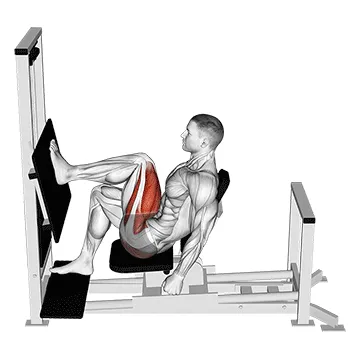
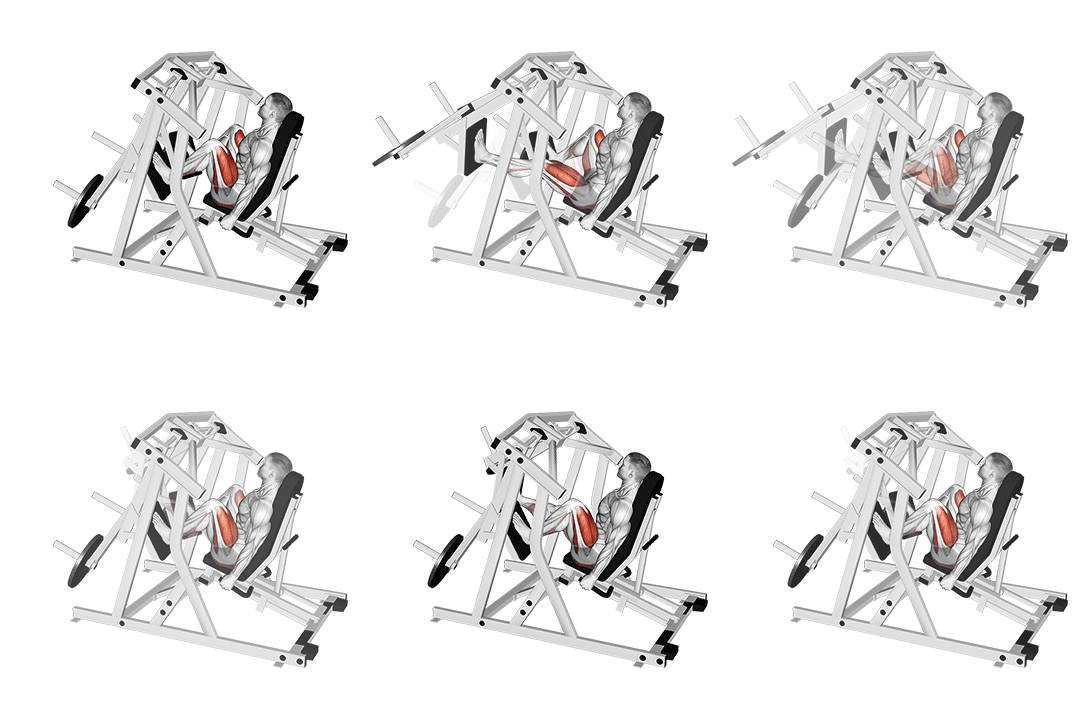
The Lever Alternate Leg Press is done seated with a lever machine. Ranked closest by our scoring: the Leg Press, the Smith Machine Pistol Squat and the Smith Single-leg Split Squat.
Updated Ranked by our 12-factor similarity model How it works
Original Exercise: Lever Alternate Leg Press
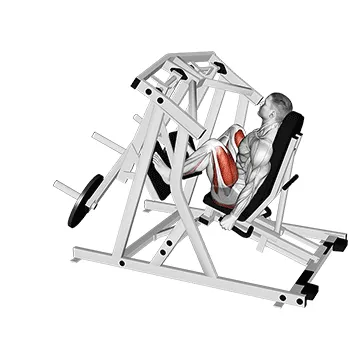
- Primary muscle
- Quads
- Equipment
- Lever
- Difficulty
- Intermediate
- Type
- Compound
Secondary muscles: Hamstrings, Glutes
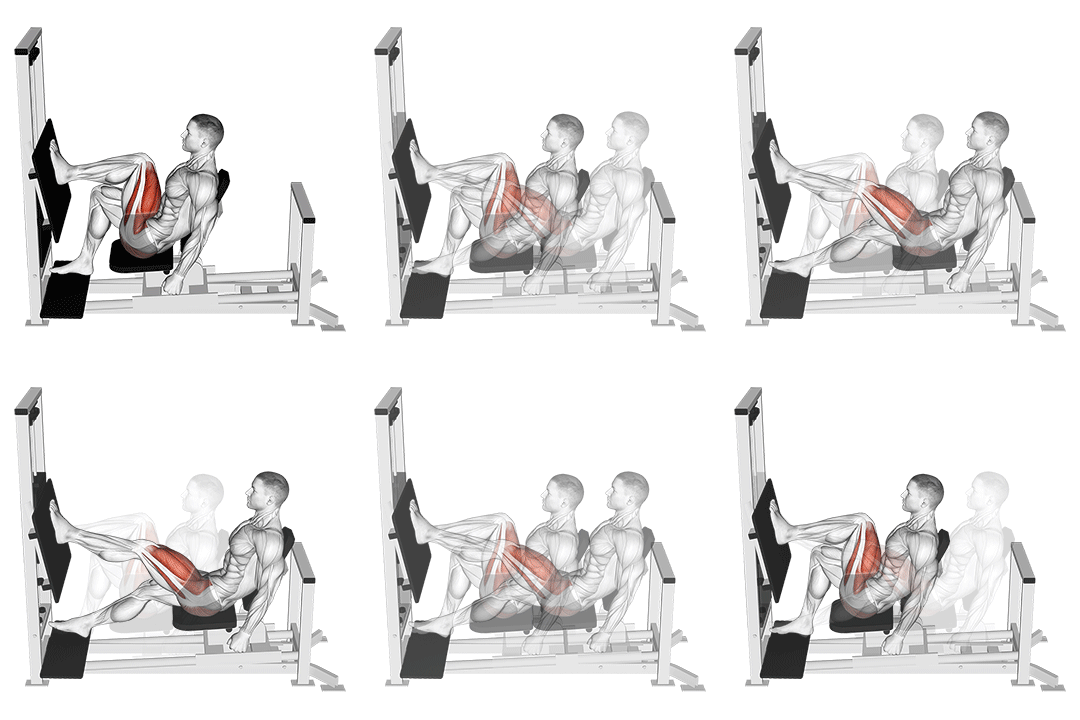
How to perform Lever Alternate Leg Press
- Adjust the seat and foot platform of the leverage machine to your desired position.
- Sit on the machine with your back against the backrest and your feet on the foot platform.
- Place your hands on the handles or sides of the machine for stability.
- Push one foot against the foot platform, extending your leg until it is almost fully straight.
- Pause for a moment, then slowly bend your leg and return to the starting position.
- Repeat with the other leg.
- Continue alternating legs for the desired number of repetitions.
Ranked Lever Alternate Leg Press Alternatives
10 substitutes, ranked by how closely each one matches the Lever Alternate Leg Press on movement pattern, muscles worked, equipment and body position. The higher the score, the less you change. Open "How to perform this exercise" on a card for the steps; every card title links to that exercise's own alternatives page.
Best match 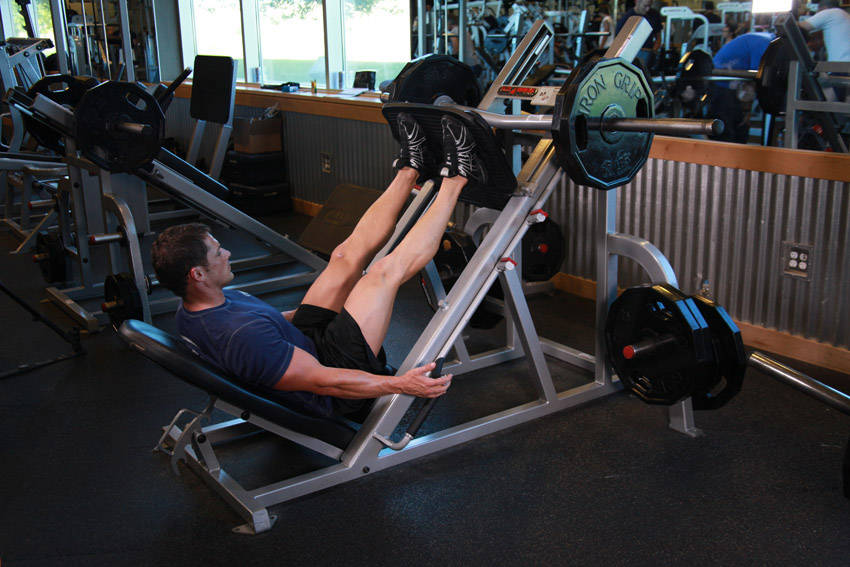
1. Leg Press
81% match- Quads
- Machine
- Beginner
- Compound
A good swap when you have a machine to work with, and it still works the quads.
How to perform this exercise
- Using a leg press machine, sit down on the machine and place your legs on the platform directly in front of you at a medium (shoulder width) foot stance. (Note: For the purposes of this discussion we will use the medium stance described above which targets overall development; however you can choose any of the three stances described in the foot positioning section).
- Lower the safety bars holding the weighted platform in place and press the platform all the way up until your legs are fully extended in front of you. Tip: Make sure that you do not lock your knees. Your torso and the legs should make a perfect 90-degree angle. This will be your starting position.
- As you inhale, slowly lower the platform until your upper and lower legs make a 90-degree angle.
- Pushing mainly with the heels of your feet and using the quadriceps go back to the starting position as you exhale.
- Repeat for the recommended amount of repetitions and ensure to lock the safety pins properly once you are done. You do not want that platform falling on you fully loaded.
Sets and reps: 3 or 4 sets of 6 to 10 reps.
Why this matches
- Primary muscle: quads, the same as the Lever Alternate Leg Press
- Equipment: a machine, the same as the Lever Alternate Leg Press
- Body position: seated, the same as the Lever Alternate Leg Press
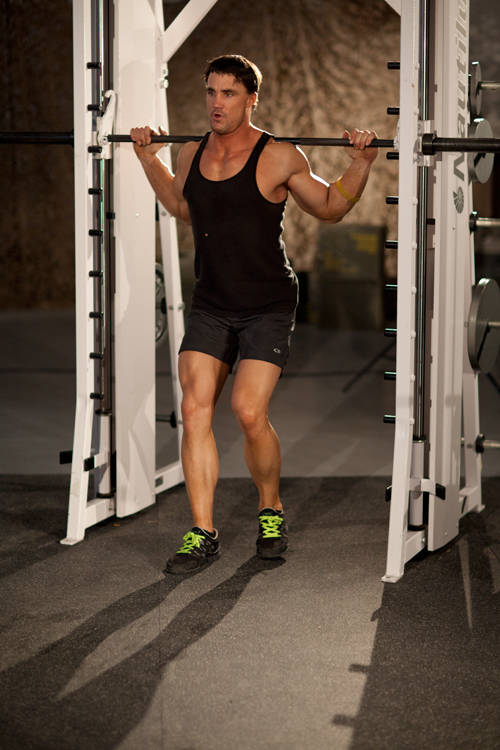
2. Smith Machine Pistol Squat
78% match- Quads
- Smith-machine
- Advanced
- Compound
A good swap when you have a Smith machine to work with, and it still works the quads.
How to perform this exercise
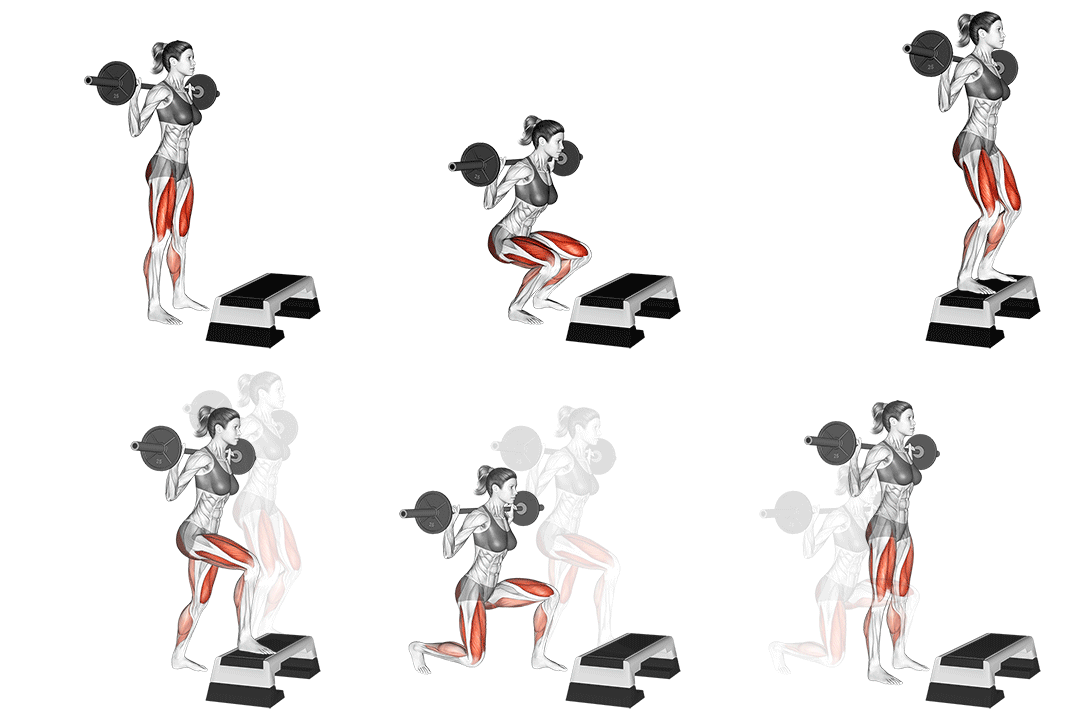
- To begin, first set the bar to a position that best matches your height. Step under it and position the bar across the back of your shoulders.
- Take the bar with your hands facing forward, unlock it and lift it off the rack by extending your legs. 3
- Move one foot forward about 12 inches in front of the bar. Extend the other leg out in front of you, holding it off the ground. Look forward at all times and maintain a neutral or slightly arched spine. This will be your starting position.
- Maintaining good posture, lower yourself by flexing the knee and hip, going down as far as flexibility allows.
- Pause briefly at the bottom and then return to the starting position by driving through the heel of your foot, extending the knee and hip.
Sets and reps: 3 to 5 sets of 5 to 8 reps on each side.
Why this matches
- Primary muscle: quads, the same as the Lever Alternate Leg Press
- Equipment: a machine, the same as the Lever Alternate Leg Press
- Body position: standing, not seated
3. Lever Horizontal One Leg Press
77% match- Glutes
- Lever
- Intermediate
- Compound
A looser match: it uses the same equipment, but it works the glutes rather than the quads.
How to perform this exercise
- Adjust the seat of the machine so that your knees are at a 90-degree angle when your feet are on the footplate.
- Sit on the machine with your back against the backrest and your feet shoulder-width apart on the footplate.
- Place your hands on the handles or sides of the machine for stability.
- Push the footplate away from your body by extending your leg, keeping your back against the backrest.
- Pause for a moment at the fully extended position, then slowly bend your leg to return to the starting position.
- Repeat for the desired number of repetitions, then switch legs.
Sets and reps: 3 or 4 sets of 6 to 10 reps on each side.
Why this matches
- Primary muscle: glutes, not quads
- Equipment: a machine, the same as the Lever Alternate Leg Press
- Body position: seated, the same as the Lever Alternate Leg Press
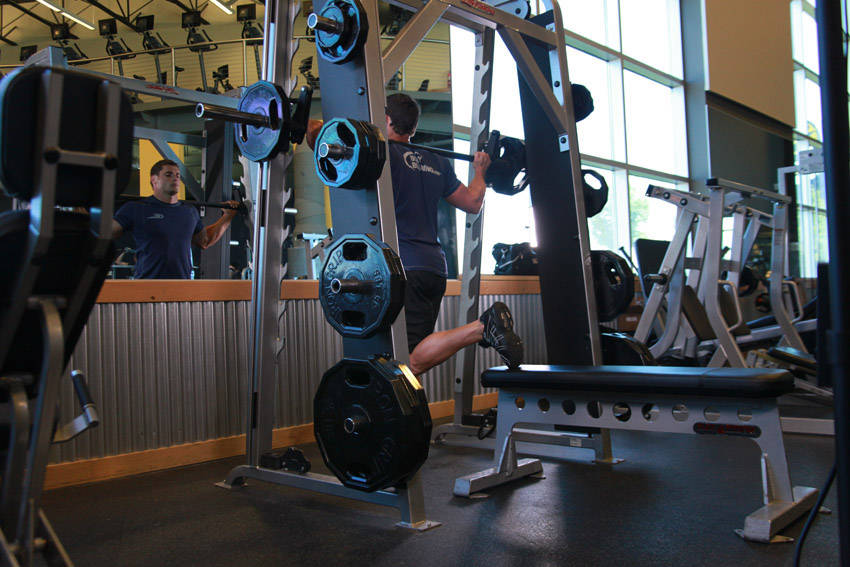
4. Smith Single-leg Split Squat
77% match- Quads
- Smith-machine
- Intermediate
- Compound
How to perform this exercise
- To begin, place a flat bench 2-3 feet behind the smith machine. Then, set the bar on the height that best matches your height. Once the correct height is chosen and the bar is loaded, step under the bar and place the back of your shoulders (slightly below the neck) across it.
- Hold on to the bar using both arms at each side (palms facing forward), unlock it and lift it off the rack by first pushing with your legs and at the same time straightening your torso.
- Position your legs by placing one foot slightly forward under the bar and extending your other leg back and place the top of your foot on the bench. This will be your starting position
- Begin to slowly lower the bar by bending the knee as you maintain a straight posture with the head up. Continue down until the angle between the upper leg and the calf becomes slightly less than 90-degrees (which is the point in which the upper legs are below parallel to the floor). Inhale as you perform this portion of the movement. Tip: If you performed the exercise correctly, the front of the knee should make an imaginary straight line with the toes that is perpendicular to the front. If your knee is past that imaginary line (if it is past your toes) then you are placing undue stress on the knee and the exercise has been performed incorrectly.
- Begin to raise the bar as you exhale by pushing the floor with the heel of your foot mainly as you straighten your leg again and go back to the starting position.
- Repeat for the recommended amount of repetitions.
- Switch legs and repeat the movement.
Sets and reps: 3 or 4 sets of 6 to 10 reps on each side.
Why this matches
- Primary muscle: quads, the same as the Lever Alternate Leg Press
- Equipment: a machine, the same as the Lever Alternate Leg Press
- Body position: standing, not seated
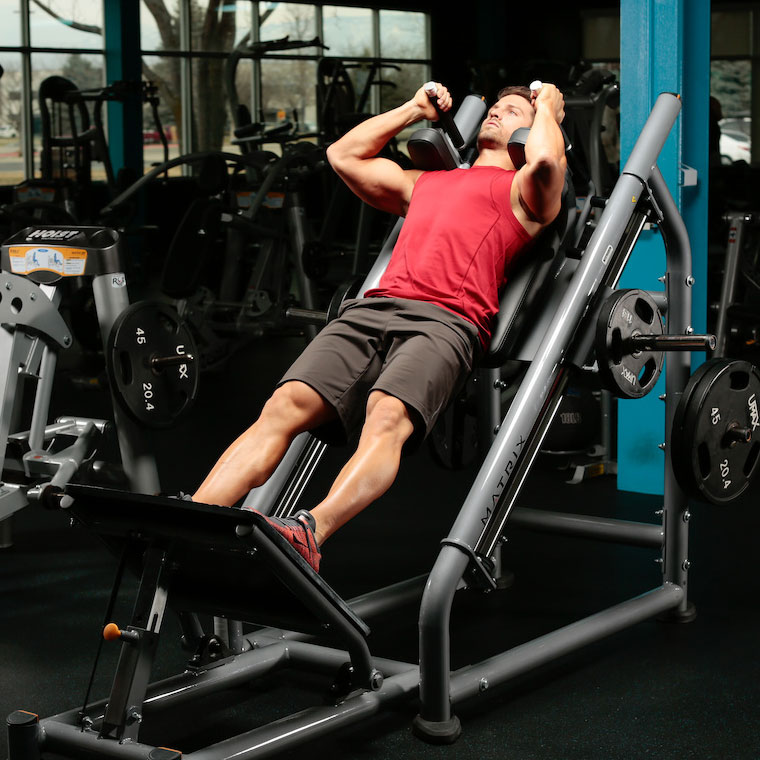
5. Hack Squat
74% match- Quads
- Machine
- Intermediate
- Compound
How to perform this exercise
- Place the back of your torso against the back pad of the machine and hook your shoulders under the shoulder pads provided.
- Position your legs in the platform using a shoulder width medium stance with the toes slightly pointed out. Tip: Keep your head up at all times and also maintain the back on the pad at all times.
- Place your arms on the side handles of the machine and disengage the safety bars (which on most designs is done by moving the side handles from a facing front position to a diagonal position).
- Now straighten your legs without locking the knees. This will be your starting position. (Note: For the purposes of this discussion we will use the medium stance described above which targets overall development; however you can choose any of the three stances described in the foot positioning section).
- Begin to slowly lower the unit by bending the knees as you maintain a straight posture with the head up (back on the pad at all times). Continue down until the angle between the upper leg and the calves becomes slightly less than 90-degrees (which is the point in which the upper legs are below parallel to the floor). Inhale as you perform this portion of the movement. Tip: If you performed the exercise correctly, the front of the knees should make an imaginary straight line with the toes that is perpendicular to the front. If your knees are past that imaginary line (if they are past your toes) then you are placing undue stress on the knee and the exercise has been performed incorrectly.
- Begin to raise the unit as you exhale by pushing the floor with mainly with the heel of your foot as you straighten the legs again and go back to the starting position.
- Repeat for the recommended amount of repetitions.
Sets and reps: 3 or 4 sets of 6 to 10 reps.
Why this matches
- Primary muscle: quads, the same as the Lever Alternate Leg Press
- Equipment: a machine, the same as the Lever Alternate Leg Press
- Body position: standing, not seated
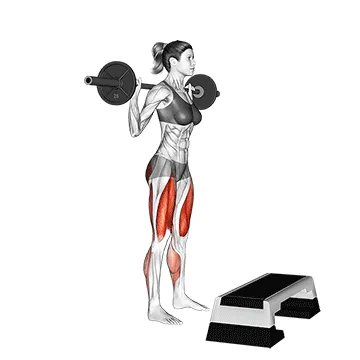
- Quads
- Barbell
- Advanced
- Compound
A good swap when you have a barbell to work with, and it still works the quads.
How to perform this exercise
- Start by standing with your feet shoulder-width apart, holding a barbell across your upper back.
- Lower your body into a squat position by bending your knees and pushing your hips back.
- Explode upwards, jumping off the ground as high as you can.
- Land softly on your feet and immediately step back with one leg into a reverse lunge.
- Lower your body down until your front thigh is parallel to the ground, keeping your back straight.
- Push through your front heel to return to the starting position.
- Repeat the jump and lunge sequence on the other leg.
- Continue alternating legs for the desired number of repetitions.
Sets and reps: 3 to 5 sets of 5 to 8 reps on each side.
Why this matches
- Primary muscle: quads, the same as the Lever Alternate Leg Press
- Equipment: free weights, not a machine
- Body position: standing, not seated
- Balance: harder to stay steady on than the Lever Alternate Leg Press
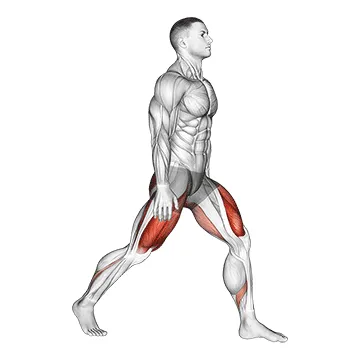
7. Split Squats
71% match- Quads
- Bodyweight
- Intermediate
- Compound
Use this when you have nothing to train with, because it works the quads with bodyweight alone.
How to perform this exercise
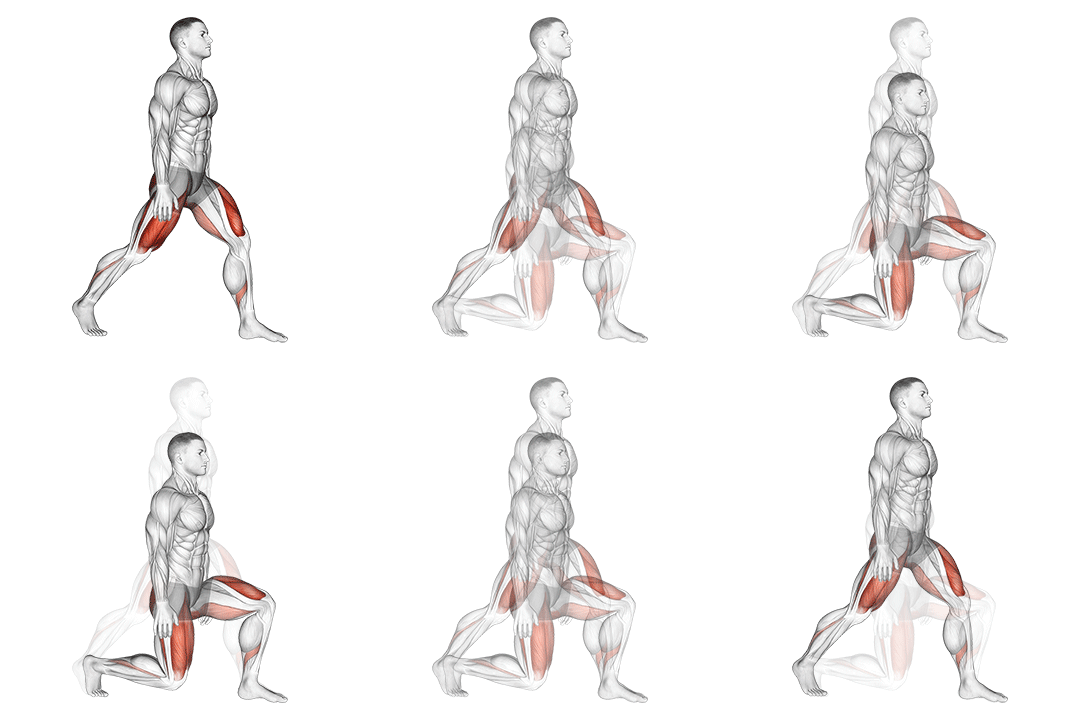
- Stand with your feet shoulder-width apart.
- Take a step forward with one foot and place it about two feet in front of the other foot.
- Lower your body by bending your knees and hips, keeping your back straight.
- Continue lowering until your front thigh is parallel to the ground, and your back knee is hovering just above the ground.
- Pause for a moment, then push through your front heel to return to the starting position.
- Repeat for the desired number of repetitions, then switch legs and repeat.
Sets and reps: 3 or 4 sets of 6 to 10 reps on each side.
Why this matches
- Primary muscle: quads, the same as the Lever Alternate Leg Press
- Equipment: bodyweight only, not a machine
- Body position: standing, not seated
- Balance: harder to stay steady on than the Lever Alternate Leg Press
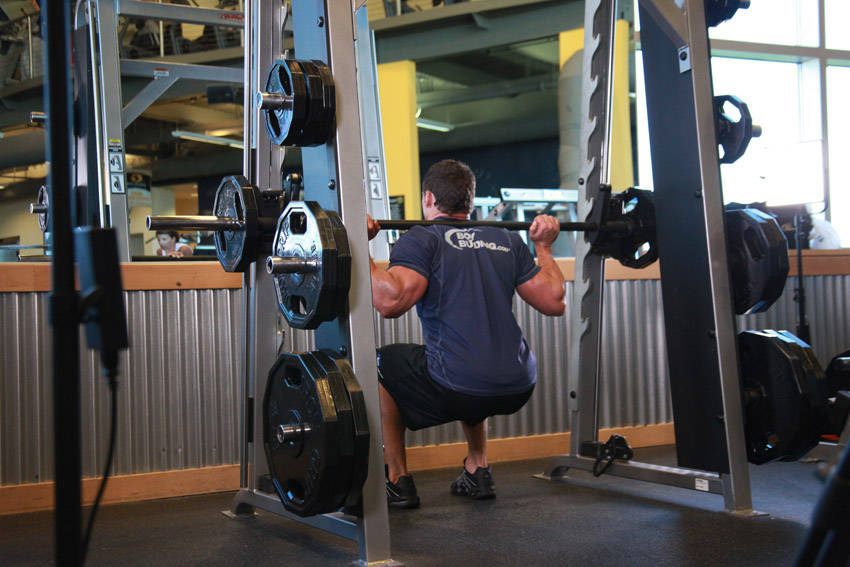
8. Smith Machine Squat
70% match- Quads
- Smith-machine
- Intermediate
- Compound
How to perform this exercise
- To begin, first set the bar on the height that best matches your height. Once the correct height is chosen and the bar is loaded, step under the bar and place the back of your shoulders (slightly below the neck) across it.
- Hold on to the bar using both arms at each side (palms facing forward), unlock it and lift it off the rack by first pushing with your legs and at the same time straightening your torso.
- Position your legs using a shoulder width medium stance with the toes slightly pointed out. Keep your head up at all times and also maintain a straight back. This will be your starting position. (Note: For the purposes of this discussion we will use the medium stance which targets overall development; however you can choose any of the three stances discussed in the foot stances section).
- Begin to slowly lower the bar by bending the knees as you maintain a straight posture with the head up. Continue down until the angle between the upper leg and the calves becomes slightly less than 90-degrees (which is the point in which the upper legs are below parallel to the floor). Inhale as you perform this portion of the movement. Tip: If you performed the exercise correctly, the front of the knees should make an imaginary straight line with the toes that is perpendicular to the front. If your knees are past that imaginary line (if they are past your toes) then you are placing undue stress on the knee and the exercise has been performed incorrectly.
- Begin to raise the bar as you exhale by pushing the floor with the heel of your foot as you straighten the legs again and go back to the starting position.
- Repeat for the recommended amount of repetitions.
Sets and reps: 3 or 4 sets of 6 to 10 reps.
Why this matches
- Primary muscle: quads, the same as the Lever Alternate Leg Press
- Equipment: a machine, the same as the Lever Alternate Leg Press
- Body position: standing, not seated
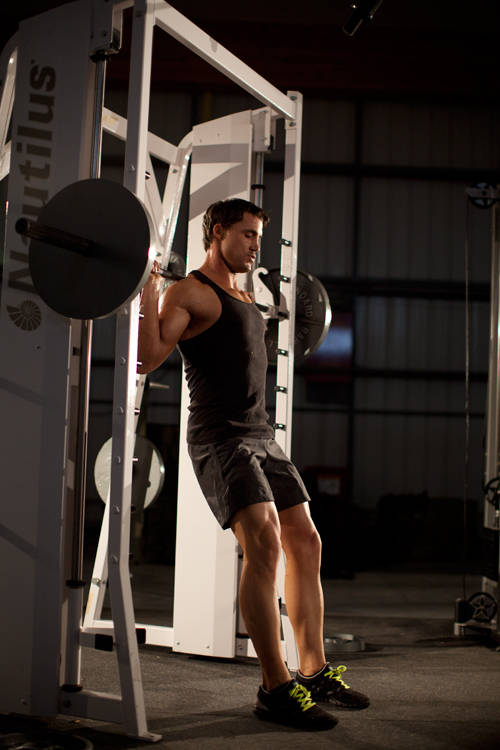
9. Chair Squat
69% match- Quads
- Machine
- Beginner
- Compound
How to perform this exercise
- To begin, first set the bar to a position that best matches your height. Once the bar is loaded, step under it and position it across the back of your shoulders.
- Take the bar with your hands facing forward, unlock it and lift it off the rack by extending your legs.
- Move your feet forward about 18 inches in front of the bar. Position your legs using a shoulder width stance with the toes slightly pointed out. Look forward at all times and maintain a neutral or slightly arched spine. This will be your starting position.
- Slowly lower the bar by bending the knees as you maintain a straight posture with the head up. Continue down until the angle between the upper and lower leg breaks 90 degrees.
- Begin to raise the bar as you exhale by pushing the floor with the heels of your feet, extending the knees and returning to the starting position.
- Repeat for the recommended amount of repetitions.
Sets and reps: 3 or 4 sets of 6 to 10 reps.
Why this matches
- Primary muscle: quads, the same as the Lever Alternate Leg Press
- Equipment: a machine, the same as the Lever Alternate Leg Press
- Body position: standing, not seated
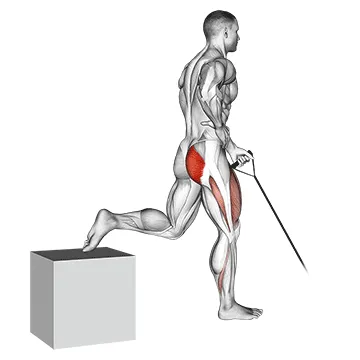
- Quads
- Band
- Intermediate
- Compound
How to perform this exercise
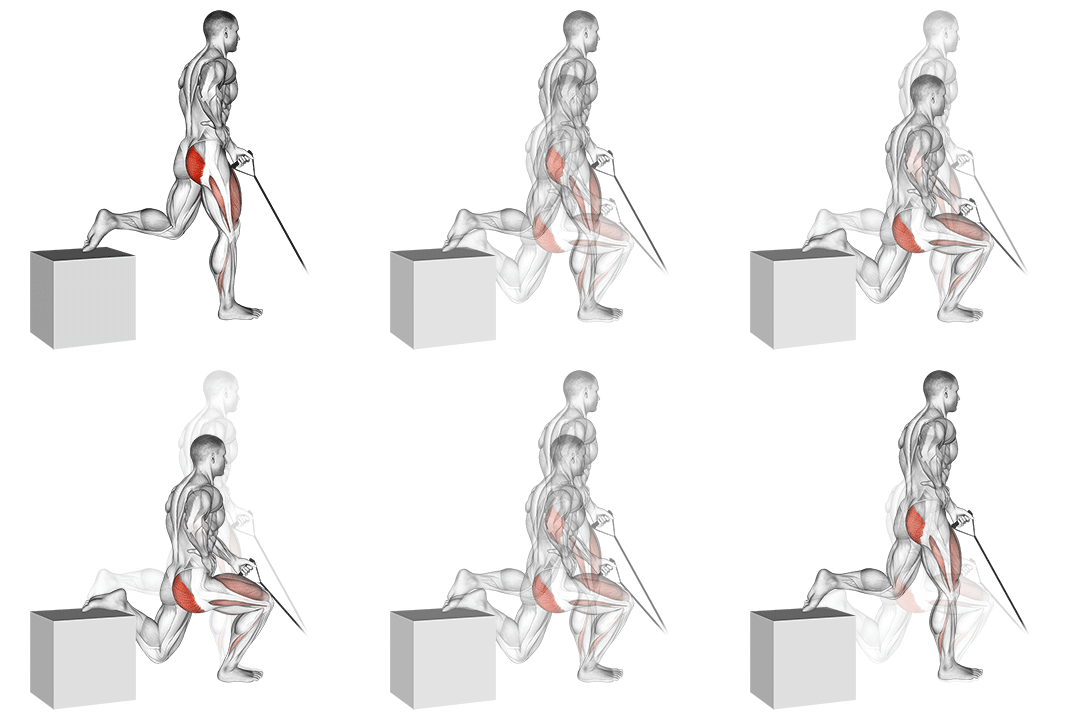
- Stand with your feet hip-width apart and place a resistance band around your ankles.
- Extend one leg forward and rest the top of your foot on a bench or step behind you.
- Hold onto a support with one hand for balance.
- Bend your standing leg and lower your body down into a squat position, keeping your knee in line with your toes.
- Push through your heel to return to the starting position.
- Repeat for the desired number of repetitions, then switch legs.
Sets and reps: 3 or 4 sets of 6 to 10 reps on each side.
Why this matches
- Primary muscle: quads, the same as the Lever Alternate Leg Press
- Equipment: a band, not a machine
- Body position: standing, not seated
- Balance: harder to stay steady on than the Lever Alternate Leg Press
Why You Might Need a Lever Alternate Leg Press Alternative
You might swap the Lever Alternate Leg Press due to machine availability, knee pain from a fixed track, or training goals that favor unilateral control. Some lifters need less compressive hip load or want greater range of motion; others want to address side-to-side imbalances. Biomechanically, alternatives that allow more forward knee travel and an upright torso increase rectus femoris and vasti activation. If you have patellofemoral irritation, choose options that limit rapid knee translation, perform controlled eccentric tempo and stop at a pain-free depth while keeping weight distributed through the mid-foot.
Lever Alternate Leg Press FAQ
What muscles does Lever Alternate Leg Press work?
The primary target is the quadriceps group (vastus lateralis, medialis, intermedius, and rectus femoris), with secondary activation of gluteus maximus and adductors depending on foot placement. The movement emphasizes knee extension biomechanics, so forward knee travel increases quad engagement while greater hip extension shifts load to the glutes.
What is the best bodyweight alternative to Lever Alternate Leg Press?
A Bulgarian split squat is the best bodyweight substitute for quad emphasis; place the front foot slightly forward and keep an upright torso to increase knee-extension demand. Cue: descend slowly, pause at 90 degrees, then drive through the mid-foot to maximize quad activation and stability.
Can I build muscle without doing Lever Alternate Leg Press?
Yes. You can achieve quad hypertrophy with front squats, hack squats, heavy lunges, and single-leg presses using progressive overload and controlled tempos. Focus on full reps with an upright torso, slow eccentrics, and incremental loading to increase time under tension and stimulate muscle growth.
Find Alternatives for Any Exercise
Search the exercise database and filter the ranked substitutes by the equipment you own.
Similarity scores compare exercise metadata such as movement pattern, muscles, equipment and body position. They are not a safety rating or a check that you own the equipment. Learn about our methodology