

5 Best Reverse Hyper Extension (On Stability Ball) Alternatives
The Reverse Hyper Extension (On Stability Ball) is done lying face down with a stability ball.
Original Exercise: Reverse Hyper Extension (On Stability Ball)
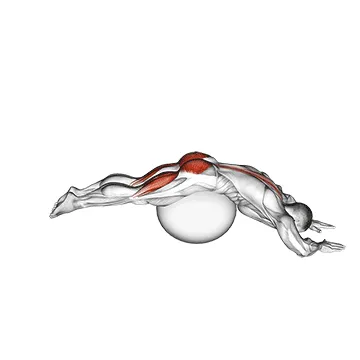
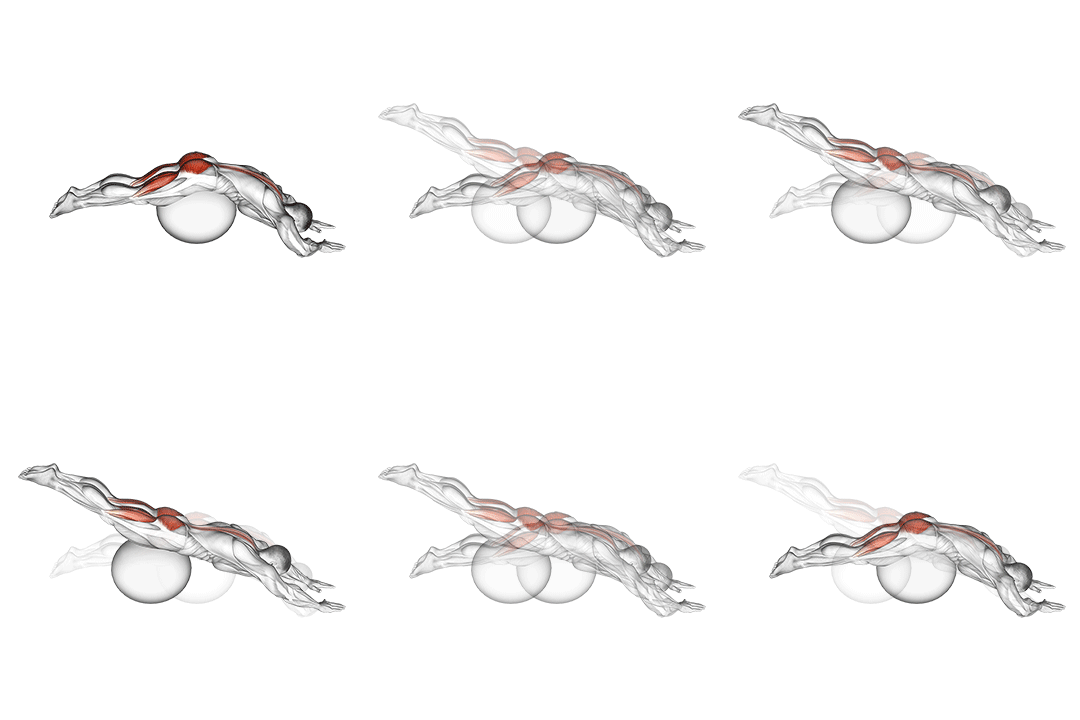
- Primary muscle
- Glutes
- Equipment
- Stability-ball
- Difficulty
- Intermediate
- Type
- Compound
Secondary muscles: Hamstrings, Lower Back
How to perform Reverse Hyper Extension (On Stability Ball)
- Lie face down on a stability ball with your hips resting on the ball and your legs extended straight behind you.
- Place your hands on the ground in front of you for stability.
- Engaging your glutes and hamstrings, lift your legs up towards the ceiling as high as you can.
- Pause for a moment at the top, then slowly lower your legs back down to the starting position.
- Repeat for the desired number of repetitions.
Why You Might Need a Reverse Hyper Extension (On Stability Ball) Alternative
You might substitute the stability-ball reverse hyper for several reasons: lack of equipment, low-back pain, or the need for progressive loading. The stability-ball version reduces lumbar shear but offers limited overload; loaded hip thrusts and RDLs let you increase resistance while preserving hip-dominant mechanics. For low-back issues, choose supine bridges or bench-supported reverse hypers to limit spine loading and emphasize glute contraction. Technique cue: maintain a neutral spine and initiate movement from the hips so the gluteus maximus and hamstrings, not the lumbar extensors, carry most of the load.
Reverse Hyper Extension (On Stability Ball) FAQ
What muscles does Reverse Hyper Extension (on Stability Ball) work?
The move primarily targets the gluteus maximus and engages the hamstrings as hip extensors; the erector spinae act isometrically to stabilize the lumbar spine. Cue: extend through the hips while keeping the ribs stacked over the pelvis to bias glute activation and limit lumbar loading.
Find Alternatives for Any Exercise
Search the exercise database and filter the ranked substitutes by the equipment you own.