

10 Best Band Lying Hip Internal Rotation Alternatives for Rehab
The Band Lying Hip Internal Rotation is done lying on your back with a band. Ranked closest by our scoring: the Band Seated Hip Internal Rotation, the Bent Knee Lying Twist and the Exercise Ball One Leg Prone Lower Body Rotation.
Updated Ranked by our 12-factor similarity model How it works
Original Exercise: Band Lying Hip Internal Rotation
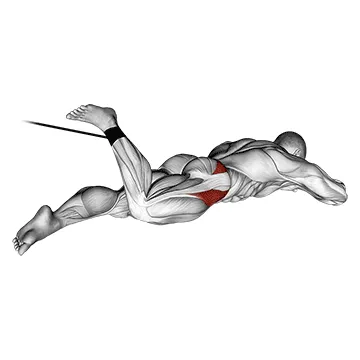
- Primary muscle
- Glutes
- Equipment
- Band
- Difficulty
- Beginner
- Type
- Isolation
Secondary muscles: Hamstrings, Quadriceps
How to perform Band Lying Hip Internal Rotation
- Lie on your back with your legs straight and a resistance band looped around your feet.
- Bend your knees and bring them towards your chest, keeping your feet together.
- Slowly rotate your knees outwards, away from each other, while keeping your feet together.
- Pause for a moment at the end of the rotation, then slowly return to the starting position.
- Repeat for the desired number of repetitions.
Ranked Band Lying Hip Internal Rotation Alternatives
10 substitutes, ranked by how closely each one matches the Band Lying Hip Internal Rotation on movement pattern, muscles worked, equipment and body position. The higher the score, the less you change. Open "How to perform this exercise" on a card for the steps; every card title links to that exercise's own alternatives page.
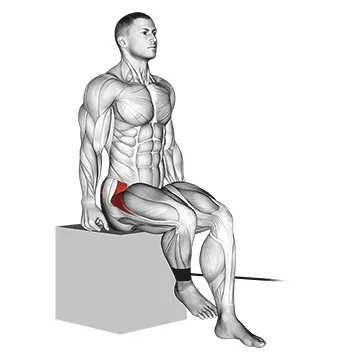
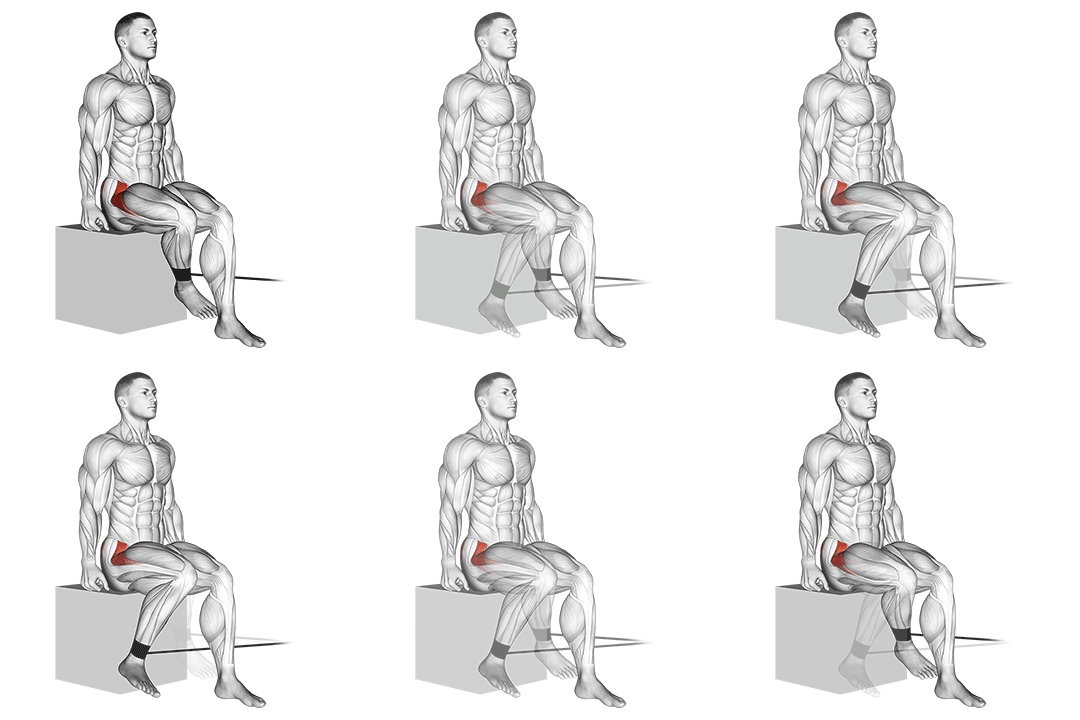
Best match 1. Band Seated Hip Internal Rotation
91% match- Glutes
- Band
- Beginner
- Isolation
The same equipment, done seated instead.
How to perform this exercise
- Sit on a chair or bench with your back straight and feet flat on the ground.
- Place a resistance band around your thighs, just above your knees.
- Keep your knees bent at a 90-degree angle and your feet shoulder-width apart.
- Engage your glutes and slowly rotate your knees outward, pushing against the resistance of the band.
- Pause for a moment at the end of the movement, then slowly return to the starting position.
- Repeat for the desired number of repetitions.
Sets and reps: 3 sets of 10 to 15 reps on each side.
Why this matches
- Primary muscle: glutes, the same as the Band Lying Hip Internal Rotation
- Equipment: a band, the same as the Band Lying Hip Internal Rotation
- Body position: seated, not lying on your back
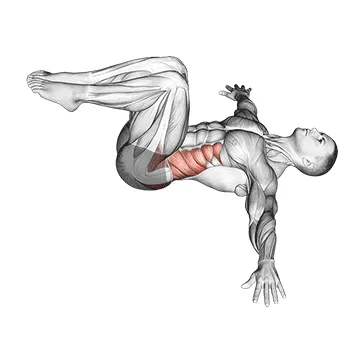
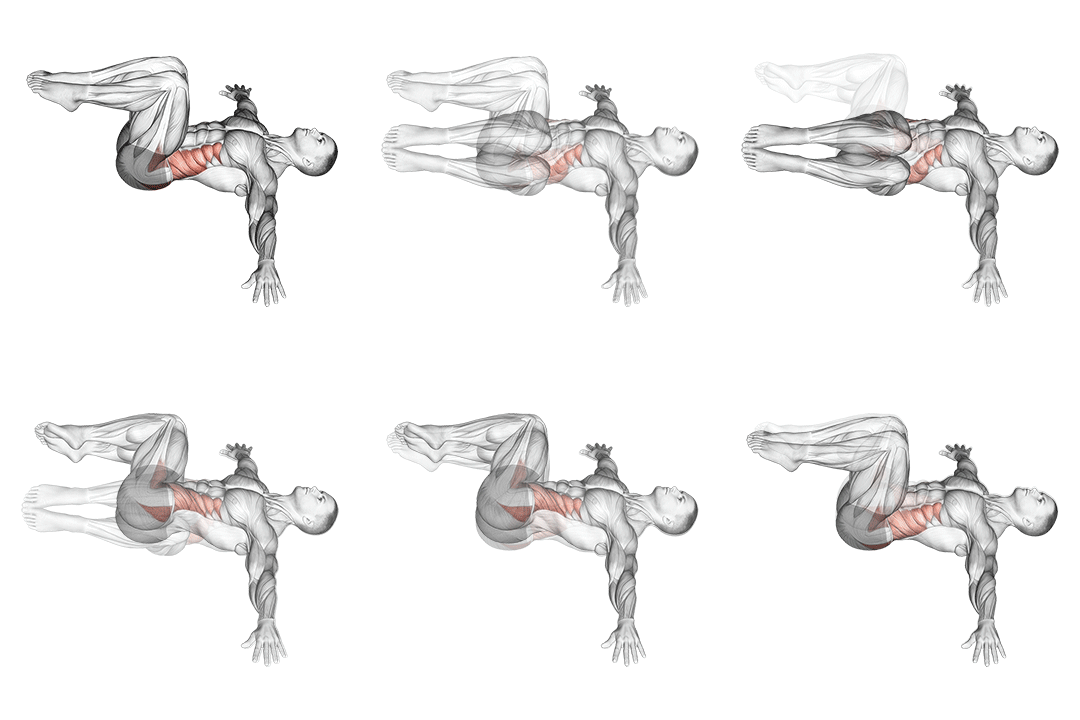
2. Bent Knee Lying Twist
83% match- Glutes
- Bodyweight
- Beginner
- Isolation
Use this when you have nothing to train with, because it works the glutes with bodyweight alone.
How to perform this exercise
- Lie flat on your back with your knees bent and feet flat on the ground.
- Extend your arms out to the sides, perpendicular to your body.
- Keeping your knees together, slowly lower them to one side, aiming to touch the ground with your knees.
- Pause for a moment, then engage your core and slowly lift your knees back to the starting position.
- Repeat the movement to the other side.
- Continue alternating sides for the desired number of repetitions.
Sets and reps: 3 sets of 8 to 12 reps on each side, and add reps before you add load.
Why this matches
- Primary muscle: glutes, the same as the Band Lying Hip Internal Rotation
- Equipment: bodyweight only, not a band
- Body position: lying on your back, the same as the Band Lying Hip Internal Rotation
- Glutes
- Stability-ball
- Intermediate
- Compound
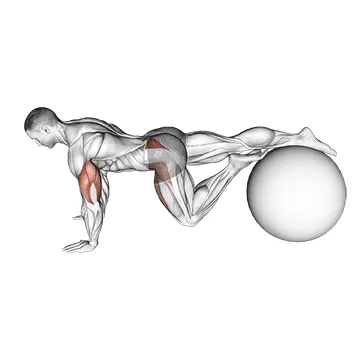
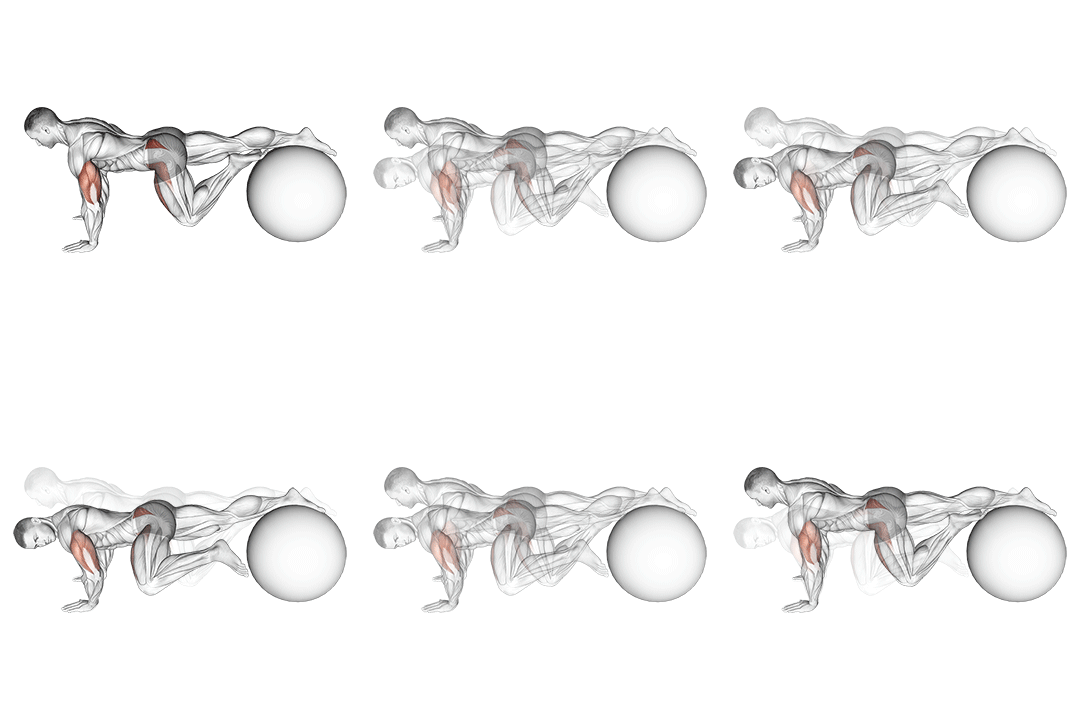
A good swap when you have a stability ball to work with, and it still works the glutes.
How to perform this exercise
- Lie face down on the stability ball with your hips resting on the ball and your legs extended straight behind you.
- Place your hands on the ground in front of you for support.
- Engage your glutes and core muscles to stabilize your body.
- Slowly lift one leg off the ground, keeping it straight and parallel to the floor.
- Rotate your leg outward, away from your body, while keeping your hips and upper body stable.
- Pause for a moment at the end of the rotation, then slowly return your leg to the starting position.
- Repeat the rotation with the other leg.
- Continue alternating legs for the desired number of repetitions.
Sets and reps: 3 or 4 sets of 6 to 10 reps on each side.
Why this matches
- Primary muscle: glutes, the same as the Band Lying Hip Internal Rotation
- Equipment: bodyweight only, not a band
- Body position: lying face down, not lying on your back
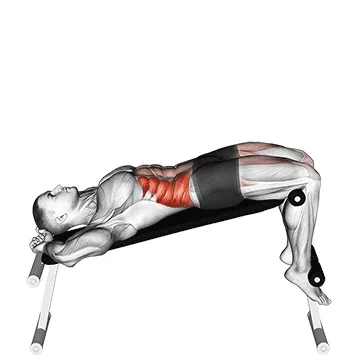
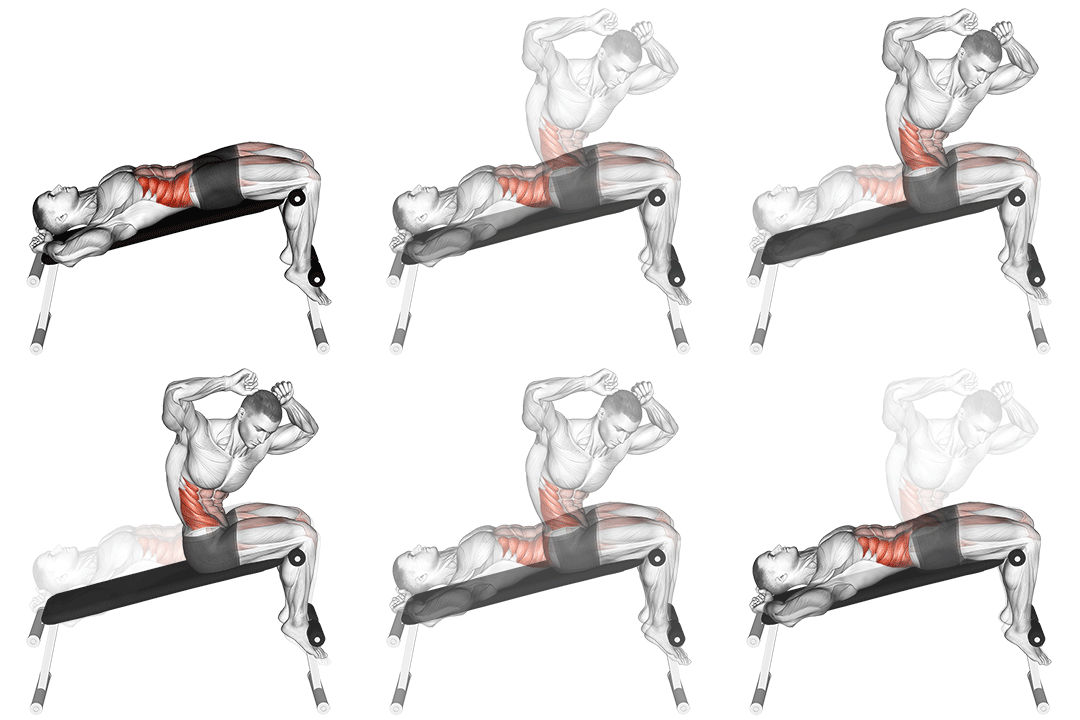
4. Incline Twisting Sit-up
57% match- Abs
- Bodyweight
- Intermediate
- Compound
A looser match: it works the abs rather than the glutes.
How to perform this exercise
- Set up an incline bench at a 45-degree angle.
- Lie down on the bench with your feet secured under the foot pads.
- Place your hands behind your head or across your chest.
- Engage your abs and lift your upper body off the bench, curling forward.
- As you curl up, twist your torso to one side, bringing your elbow towards the opposite knee.
- Pause for a moment at the top, then slowly lower your upper body back down to the starting position.
- Repeat the movement, this time twisting your torso to the other side.
- Continue alternating sides for the desired number of repetitions.
Sets and reps: 3 or 4 sets of 6 to 10 reps.
Why this matches
- Primary muscle: abs, not glutes
- Equipment: bodyweight only, not a band
- Body position: lying on your back, the same as the Band Lying Hip Internal Rotation
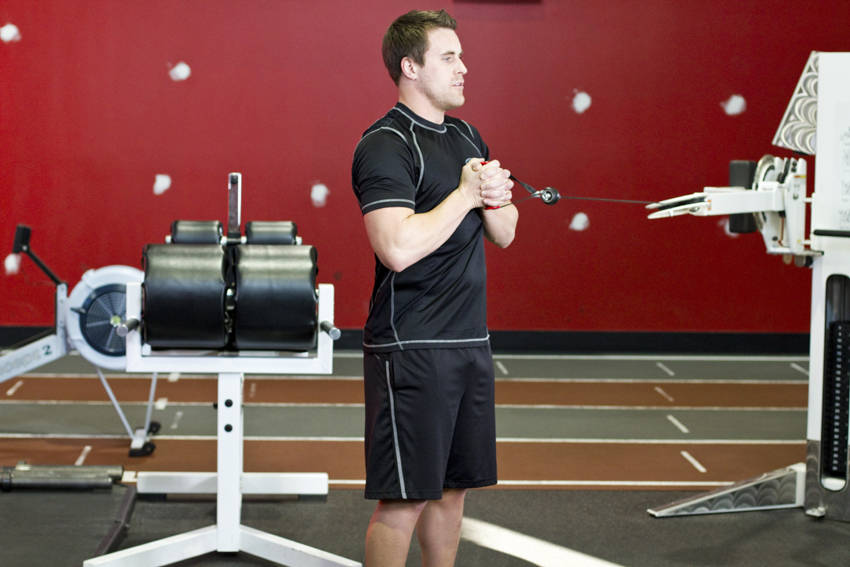
5. Pallof Press With Rotation
54% match- Abs
- Cable
- Intermediate
- Compound
How to perform this exercise
- Connect a standard handle to a tower, and position the cable to shoulder height.
- With your side to the cable, grab the handle with one hand and step away from the tower. You should be approximately arm's length away from the pulley, with the tension of the weight on the cable. Align outstretched arm with cable.
- With your feet positioned hip-width apart, pull the cable into your chest and grab the handle with your other hand. Both hands should be on the handle at this time.
- Facing forward, press the cable away from your chest. You core should be tight and engaged.
- Keeping your hips straight, twist your torso away from the pulley until you get a full quarter rotation.
- Maintain your rigid stance and straight arms. Return to the neutral position in a slow and controlled manner. Your arms should be extended in front of you.
- With the side tension still engaging your core, bring your hands to your chest and immediately press outward to a fully extended position. This constitutes one rep.
- Repeat to failure.
- Then, reposition and repeat the same series of movements on the opposite side.
Sets and reps: 3 or 4 sets of 6 to 10 reps on each side.
Why this matches
- Primary muscle: abs, not glutes
- Equipment: a cable, not a band
- Body position: standing, not lying on your back
- Balance: harder to stay steady on than the Band Lying Hip Internal Rotation
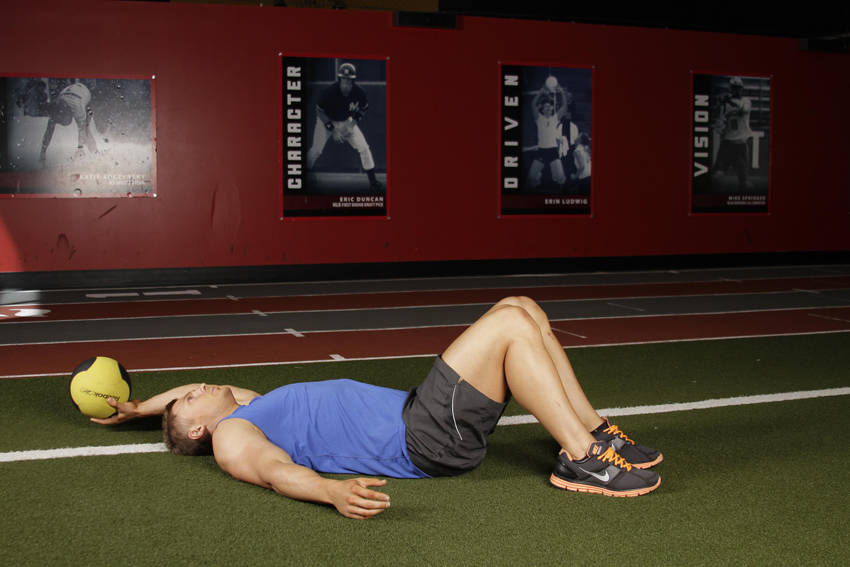
6. Supine One-arm Overhead Throw
51% match- Abs
- Medicine-ball
- Intermediate
- Compound
How to perform this exercise
- Lay on the ground on your back with your knees bent. Hold the ball with one hand, extending the arm fully behind your head. This will be your starting position.
- Initiate the movement at the shoulder, throwing the ball directly forward of you as you sit up, attempting to go for maximum distance.
- The ball can be thrown to a partner or bounced off of a wall.
Sets and reps: 3 to 5 sets of 5 to 8 reps on each side.
Why this matches
- Primary muscle: abs, not glutes
- Equipment: free weights, not a band
- Body position: lying on your back, the same as the Band Lying Hip Internal Rotation
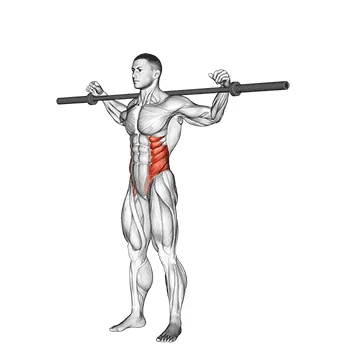
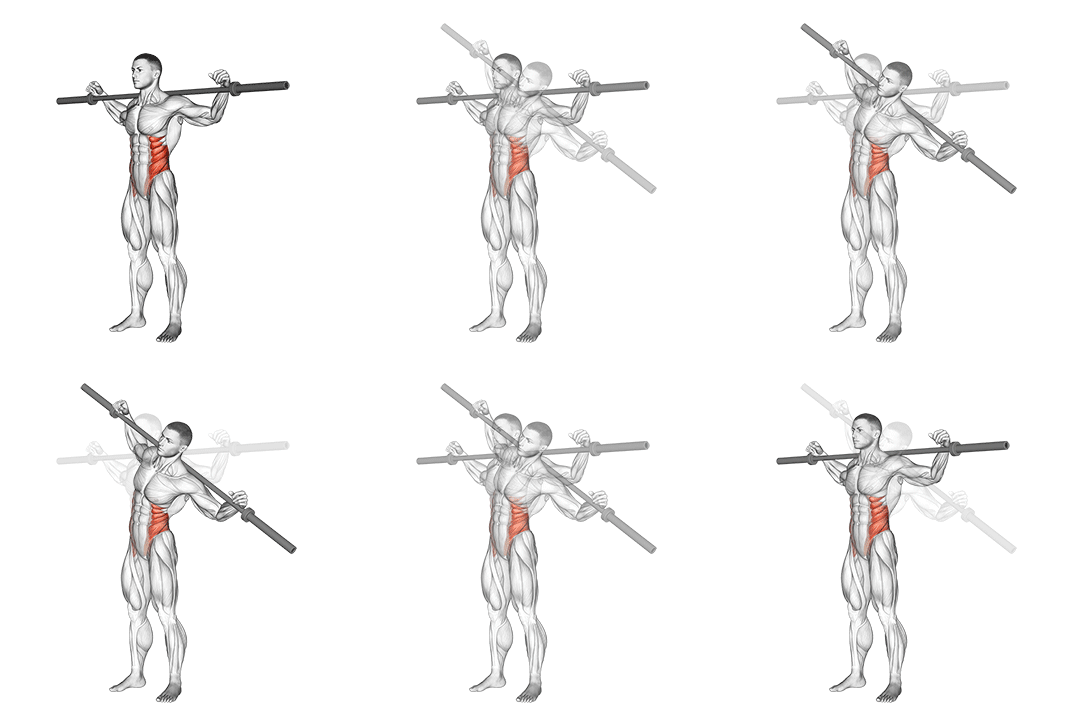
7. Barbell Side Bent
51% match- Abs
- Barbell
- Beginner
- Compound
How to perform this exercise
- Stand with your feet shoulder-width apart and hold a barbell with both hands, palms facing down.
- Keep your back straight and core engaged throughout the exercise.
- Slowly bend your torso to the right side, lowering the barbell towards your right knee.
- Pause for a moment, then return to the starting position.
- Repeat the movement on the left side.
- Continue alternating sides for the desired number of repetitions.
Sets and reps: 3 or 4 sets of 6 to 10 reps on each side.
Why this matches
- Primary muscle: abs, not glutes
- Equipment: free weights, not a band
- Body position: standing, not lying on your back
- Balance: harder to stay steady on than the Band Lying Hip Internal Rotation
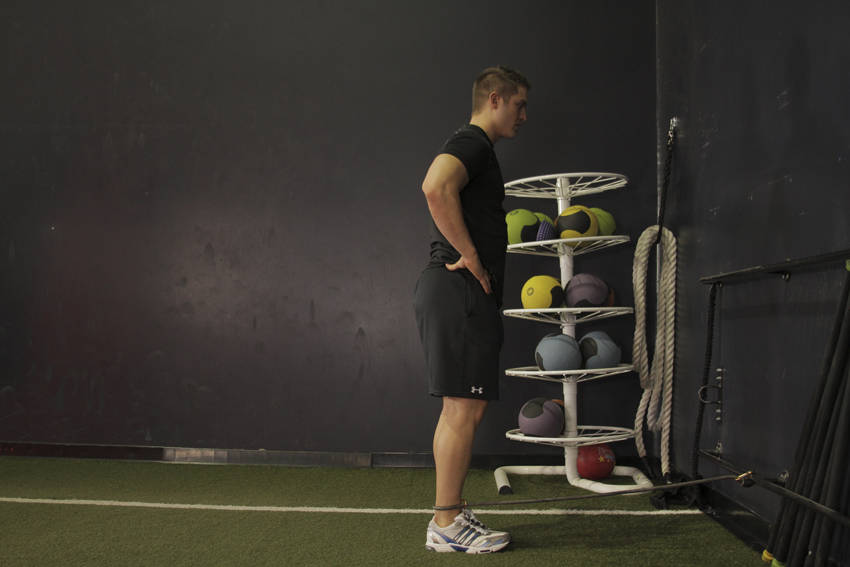
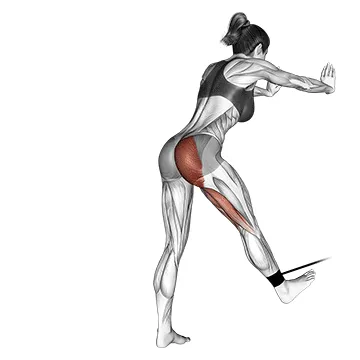
8. Hip Extension With Bands
47% match- Glutes
- Band
- Beginner
- Isolation
How to perform this exercise
- Secure one end of the band to the lower portion of a post and attach the other to one ankle.
- Facing the attachment point of the band, hold on to the column to stabilize yourself.
- Keeping your head and your chest up, move the resisted leg back as far as you can while keeping the knee straight.
- Return the leg to the starting position.
Sets and reps: 3 sets of 10 to 15 reps on each side.
Why this matches
- Primary muscle: glutes, the same as the Band Lying Hip Internal Rotation
- Equipment: a band, the same as the Band Lying Hip Internal Rotation
- Body position: standing, not lying on your back
- Balance: harder to stay steady on than the Band Lying Hip Internal Rotation
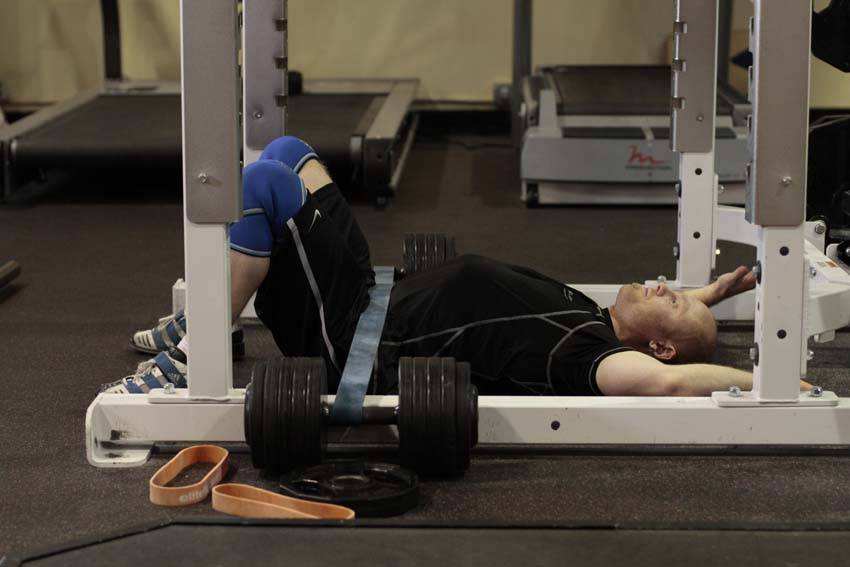
9. Hip Lift With Band
47% match- Glutes
- Band
- Beginner
- Compound
How to perform this exercise
- After choosing a suitable band, lay down in the middle of the rack, after securing the band on either side of you. If your rack doesn't have pegs, the band can be secured using heavy dumbbells or similar objects, just ensure they won't move.
- Adjust your position so that the band is directly over your hips. Bend your knees and place your feet flat on the floor. Your hands can be on the floor or holding the band in position.
- Keeping your shoulders on the ground, drive through your heels to raise your hips, pushing into the band as high as you can.
- Pause at the top of the motion, and return to the starting position.
Sets and reps: 3 or 4 sets of 6 to 10 reps.
Why this matches
- Primary muscle: glutes, the same as the Band Lying Hip Internal Rotation
- Equipment: a band, the same as the Band Lying Hip Internal Rotation
- Body position: lying on your back, the same as the Band Lying Hip Internal Rotation
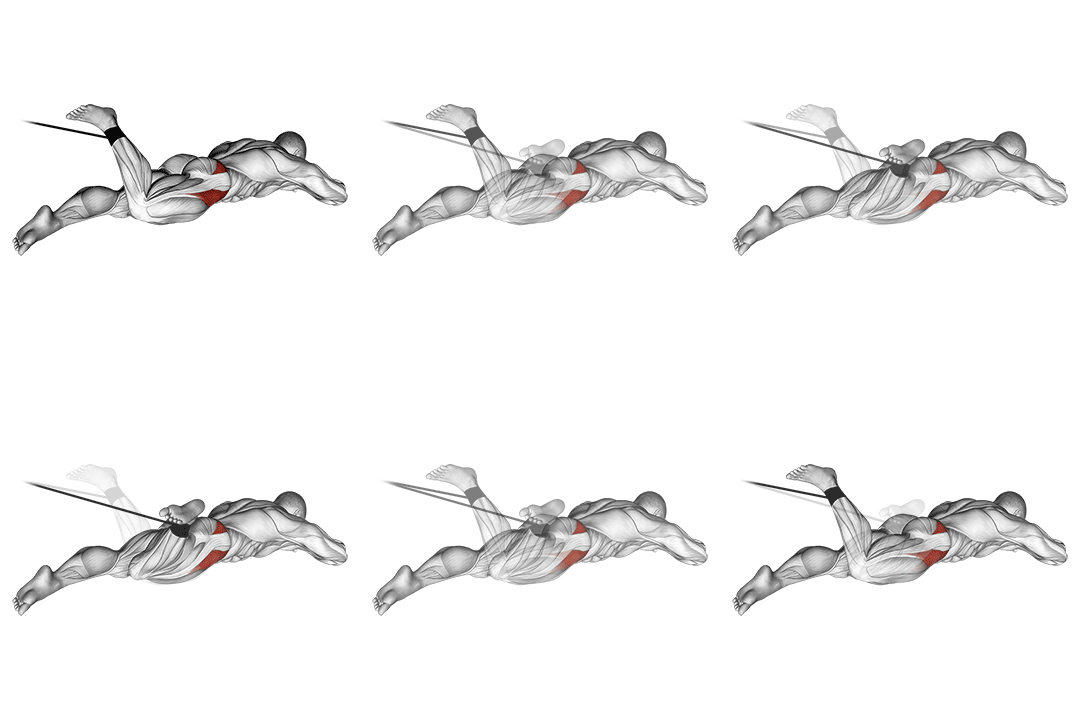
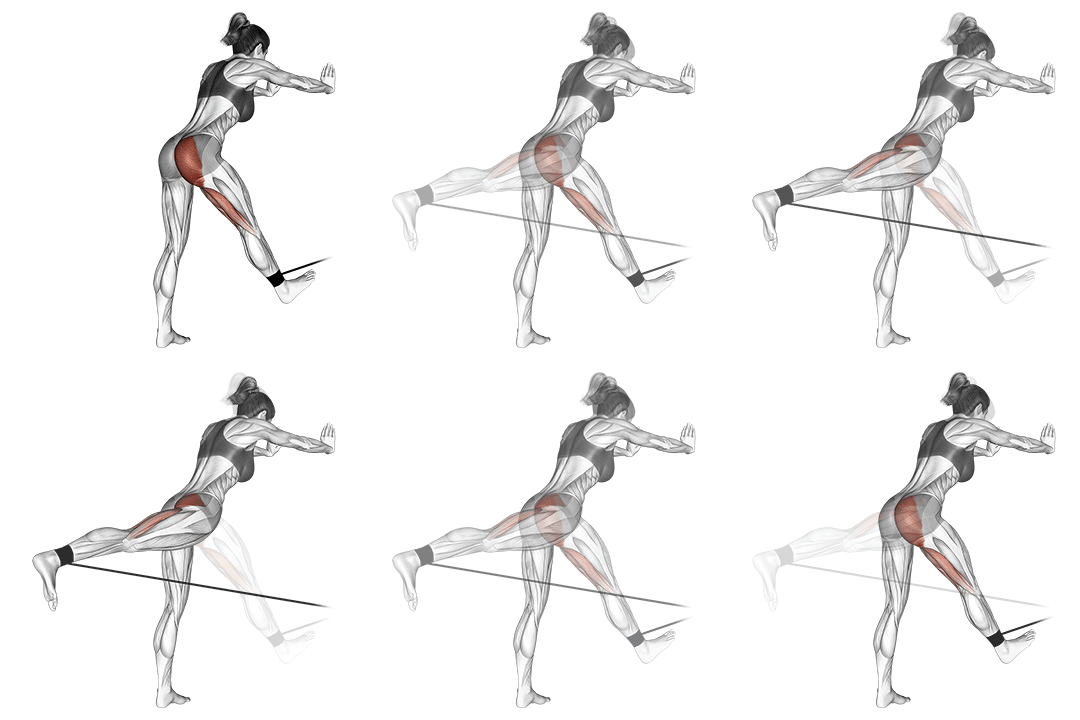
10. Band Bent-over Hip Extension
47% match- Glutes
- Band
- Beginner
- Isolation
How to perform this exercise
- Attach the band to a sturdy anchor point at ankle height.
- Stand facing away from the anchor point with your feet shoulder-width apart.
- Step back to create tension in the band, keeping your knees slightly bent.
- Hinge at the hips and lean forward, maintaining a neutral spine.
- Extend your right leg straight back, squeezing your glutes at the top.
- Lower your right leg back down and repeat with the left leg.
- Continue alternating legs for the desired number of repetitions.
Sets and reps: 3 sets of 10 to 15 reps on each side.
Why this matches
- Primary muscle: glutes, the same as the Band Lying Hip Internal Rotation
- Equipment: a band, the same as the Band Lying Hip Internal Rotation
- Body position: standing, not lying on your back
- Balance: harder to stay steady on than the Band Lying Hip Internal Rotation
Why You Might Need a Band Lying Hip Internal Rotation Alternative
You might substitute Band Lying Hip Internal Rotation for pain, limited equipment, or to progress load and motor control. Lying band work stresses hip internal rotators in an isolated, short-lever position; alternatives change moment arm, load, or range to reduce irritation or increase strength. For rehab pick isometric or mid-range drills (hold at 15–30° IR) and brace your core to prevent lumbar compensation. For strength, pick standing or cable variations that permit progressive overload and longer muscle tension. Technique cue: avoid lumbar rotation, keep pelvis fixed and feel activation in the anterior glute med and TFL rather than the quad or lower back.
How to Choose the Right Band Lying Hip Internal Rotation Substitute
Select a substitute based on pain, training goal, and movement control. If pain limits ROM, choose an isometric hold or assisted supine drill to keep hip torque low; cue: gently contract hip internal rotators without exceeding 30° internal rotation. For strength, pick standing or cable options that let you increase resistance and work through a larger arc. For motor control, use slow, controlled repetitions with a neutral pelvis and a fixed thigh to maximize anterior glute activation. Also consider single-leg stability and ability to progress load, choose an alternative that preserves hip alignment and progressive overload.
Band Lying Hip Internal Rotation FAQ
What muscles does Band Lying Hip Internal Rotation work?
Band Lying Hip Internal Rotation primarily targets the anterior fibers of the gluteus medius, gluteus minimus, and tensor fasciae latae (TFL). It also recruits hip joint stabilizers and the deep rotator group to maintain femoral head alignment during internal rotation.
What is the best bodyweight alternative to Band Lying Hip Internal Rotation?
A supine active internal-rotation drill works well: lie on your back with knee bent to 90°, rotate the foot inward to produce hip internal rotation while keeping the pelvis flat. Cue: keep the thigh stable and pivot at the hip so you feel the anterior glute med and TFL working.
Find Alternatives for Any Exercise
Search the exercise database and filter the ranked substitutes by the equipment you own.
Similarity scores compare exercise metadata such as movement pattern, muscles, equipment and body position. They are not a safety rating or a check that you own the equipment. Learn about our methodology