

5 Top Alternatives to Exercise Ball One-Leg Diagonal Hamstring Curl
The Exercise Ball One Legged Diagonal Kick Hamstring Curl is done lying face down with a stability ball.
Original Exercise: Exercise Ball One Legged Diagonal Kick Hamstring Curl
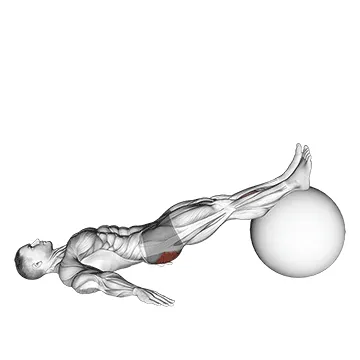
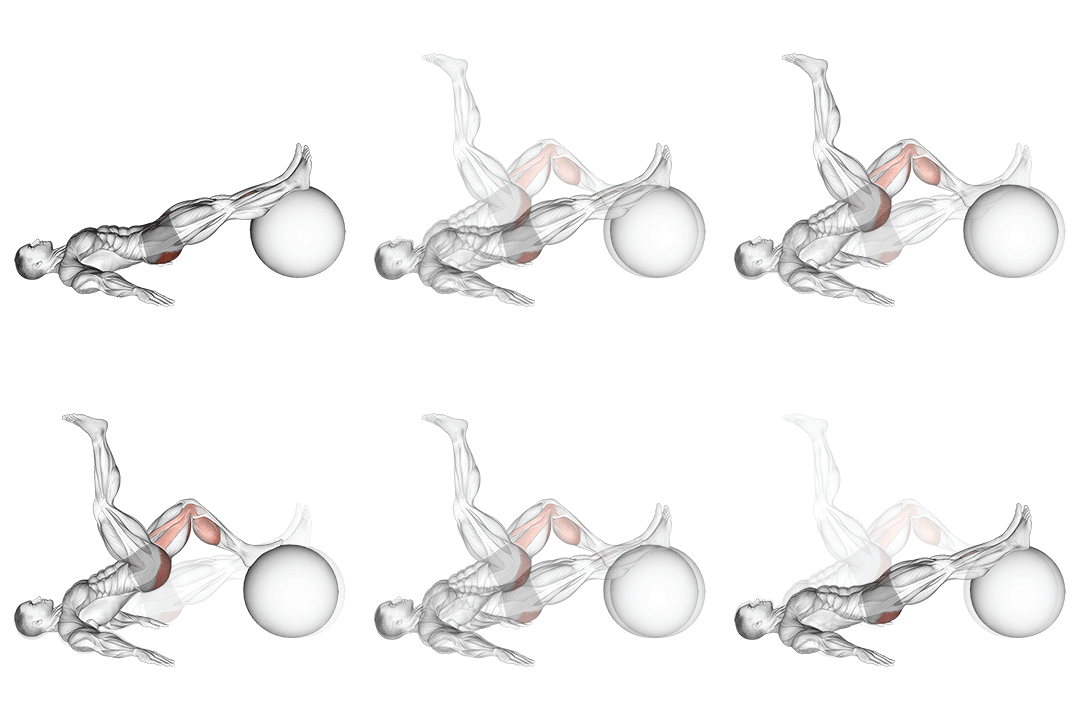
- Primary muscle
- Glutes
- Equipment
- Stability-ball
- Difficulty
- Intermediate
- Type
- Compound
Secondary muscles: Hamstrings, Calves
How to perform Exercise Ball One Legged Diagonal Kick Hamstring Curl
- Start by lying on your back with your legs extended and your heels resting on top of the stability ball.
- Place your arms by your sides for stability.
- Engage your glutes and core muscles to lift your hips off the ground, creating a straight line from your shoulders to your heels.
- Bend your right knee and bring it towards your chest, keeping your left leg extended and your foot flexed.
- Kick your right leg diagonally across your body, extending it fully and engaging your hamstrings.
- Slowly return your right leg to the starting position, maintaining control and stability.
- Repeat the movement with your left leg, alternating sides for the desired number of repetitions.
Exercise Ball One Legged Diagonal Kick Hamstring Curl FAQ
What muscles does Exercise Ball One Legged Diagonal Kick Hamstring Curl work?
It primarily targets the glutes and hamstrings while engaging the erector spinae and core for stabilization. The unilateral diagonal pattern increases hip-extension demand and challenges glute medius for pelvic stability.
Can I build muscle without doing Exercise Ball One Legged Diagonal Kick Hamstring Curl?
Yes. You can build glute and hamstring mass with alternatives that load the same movement patterns, like single-leg RDLs, Nordic curls, and weighted glute bridges. Focus on progressive overload, controlled eccentric reps, and full hip extension to stimulate hypertrophy.
Find Alternatives for Any Exercise
Search the exercise database and filter the ranked substitutes by the equipment you own.