

10 Best Dumbbell Lunges Alternatives for Quad Strength
Dumbbell Lunges are done standing with dumbbells. Ranked closest by our scoring: the Barbell Walking Lunge, the Bodyweight Walking Lunge and the Dumbbell Single Leg Split Squat.
Dumbbell Lunges step you forward one leg at a time, holding a pair of dumbbells at your sides, until your front shin is straight up and down, then push back up through your heel. Dumbbell Lunges are hard to do once the dumbbell rack is bare, so the closest stand-in is the Barbell Walking Lunge, loading the same forward step through a bar on your back. With nothing to load, the Bodyweight Walking Lunge repeats that step with bodyweight alone.
Updated Ranked by our 12-factor similarity model How it works
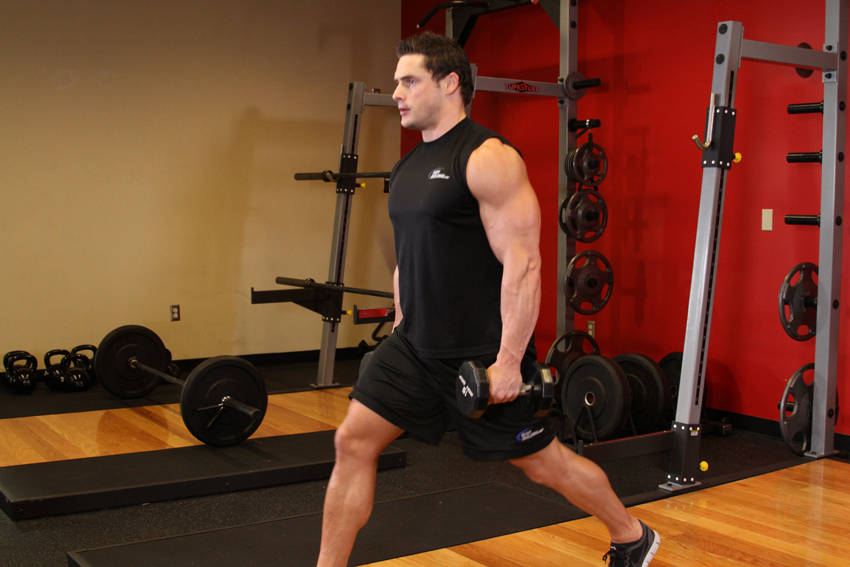
Original Exercise: Dumbbell Lunges
- Primary muscle
- Quads
- Equipment
- Dumbbell
- Difficulty
- Intermediate
- Type
- Compound
Secondary muscles: Calves, Glutes, Hamstrings
How to perform Dumbbell Lunges
- Stand with your torso upright holding two dumbbells in your hands by your sides. This will be your starting position.
- Step forward with your right leg around 2 feet or so from the foot being left stationary behind and lower your upper body down, while keeping the torso upright and maintaining balance. Inhale as you go down. Note: As in the other exercises, do not allow your knee to go forward beyond your toes as you come down, as this will put undue stress on the knee joint. Make sure that you keep your front shin perpendicular to the ground.
- Using mainly the heel of your foot, push up and go back to the starting position as you exhale.
- Repeat the movement for the recommended amount of repetitions and then perform with the left leg.
Ranked Dumbbell Lunges Alternatives
10 substitutes, ranked by how closely each one matches Dumbbell Lunges on movement pattern, muscles worked, equipment and body position. The higher the score, the less you change. Open "How to perform this exercise" on a card for the steps; every card title links to that exercise's own alternatives page.
Best match 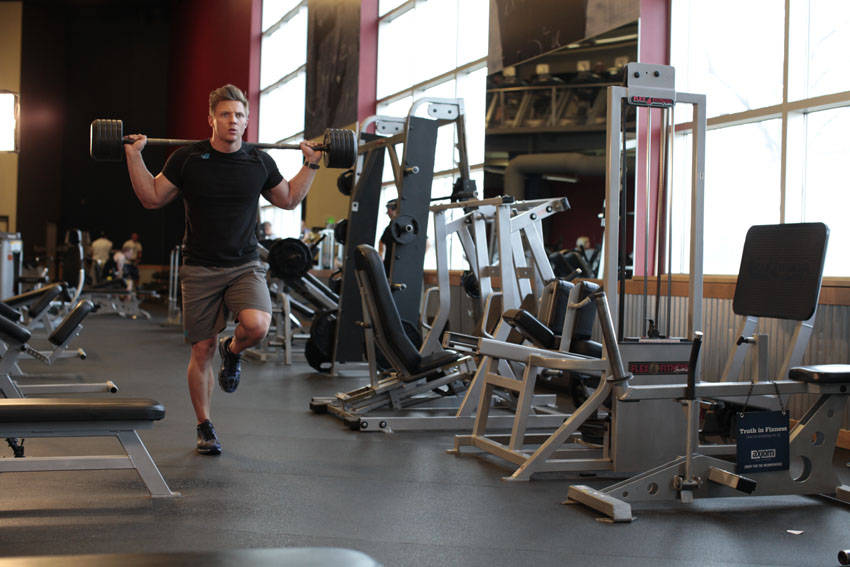
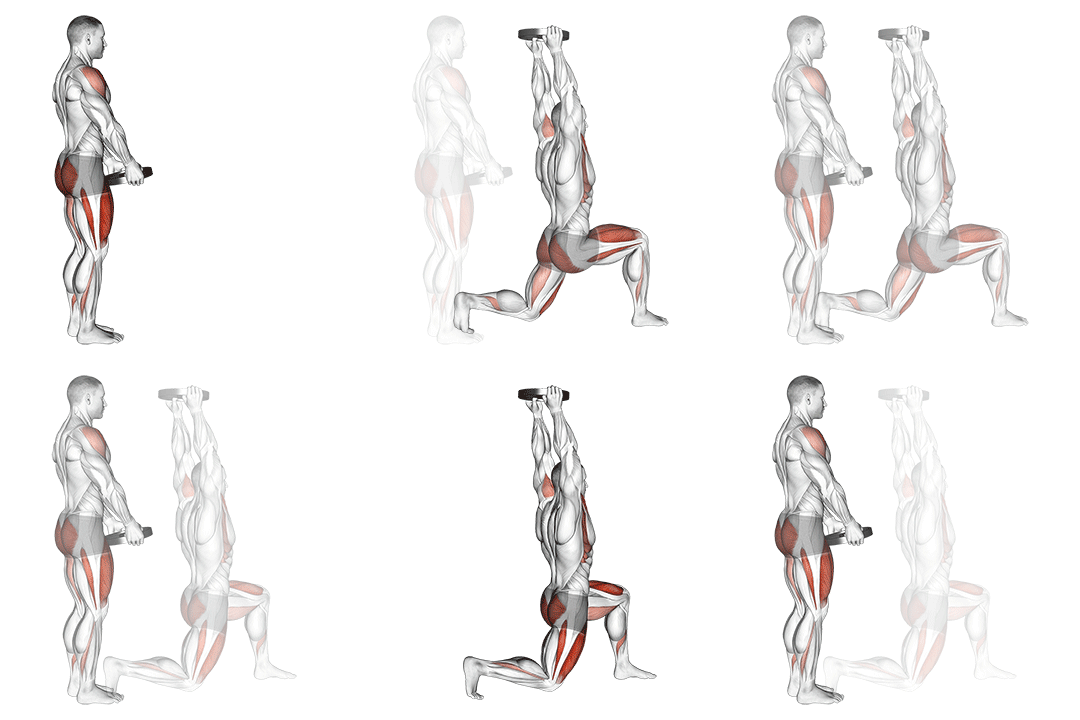
1. Barbell Walking Lunge
95% match- Quads
- Barbell
- Intermediate
- Compound
A good swap when you have a barbell to work with, and it still works the quads.
How to perform this exercise
- Begin standing with your feet shoulder width apart and a barbell across your upper back.
- Step forward with one leg, flexing the knees to drop your hips. Descend until your rear knee nearly touches the ground. Your posture should remain upright, and your front knee should stay above the front foot.
- Drive through the heel of your lead foot and extend both knees to raise yourself back up.
- Step forward with your rear foot, repeating the lunge on the opposite leg.
Sets and reps: 3 or 4 sets of 6 to 10 reps on each side.
Why this matches
- Movement: forward lunge, the same as Dumbbell Lunges
- Primary muscle: quads, the same as Dumbbell Lunges
- Equipment: free weights, the same as Dumbbell Lunges
- Body position: standing, the same as Dumbbell Lunges
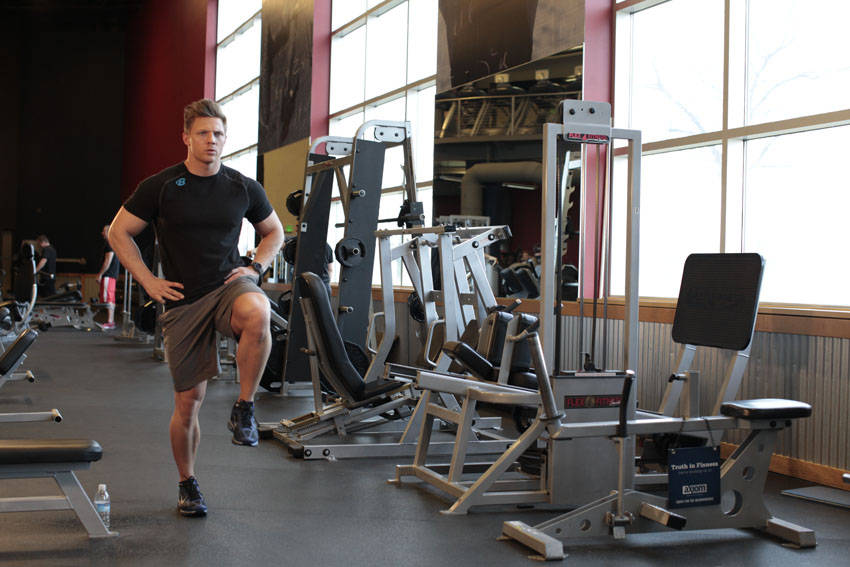
2. Bodyweight Walking Lunge
89% match- Quads
- Bodyweight
- Intermediate
- Compound
Use this when you have nothing to train with, because it works the quads with bodyweight alone.
How to perform this exercise
- Begin standing with your feet shoulder width apart and your hands on your hips.
- Step forward with one leg, flexing the knees to drop your hips. Descend until your rear knee nearly touches the ground. Your posture should remain upright, and your front knee should stay above the front foot.
- Drive through the heel of your lead foot and extend both knees to raise yourself back up.
- Step forward with your rear foot, repeating the lunge on the opposite leg.
Sets and reps: 3 or 4 sets of 6 to 10 reps on each side.
Why this matches
- Movement: forward lunge, the same as Dumbbell Lunges
- Primary muscle: quads, the same as Dumbbell Lunges
- Equipment: bodyweight only, not free weights
- Body position: standing, the same as Dumbbell Lunges
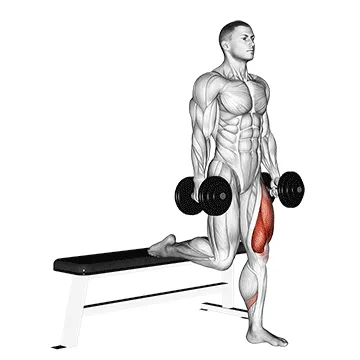
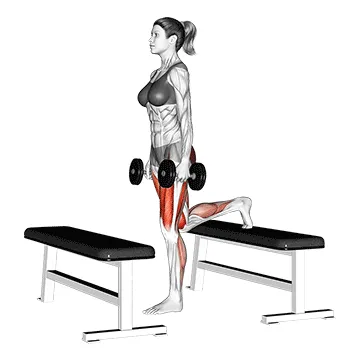
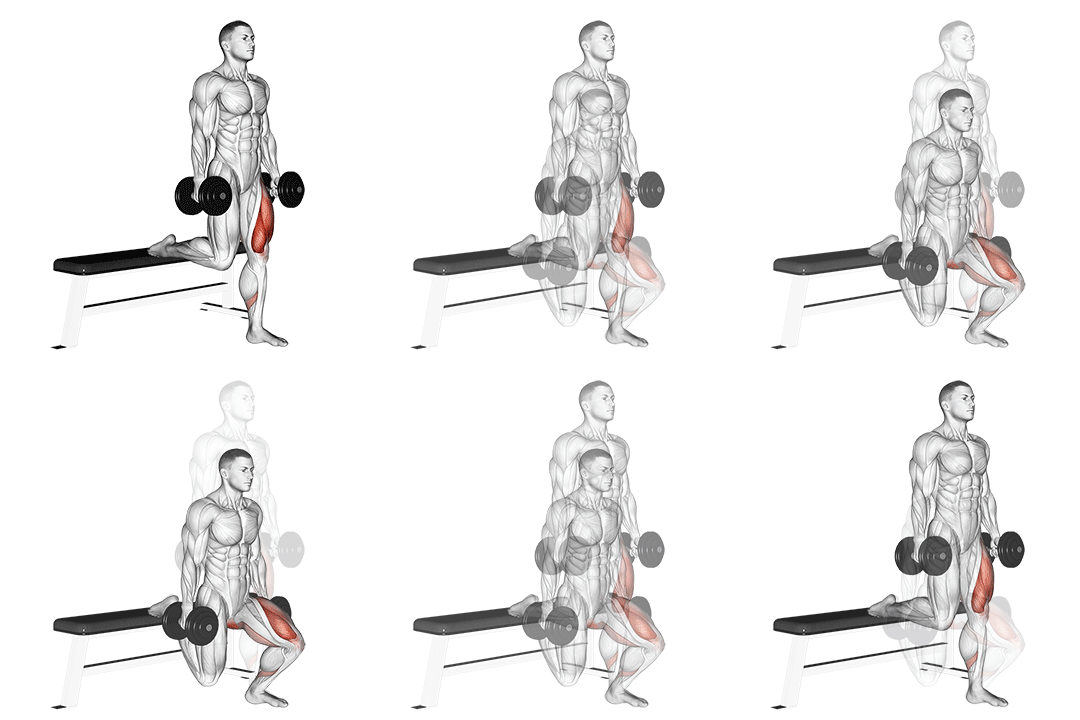
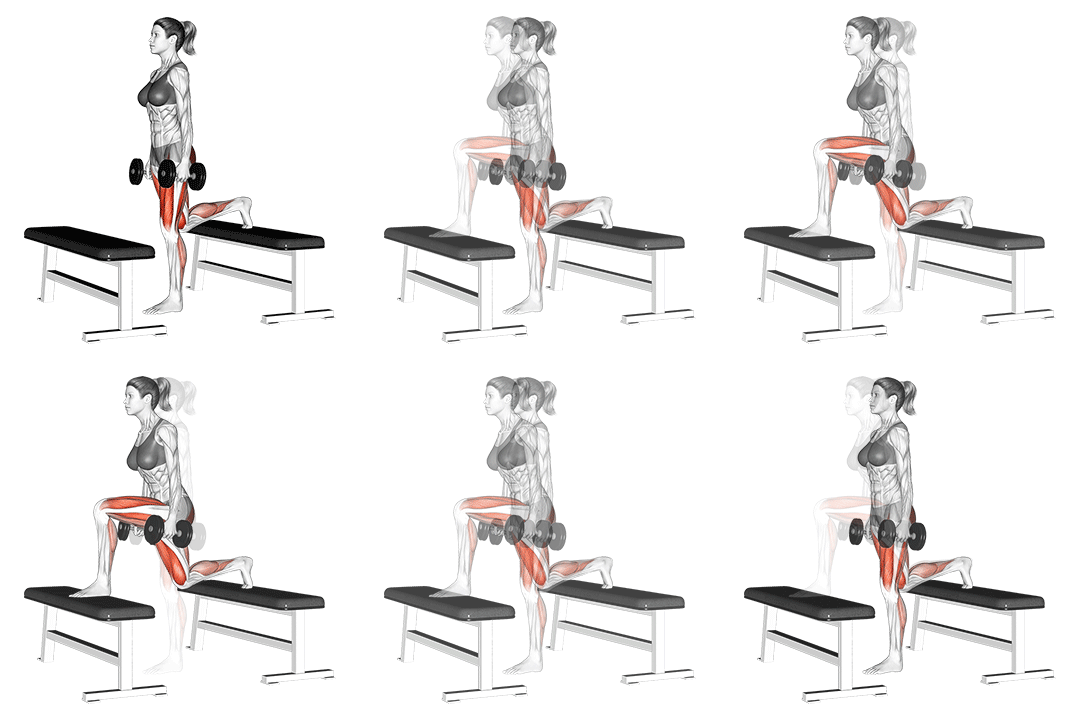
3. Dumbbell Single Leg Split Squat
87% match- Quads
- Dumbbell
- Intermediate
- Compound
It uses the same equipment and still works the quads.
How to perform this exercise
- Stand with your feet shoulder-width apart, holding a dumbbell in each hand.
- Take a step forward with one foot and position your feet so that your front foot is flat on the ground and your back foot is elevated on a bench or step.
- Lower your body by bending your front knee and hip, keeping your back knee slightly bent and your back heel off the ground.
- Continue lowering until your front thigh is parallel to the ground, then push through your front heel to return to the starting position.
- Repeat for the desired number of repetitions, then switch legs and repeat.
Sets and reps: 3 to 5 sets of 5 to 8 reps on each side.
Why this matches
- Primary muscle: quads, the same as Dumbbell Lunges
- Equipment: free weights, the same as Dumbbell Lunges
- Body position: standing, the same as Dumbbell Lunges
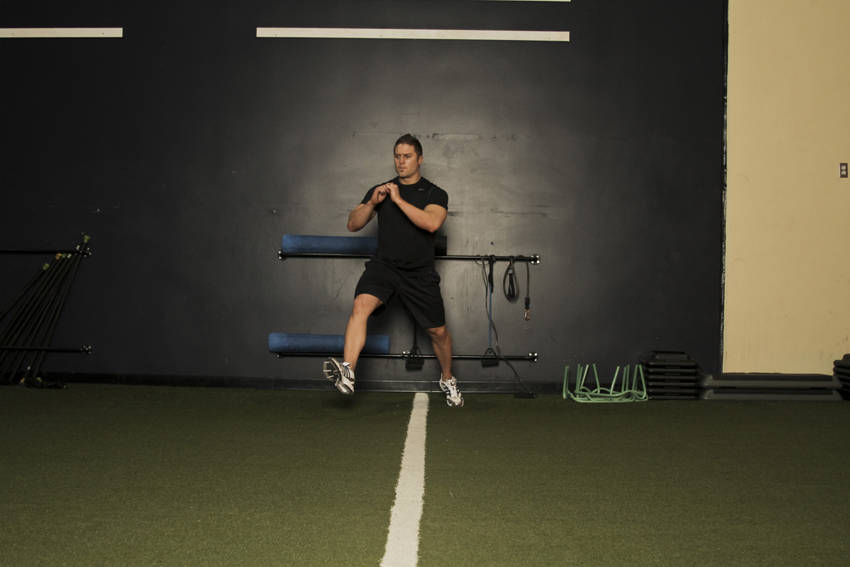
4. Alternate Leg Diagonal Bound
84% match- Quads
- Bodyweight
- Intermediate
- Compound
How to perform this exercise
- Assume a comfortable stance with one foot slightly in front of the other.
- Begin by pushing off with the front leg, driving the opposite knee forward and as high as possible before landing. Attempt to cover as much distance to each side with each bound.
- It may help to use a line on the ground to guage distance from side to side.
- Repeat the sequence with the other leg.
Sets and reps: 3 or 4 sets of 6 to 10 reps on each side.
Why this matches
- Primary muscle: quads, the same as Dumbbell Lunges
- Equipment: bodyweight only, not free weights
- Body position: standing, the same as Dumbbell Lunges
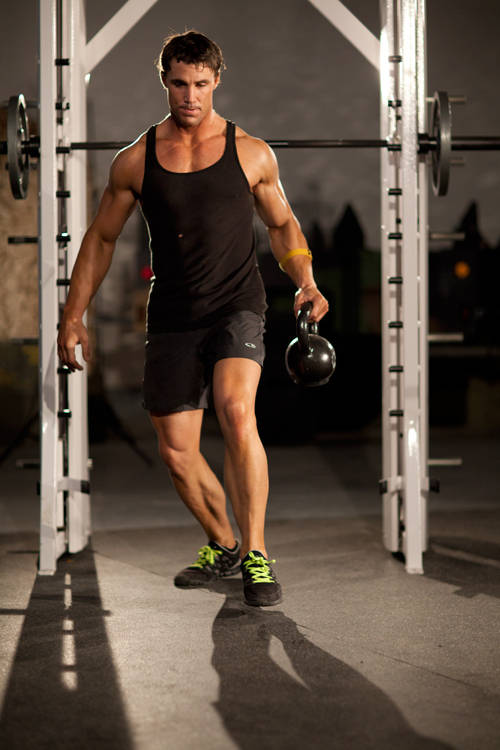
5. Lunge Pass Through
84% match- Hamstrings
- Kettlebell
- Intermediate
- Compound
A looser match: it works the hamstrings rather than the quads.
How to perform this exercise
- Stand with your torso upright holding a kettlebell in your right hand. This will be your starting position.
- Step forward with your left foot and lower your upper body down by flexing the hip and the knee, keeping the torso upright. Lower your back knee until it nearly touches the ground.
- As you lunge, pass the kettlebell under your front leg to your opposite hand.
- Pressing through the heel of your foot, return to the starting position.
- Repeat the movement for the recommended amount of repetitions, alternating legs.
Sets and reps: 3 or 4 sets of 6 to 10 reps on each side.
Why this matches
- Movement: forward lunge, the same as Dumbbell Lunges
- Primary muscle: hamstrings, not quads
- Equipment: free weights, the same as Dumbbell Lunges
- Body position: standing, the same as Dumbbell Lunges
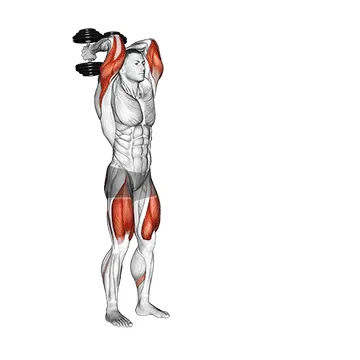
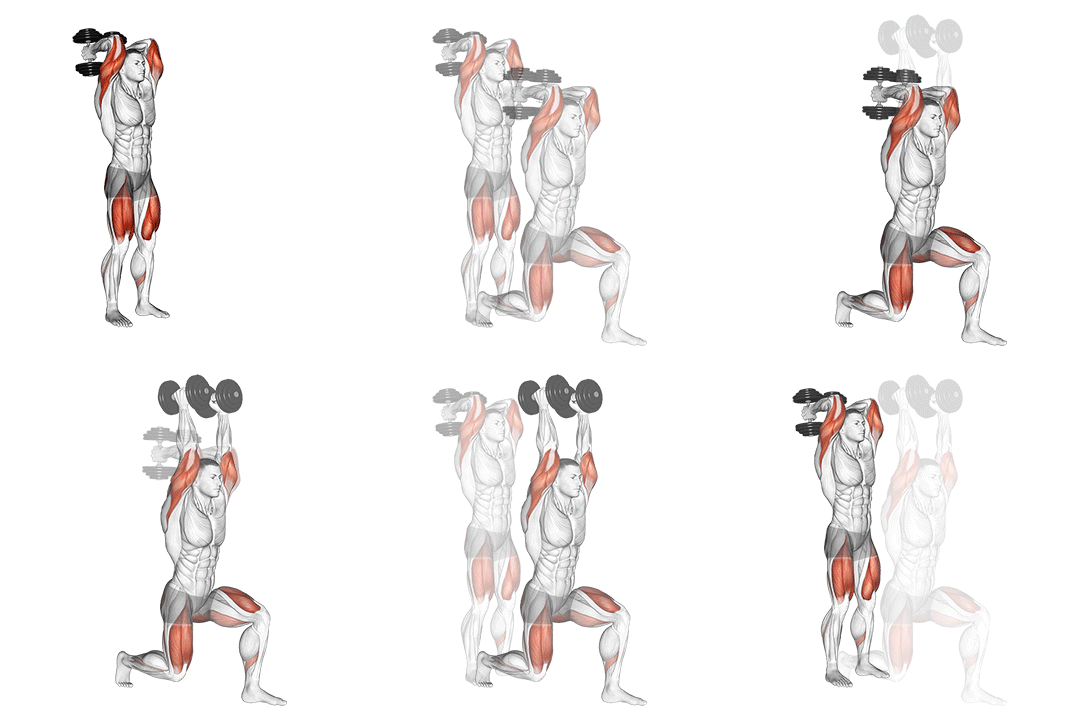
- Triceps
- Dumbbell
- Intermediate
- Compound
A looser match: it uses the same equipment, but it works the triceps rather than the quads.
How to perform this exercise
- Stand with your feet shoulder-width apart, holding a dumbbell in each hand.
- Take a step forward with your right foot, lowering your body into a lunge position.
- Keep your back straight and your chest up.
- Extend your arms straight overhead, keeping your elbows close to your ears.
- Lower the dumbbells behind your head by bending your elbows.
- Pause for a moment, then straighten your arms to return to the starting position.
- Repeat the movement for the desired number of repetitions, then switch legs and repeat.
Sets and reps: 3 or 4 sets of 6 to 10 reps on each side.
Why this matches
- Movement: forward lunge, the same as Dumbbell Lunges
- Primary muscle: triceps, not quads
- Equipment: free weights, the same as Dumbbell Lunges
- Body position: standing, the same as Dumbbell Lunges
7. Dumbbell Step-up Lunge
82% match- Quads
- Dumbbell
- Intermediate
- Compound
How to perform this exercise
- Stand in front of a step or platform with a dumbbell in each hand, palms facing your sides.
- Place your right foot on the step, ensuring your entire foot is on the surface.
- Push through your right heel and lift your body up onto the step, bringing your left foot up as well.
- Once both feet are on the step, lower your left foot back down to the starting position, keeping your right foot on the step.
- Repeat the movement, alternating which foot you step up with each time.
- Continue for the desired number of repetitions.
Sets and reps: 3 or 4 sets of 6 to 10 reps on each side.
Why this matches
- Primary muscle: quads, the same as Dumbbell Lunges
- Equipment: free weights, the same as Dumbbell Lunges
- Body position: standing, the same as Dumbbell Lunges
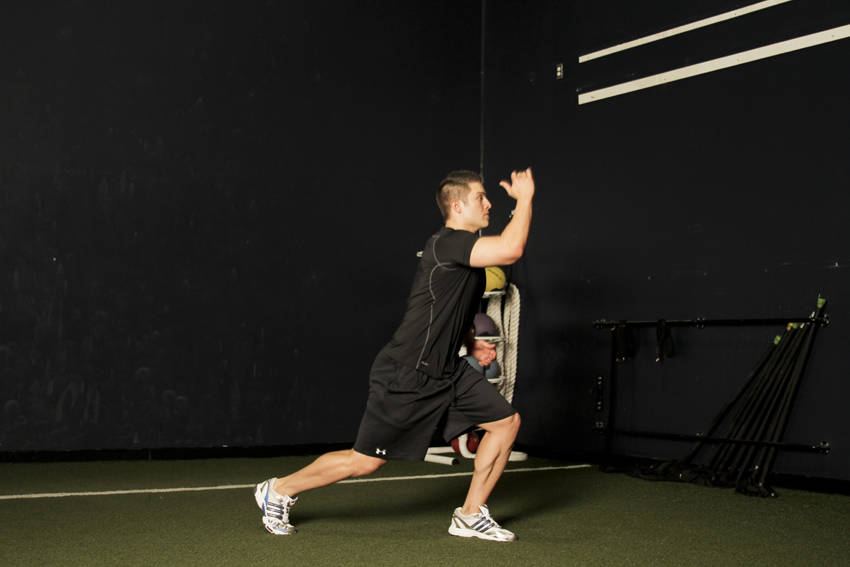
8. Scissors Jump
80% match- Quads
- Bodyweight
- Advanced
- Compound
How to perform this exercise
- Assume a lunge stance position with one foot forward with the knee bent, and the rear knee nearly touching the ground.
- Ensure that the front knee is over the midline of the foot. Extending through both legs, jump as high as possible, swinging your arms to gain lift.
- As you jump as high as you can, switch the position of your legs, moving your front leg to the back and the rear leg to the front.
- As you land, absorb the impact through the legs by adopting the lunge position, and repeat.
Sets and reps: 3 or 4 sets of 6 to 10 reps on each side.
Why this matches
- Primary muscle: quads, the same as Dumbbell Lunges
- Equipment: bodyweight only, not free weights
- Body position: standing, the same as Dumbbell Lunges
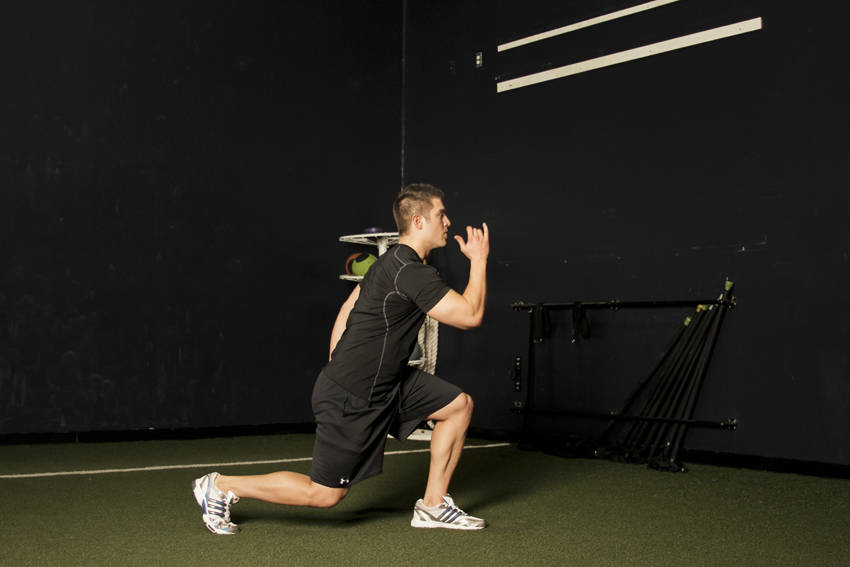
9. Split Jump
80% match- Quads
- Bodyweight
- Intermediate
- Compound
How to perform this exercise
- Assume a lunge stance position with one foot forward with the knee bent, and the rear knee nearly touching the ground.
- Ensure that the front knee is over the midline of the foot.
- Extending through both legs, jump as high as possible, swinging your arms to gain lift.
- As you jump, bring your feet together, and move them back to their initial positions as you land.
- Absorb the impact by reverting back to the starting position.
Sets and reps: 3 or 4 sets of 6 to 10 reps on each side.
Why this matches
- Primary muscle: quads, the same as Dumbbell Lunges
- Equipment: bodyweight only, not free weights
- Body position: standing, the same as Dumbbell Lunges
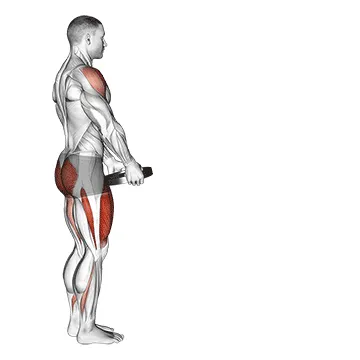
10. Weighted Lunge With Swing
79% match- Glutes
- Weighted
- Intermediate
- Compound
How to perform this exercise
- Stand with your feet shoulder-width apart, holding a weight in each hand.
- Take a step forward with your right foot, lowering your body into a lunge position.
- As you lunge forward, swing the weights forward and upward, keeping your arms straight.
- Push off with your right foot and return to the starting position, swinging the weights back down.
- Repeat with your left foot and continue alternating legs for the desired number of repetitions.
Sets and reps: 3 or 4 sets of 6 to 10 reps on each side.
Why this matches
- Movement: forward lunge, the same as Dumbbell Lunges
- Primary muscle: glutes, not quads
- Equipment: free weights, the same as Dumbbell Lunges
- Body position: standing, the same as Dumbbell Lunges
Why You Might Need a Dumbbell Lunges Alternative
Dumbbell Lunges need a matched pair of dumbbells, which disappears first when a gym gets busy or a home setup stretches only to a bar or nothing. Every swap keeps you on your feet working one leg at a time; what changes is the load you carry and whether you step forward, stay put, step up or jump. The Barbell Walking Lunge moves the load onto your back so your grip stops limiting you and you can keep adding plates. The Bodyweight Walking Lunge and the Alternate Leg Diagonal Bound drop the load entirely, one as a walking step and one as an explosive bound to each side. The Dumbbell Single Leg Split Squat keeps the same dumbbells but parks your rear foot on a bench, so you lower and drive on one leg without stepping out and back.
How to Choose the Right Dumbbell Lunges Substitute
If a barbell is free, the Barbell Walking Lunge keeps the same forward step and lets you load more once a pair of dumbbells stops being heavy enough. If you still have the dumbbells and a bench to rest your rear foot on, the Dumbbell Single Leg Split Squat works the same quads one leg at a time without the step forward and back. With no equipment at all, the Bodyweight Walking Lunge repeats the same step and shin position using only your bodyweight, which suits a warm up or a lighter day. Once that feels easy, the Split Jump and the Scissors Jump add a jump to the same stance, and the Dumbbell Step-up Lunge keeps the dumbbells but drives up onto a box instead of stepping forward.
Dumbbell Lunges FAQ
Can I train the same muscles at home with no dumbbells?
Yes. The Bodyweight Walking Lunge repeats the same forward step and shin position with no load at all, so it is the simplest home swap. The Alternate Leg Diagonal Bound trades the walking step for an explosive bound from leg to leg, still working your quads, and it asks more of your balance once the walking version feels easy.
What should I do if all I have is a barbell?
Take the Barbell Walking Lunge. It keeps the same forward step and the same upright torso, just loaded across your back instead of held at your sides, so you can keep adding plates once a pair of dumbbells stops being enough weight.
How do I make a bodyweight lunge swap more demanding?
Add a jump. The Split Jump and the Scissors Jump turn the same standing lunge stance into an explosive movement once the walking versions feel easy. Land soft and reset your stance each rep rather than chasing height early on.
Which swap uses the exact same pair of dumbbells?
The Split Squat rests your rear foot on a bench and works one leg in place, and the Step-up Lunge drives you up onto a step or box, so both need one extra piece of furniture; pick whichever you have the bench or box and the balance for.
Find Alternatives for Any Exercise
Search the exercise database and filter the ranked substitutes by the equipment you own.
Similarity scores compare exercise metadata such as movement pattern, muscles, equipment and body position. They are not a safety rating or a check that you own the equipment. Learn about our methodology