

10 Best Dumbbell Supported Squat Alternatives for Quad Development
The Dumbbell Supported Squat is done standing with dumbbells. Ranked closest by our scoring: the Barbell Squat, Speed Squats and the Squat With Bands.
Updated Ranked by our 12-factor similarity model How it works
Original Exercise: Dumbbell Supported Squat
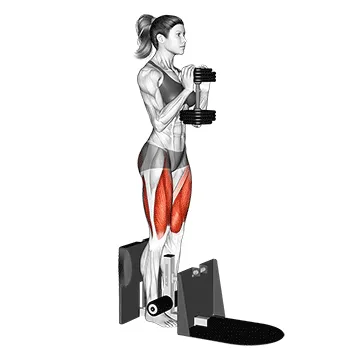
- Primary muscle
- Quads
- Equipment
- Dumbbell
- Difficulty
- Intermediate
- Type
- Compound
Secondary muscles: Glutes, Hamstrings, Calves
How to perform Dumbbell Supported Squat
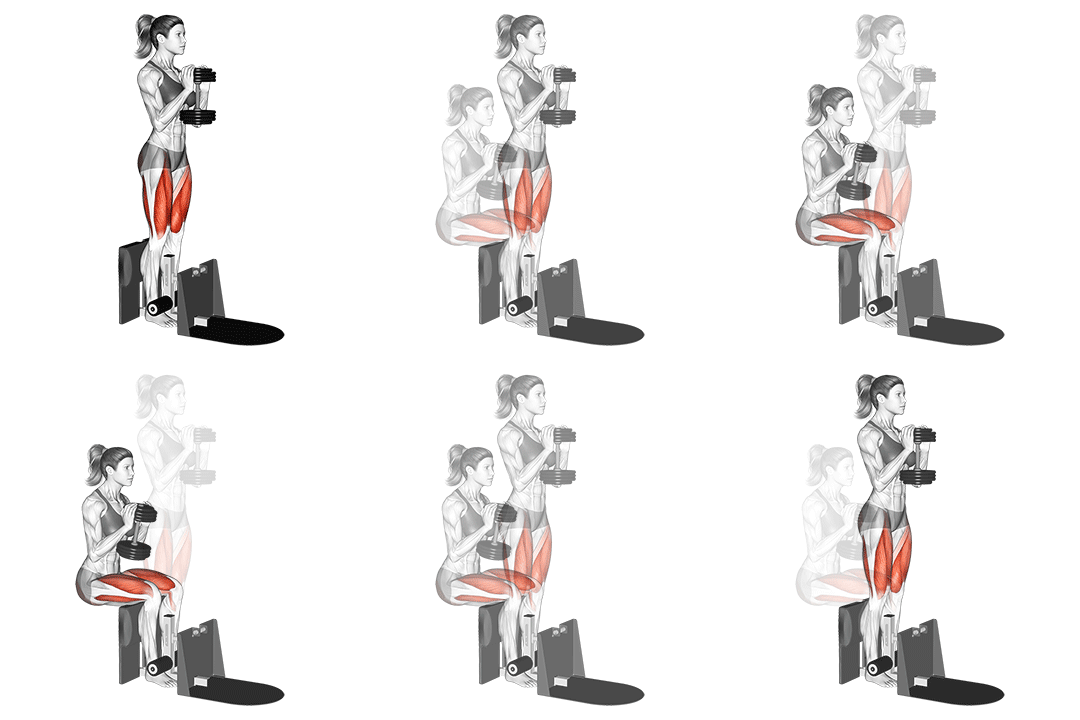
- Stand with your feet shoulder-width apart, holding a dumbbell in each hand at your sides.
- Keeping your chest up and core engaged, slowly lower your body down by bending your knees and pushing your hips back.
- Continue lowering until your thighs are parallel to the ground, or as low as you can comfortably go.
- Pause for a moment at the bottom, then push through your heels to return to the starting position.
- Repeat for the desired number of repetitions.
Ranked Dumbbell Supported Squat Alternatives
10 substitutes, ranked by how closely each one matches the Dumbbell Supported Squat on movement pattern, muscles worked, equipment and body position. The higher the score, the less you change. Open "How to perform this exercise" on a card for the steps; every card title links to that exercise's own alternatives page.
Best match 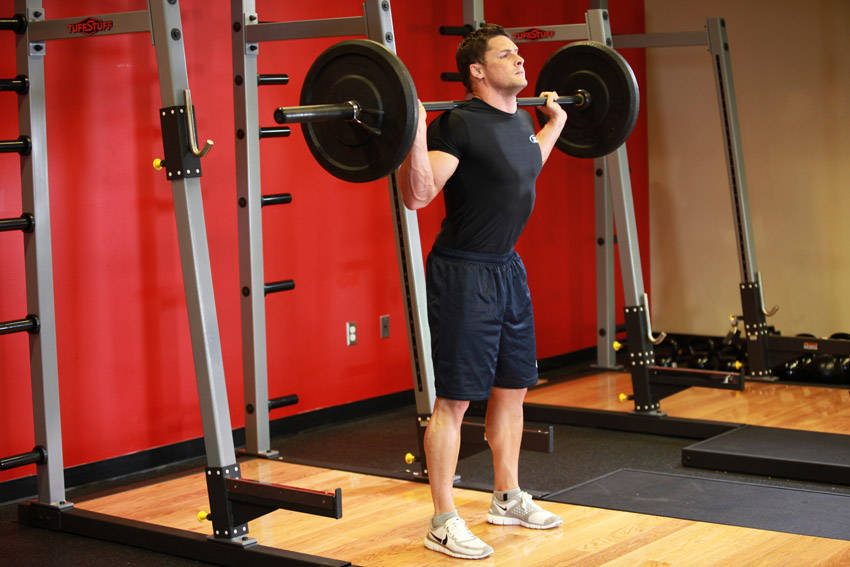
1. Barbell Squat
95% match- Quads
- Barbell
- Intermediate
- Compound
A good swap when you have a barbell to work with, and it still works the quads.
How to perform this exercise
- This exercise is best performed inside a squat rack for safety purposes. To begin, first set the bar on a rack to just below shoulder level. Once the correct height is chosen and the bar is loaded, step under the bar and place the back of your shoulders (slightly below the neck) across it.
- Hold on to the bar using both arms at each side and lift it off the rack by first pushing with your legs and at the same time straightening your torso.
- Step away from the rack and position your legs using a shoulder width medium stance with the toes slightly pointed out. Keep your head up at all times and also maintain a straight back. This will be your starting position. (Note: For the purposes of this discussion we will use the medium stance described above which targets overall development; however you can choose any of the three stances discussed in the foot stances section).
- Begin to slowly lower the bar by bending the knees and hips as you maintain a straight posture with the head up. Continue down until the angle between the upper leg and the calves becomes slightly less than 90-degrees. Inhale as you perform this portion of the movement. Tip: If you performed the exercise correctly, the front of the knees should make an imaginary straight line with the toes that is perpendicular to the front. If your knees are past that imaginary line (if they are past your toes) then you are placing undue stress on the knee and the exercise has been performed incorrectly.
- Begin to raise the bar as you exhale by pushing the floor with the heel of your foot as you straighten the legs again and go back to the starting position.
- Repeat for the recommended amount of repetitions.
Sets and reps: 3 or 4 sets of 6 to 10 reps.
Why this matches
- Movement: two-legged squat, the same as the Dumbbell Supported Squat
- Primary muscle: quads, the same as the Dumbbell Supported Squat
- Equipment: free weights, the same as the Dumbbell Supported Squat
- Body position: standing, the same as the Dumbbell Supported Squat
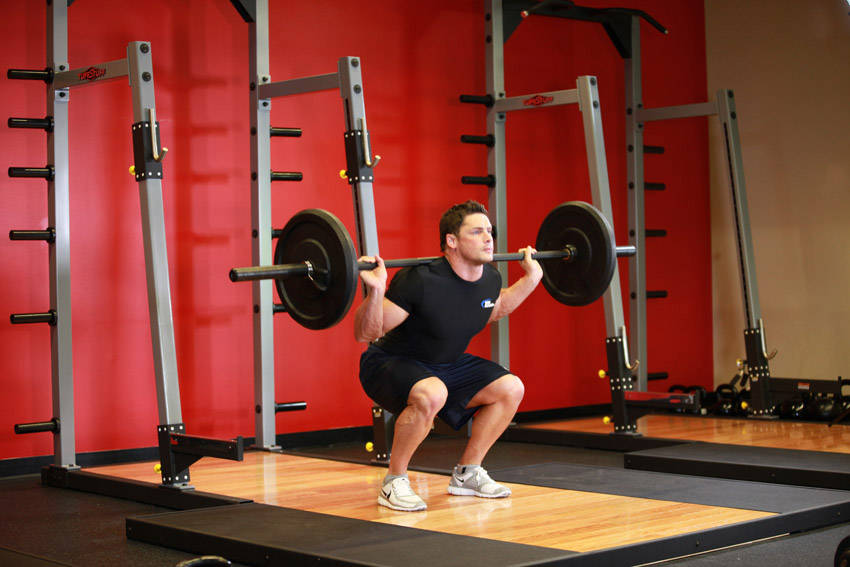
2. Speed Squats
95% match- Quads
- Barbell
- Intermediate
- Compound
How to perform this exercise
- This exercise is best performed inside a squat rack for safety purposes. To begin, first set the bar on a rack that best matches your height. Once the correct height is chosen and the bar is loaded, step under the bar and place the back of your shoulders (slightly below the neck) across it.
- Hold on to the bar using both arms at each side and lift it off the rack by first pushing with your legs and at the same time straightening your torso.
- Step away from the rack and position your legs using a shoulder width medium stance with the toes slightly pointed out. Keep your head up at all times as looking down will get you off balance and also maintain a straight back. This will be your starting position. (Note: For the purposes of this discussion we will use the medium stance which targets overall development; however you can choose any of the three stances discussed in the foot stances section).
- Begin to lower the bar by bending the knees as you maintain a straight posture with the head up. Continue down until the angle between the upper leg and the calves becomes slightly less than 90-degrees (which is the point in which the upper legs are below parallel to the floor). Inhale as you perform this portion of the movement. Tip: If you performed the exercise correctly, the front of the knees should make an imaginary straight line with the toes that is perpendicular to the front. If your knees are past that imaginary line (if they are past your toes) then you are placing undue stress on the knee and the exercise has been performed incorrectly.
- Begin to raise the bar as fast as possible without involving momentum as you exhale by pushing the floor with the heel of your foot mainly as you straighten the legs again and go back to the starting position. Note: You should perform these exercises as fast as possible but without breaking perfect form and without involving momentum.
- Repeat for the recommended amount of repetitions.
Sets and reps: 3 or 4 sets of 6 to 10 reps.
Why this matches
- Movement: two-legged squat, the same as the Dumbbell Supported Squat
- Primary muscle: quads, the same as the Dumbbell Supported Squat
- Equipment: free weights, the same as the Dumbbell Supported Squat
- Body position: standing, the same as the Dumbbell Supported Squat
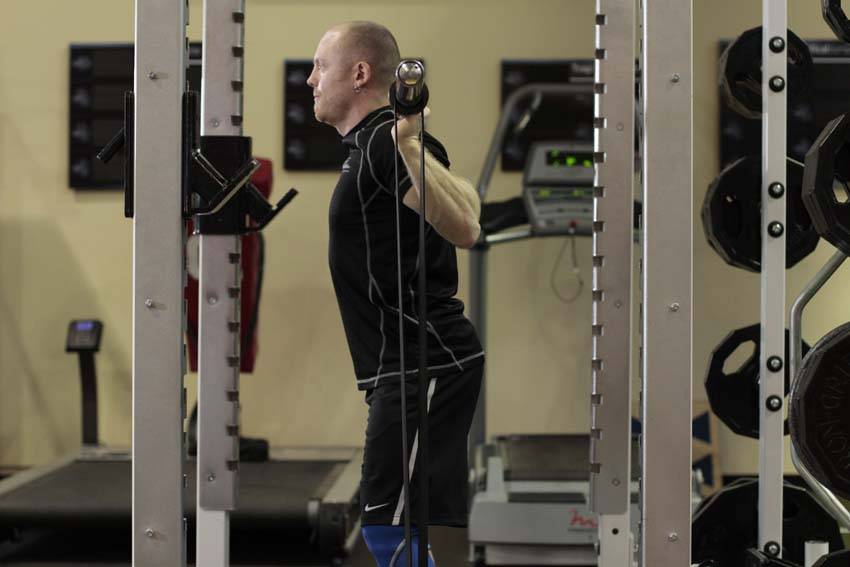
3. Squat With Bands
94% match- Quads
- Barbell
- Intermediate
- Compound
How to perform this exercise
- Set up the bands on the sleeves, secured to either band pegs, the rack, or dumbbells so that there is appropriate tension.
- Begin by stepping under the bar and placing it across the back of the shoulders. Squeeze your shoulder blades together and rotate your elbows forward, attempting to bend the bar across your shoulders. Remove the bar from the rack, creating a tight arch in your lower back, and step back into position. Place your feet wide for more emphasis on the back, glutes, adductors, and hamstrings. Keep your head facing forward.
- With your back, shoulders, and core tight, push your knees and butt out and you begin your descent. Sit back with your hips as much as possible. Ideally, your shins should be perpendicular to the ground. Lower bar position necessitates a greater torso lean to keep the bar over the heels. Continue until you break parallel, which is defined as the crease of the hip being in line with the top of the knee.
- Keeping the weight on your heels and pushing your feet and knees out, drive upward as you lead the movement with your head. Continue upward, maintaining tightness head to toe, until you have returned to the starting position.
Sets and reps: 3 or 4 sets of 6 to 10 reps.
Why this matches
- Movement: two-legged squat, the same as the Dumbbell Supported Squat
- Primary muscle: quads, the same as the Dumbbell Supported Squat
- Equipment: free weights, the same as the Dumbbell Supported Squat
- Body position: standing, the same as the Dumbbell Supported Squat
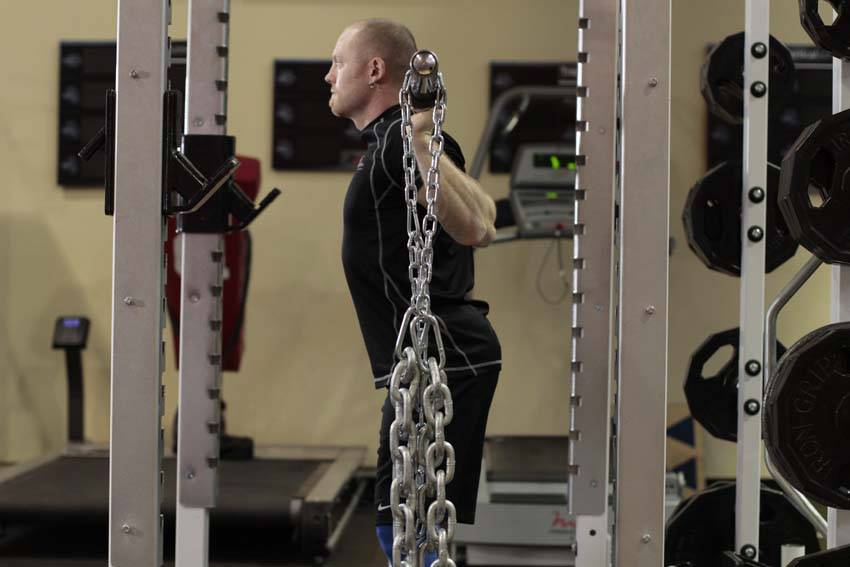
4. Squat With Chains
94% match- Quads
- Barbell
- Intermediate
- Compound
How to perform this exercise
- To set up the chains, begin by looping the leader chain over the sleeves of the bar. The heavy chain should be attached using a snap hook. Adjust the length of the lead chain so that a few links are still on the floor at the top of the movement.
- Begin by stepping under the bar and placing it across the back of the shoulders. Squeeze your shoulder blades together and rotate your elbows forward, attempting to bend the bar across your shoulders. Remove the bar from the rack, creating a tight arch in your lower back, and step back into position. Place your feet wide for more emphasis on the back, glutes, adductors, and hamstrings. Keep your head facing forward.
- With your back, shoulders, and core tight, push your knees and butt out and you begin your descent. Sit back with your hips as much as possible. Ideally, your shins should be perpendicular to the ground. Lower bar position necessitates a greater torso lean to keep the bar over the heels. Continue until you break parallel, which is defined as the crease of the hip being in line with the top of the knee.
- Keeping the weight on your heels and pushing your feet and knees out, drive upward as you lead the movement with your head. Continue upward, maintaining tightness head to toe, until you have returned to the starting position.
Sets and reps: 3 or 4 sets of 6 to 10 reps.
Why this matches
- Movement: two-legged squat, the same as the Dumbbell Supported Squat
- Primary muscle: quads, the same as the Dumbbell Supported Squat
- Equipment: free weights, the same as the Dumbbell Supported Squat
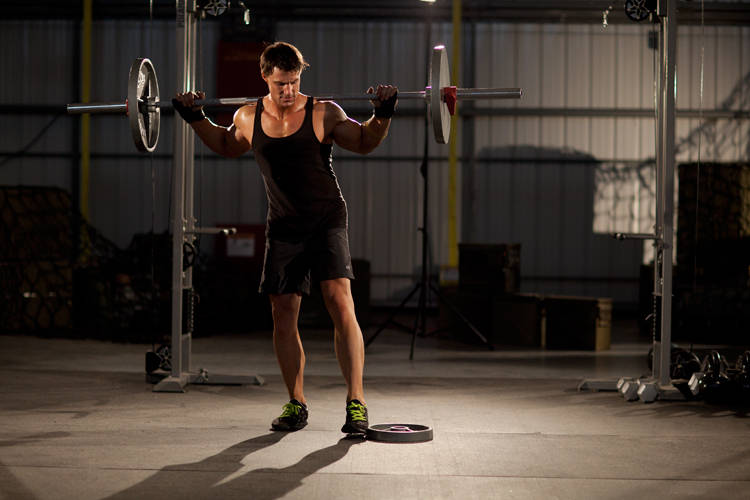
5. Squat With Plate Movers
94% match- Quads
- Barbell
- Intermediate
- Compound
How to perform this exercise
- To begin, first set the bar on a rack to just below shoulder level. Position a weight plate on the ground a couple feet back from the rack. Once the bar is loaded, step under it and place the back of your shoulders across it.
- Hold on to the bar with both hands and lift it off the rack by first pushing with your legs and at the same time straighten your torso.
- Step away from the rack and adopt a wide stance with the toes slightly pointed out, with one foot on the weight plate. Keep your head up at all times. This will be your starting position.
- Begin to slowly lower the bar by bending the knees and hips. Continue down until the angle between the upper leg and the calves becomes slightly less than 90-degrees.
- Raise the bar as you exhale by pushing the floor with the heels of your feet as you extend the hips and knees.
- At the top of the movement, side step, bringing your feet together on the opposite side of the plate.
- Using your inside foot, push the weight plate, sliding it across the floor to where you were just standing.
- Place your inside foot on the weight plate, adopting a wide stance for the next repetition.
Sets and reps: 3 or 4 sets of 6 to 10 reps.
Why this matches
- Movement: two-legged squat, the same as the Dumbbell Supported Squat
- Primary muscle: quads, the same as the Dumbbell Supported Squat
- Equipment: free weights, the same as the Dumbbell Supported Squat
- Body position: standing, the same as the Dumbbell Supported Squat
6. Weighted Sissy Squat
92% match- Quads
- Weighted
- Advanced
- Isolation
Pick this when you want a harder version that still works the quads.
How to perform this exercise
- Stand with your feet shoulder-width apart and your toes pointing slightly outward.
- Hold a weight in front of your chest with both hands, or place a barbell across your upper back.
- Keeping your chest up and your core engaged, slowly lower your body down by bending at the knees and hips.
- Continue lowering until your thighs are parallel to the ground or as low as you can comfortably go.
- Pause for a moment at the bottom, then push through your heels to return to the starting position.
- Repeat for the desired number of repetitions.
Sets and reps: 3 sets of 10 to 15 reps.
Why this matches
- Movement: two-legged squat, the same as the Dumbbell Supported Squat
- Primary muscle: quads, the same as the Dumbbell Supported Squat
- Equipment: free weights, the same as the Dumbbell Supported Squat
- Body position: standing, the same as the Dumbbell Supported Squat
- Balance: harder to stay steady on than the Dumbbell Supported Squat
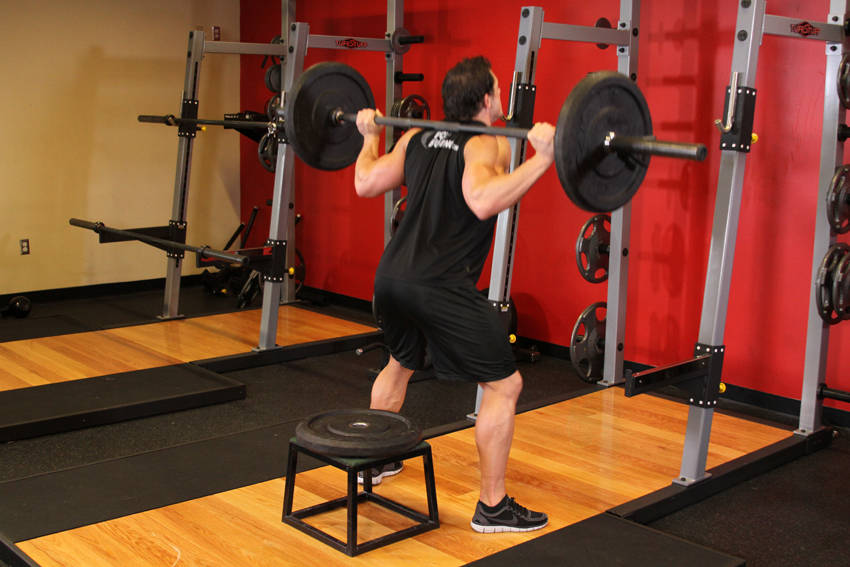
7. Barbell Squat To A Bench
91% match- Quads
- Barbell
- Beginner
- Compound
How to perform this exercise
- This exercise is best performed inside a squat rack for safety purposes. To begin, first place a flat bench or a box behind you. The flat bench is used to teach you to set your hips back and to hit depth.
- Then, set the bar on a rack that best matches your height. Once the correct height is chosen and the bar is loaded, step under the bar and place the back of your shoulders (slightly below the neck) across it.
- Hold on to the bar using both arms at each side and lift it off the rack by first pushing with your legs and at the same time straightening your torso.
- Step away from the rack and position your legs using a shoulder width medium stance with the toes slightly pointed out. Keep your head up at all times as looking down will get you off balance and also maintain a straight back. This will be your starting position. (Note: For the purposes of this discussion we will use the medium stance described above which targets overall development; however you can choose any of the three stances discussed in the foot stances section).
- Begin to slowly lower the bar by bending the knees and sitting your hips back as you maintain a straight posture with the head up. Continue down until you slightly touch the bench behind you. Inhale as you perform this portion of the movement. Tip: If you performed the exercise correctly, the front of the knees should make an imaginary straight line with the toes that is perpendicular to the front. If your knees are past that imaginary line (if they are past your toes) then you are placing undue stress on the knee and the exercise has been performed incorrectly.
- Begin to raise the bar as you exhale by pushing the floor with the heel of your foot as you straighten the legs and extend the hips to go back to the starting position.
- Repeat for the recommended amount of repetitions.
Sets and reps: 3 or 4 sets of 6 to 10 reps.
Why this matches
- Movement: two-legged squat, the same as the Dumbbell Supported Squat
- Primary muscle: quads, the same as the Dumbbell Supported Squat
- Equipment: free weights, the same as the Dumbbell Supported Squat
- Body position: standing, the same as the Dumbbell Supported Squat
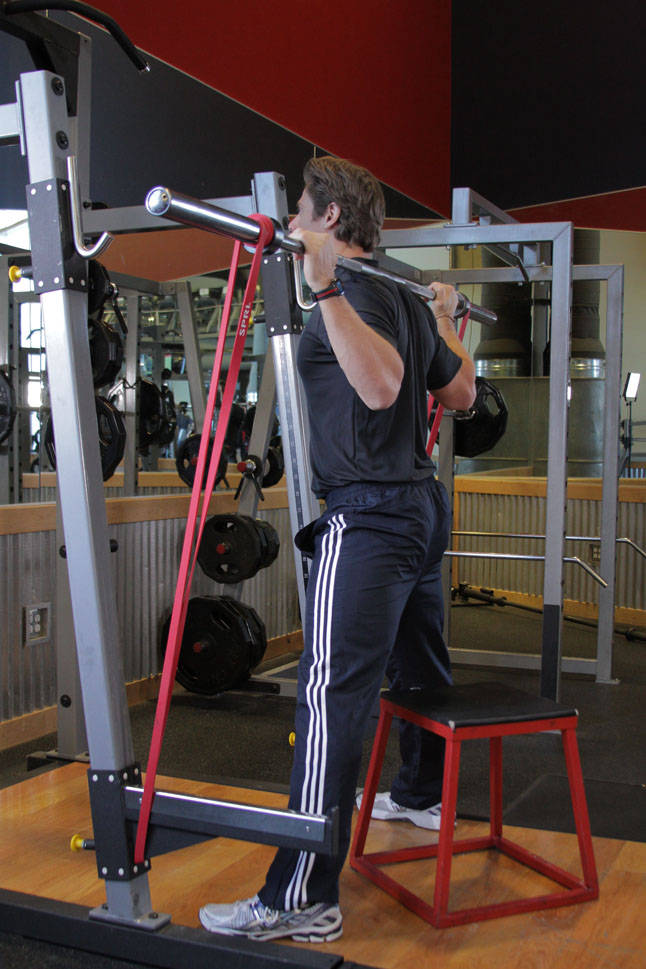
8. Speed Box Squat
91% match- Quads
- Barbell
- Intermediate
- Compound
How to perform this exercise
- Attach bands to the bar that are securely anchored near the ground. You may need to choke the bands to get adequate tension.
- Use a box of an appropriate height for this exercise. Load the bar to a weight that still requires effort, but isn't so heavy that speed is compromised. Typically, that will be between 50-70% of your one rep max.
- Position the bar on your upper back, shoulder blades retracted, back arched and everything tight head to toe. This will be the starting position.
- Unrack the bar and position yourself in front of the box. Sit back with your hips until you are seated on the box, ensuring that you descend under control and don't crash onto the surface.
- Pause briefly, and explode off of the box, extending through the hips and knees.
Sets and reps: 3 or 4 sets of 6 to 10 reps.
Why this matches
- Movement: two-legged squat, the same as the Dumbbell Supported Squat
- Primary muscle: quads, the same as the Dumbbell Supported Squat
- Equipment: free weights, the same as the Dumbbell Supported Squat
- Body position: standing, the same as the Dumbbell Supported Squat
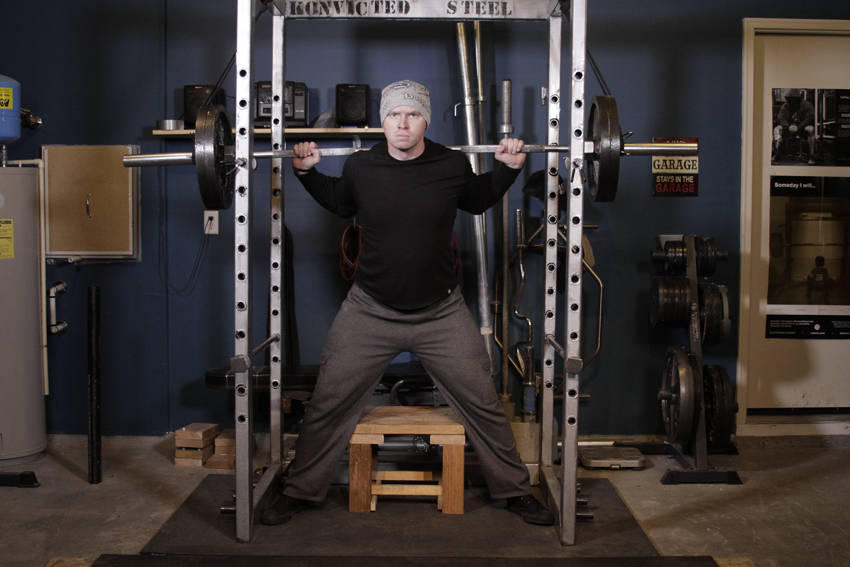
9. Reverse Band Box Squat
91% match- Quads
- Barbell
- Intermediate
- Compound
How to perform this exercise
- Begin in a power rack with a box at the appropriate height behind you. Set up the bands either on band pegs or attached to the top of the rack, ensuring they will be directly above the bar during the squat. Attach the other end to the bar.
- Begin by stepping under the bar and placing it across the back of the shoulders. Squeeze your shoulder blades together and rotate your elbows forward, attempting to bend the bar across your shoulders. Remove the bar from the rack, creating a tight arch in your lower back, and step back into position. Place your feet wider for more emphasis on the back, glutes, adductors, and hamstrings, or closer together for more quad development. Keep your head facing forward.
- With your back, shoulders, and core tight, push your knees and butt out and you begin your descent. Sit back with your hips until you are seated on the box. Ideally, your shins should be perpendicular to the ground. Pause when you reach the box, and relax the hip flexors. Never bounce off of a box.
- Keeping the weight on your heels and pushing your feet and knees out, drive upward off of the box as you lead the movement with your head. Continue upward, maintaining tightness head to toe. Use care to return the barbell to the rack.
Sets and reps: 3 or 4 sets of 6 to 10 reps.
Why this matches
- Movement: two-legged squat, the same as the Dumbbell Supported Squat
- Primary muscle: quads, the same as the Dumbbell Supported Squat
- Equipment: free weights, the same as the Dumbbell Supported Squat
- Body position: standing, the same as the Dumbbell Supported Squat
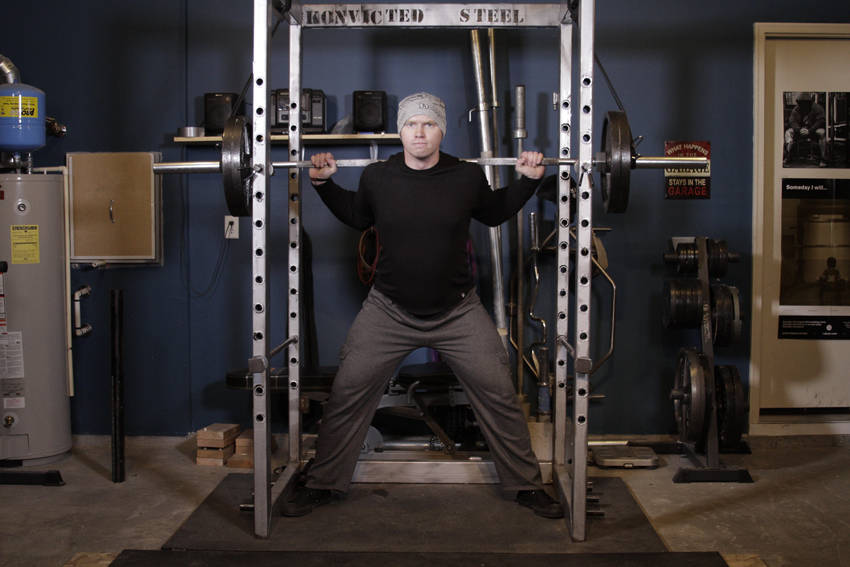
10. Reverse Band Power Squat
90% match- Quads
- Barbell
- Advanced
- Compound
How to perform this exercise
- Begin in a power rack with the pins and bar set at the appropriate height. After loading the bar, attach bands to the top of the rack, using either pegs or the frame itself. Attach the other end of the bands to the bar.
- Begin by stepping under the bar and placing it across the back of the shoulders. Squeeze your shoulder blades together and rotate your elbows forward, attempting to bend the bar across your shoulders. Remove the bar from the rack, creating a tight arch in your lower back, and step back into position. Place your feet wide for more emphasis on the back, glutes, adductors, and hamstrings.
- Keep your head facing forward. With your back, shoulders, and core tight, push your knees and butt out and you begin your descent. Sit back with your hips as much as possible. Ideally, your shins should be perpendicular to the ground. Lower bar position necessitates a greater torso lean to keep the bar over the heels. Continue until you break parallel, which is defined as the crease of the hip being in line with the top of the knee.
- Keeping the weight on your heels and pushing your feet and knees out, drive upward as you lead the movement with your head. Continue upward, maintaining tightness head to toe, until you have returned to the starting position.
Sets and reps: 3 to 5 sets of 5 to 8 reps.
Why this matches
- Movement: two-legged squat, the same as the Dumbbell Supported Squat
- Primary muscle: quads, the same as the Dumbbell Supported Squat
- Equipment: free weights, the same as the Dumbbell Supported Squat
- Body position: standing, the same as the Dumbbell Supported Squat
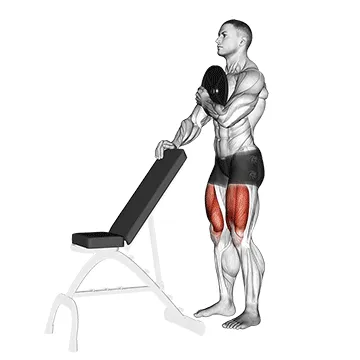
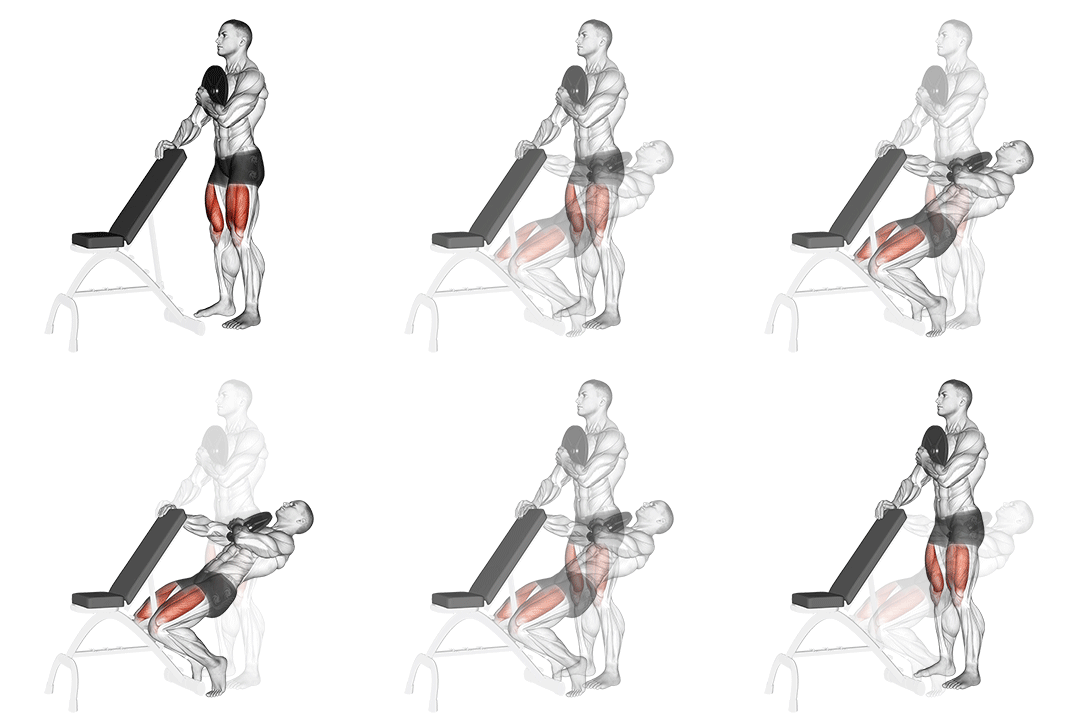
Dumbbell Supported Squat FAQ
What muscles does Dumbbell Supported Squat work?
The Dumbbell Supported Squat primarily targets the quadriceps through knee extension, with secondary activation of glutes and hamstrings for hip control and the core for trunk stabilization. Biomechanically, an upright torso and forward knee travel increase the knee moment arm and shift load onto the quads.
What is the best bodyweight alternative to Dumbbell Supported Squat?
The Bulgarian split squat is the best bodyweight alternative to preserve quad emphasis while reducing spinal load, perform it with an upright torso and a front foot slightly forward to maximize knee flexion. Cue: lower until the front thigh is parallel, keep the knee tracking over toes, and push through the midfoot.
Find Alternatives for Any Exercise
Search the exercise database and filter the ranked substitutes by the equipment you own.
Similarity scores compare exercise metadata such as movement pattern, muscles, equipment and body position. They are not a safety rating or a check that you own the equipment. Learn about our methodology