

10 Kettlebell Turkish Get Up (squat Style) Alternatives for Glutes
The Kettlebell Turkish Get Up (Squat Style) is done kneeling with a kettlebell. Ranked closest by our scoring: the Kettlebell Pistol Squat, Weighted Cossack Squats and the Kneeling Squat.
Updated Ranked by our 12-factor similarity model How it works
Original Exercise: Kettlebell Turkish Get Up (Squat Style)
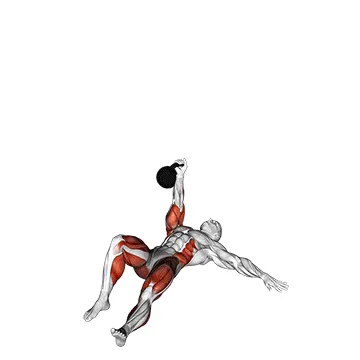
- Primary muscle
- Glutes
- Equipment
- Kettlebell
- Difficulty
- Advanced
- Type
- Compound
Secondary muscles: Quadriceps, Hamstrings, Core
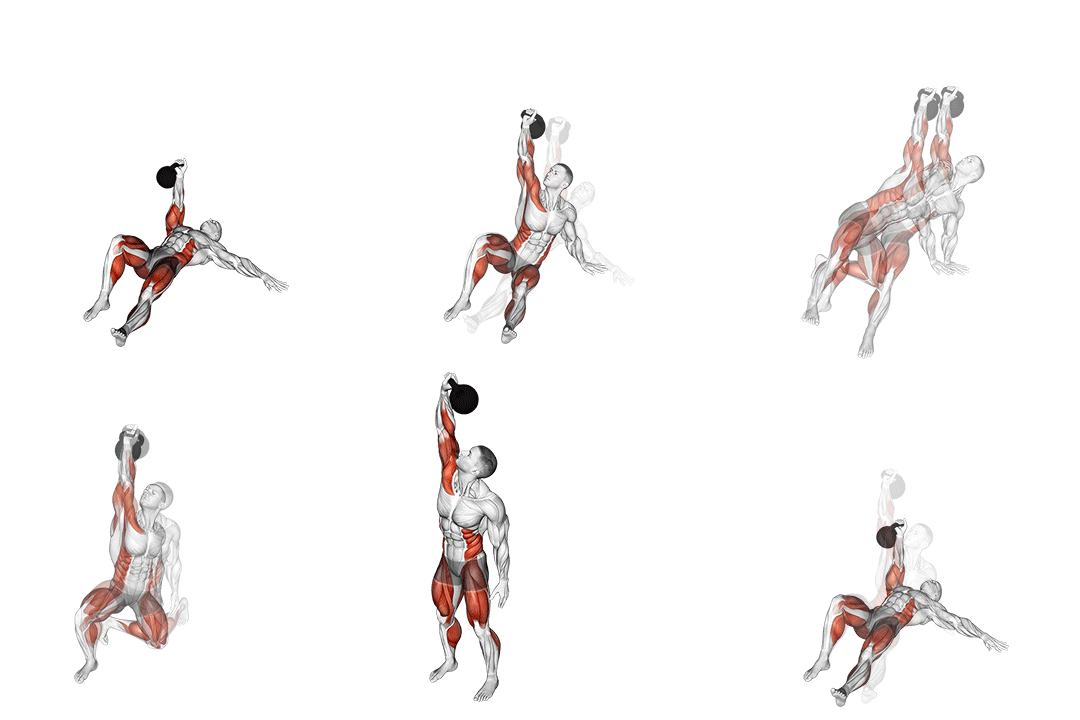
How to perform Kettlebell Turkish Get Up (Squat Style)
- Start by lying on your back with your legs extended and the kettlebell held in your right hand, arm fully extended above your shoulder.
- Bend your right knee and place your right foot flat on the ground, keeping your left leg extended.
- Pressing through your right foot, lift your hips off the ground, coming into a bridge position.
- Slide your left leg underneath your body, bending your left knee and placing your left foot flat on the ground.
- Rotate your torso to the left, bringing your left hand to the ground for support.
- Pressing through your right foot and left hand, lift your torso off the ground, coming into a kneeling position.
- From the kneeling position, stand up, keeping the kettlebell extended overhead.
- Reverse the movement to return to the starting position.
- Repeat the exercise on the other side, starting with the kettlebell in your left hand.
Ranked Kettlebell Turkish Get Up (Squat Style) Alternatives
10 substitutes, ranked by how closely each one matches the Kettlebell Turkish Get Up (Squat Style) on movement pattern, muscles worked, equipment and body position. The higher the score, the less you change. Open "How to perform this exercise" on a card for the steps; every card title links to that exercise's own alternatives page.
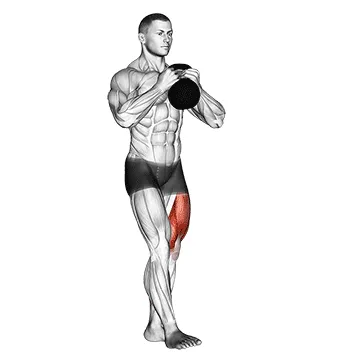
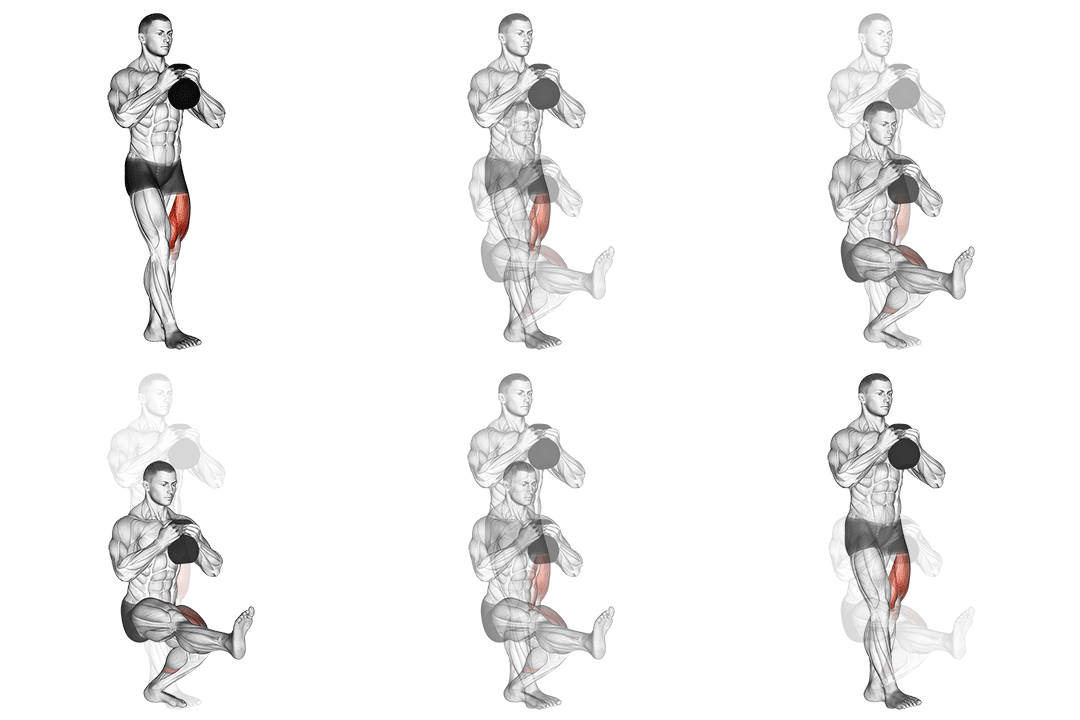
Best match 1. Kettlebell Pistol Squat
81% match- Glutes
- Kettlebell
- Advanced
- Compound
The same equipment, done standing instead.
How to perform this exercise
- Stand with your feet shoulder-width apart, holding a kettlebell in front of your chest with both hands.
- Lift your left foot off the ground and extend it forward, keeping it parallel to the ground.
- Slowly lower your body down into a squat position, keeping your right foot flat on the ground and your left leg extended.
- Pause for a moment at the bottom of the squat, then push through your right heel to return to the starting position.
- Repeat for the desired number of repetitions, then switch legs.
Sets and reps: 3 to 5 sets of 5 to 8 reps on each side.
Why this matches
- Primary muscle: glutes, the same as the Kettlebell Turkish Get Up (Squat Style)
- Equipment: free weights, the same as the Kettlebell Turkish Get Up (Squat Style)
- Body position: standing, not kneeling
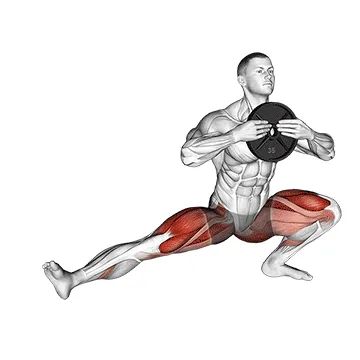
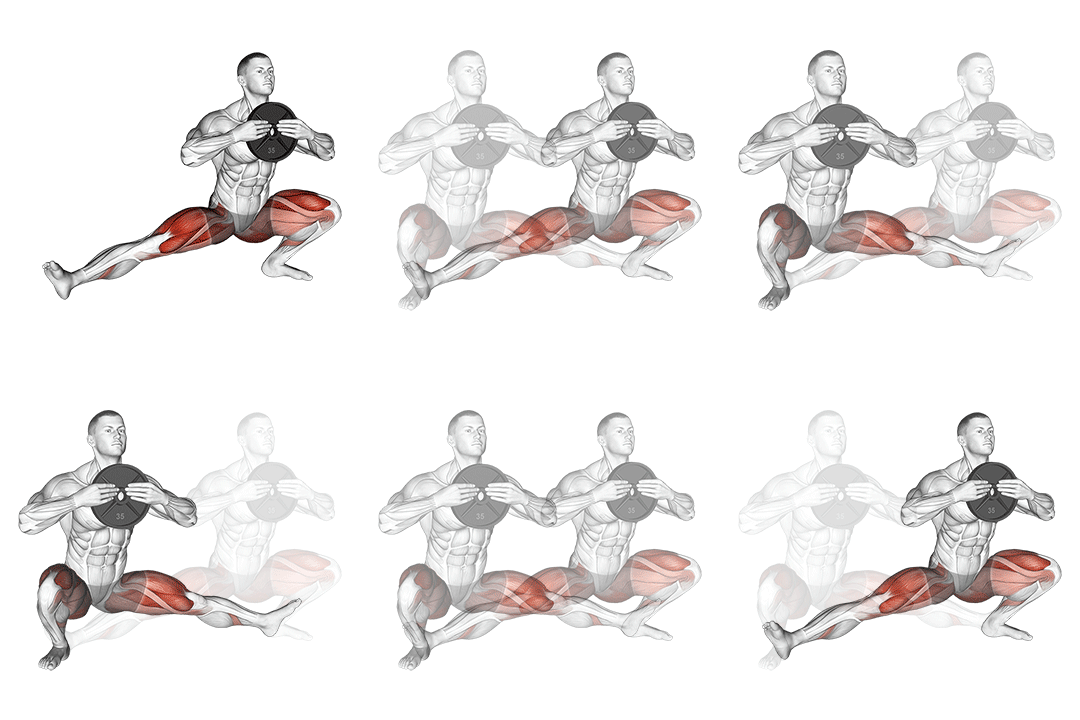
2. Weighted Cossack Squats
79% match- Glutes
- Weighted
- Advanced
- Compound
Pick this when you want to work the glutes with less balance to manage.
How to perform this exercise
- Stand with your feet wider than shoulder-width apart and toes pointing slightly outward.
- Hold a weight in front of your chest with both hands.
- Shift your weight to one side and lower your body by bending the knee of the side you shifted towards, while keeping the other leg straight.
- Go as low as you can while maintaining balance and keeping your chest up.
- Push through the heel of the bent leg to return to the starting position.
- Repeat on the other side, alternating between legs.
Sets and reps: 3 to 5 sets of 5 to 8 reps on each side.
Why this matches
- Primary muscle: glutes, the same as the Kettlebell Turkish Get Up (Squat Style)
- Equipment: free weights, the same as the Kettlebell Turkish Get Up (Squat Style)
- Body position: standing, not kneeling
- Balance: easier to stay steady on than the Kettlebell Turkish Get Up (Squat Style)
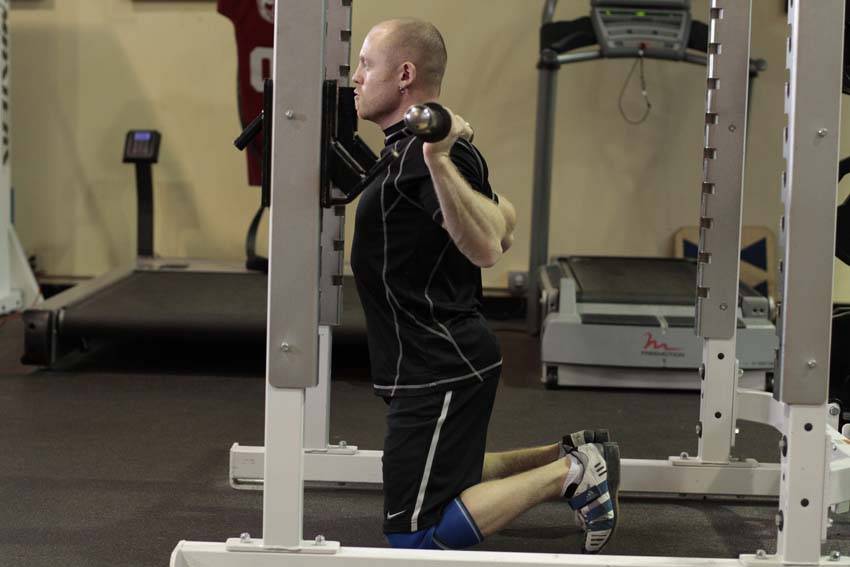
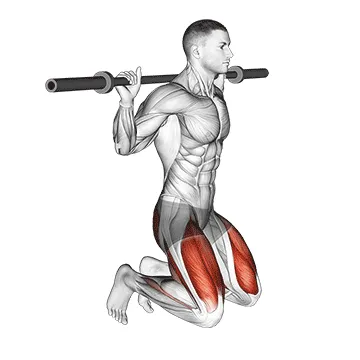
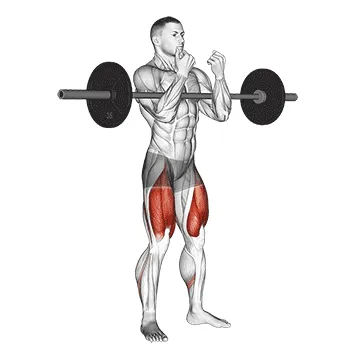
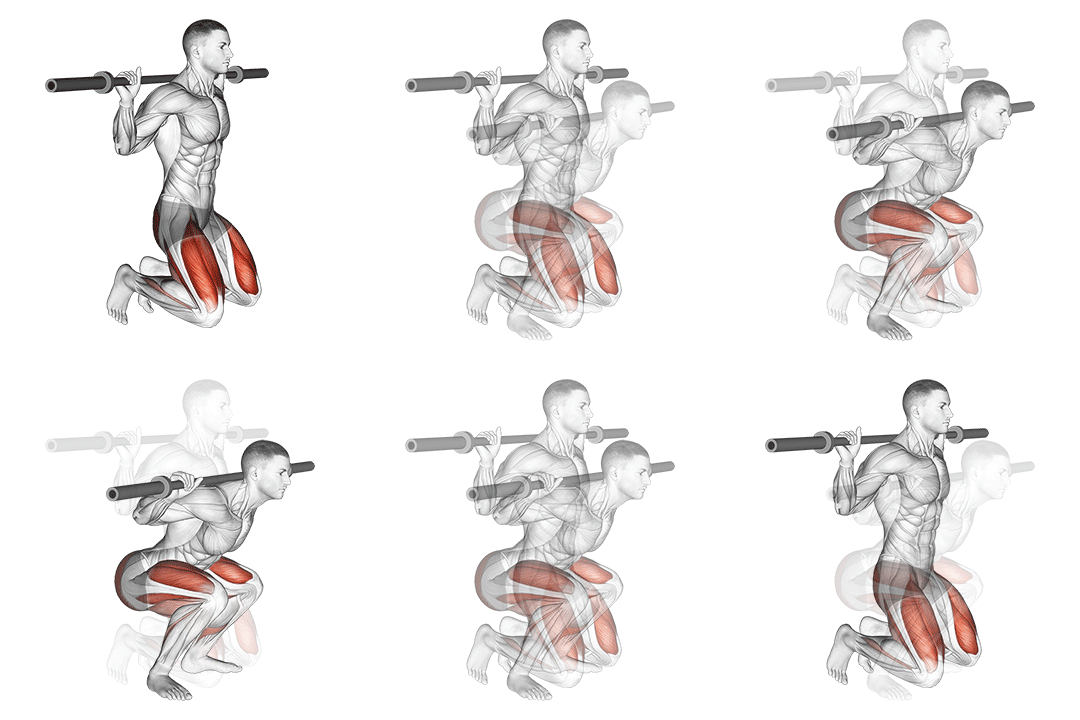
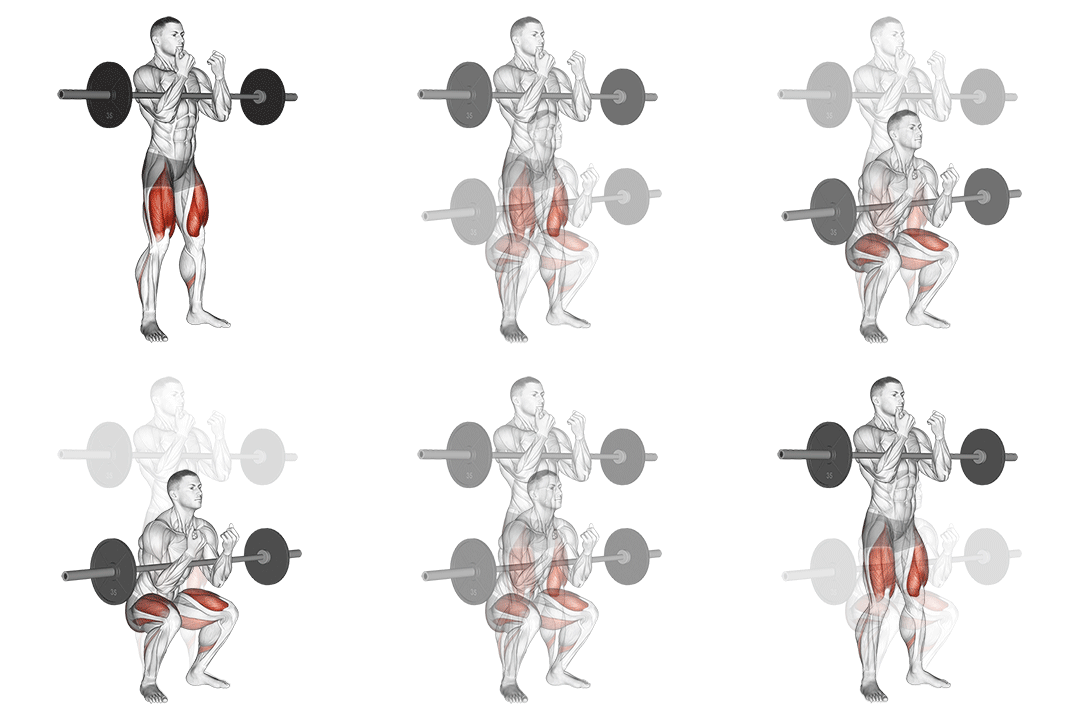
3. Kneeling Squat
77% match- Glutes
- Barbell
- Intermediate
- Compound
A good swap when you have a barbell to work with, and it still works the glutes.
How to perform this exercise
- Set the bar to the proper height in a power rack. Kneel behind the bar; it may be beneficial to put a mat down to pad your knees. Slide under the bar, racking it across the back of your shoulders. Your shoulder blades should be retracted and the bar tight across your back. Unrack the weight.
- With your head looking forward, sit back with your butt until you touch your calves.
- Reverse the motion, returning the torso to an upright position.
Sets and reps: 3 or 4 sets of 6 to 10 reps.
Why this matches
- Primary muscle: glutes, the same as the Kettlebell Turkish Get Up (Squat Style)
- Equipment: free weights, the same as the Kettlebell Turkish Get Up (Squat Style)
- Body position: kneeling, the same as the Kettlebell Turkish Get Up (Squat Style)
- Balance: easier to stay steady on than the Kettlebell Turkish Get Up (Squat Style)
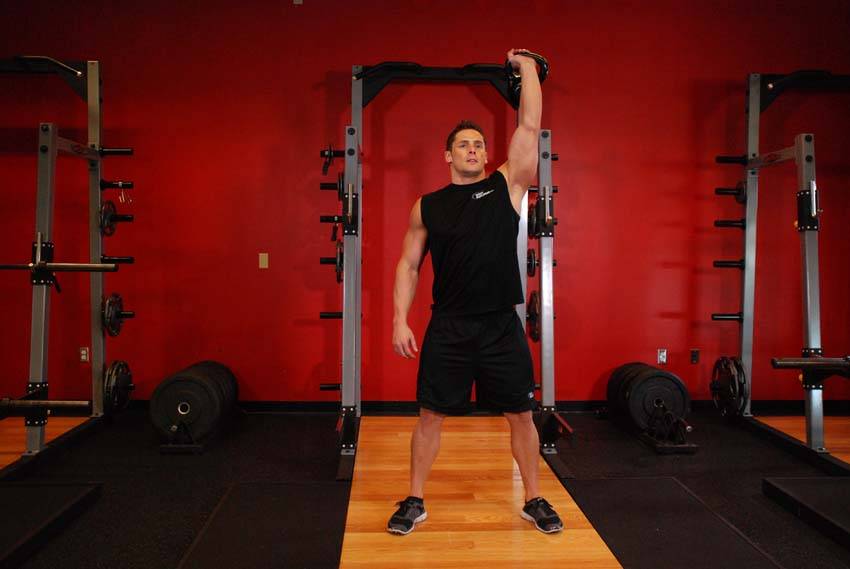
- Quadriceps
- Kettlebell
- Advanced
- Compound
A looser match: it uses the same equipment, but it works the quadriceps rather than the glutes.
How to perform this exercise
- Clean and press a kettlebell with one arm. Clean the kettlebell to your shoulder by extending through the legs and hips as you pull the kettlebell towards your shoulder. Rotate your wrist as you do so. Press the weight overhead by extending through the elbow.This will be your starting position.
- Looking straight ahead and keeping a kettlebell locked out above you, flex the knees and hips and lower your torso between your legs, keeping your head and chest up.
- Pause at the bottom position for a second before rising back to the top, driving through the heels of your feet.
Sets and reps: 3 to 5 sets of 5 to 8 reps on each side.
Why this matches
- Primary muscle: quadriceps, not glutes
- Equipment: free weights, the same as the Kettlebell Turkish Get Up (Squat Style)
- Body position: standing, not kneeling
5. Kneeling Jump Squat
75% match- Glutes
- Barbell
- Advanced
- Compound
How to perform this exercise
- Start by kneeling on the ground with your feet hip-width apart and your toes pointing forward.
- Hold a barbell across your upper back, resting it on your shoulders.
- Engage your core and glutes, then explosively jump up into the air, extending your hips and knees.
- As you jump, push through your toes and fully extend your ankles, knees, and hips.
- Land softly back on the ground, bending your knees to absorb the impact.
- Immediately go into the next repetition, repeating the jump squat motion.
Sets and reps: 3 to 5 sets of 5 to 8 reps.
Why this matches
- Primary muscle: glutes, the same as the Kettlebell Turkish Get Up (Squat Style)
- Equipment: free weights, the same as the Kettlebell Turkish Get Up (Squat Style)
- Body position: kneeling, the same as the Kettlebell Turkish Get Up (Squat Style)
- Balance: easier to stay steady on than the Kettlebell Turkish Get Up (Squat Style)
6. One Leg Squat
71% match- Glutes
- Bodyweight
- Advanced
- Compound
Use this when you have nothing to train with, because it works the glutes with bodyweight alone.
How to perform this exercise
- Stand with your feet shoulder-width apart.
- Extend one leg forward, keeping it off the ground.
- Bend your standing leg and lower your body down as if sitting back into a chair.
- Keep your chest up and your back straight.
- Push through your heel to return to the starting position.
- Repeat with the other leg.
Sets and reps: 3 or 4 sets of 6 to 10 reps on each side.
Why this matches
- Primary muscle: glutes, the same as the Kettlebell Turkish Get Up (Squat Style)
- Equipment: bodyweight only, not free weights
- Body position: standing, not kneeling
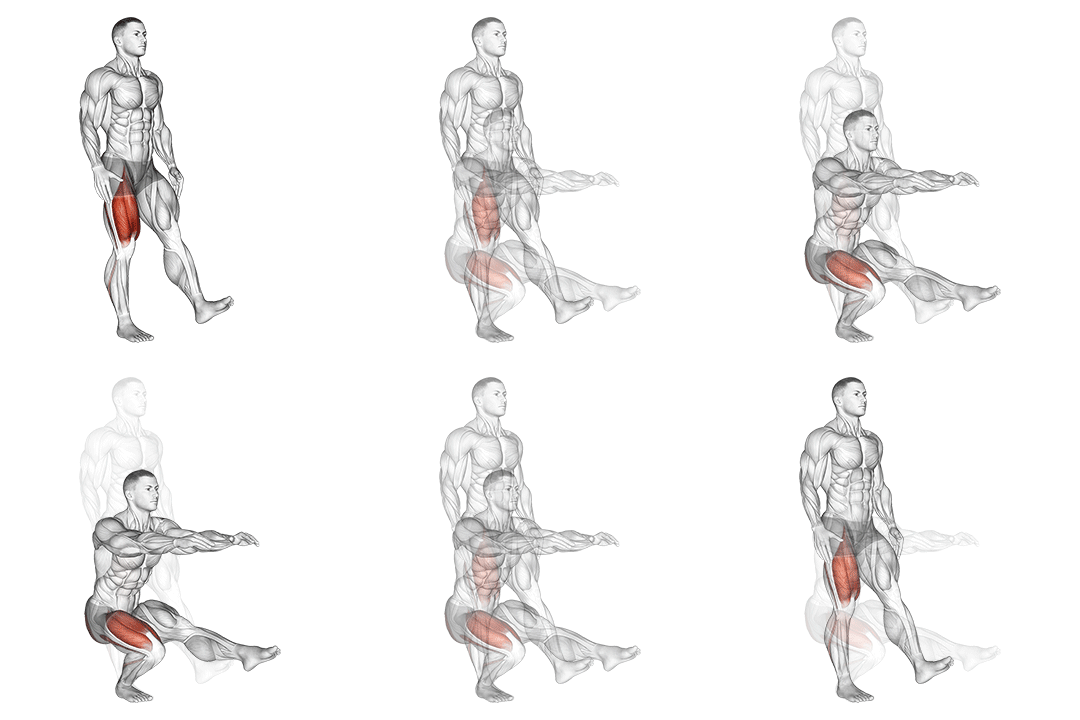
7. Single Leg Squat (Pistol) Male
71% match- Glutes
- Bodyweight
- Advanced
- Compound
How to perform this exercise
- Stand with your feet shoulder-width apart and arms extended in front of you.
- Lift your right foot off the ground and extend it forward.
- Slowly lower your body down by bending your left knee and pushing your hips back.
- Keep your chest up and your back straight as you lower yourself down.
- Lower until your left thigh is parallel to the ground, or as low as you can comfortably go.
- Pause for a moment at the bottom, then push through your left heel to return to the starting position.
- Repeat for the desired number of repetitions, then switch legs.
Sets and reps: 3 or 4 sets of 6 to 10 reps on each side.
Why this matches
- Primary muscle: glutes, the same as the Kettlebell Turkish Get Up (Squat Style)
- Equipment: bodyweight only, not free weights
- Body position: standing, not kneeling
8. Barbell Full Zercher Squat
71% match- Glutes
- Barbell
- Advanced
- Compound
How to perform this exercise
- Stand with your feet shoulder-width apart and toes slightly turned out.
- Hold the barbell in the crooks of your elbows, with your hands gripping the barbell for stability.
- Engage your core and keep your chest lifted as you lower your hips back and down into a squat position.
- Keep your knees in line with your toes and your weight in your heels.
- Lower until your thighs are parallel to the ground, or as low as you can comfortably go.
- Drive through your heels to stand back up, squeezing your glutes at the top of the movement.
- Repeat for the desired number of repetitions.
Sets and reps: 3 to 5 sets of 5 to 8 reps.
Why this matches
- Primary muscle: glutes, the same as the Kettlebell Turkish Get Up (Squat Style)
- Equipment: free weights, the same as the Kettlebell Turkish Get Up (Squat Style)
- Body position: standing, not kneeling
- Balance: easier to stay steady on than the Kettlebell Turkish Get Up (Squat Style)
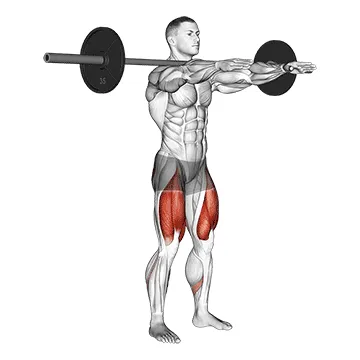
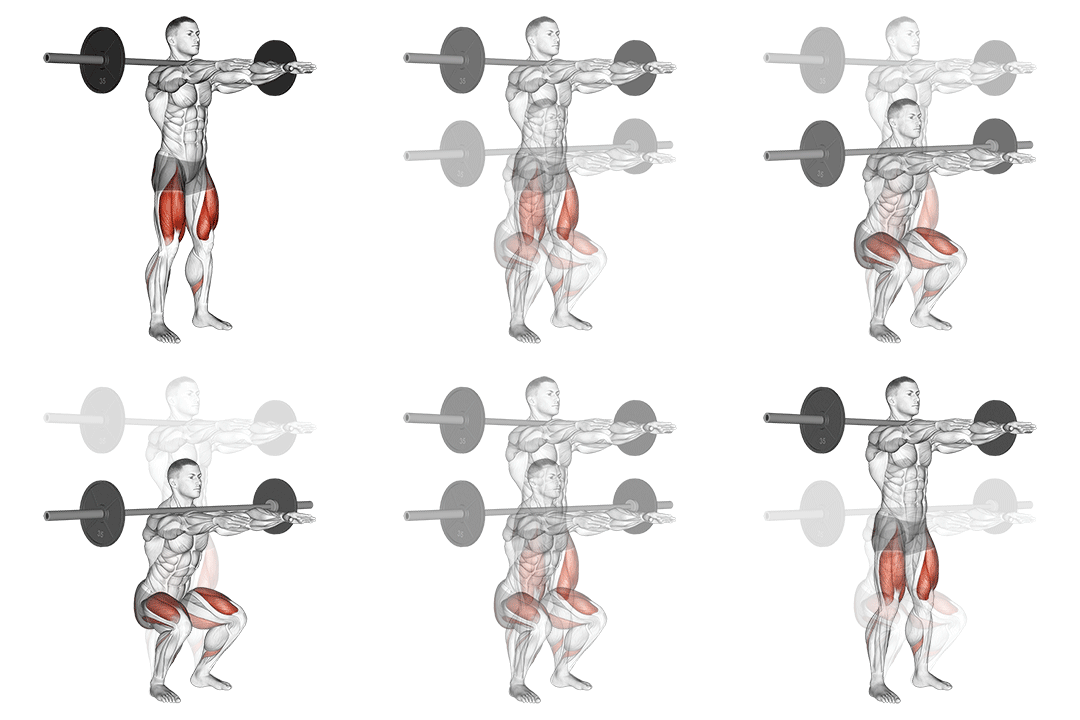
9. Frankenstein Squat
70% match- Glutes
- Barbell
- Intermediate
- Compound
How to perform this exercise
- Stand with your feet shoulder-width apart and hold the barbell in front of your body with straight arms.
- Keeping your back straight, lower your body by bending at the knees and hips, as if sitting back into a chair.
- Continue lowering until your thighs are parallel to the ground, or as low as you can comfortably go.
- Pause for a moment, then push through your heels to return to the starting position.
- Repeat for the desired number of repetitions.
Sets and reps: 3 or 4 sets of 6 to 10 reps.
Why this matches
- Primary muscle: glutes, the same as the Kettlebell Turkish Get Up (Squat Style)
- Equipment: free weights, the same as the Kettlebell Turkish Get Up (Squat Style)
- Body position: standing, not kneeling
- Balance: easier to stay steady on than the Kettlebell Turkish Get Up (Squat Style)
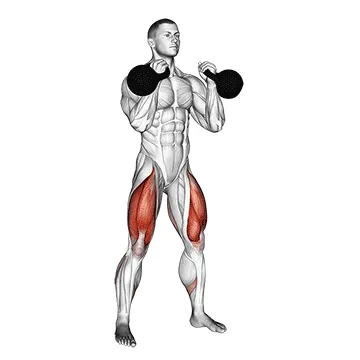
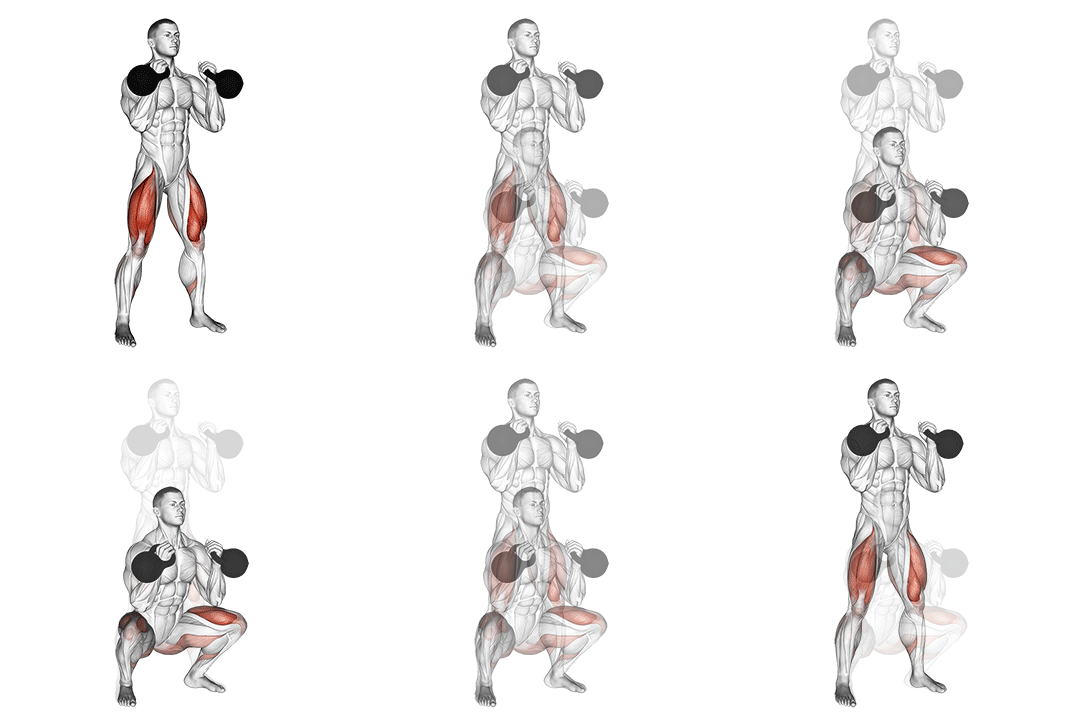
10. Kettlebell Front Squat
69% match- Glutes
- Kettlebell
- Intermediate
- Compound
How to perform this exercise
- Stand with your feet shoulder-width apart, toes slightly turned out.
- Hold the kettlebell with both hands in front of your chest, close to your body.
- Engage your core and keep your chest up as you lower your hips down and back, as if sitting into a chair.
- Lower until your thighs are parallel to the ground, or as low as you can comfortably go.
- Drive through your heels to stand back up, squeezing your glutes at the top.
- Repeat for the desired number of repetitions.
Sets and reps: 3 or 4 sets of 6 to 10 reps.
Why this matches
- Primary muscle: glutes, the same as the Kettlebell Turkish Get Up (Squat Style)
- Equipment: free weights, the same as the Kettlebell Turkish Get Up (Squat Style)
- Body position: standing, not kneeling
- Balance: easier to stay steady on than the Kettlebell Turkish Get Up (Squat Style)
Why You Might Need a Kettlebell Turkish Get Up (Squat Style) Alternative
You may substitute the Kettlebell Turkish Get Up (squat Style) for many reasons: shoulder or overhead limitations, poor thoracic mobility, lack of a suitable kettlebell, or the need for heavier loading to grow the glutes. Alternatives let you isolate hip extension or increase bilateral load while maintaining glute activation. Use hip-thrust variations to emphasize glute max via horizontal hip extension; choose single-leg moves to tax stabilizers and correct side-to-side imbalances. Cue for any substitute: maintain a neutral spine, brace the core, and focus on producing force through the posterior chain to maximize glute recruitment.
Kettlebell Turkish Get Up (Squat Style) FAQ
What muscles does Kettlebell Turkish Get Up (squat Style) work?
The movement primarily targets the gluteus maximus through hip extension and stresses the quadriceps during the squat portion. It also engages the hamstrings, hip stabilizers, core for anti-rotation, and shoulder stabilizers to hold the kettlebell overhead.
Find Alternatives for Any Exercise
Search the exercise database and filter the ranked substitutes by the equipment you own.
Similarity scores compare exercise metadata such as movement pattern, muscles, equipment and body position. They are not a safety rating or a check that you own the equipment. Learn about our methodology