

5 Best Forward Jump Alternatives
The Forward Jump is done standing.
Original Exercise: Forward Jump
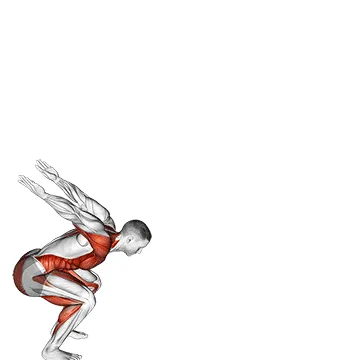
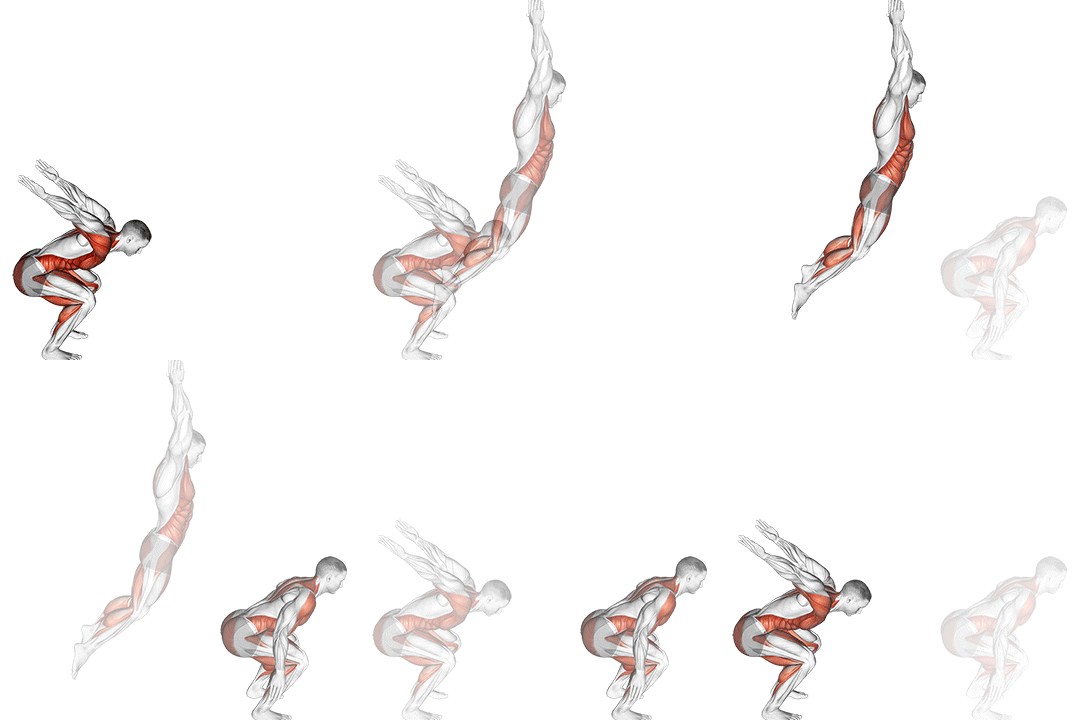
- Primary muscle
- Quads
- Equipment
- Bodyweight
- Difficulty
- Intermediate
- Type
- Compound
Secondary muscles: Calves, Hamstrings, Glutes
How to perform Forward Jump
- Stand with your feet shoulder-width apart.
- Bend your knees and lower your body into a squat position.
- Swing your arms back for momentum.
- Jump forward explosively, extending your hips, knees, and ankles.
- Land softly on the balls of your feet and immediately go into the next jump.
- Repeat for the desired number of repetitions.
Why You Might Need a Forward Jump Alternative
You might replace Forward Jumps for injury, limited space, high-impact restrictions, or technique deficits. Plyometric forward hops stress the knee joint and require good ankle and hip control; swapping to controlled or unilateral movements reduces peak ground reaction forces and isolates the quads. For example, the Bulgarian split squat preserves knee extension strength while limiting horizontal momentum, keep torso upright and drive the front knee over the toes to emphasize quad activation.
How to Choose the Right Forward Jump Substitute
Choose based on goal, impact tolerance, and movement pattern. For power, prioritize the broad jump or squat jump and cue a rapid triple extension (ankle, knee, hip) with arms driving forward. For hypertrophy or rehabilitation, pick split-leg or step-up variations to load the quads with lower impact; press through the mid-foot and pause at full knee extension to boost muscle tension. Account for available space and progress by increasing reps, adding external load, or shifting from bilateral to unilateral work.
Forward Jump FAQ
What muscles does Forward Jump work?
Forward Jumps primarily load the quadriceps via rapid knee extension while the glutes and hamstrings contribute to hip extension and deceleration. Calves provide ankle plantarflexion during takeoff, and the core stabilizes torso position; cue explosive knee drive and active hip extension to maximize quad and glute recruitment.
Find Alternatives for Any Exercise
Search the exercise database and filter the ranked substitutes by the equipment you own.