

Alternate Lateral Pulldown vs Cable Bar Lateral Pulldown: Complete Comparison Guide
Alternate Lateral Pulldown vs Cable Bar Lateral Pulldown — if you want thicker lats and better back shape, you need to pick the right tool for your session. You’ll get clear comparisons of muscle activation, equipment needs, technique cues, and progression strategies so you can choose based on hypertrophy, strength, or convenience. I’ll show specific rep ranges, joint angles, and movement patterns so you can use each pull to hit the lats more effectively and avoid common form mistakes.
Exercise Comparison
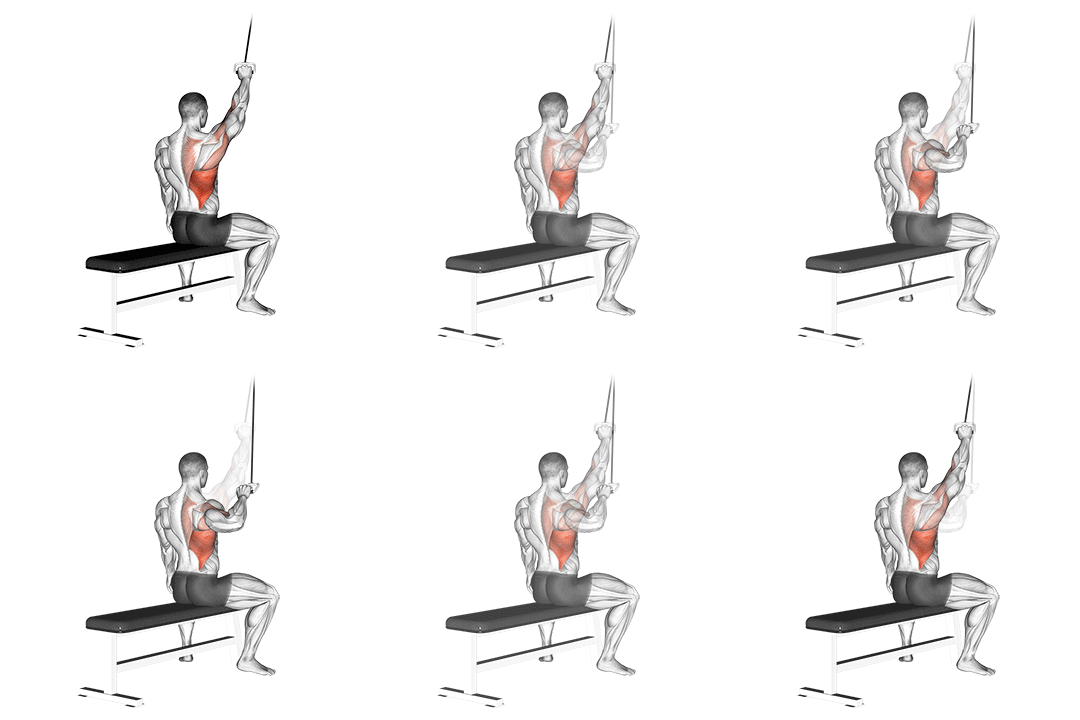
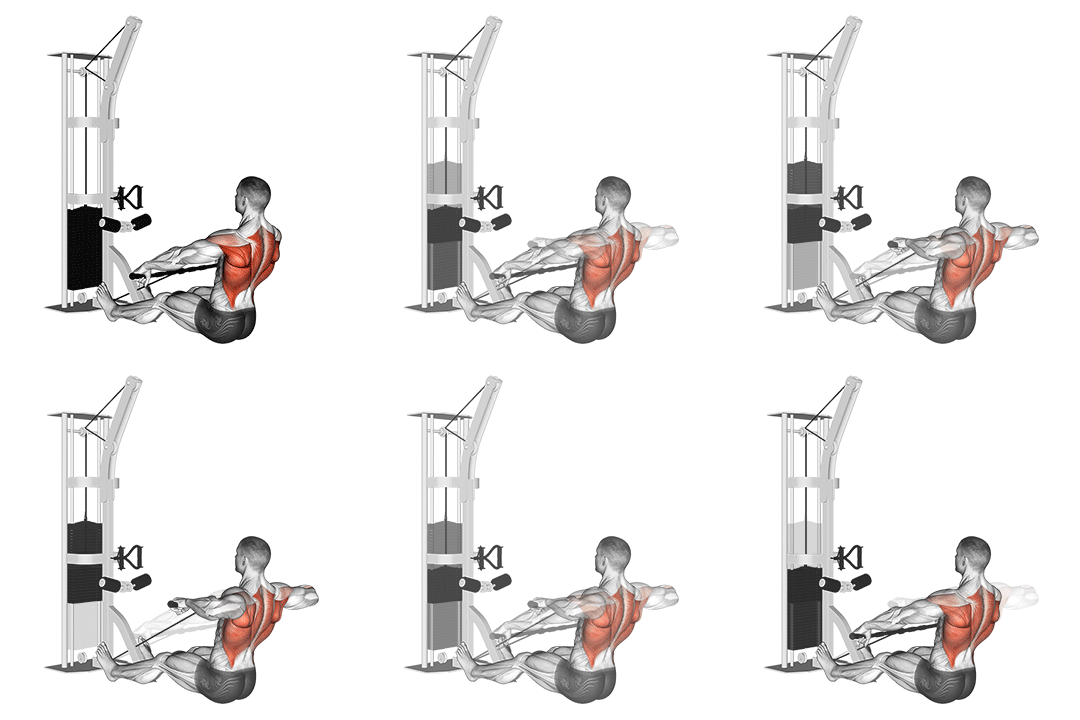
Alternate Lateral Pulldown
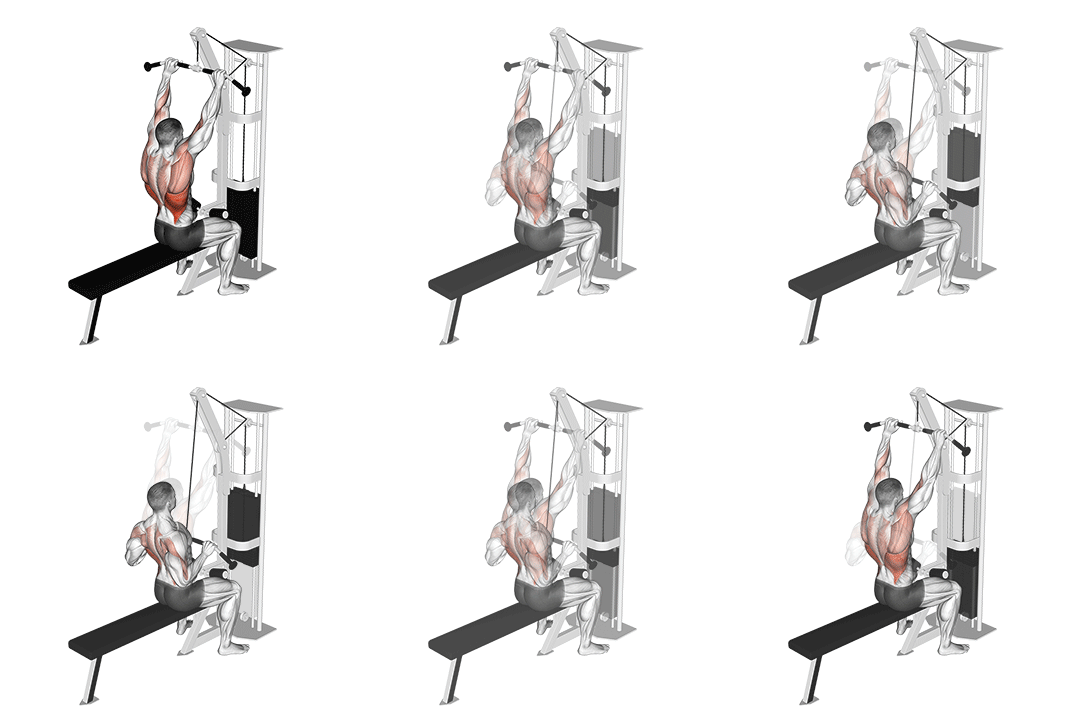
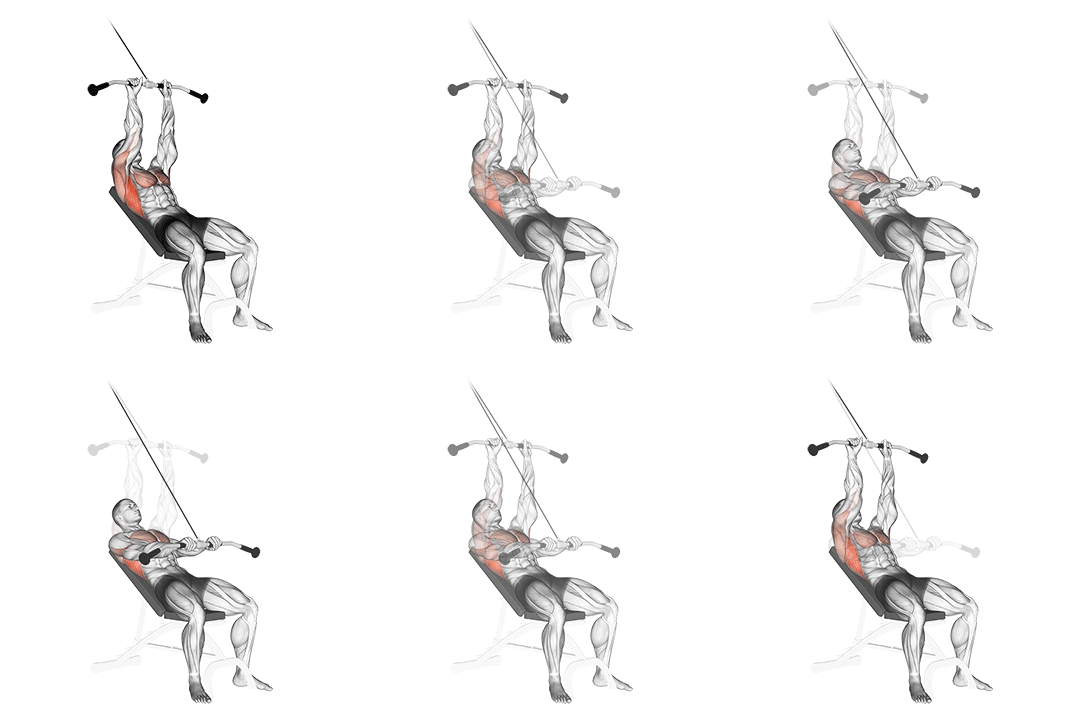
Cable Bar Lateral Pulldown
Head-to-Head Comparison
| Attribute | Alternate Lateral Pulldown | Cable Bar Lateral Pulldown |
|---|---|---|
| Target Muscle |
Lats
|
Lats
|
| Body Part |
Back
|
Back
|
| Equipment |
Cable
|
Cable
|
| Difficulty |
Intermediate
|
Intermediate
|
| Movement Type |
Compound
|
Compound
|
| Secondary Muscles |
2
|
3
|
Secondary Muscles Activated
Alternate Lateral Pulldown
Cable Bar Lateral Pulldown
Visual Comparison
Overview
Alternate Lateral Pulldown vs Cable Bar Lateral Pulldown — if you want thicker lats and better back shape, you need to pick the right tool for your session. You’ll get clear comparisons of muscle activation, equipment needs, technique cues, and progression strategies so you can choose based on hypertrophy, strength, or convenience. I’ll show specific rep ranges, joint angles, and movement patterns so you can use each pull to hit the lats more effectively and avoid common form mistakes.
Key Differences
- Both exercises target the Lats using Cable. The main differences are in their movement patterns and muscle activation angles.
Pros & Cons
Alternate Lateral Pulldown
+ Pros
- Unilateral focus helps fix left-right strength imbalances and reveals weaker side limitations
- Greater end-range stretch and isolated peak contraction for each lat, aiding hypertrophy
- Increases scapular stabilizer and core activation due to anti-rotation demand
- Allows focused tempo work (eccentric emphasis) on each side for time under tension
− Cons
- Requires more setup and attention to torso control to avoid cheating
- Harder to progressively overload with heavy absolute loads compared to bilateral bar
- Can increase shoulder strain if technique breaks and you reach too far laterally
Cable Bar Lateral Pulldown
+ Pros
- Symmetrical bilateral loading lets you handle heavier weight for strength
- Consistent bar path recruits rear delts and lats evenly for uniform development
- Simpler cues and setup—good for higher volume and quick gym sessions
- Easier to add microloading and perform low-rep strength cycles
− Cons
- Can mask unilateral weaknesses and asymmetries
- Less single-arm peak contraction and slightly less end-range stretch per lat
- Pulling behind the neck or with poor posture increases impingement risk
When Each Exercise Wins
Alternate loading increases time under tension on each lat and lets you emphasize a full stretch and controlled concentric, which drives localized hypertrophic stimulus. Use 8–15 reps per side with 2–3 second eccentrics and minimal torso swing for maximum stimulus.
The cable bar supports heavier absolute loads and a stable bilateral force vector, letting you load the movement for low-rep strength phases (3–6 reps) and maintain consistent mechanics under high intensity.
Two-handed symmetry simplifies motor patterns and cueing, making it easier to learn proper scapular depression and humeral adduction without managing anti-rotation demands. Start with 10–12 controlled reps to build posture and lat awareness.
If you have a single high-pulley or resistance band, unilateral variations replicate the lat-pull motion well and require less bulky hardware than a long lat bar. You can use handles or bands and still get effective unilateral overload.
Frequently Asked Questions
Can I do both Alternate Lateral Pulldown and Cable Bar Lateral Pulldown in the same workout?
Yes. Use the cable bar as a heavy primary movement (3–6 or 6–8 reps) and follow with alternate pulldowns as an accessory to address imbalances and add 8–12 reps per side with a slower eccentric. Keep total volume in check to avoid overworking the lats and biceps.
Which exercise is better for beginners?
Cable Bar Lateral Pulldown is better for beginners because its bilateral pattern simplifies technique and allows faster learning of scapular depression and humeral adduction. Start light, control the scapula first, and pull to the upper chest for safe mechanics.
How do the muscle activation patterns differ?
Cable bar pulldowns create a symmetric, vertical-to-inward force vector that activates both lats and rear delts more evenly, while alternate pulldowns shift the vector unilaterally, increasing peak activation and stretch on the working lat and raising demand on scapular stabilizers and core to resist rotation.
Can Cable Bar Lateral Pulldown replace Alternate Lateral Pulldown?
Cable bar can replace alternate work when your goal is strength and balanced mass, but it won’t fix unilateral weaknesses as effectively. If you have noticeable asymmetry or want greater end-range tension on each lat, keep alternate pulls in your program.
Expert Verdict
Use the cable bar lateral pulldown when you want to build raw pulling strength, handle heavier loads, or keep training simple and bilateral—aim for 3–6 reps for strength or 6–12 for hypertrophy with strict scapular control. Choose the alternate lateral pulldown when addressing imbalances, increasing end-range stretch, or targeting one lat at a time for tighter muscle focus—use 8–15 reps per side and emphasize tempo and anti-rotation. Both moves train humeral adduction and scapular retraction; pick the exercise that matches your goal that day and rotate both periodically to maximize muscle growth and balanced development.
Also Compare
More comparisons with Alternate Lateral Pulldown
More comparisons with Cable Bar Lateral Pulldown
Compare More Exercises
Use our free comparison tool to analyze any two exercises head-to-head.
Compare Exercises