

Alternate Lateral Pulldown vs Cable Cross-over Lateral Pulldown: Complete Comparison Guide
Alternate Lateral Pulldown vs Cable Cross-over Lateral Pulldown — if you want wider, thicker lats you need to know the differences. I’ll walk you through muscle activation, biomechanics, equipment needs, learning curve, and programming so you can choose the right move for hypertrophy, strength, or rehab. You’ll get cues for clean reps, recommended rep ranges (6–12 for hypertrophy, 3–6 for maximal strength, 10–20 for endurance), and clear scenarios where one exercise outperforms the other.
Exercise Comparison
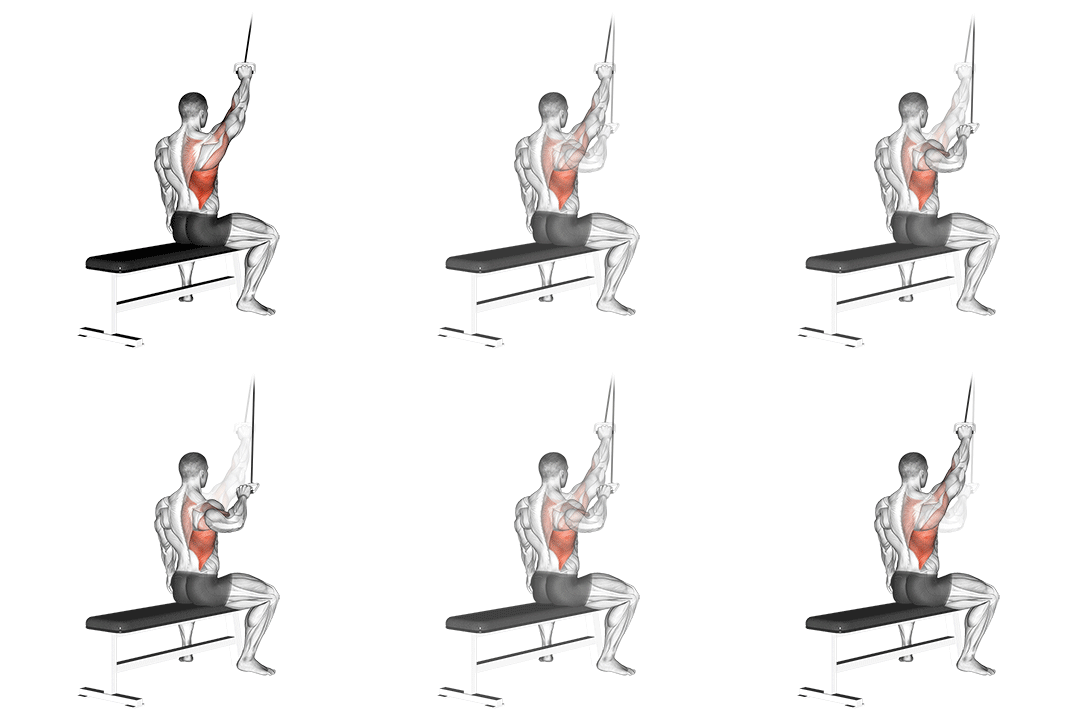
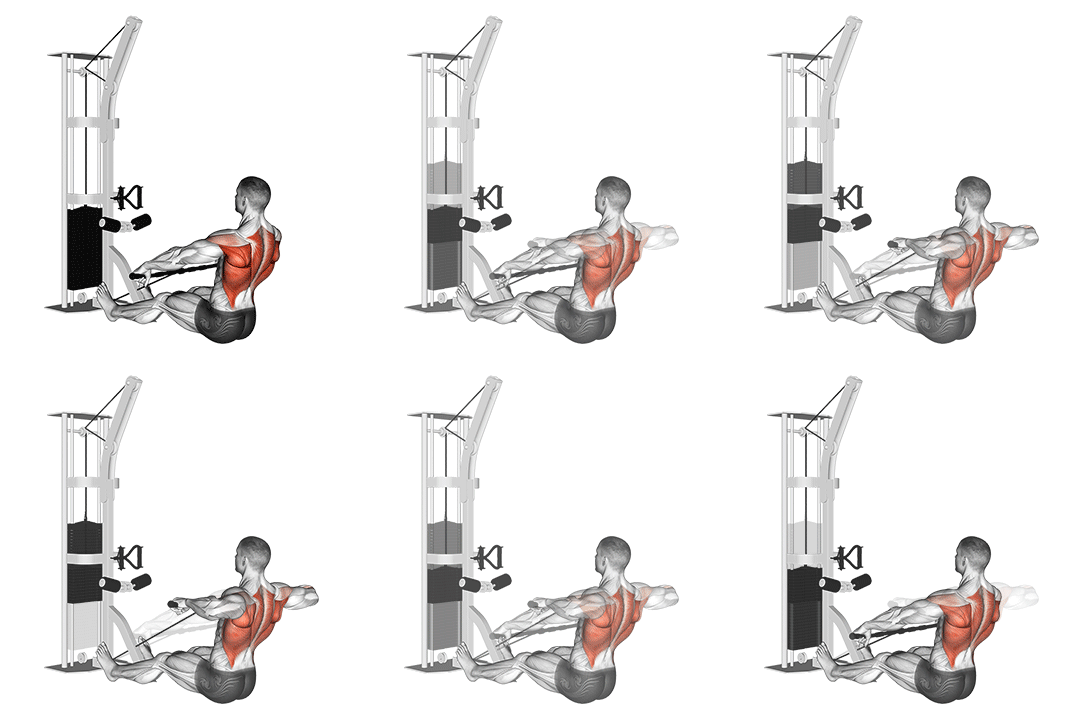
Alternate Lateral Pulldown
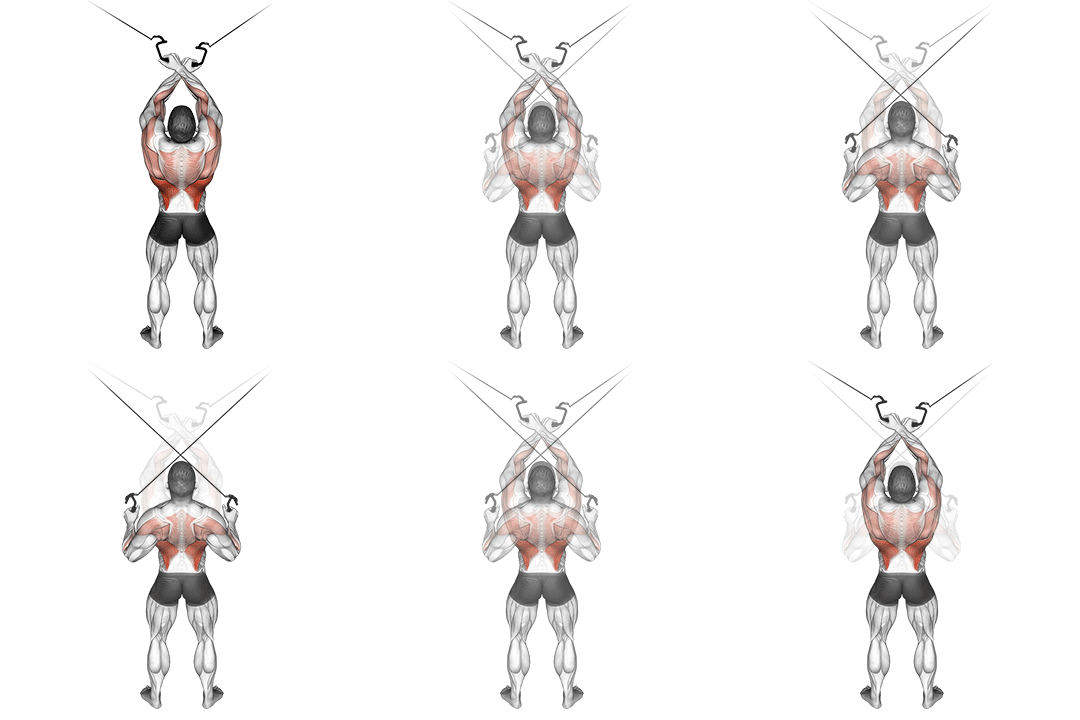
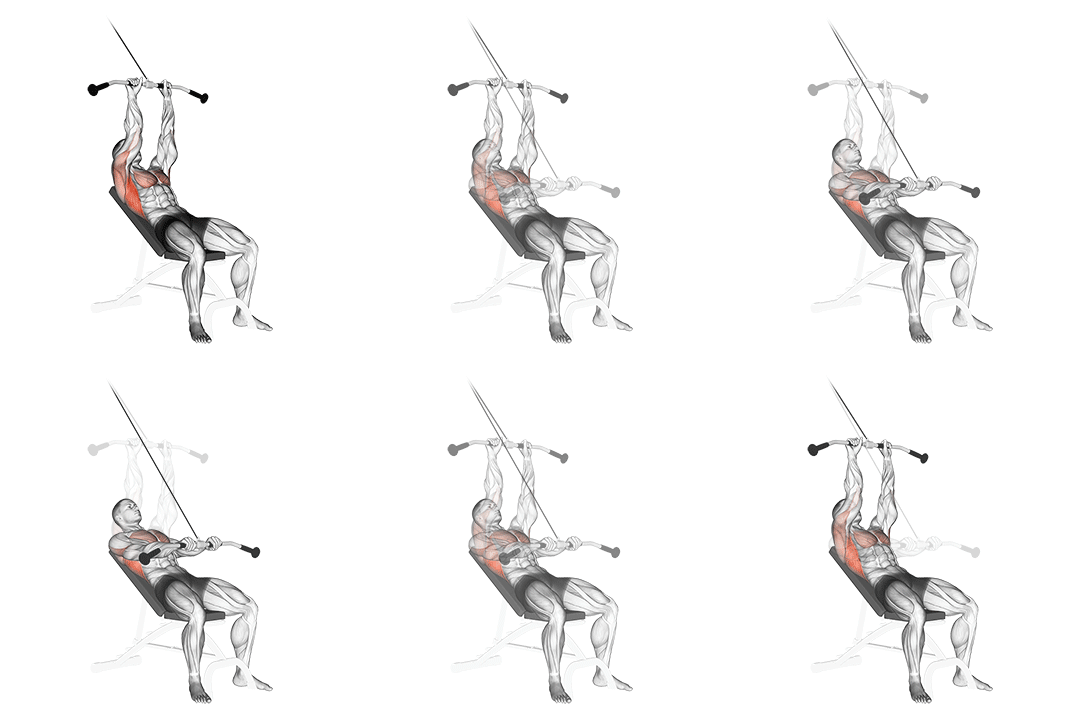
Cable Cross-over Lateral Pulldown
Head-to-Head Comparison
| Attribute | Alternate Lateral Pulldown | Cable Cross-over Lateral Pulldown |
|---|---|---|
| Target Muscle |
Lats
|
Lats
|
| Body Part |
Back
|
Back
|
| Equipment |
Cable
|
Cable
|
| Difficulty |
Intermediate
|
Intermediate
|
| Movement Type |
Compound
|
Compound
|
| Secondary Muscles |
2
|
3
|
Secondary Muscles Activated
Alternate Lateral Pulldown
Cable Cross-over Lateral Pulldown
Visual Comparison
Overview
Alternate Lateral Pulldown vs Cable Cross-over Lateral Pulldown — if you want wider, thicker lats you need to know the differences. I’ll walk you through muscle activation, biomechanics, equipment needs, learning curve, and programming so you can choose the right move for hypertrophy, strength, or rehab. You’ll get cues for clean reps, recommended rep ranges (6–12 for hypertrophy, 3–6 for maximal strength, 10–20 for endurance), and clear scenarios where one exercise outperforms the other.
Key Differences
- Both exercises target the Lats using Cable. The main differences are in their movement patterns and muscle activation angles.
Pros & Cons
Alternate Lateral Pulldown
+ Pros
- Great for fixing left-right strength imbalances with unilateral focus
- Easier to perform on single-pulley or home cable towers
- Allows heavier single-arm loading and strict tempo control
- Improves scapular stability and anti-rotation under load
− Cons
- Requires more core and pelvic stabilization to avoid body swing
- Shorter continuous tension per side unless controlled tempo is used
- Can accentuate asymmetries if programming ignores bilateral work
Cable Cross-over Lateral Pulldown
+ Pros
- Provides continuous bilateral tension for consistent lat loading
- Stronger rear deltoid and upper-back recruitment due to crossing vector
- Easier to cue symmetrical technique and posture
- Excellent for high-rep sets and finishers with constant tension
− Cons
- Requires a dual pulley/crossover rig or two high pulleys
- Can place extra stress on posterior shoulder if you overextend
- Less effective at isolating unilateral weaknesses without modification
When Each Exercise Wins
Cable Cross-over maintains constant tension across the full rep and recruits the rear delts and upper back more, which increases total muscle work per set. Use 6–12 reps with a 2:1 eccentric-to-concentric tempo to maximize time under tension.
Alternate Lateral Pulldown lets you load one side heavier and train strict, heavy single-arm sets that transfer to stronger bilateral pulls. Progress with lower reps (3–6) and longer rest to build force production.
The bilateral, symmetrical path reduces coordination demands and helps beginners learn scapular retraction and the pull pattern. Start with lighter loads, 8–12 reps, and focus on scapula-first initiation.
Alternate Lateral Pulldown adapts to single high-pulley towers commonly found in home gyms and needs less space and hardware than a full cable crossover. Use single-handle variations to replicate the movement.
Frequently Asked Questions
Can I do both Alternate Lateral Pulldown and Cable Cross-over Lateral Pulldown in the same workout?
Yes. Pair Cable Cross-over as your main bilateral work for 3–4 sets of 6–12 reps, then add 2–3 unilateral sets of Alternate Lateral Pulldown to target imbalances and add extra volume per side.
Which exercise is better for beginners?
Cable Cross-over Lateral Pulldown is usually better for beginners because the bilateral pattern simplifies balance and technique. Start light and cue scapular depression and retraction before elbow drive.
How do the muscle activation patterns differ?
Alternate Lateral Pulldown creates peak unilateral contractions with brief recovery between reps per side, while Cable Cross-over keeps the lats under continuous bilateral tension. The cross-over shifts the force vector slightly posterior, boosting rear deltoid coactivation.
Can Cable Cross-over Lateral Pulldown replace Alternate Lateral Pulldown?
Cable Cross-over can cover most bilateral hypertrophy needs, but it won’t replace the unilateral benefits of Alternate Lateral Pulldown for correcting imbalances or specific strength carryover. Use the cross-over for volume and the alternate version for targeted single-arm work.
Expert Verdict
Choose Cable Cross-over Lateral Pulldown when you want steady, continuous tension across both lats, stronger rear-delt involvement, and a movement that’s easy to cue for hypertrophy and finishers. Pick Alternate Lateral Pulldown when you need unilateral overload, want to correct left-right imbalances, or have a single-pulley setup at home. Program both: use Cable Cross-over for bilateral hypertrophy blocks (6–12 reps, slower eccentrics) and Alternate Lateral Pulldown for strength cycles and unilateral corrective work (3–6 reps or 8–10 strict tempo reps). Always prioritize scapular control and a controlled eccentric to protect the shoulder and maximize muscle recruitment.
Also Compare
More comparisons with Alternate Lateral Pulldown
More comparisons with Cable Cross-over Lateral Pulldown
Compare More Exercises
Use our free comparison tool to analyze any two exercises head-to-head.
Compare Exercises