

Alternate Lateral Pulldown vs Cable Decline Seated Wide-grip Row: Complete Comparison Guide
Alternate Lateral Pulldown vs Cable Decline Seated Wide-grip Row pits two cable compounds that attack the lats from different force vectors. If you want practical guidance, you’re in the right place: I’ll compare muscle activation, equipment needs, technique cues, injury risk, and progression strategies. You’ll get clear winners for hypertrophy, strength, beginners, and home setups plus exact rep ranges, angles, and biomechanical reasons to choose one over the other. Read on to pick the move that best fits your back-development goals and training setup.
Exercise Comparison
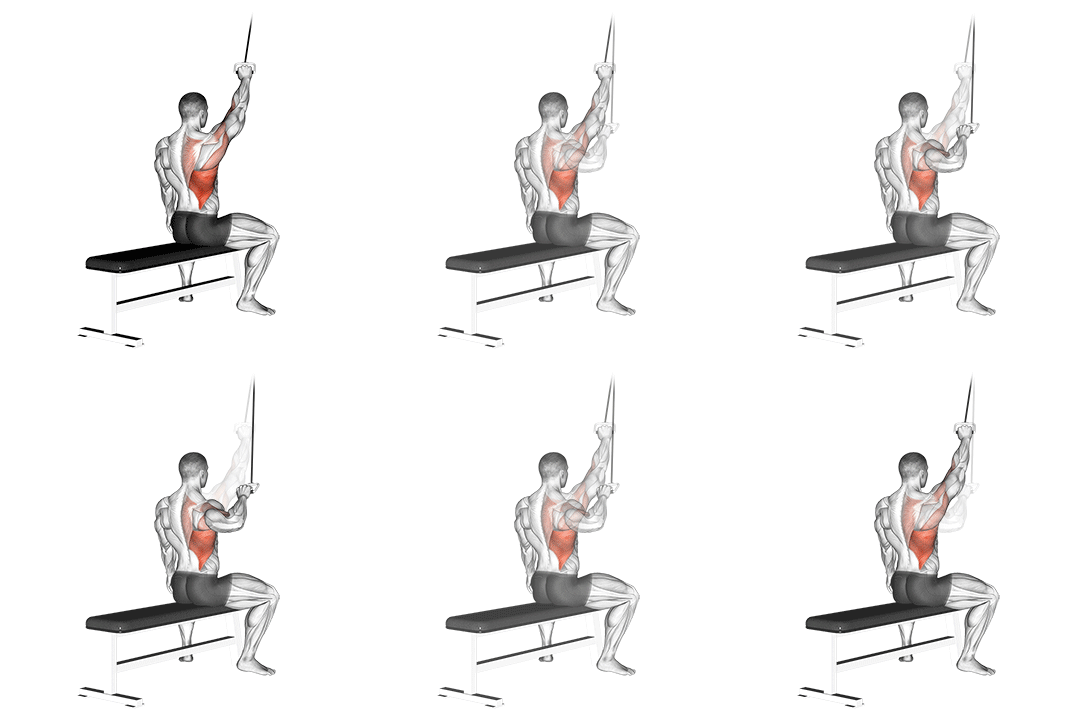
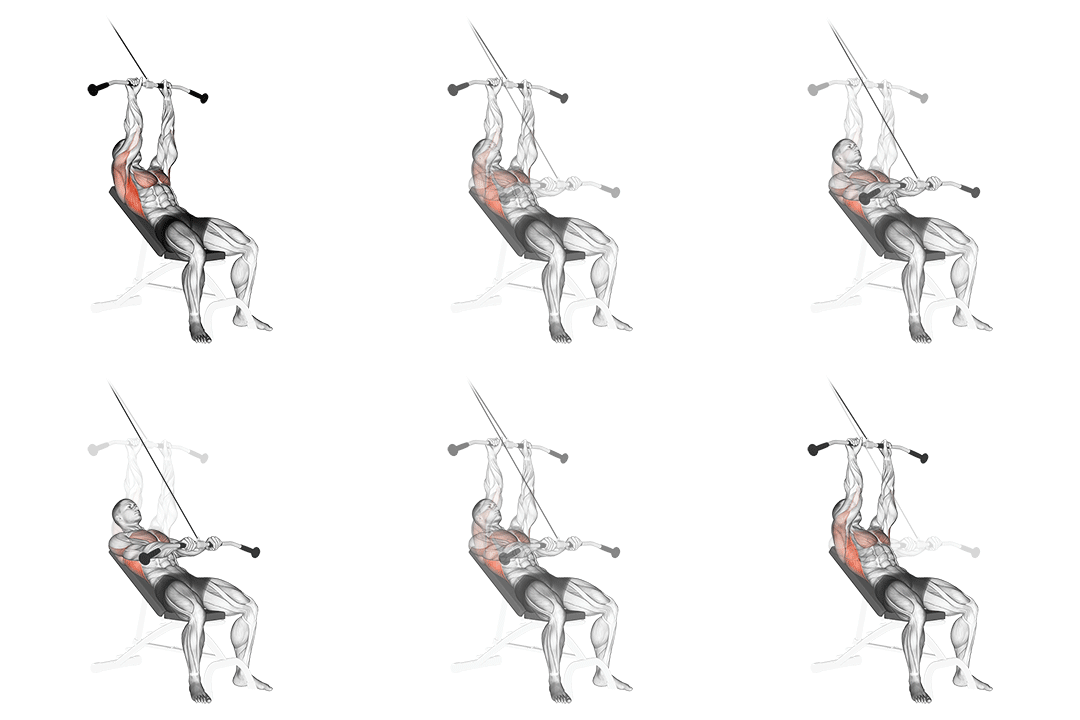
Alternate Lateral Pulldown
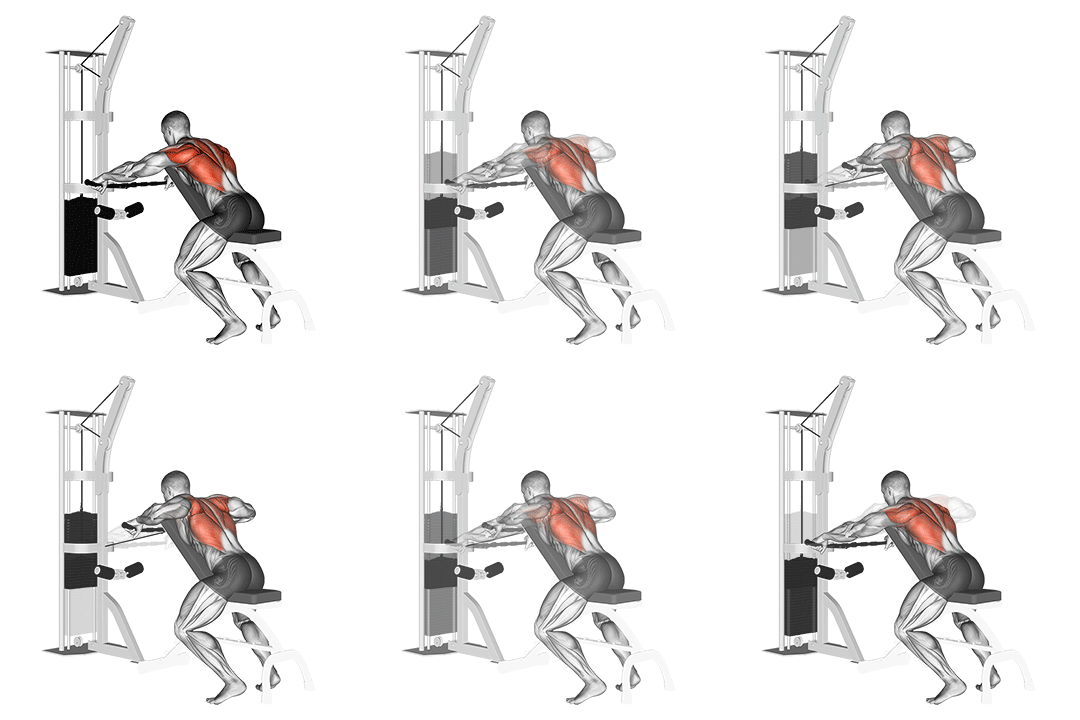
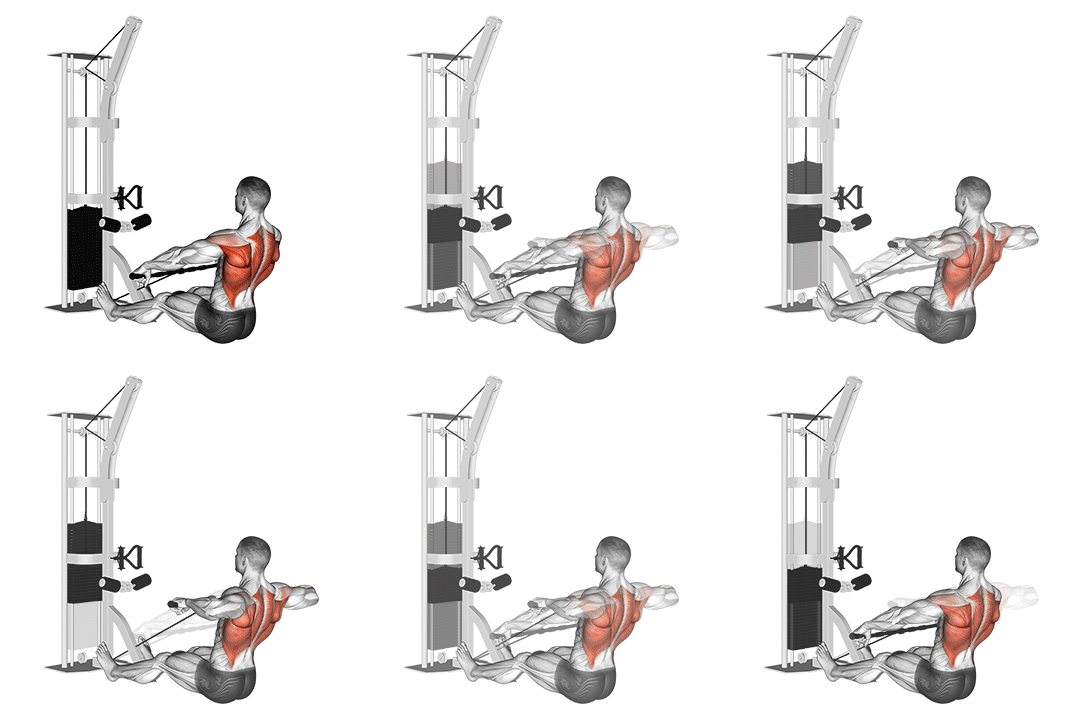
Cable Decline Seated Wide-grip Row
Head-to-Head Comparison
| Attribute | Alternate Lateral Pulldown | Cable Decline Seated Wide-grip Row |
|---|---|---|
| Target Muscle |
Lats
|
Lats
|
| Body Part |
Back
|
Back
|
| Equipment |
Cable
|
Cable
|
| Difficulty |
Intermediate
|
Intermediate
|
| Movement Type |
Compound
|
Compound
|
| Secondary Muscles |
2
|
2
|
Secondary Muscles Activated
Alternate Lateral Pulldown
Cable Decline Seated Wide-grip Row
Visual Comparison
Overview
Alternate Lateral Pulldown vs Cable Decline Seated Wide-grip Row pits two cable compounds that attack the lats from different force vectors. If you want practical guidance, you’re in the right place: I’ll compare muscle activation, equipment needs, technique cues, injury risk, and progression strategies. You’ll get clear winners for hypertrophy, strength, beginners, and home setups plus exact rep ranges, angles, and biomechanical reasons to choose one over the other. Read on to pick the move that best fits your back-development goals and training setup.
Key Differences
- Both exercises target the Lats using Cable. The main differences are in their movement patterns and muscle activation angles.
Pros & Cons
Alternate Lateral Pulldown
+ Pros
- Better unilateral isolation for left-right balance and correcting asymmetries
- Greater lat stretch and late-concentric peak, which helps muscle growth when paired with 6–12 rep ranges
- Requires less specialized benching; can be mimicked with bands or a high pulley
- Improves core anti-rotation and scapular control
− Cons
- Harder to load maximally per side—total load per rep typically 10–20% lower than bilateral alternatives
- Higher demand on scapular control; poor form quickly reduces lat emphasis
- Can provoke shoulder issues if performed behind the neck or with excessive torso lean
Cable Decline Seated Wide-grip Row
+ Pros
- Allows heavier absolute loads and clearer strength progression
- Chest support reduces lower-back strain and isolates pulling muscles
- Wide grip emphasizes upper back and scapular retractors, improving posture
- Strong continuous tension on lats and forearms for grip and hypertrophy work
− Cons
- Wide grip can shift emphasis away from the lower lats toward upper-back and posterior deltoid
- Requires a decline bench or specific cable station setup not always available
- Flared elbows increase rotator cuff and shoulder stress if you overdo the weight
When Each Exercise Wins
The unilateral vertical pull creates a bigger lat length change and a stronger late-concentric peak, which favors mechanical tension and time under tension in the 6–12 rep range. You can use slow eccentrics (2–4 s) and unilateral focus to remove weaker side compensation and maximize lat fiber recruitment.
Chest support lets you load heavier with safer spinal position, and the horizontal force vector is better for building raw pulling strength. Progressive overload is simpler since you can incrementally add plates or stack weight without losing stability.
A supported, horizontal row reduces the need for anti-rotation core strength and teaches scapular retraction more safely. This stability helps a beginner learn pulling mechanics before progressing to unilateral variations.
You can approximate the unilateral pulldown with a resistance band or a single high pulley and a door anchor, making it more feasible for limited setups. It requires less bulky equipment than a decline bench plus wide cable attachments.
Frequently Asked Questions
Can I do both Alternate Lateral Pulldown and Cable Decline Seated Wide-grip Row in the same workout?
Yes—pairing them works well: use the heavier Cable Decline Seated Wide-grip Row early for 3–5 sets of 4–8 reps to build strength, then finish with 2–3 sets of Alternate Lateral Pulldown for 8–12 reps to emphasize unilateral hypertrophy and extra time under tension.
Which exercise is better for beginners?
The Cable Decline Seated Wide-grip Row is better for most beginners because chest support stabilizes the torso and simplifies learning scapular retraction. Once you’ve built basic strength and control, add unilateral pulldowns to correct imbalances and increase ROM.
How do the muscle activation patterns differ?
Pulldowns produce greater lat length change and a late-concentric peak due to the vertical-down vector and shoulder extension motion, while wide-grip rows place more continuous load on scapular retractors and forearms because the pull is horizontal and elbows flare. Expect higher mid-trap/rhomboid EMG in the row and stronger isolated lat peaks in the pulldown.
Can Cable Decline Seated Wide-grip Row replace Alternate Lateral Pulldown?
It can replace the pulldown for strength phases because it allows heavier loading, but it won’t replicate the exact lat stretch and unilateral control of the pulldown. For balanced development, include both across training cycles rather than relying on one permanently.
Expert Verdict
Both exercises deserve a place in a balanced back program, but choose deliberately by goal. Use Alternate Lateral Pulldown when your aim is targeted lat hypertrophy, unilateral correction, and greater stretch under load—work sets of 6–12 reps with 2–4 s eccentrics and a slight 10–15° torso lean. Choose Cable Decline Seated Wide-grip Row when you want to build raw horizontal pulling strength, add heavier loads safely, or emphasize the mid-upper back; load for 4–8 heavy reps or 8–12 for hypertrophy. Rotate them across phases to get the different force vectors and complete lat development.
Also Compare
More comparisons with Alternate Lateral Pulldown
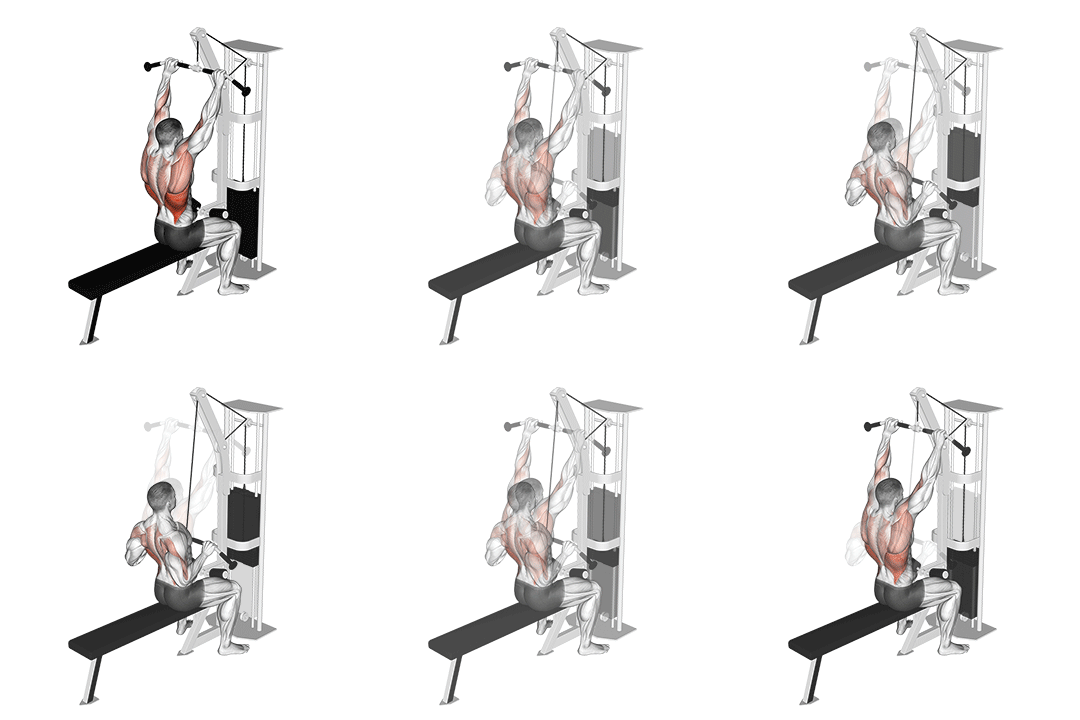
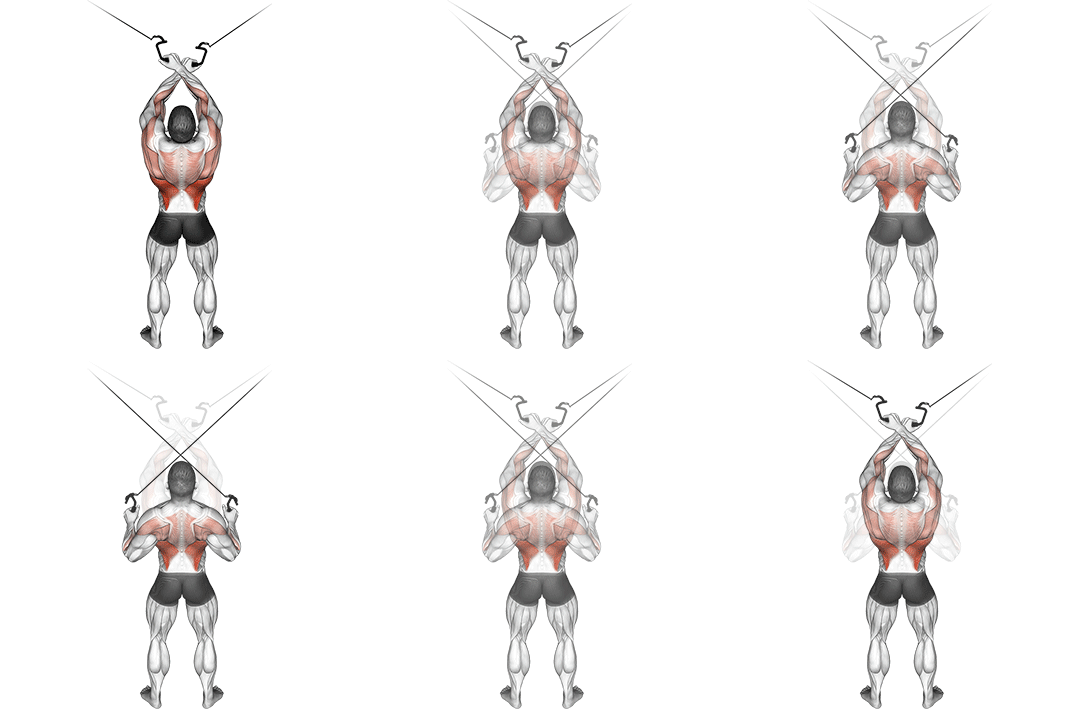
More comparisons with Cable Decline Seated Wide-grip Row
Compare More Exercises
Use our free comparison tool to analyze any two exercises head-to-head.
Compare Exercises