

Alternate Lateral Pulldown vs Cable Floor Seated Wide-grip Row: Complete Comparison Guide
Alternate Lateral Pulldown vs Cable Floor Seated Wide-grip Row — if you want wider, thicker lats you need to pick movements that match your goals and equipment. Here you’ll get clear, actionable guidance on how each exercise loads the latissimus dorsi, how the force vector and scapular path change muscle recruitment, and specific technique cues to maximize muscle growth and reduce injury risk. You’ll also find rep ranges, progression ideas, and when to choose one over the other in your program.
Exercise Comparison
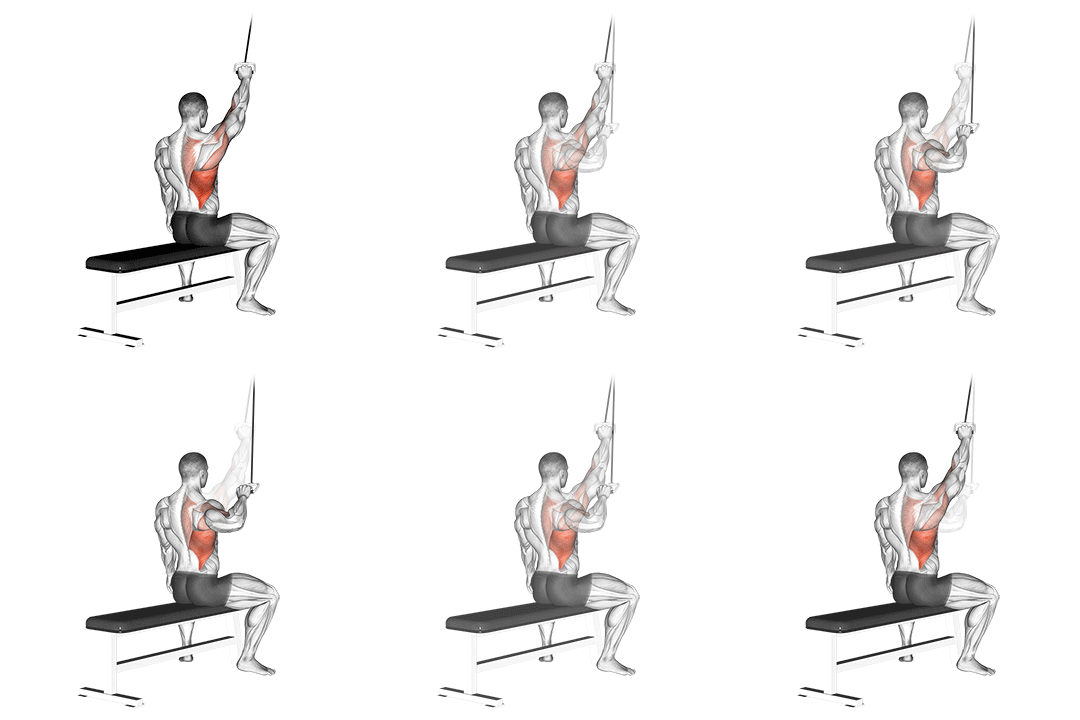
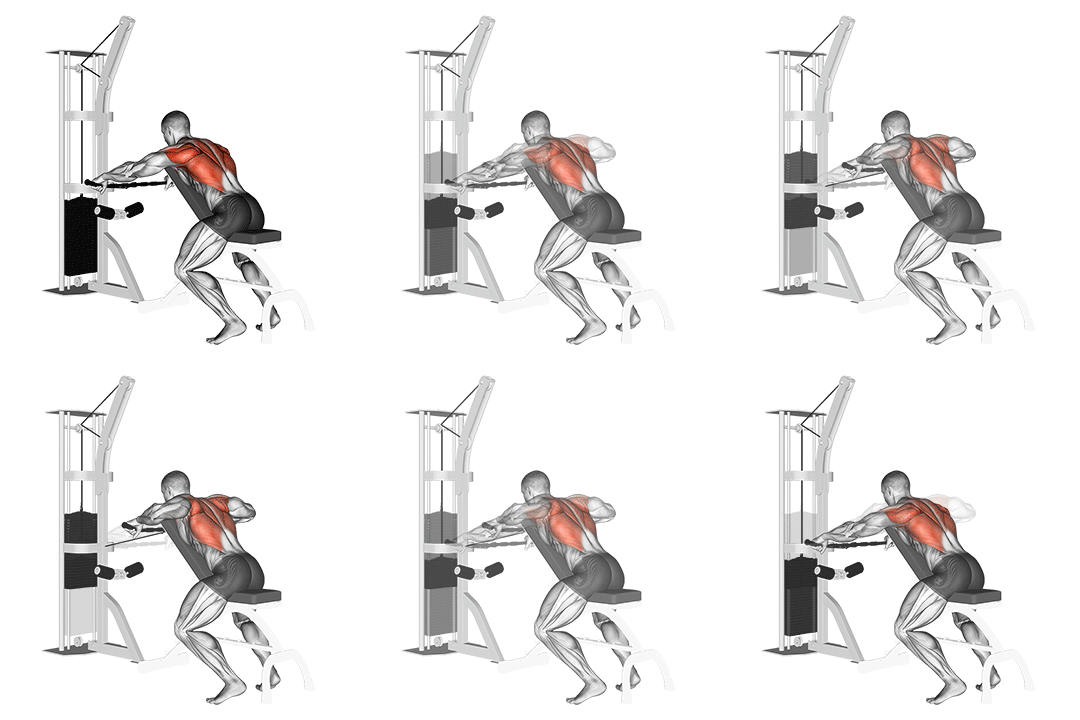
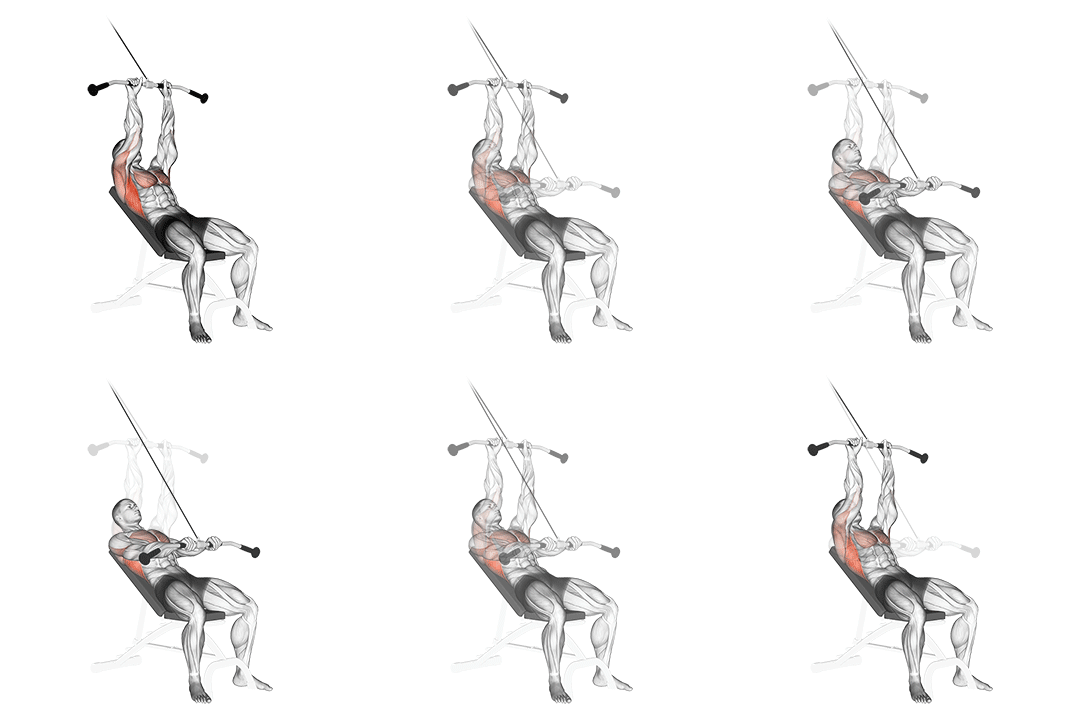
Alternate Lateral Pulldown
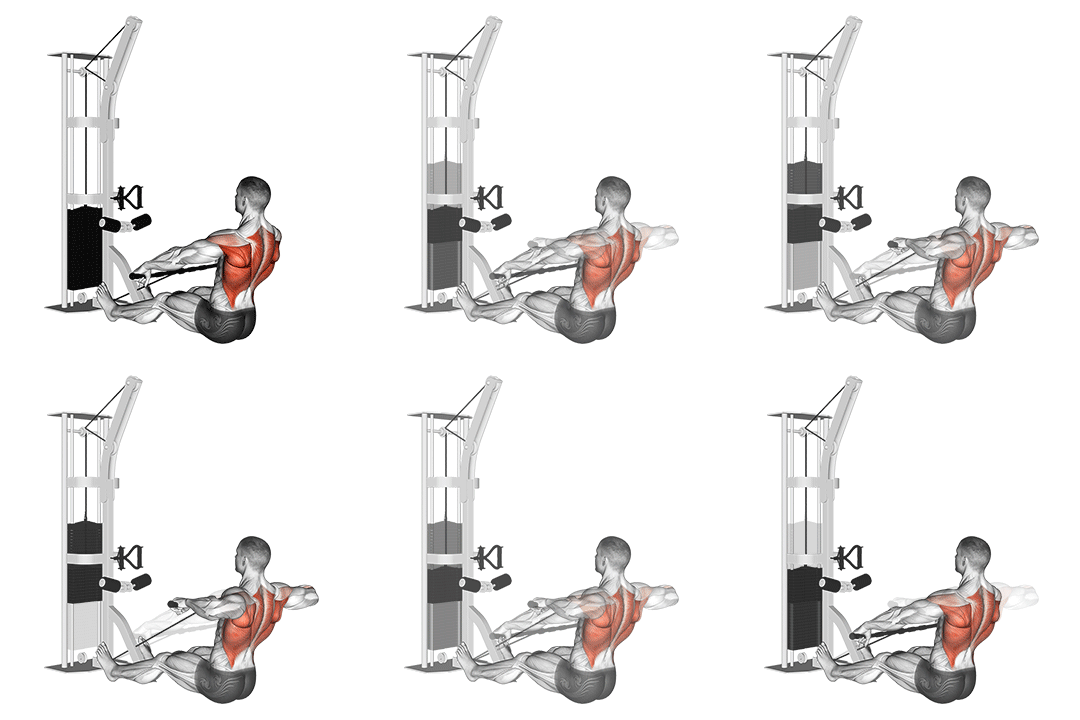
Cable Floor Seated Wide-grip Row
Head-to-Head Comparison
| Attribute | Alternate Lateral Pulldown | Cable Floor Seated Wide-grip Row |
|---|---|---|
| Target Muscle |
Lats
|
Lats
|
| Body Part |
Back
|
Back
|
| Equipment |
Cable
|
Cable
|
| Difficulty |
Intermediate
|
Intermediate
|
| Movement Type |
Compound
|
Compound
|
| Secondary Muscles |
2
|
2
|
Secondary Muscles Activated
Alternate Lateral Pulldown
Cable Floor Seated Wide-grip Row
Visual Comparison
Overview
Alternate Lateral Pulldown vs Cable Floor Seated Wide-grip Row — if you want wider, thicker lats you need to pick movements that match your goals and equipment. Here you’ll get clear, actionable guidance on how each exercise loads the latissimus dorsi, how the force vector and scapular path change muscle recruitment, and specific technique cues to maximize muscle growth and reduce injury risk. You’ll also find rep ranges, progression ideas, and when to choose one over the other in your program.
Key Differences
- Both exercises target the Lats using Cable. The main differences are in their movement patterns and muscle activation angles.
Pros & Cons
Alternate Lateral Pulldown
+ Pros
- Places lats under a greater stretch at the top of the movement, enhancing length-tension stimulus for width
- Unilateral variation reduces side-to-side imbalances and corrects dominance
- Vertical-to-diagonal force vector targets lower and lateral lat fibers effectively
- Allows strict tempo control for eccentric overload (2–4 second eccentrics)
− Cons
- Requires a high pulley or lat tower, less common in small gyms
- Higher coordination demand; easy to let the torso cheat on unilateral reps
- Potential for shoulder impingement if you flare elbows or pull behind the neck
Cable Floor Seated Wide-grip Row
+ Pros
- Easier to load heavier and progress strength via heavier weights
- Stable floor position reduces lower-back involvement and simplifies cueing
- Strong emphasis on scapular retraction builds mid-back thickness
- Low-pulley setups are common and can be replicated with bands
− Cons
- Less lat stretch at start compared with pulldown, slightly less emphasis on width
- Grip and forearm fatigue can limit lat stimulus before targeted fatigue
- Can promote rounded shoulders if scapular retraction and neutral spine aren’t maintained
When Each Exercise Wins
Pulldowns create a larger lat length-tension change and let you target lateral fibers with a long ROM; use 8–12 reps with 2–3 second eccentrics for hypertrophy and unilateral control.
Rows let you handle heavier loads and emphasize horizontal force production and scapular retraction, so use 3–6 rep ranges and heavier sets to build pulling strength.
The seated row’s stable position and simpler motor pattern make it easier to learn proper scapular retraction and breathing; start with light loads and focus on 8–15 controlled reps.
Low-pulley mechanics translate well to resistance bands anchored low or door anchors, making the seated row more practical when you lack a tall lat tower.
Frequently Asked Questions
Can I do both Alternate Lateral Pulldown and Cable Floor Seated Wide-grip Row in the same workout?
Yes. Pair them by priority: do your main focus first (e.g., rows for strength or pulldowns for width) and follow with the other for 2–3 lighter sets. Keep total weekly volume in mind—8–15 working sets per muscle group per week is a common hypertrophy range.
Which exercise is better for beginners?
The Cable Floor Seated Wide-grip Row is better for beginners because the floor provides a stable base and the horizontal pull is an easier motor pattern. Focus on slow controlled reps and learning scapular retraction before increasing load.
How do the muscle activation patterns differ?
Activation differs by force vector and muscle length: pulldowns load the lats at longer starting lengths with more downward scapular motion, while seated rows maintain a more constant moment arm with stronger mid-trap and posterior-delt engagement during horizontal adduction.
Can Cable Floor Seated Wide-grip Row replace Alternate Lateral Pulldown?
It can for overall back development, but not perfectly. If your goal is maximum lat width and length-tension stimulus, keep pulldowns in your rotation; use seated rows when you need heavier loading or simpler progression.
Expert Verdict
Use Alternate Lateral Pulldown when your priority is lat width and controlling unilateral weak links: the vertical-to-diagonal pull puts the lat through a longer ROM and emphasizes lateral fibers when you pull with elbow drive and scapular depression. Choose Cable Floor Seated Wide-grip Row when you want thicker mid-back development, heavier loading, and a simpler pattern for beginners—its horizontal vector trains scapular retractors and lets you progress load efficiently. Program both if possible: alternate pulldowns for 2–3 sets of 8–12 to prioritize length-tension and rows for 3–5 sets of 4–8 to build strength and thickness.
Also Compare
More comparisons with Alternate Lateral Pulldown
More comparisons with Cable Floor Seated Wide-grip Row
Compare More Exercises
Use our free comparison tool to analyze any two exercises head-to-head.
Compare Exercises