

Alternate Lateral Pulldown vs Cable Incline Pushdown: Complete Comparison Guide
Alternate Lateral Pulldown vs Cable Incline Pushdown — if you want bigger, stronger lats you need to know how these two cable compounds differ. You’ll get a clear breakdown of primary and secondary muscle recruitment, equipment and setup cues, concrete technique tips, and programming recommendations (sets, reps, angles). I’ll show how force vectors, scapular mechanics, and length-tension relationships change which fibers you hit, and give direct guidance so you can pick the right move for hypertrophy, strength, or easy learning.
Exercise Comparison
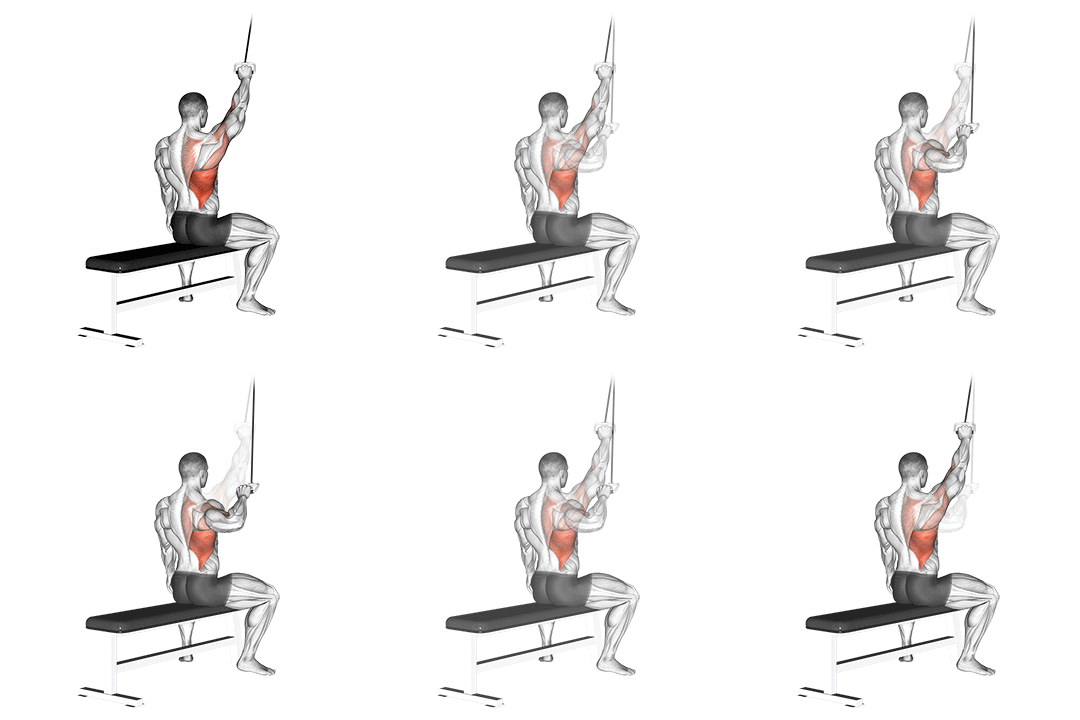
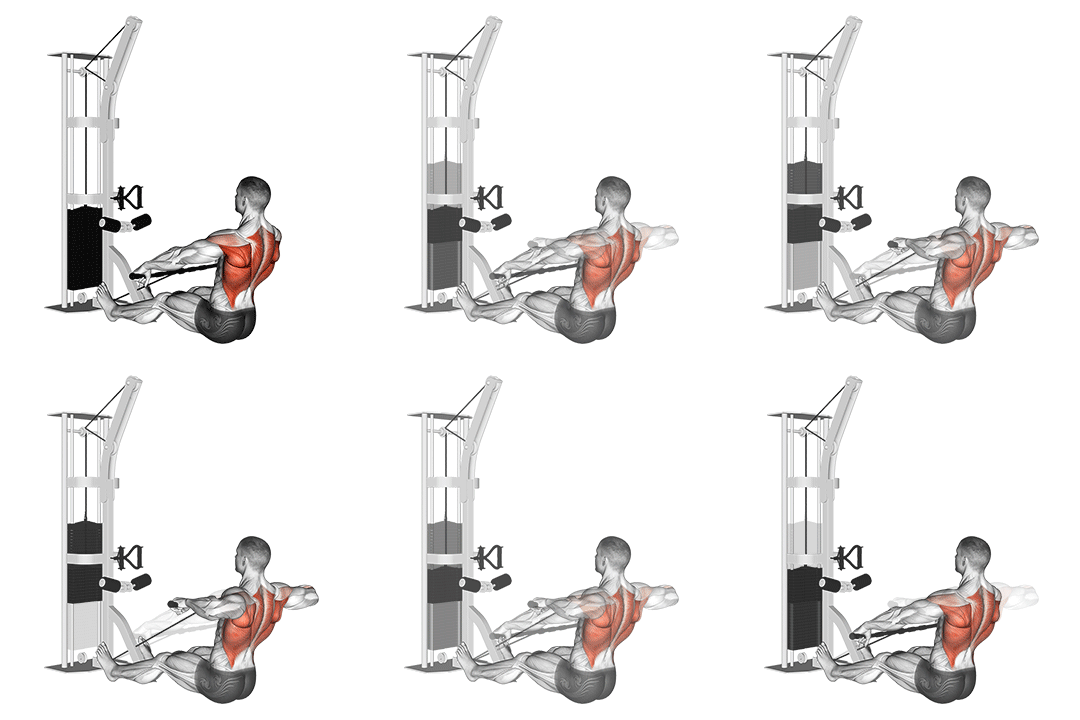
Alternate Lateral Pulldown
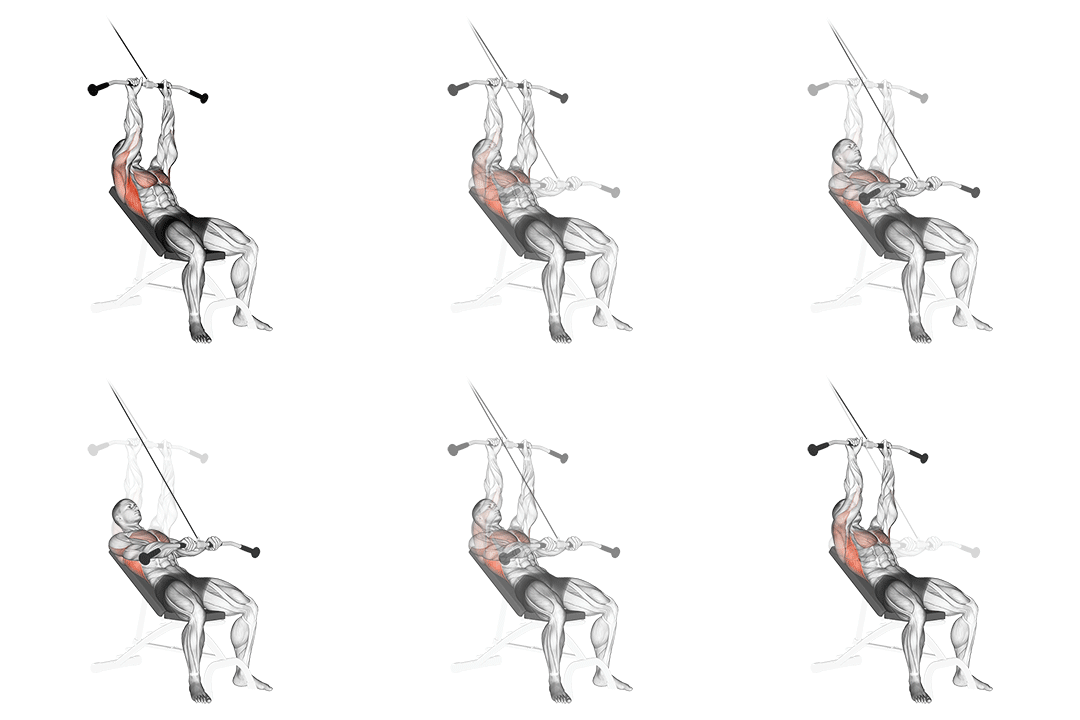
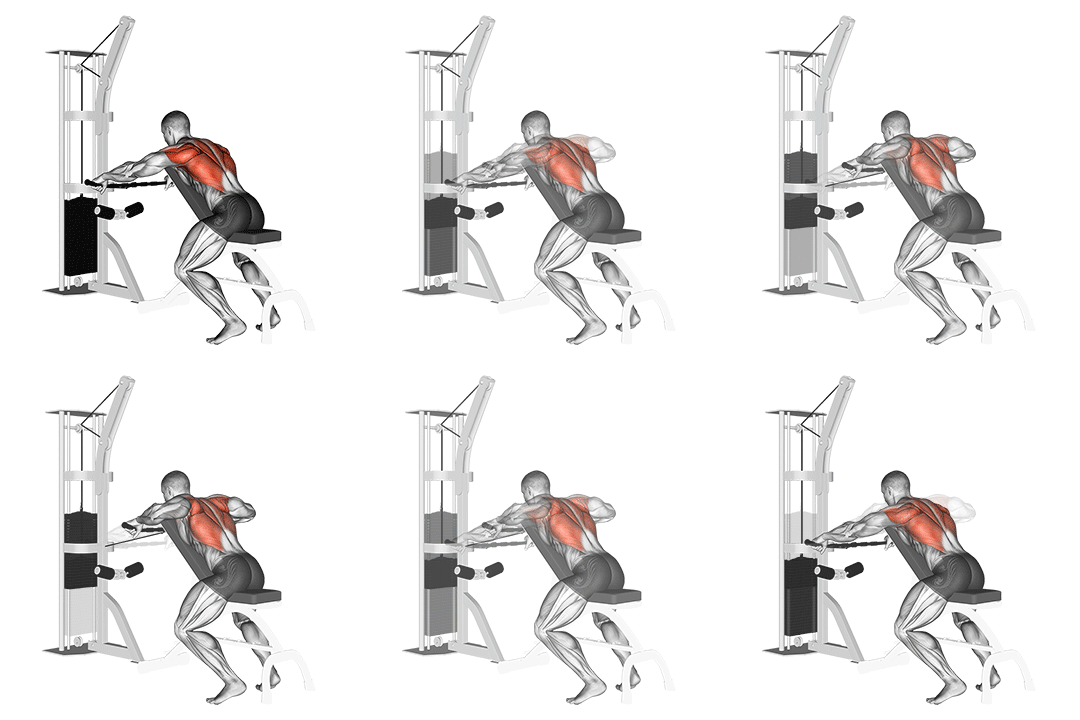
Cable Incline Pushdown
Head-to-Head Comparison
| Attribute | Alternate Lateral Pulldown | Cable Incline Pushdown |
|---|---|---|
| Target Muscle |
Lats
|
Lats
|
| Body Part |
Back
|
Back
|
| Equipment |
Cable
|
Cable
|
| Difficulty |
Intermediate
|
Intermediate
|
| Movement Type |
Compound
|
Compound
|
| Secondary Muscles |
2
|
2
|
Secondary Muscles Activated
Alternate Lateral Pulldown
Cable Incline Pushdown
Visual Comparison
Overview
Alternate Lateral Pulldown vs Cable Incline Pushdown — if you want bigger, stronger lats you need to know how these two cable compounds differ. You’ll get a clear breakdown of primary and secondary muscle recruitment, equipment and setup cues, concrete technique tips, and programming recommendations (sets, reps, angles). I’ll show how force vectors, scapular mechanics, and length-tension relationships change which fibers you hit, and give direct guidance so you can pick the right move for hypertrophy, strength, or easy learning.
Key Differences
- Both exercises target the Lats using Cable. The main differences are in their movement patterns and muscle activation angles.
Pros & Cons
Alternate Lateral Pulldown
+ Pros
- Allows heavier loads and stronger mechanical advantage for lower lat fibers
- Unilateral variation corrects side-to-side asymmetries and improves stabilization
- Greater biceps and rhomboid recruitment supports compound back development
- Easy to vary grip width and tempo for strength progressions
− Cons
- Requires solid scapular control and torso bracing to perform correctly
- Slightly higher technical demand for unilateral patterning
- Risk of shoulder shrugging or pulling behind the chest if form breaks
Cable Incline Pushdown
+ Pros
- Keeps constant tension on the lats through a lengthened ROM
- Bench support simplifies technique, making it beginner-friendly
- Less direct load on the biceps so you can bias the lats and shoulders
- Great for high-rep metabolic sets and finishers
− Cons
- Bench and pulley setup can be awkward in busy gyms
- Less capacity for very heavy loads and maximal strength work
- Increased triceps and anterior shoulder involvement can limit lat isolation
When Each Exercise Wins
Choose the pulldown for hypertrophy when you want higher absolute loading and the ability to overload progressively. Its vertical force vector and capacity for heavier sets (6–12 reps at challenging loads) stimulate both stretch and high-force adaptations across more lat fibers.
Strength requires high tension and progressive loading, which the pulldown supports through heavier single-arm and double-arm variations. You can load closer to maximal effort, manipulate tempo, and track incremental increases more reliably than with an incline pushdown.
The incline pushdown offers a stable setup and simpler movement pattern so you can learn scapular retraction and lat drive without complex torso control. It’s easier to cue and keeps constant tension while you build coordination.
If you have a single high pulley or can simulate with resistance bands and an incline surface, the pushdown is more adaptable for limited setups. It requires less specialized hardware than a dedicated lat machine and gives steady tension with bands or cables.
Frequently Asked Questions
Can I do both Alternate Lateral Pulldown and Cable Incline Pushdown in the same workout?
Yes. Start with the Alternate Lateral Pulldown to handle heavier loads and target strength, then finish with Cable Incline Pushdowns for extra time under tension and isolation. Keep total volume reasonable: for example, 3–4 heavy sets at 6–8 reps followed by 2–3 sets at 10–15 reps.
Which exercise is better for beginners?
Cable Incline Pushdown is generally better for beginners because the bench provides stability and the movement path is simpler. It lets you practice scapular control and lat engagement before progressing to unilateral pulldowns that require more trunk and shoulder coordination.
How do the muscle activation patterns differ?
Pulldowns produce a vertical-to-diagonal force vector with a scapular depression-retraction sequence and marked elbow flexion, so the biceps and rhomboids assist heavily. Incline pushdowns keep the lats in a lengthened position with a more horizontal/diagonal vector, producing continuous lat tension and greater involvement of shoulder stabilizers and triceps.
Can Cable Incline Pushdown replace Alternate Lateral Pulldown?
Not exactly. Cable Incline Pushdown can complement or substitute in a pinch, especially for volume work, but it lacks the same heavy-load capacity and unilateral overload potential of the pulldown. Choose the pushdown for isolation and pump, and the pulldown when you need maximal force and strength progression.
Expert Verdict
Both exercises are valuable tools for back development, but use them with different priorities. Pick Alternate Lateral Pulldown when you want to build raw lat size and strength: it accepts heavier loads, enables unilateral correction, and targets lower/outer lat fibers through a strong vertical force vector. Use Cable Incline Pushdown as a technical primer, finisher, or for high-volume work when you want constant tension and a lengthened-position stimulus with less biceps involvement. Program pulldowns in 4–6 sets of 6–12 reps for strength and hypertrophy progress, and add 2–4 sets of 8–15 reps of incline pushdowns to increase time under tension or as a recovery-focused option.
Also Compare
More comparisons with Alternate Lateral Pulldown
More comparisons with Cable Incline Pushdown
Compare More Exercises
Use our free comparison tool to analyze any two exercises head-to-head.
Compare Exercises