

Ankle Circles vs Bodyweight Standing Calf Raise: Complete Comparison Guide
Ankle Circles vs Bodyweight Standing Calf Raise — you’re comparing a mobility-focused isolation move to a strength-oriented isolation move for the calves. If you want clearer recommendations for mobility, muscle activation, and how to program each exercise, you’re in the right place. I’ll show you how each movement loads the gastrocnemius and soleus, which secondary muscles get involved, specific technique cues (angles, rep ranges), and which exercise suits goals like hypertrophy, strength, or rehab. Read on and you’ll know exactly when to choose one or pair them together.
Exercise Comparison
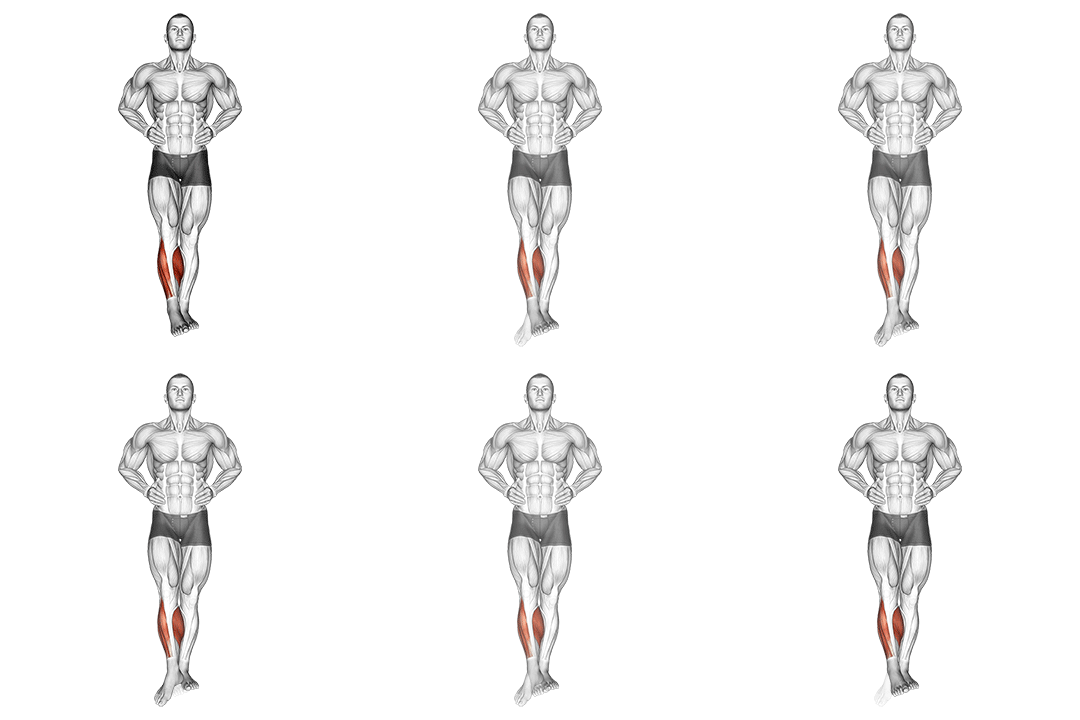
Ankle Circles
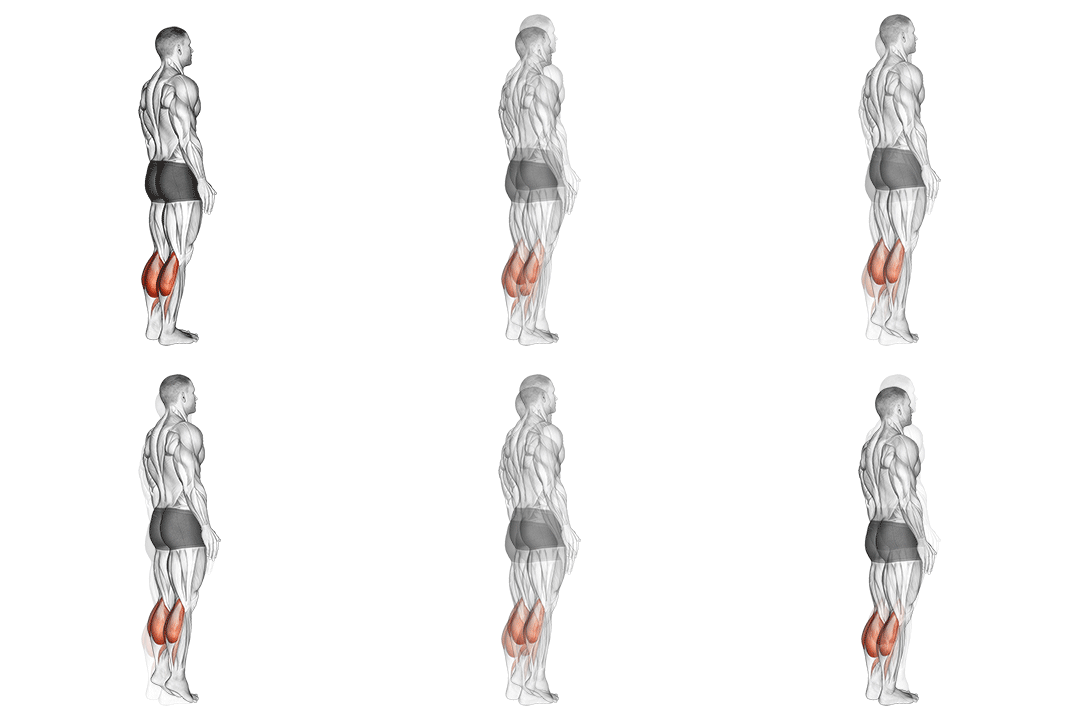
Bodyweight Standing Calf Raise
Head-to-Head Comparison
| Attribute | Ankle Circles | Bodyweight Standing Calf Raise |
|---|---|---|
| Target Muscle |
Calves
|
Calves
|
| Body Part |
Lower-legs
|
Lower-legs
|
| Equipment |
Body-weight
|
Body-weight
|
| Difficulty |
Beginner
|
Beginner
|
| Movement Type |
Isolation
|
Isolation
|
| Secondary Muscles |
1
|
2
|
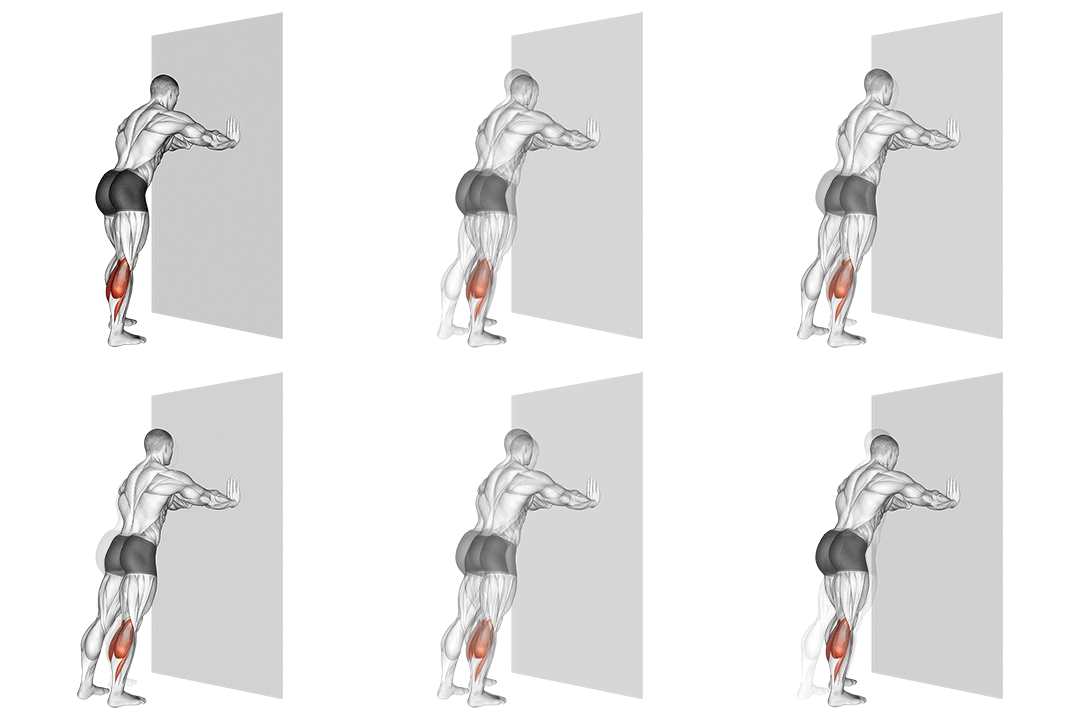
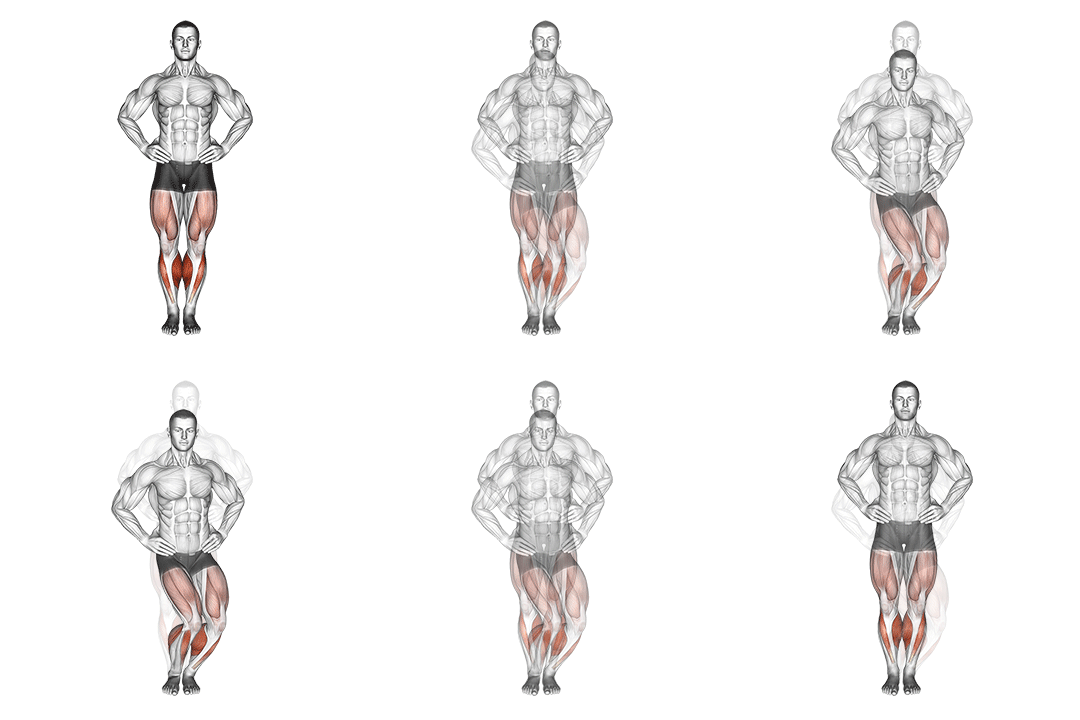
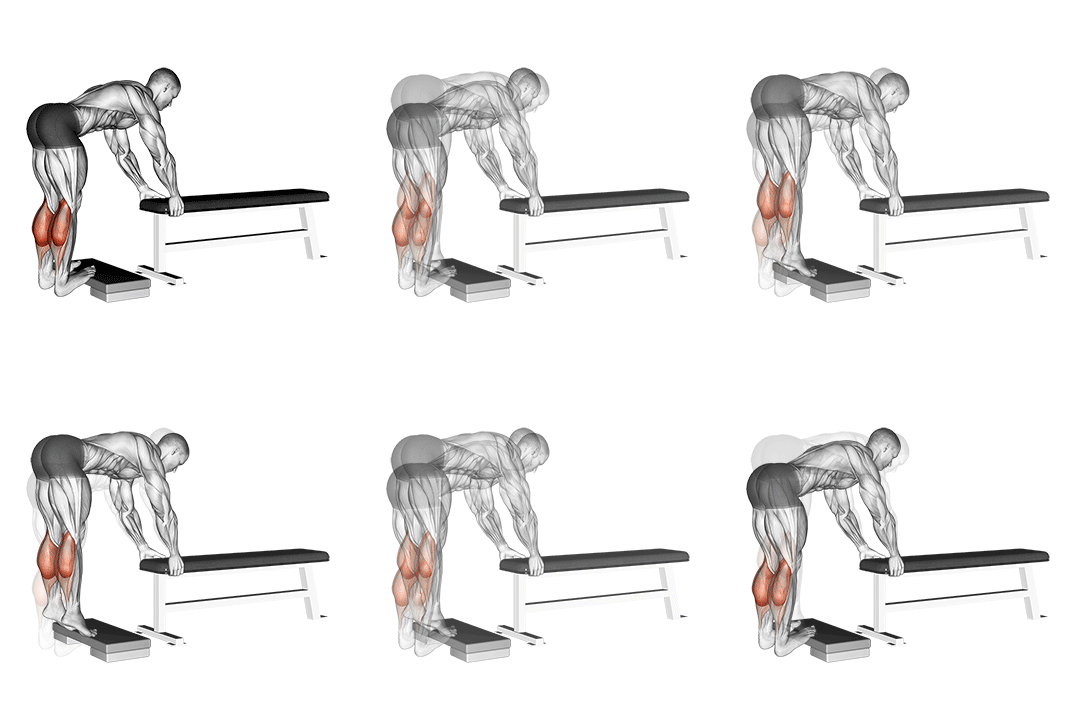
Secondary Muscles Activated
Ankle Circles
Bodyweight Standing Calf Raise
Visual Comparison
Overview
Ankle Circles vs Bodyweight Standing Calf Raise — you’re comparing a mobility-focused isolation move to a strength-oriented isolation move for the calves. If you want clearer recommendations for mobility, muscle activation, and how to program each exercise, you’re in the right place. I’ll show you how each movement loads the gastrocnemius and soleus, which secondary muscles get involved, specific technique cues (angles, rep ranges), and which exercise suits goals like hypertrophy, strength, or rehab. Read on and you’ll know exactly when to choose one or pair them together.
Key Differences
- Both exercises target the Calves using Body-weight. The main differences are in their movement patterns and muscle activation angles.
Pros & Cons
Ankle Circles
+ Pros
- Improves ankle mobility and multi-planar control
- Very low load — safe for rehab and warm-ups
- Requires zero equipment and minimal space
- Enhances proprioception and intrinsic foot activation
− Cons
- Minimal stimulus for muscle hypertrophy
- Limited progression options for strength
- Provides low mechanical tension (not ideal for heavy loading)
Bodyweight Standing Calf Raise
+ Pros
- Delivers measurable mechanical tension for muscle growth
- Easy to progress with added load or single-leg variations
- Targets gastrocnemius strongly in extended-knee position
- Teaches force production and eccentric control in the sagittal plane
− Cons
- Requires balance and a stable surface
- Higher Achilles and calf loading — greater injury risk if overloaded
- Less multi-planar ankle mobility work compared with ankle circles
When Each Exercise Wins
Standing Calf Raises create substantially higher plantarflexion torque and allow progressive overload (add weight, single-leg) and 8–20 rep schemes, producing the mechanical tension required for muscle growth.
You can progressively add external load and manipulate tempo in standing raises to increase force output and tendon stiffness—key drivers of strength—unlike the low-load ankle circles.
Ankle Circles teach motor control, restore ROM, and place minimal load on the Achilles and calf muscles, making them ideal as an introductory exercise or during recovery.
Ankle Circles need zero equipment and almost no space, so they’re the easiest to fit into travel, desk breaks, or rehab routines; standing raises are workable but may need a step or rail for safety.
Frequently Asked Questions
Can I do both Ankle Circles and Bodyweight Standing Calf Raise in the same workout?
Yes. Begin with 1–2 sets of ankle circles (10–20 rotations each direction) to improve ROM and neuromuscular readiness, then perform 3–4 sets of standing calf raises (8–20 reps) to apply load and build strength.
Which exercise is better for beginners?
Ankle Circles are better for absolute beginners because they require no load and teach ankle control. Once you have adequate mobility and balance, add standing calf raises to develop strength and size.
How do the muscle activation patterns differ?
Ankle Circles produce continuous, low-amplitude activation across multiple planes, emphasizing stabilizers and proprioception. Standing calf raises produce high concentric peaks in the sagittal plane, maximizing gastrocnemius and soleus recruitment for force production and hypertrophy.
Can Bodyweight Standing Calf Raise replace Ankle Circles?
Not entirely. Standing raises replace the strength and overload function of ankle circles for the sagittal plane, but they don’t match the multi-directional mobility and ankle stabilizer activation that ankle circles provide. Use both when possible.
Expert Verdict
Use Ankle Circles when your priority is mobility, ankle stability, or rehabbing a tendon. They deliver multi-planar control, activate intrinsic foot muscles, and are safe enough for daily use. Choose Bodyweight Standing Calf Raises when you want to build calf size or strength: perform 3–4 sets of 8–20 reps, emphasize full range (10–20° dorsiflexion to full plantarflexion), and add load or single-leg progressions as you improve. For best results, pair them: start sessions with ankle circles to prime the joint and finish with calf raises to apply high mechanical tension for muscle growth.
Also Compare
More comparisons with Ankle Circles
More comparisons with Bodyweight Standing Calf Raise
Compare More Exercises
Use our free comparison tool to analyze any two exercises head-to-head.
Compare Exercises