

Ankle Circles vs Calf Stretch With Hands Against Wall: Complete Comparison Guide
Ankle Circles vs Calf Stretch With Hands Against Wall puts two beginner-friendly calf isolation moves side by side so you can pick what fits your goals. You’ll get clear technique cues, the biomechanics behind muscle length-tension and force vectors, how each movement recruits calves and supporting muscles, plus practical sets, reps, and progressions. Read on and you’ll know which exercise to use for mobility, prehab, or to increase muscle stiffness and tension for stronger plantarflexion.
Exercise Comparison
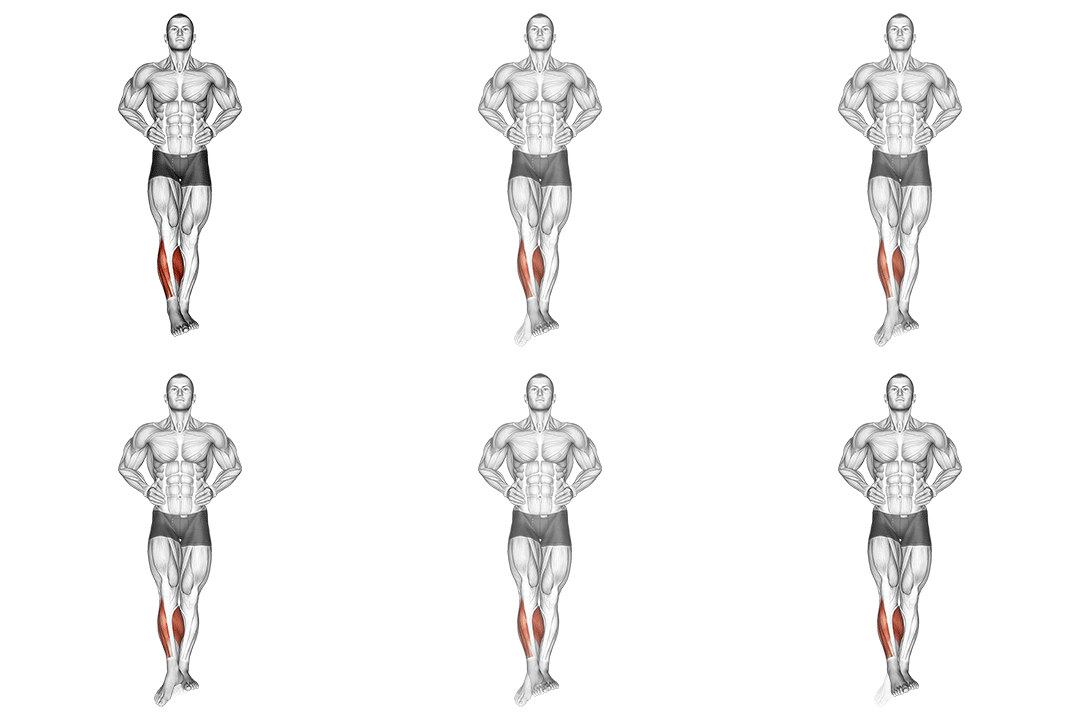
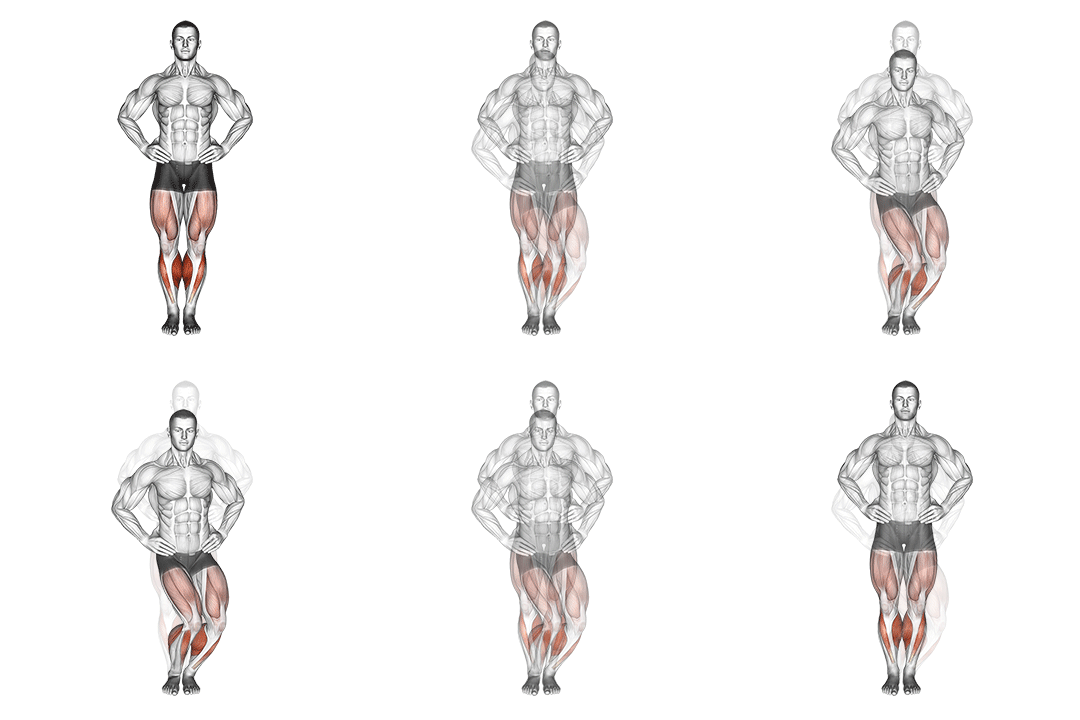
Ankle Circles
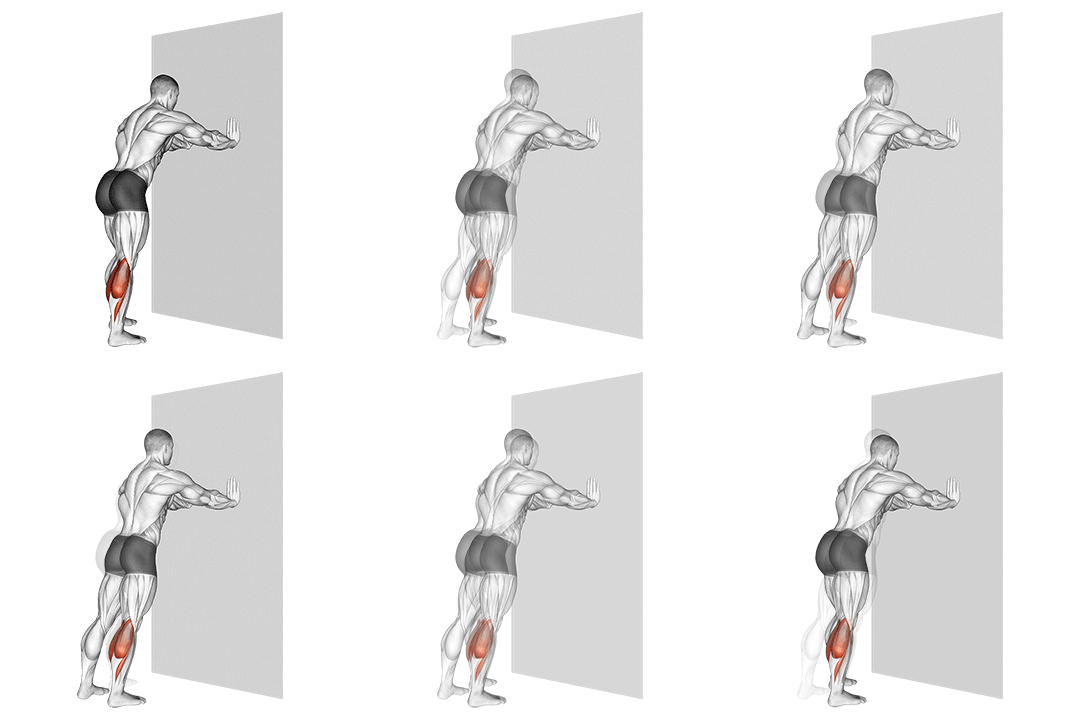
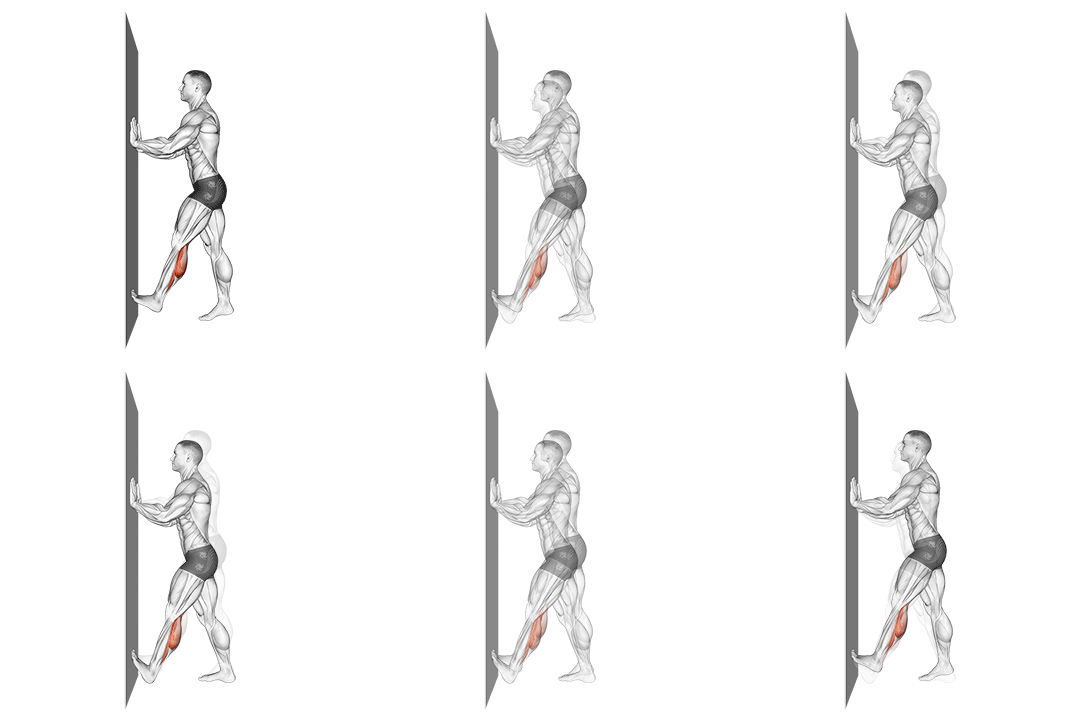
Calf Stretch With Hands Against Wall
Head-to-Head Comparison
| Attribute | Ankle Circles | Calf Stretch With Hands Against Wall |
|---|---|---|
| Target Muscle |
Calves
|
Calves
|
| Body Part |
Lower-legs
|
Lower-legs
|
| Equipment |
Body-weight
|
Body-weight
|
| Difficulty |
Beginner
|
Beginner
|
| Movement Type |
Isolation
|
Isolation
|
| Secondary Muscles |
1
|
1
|
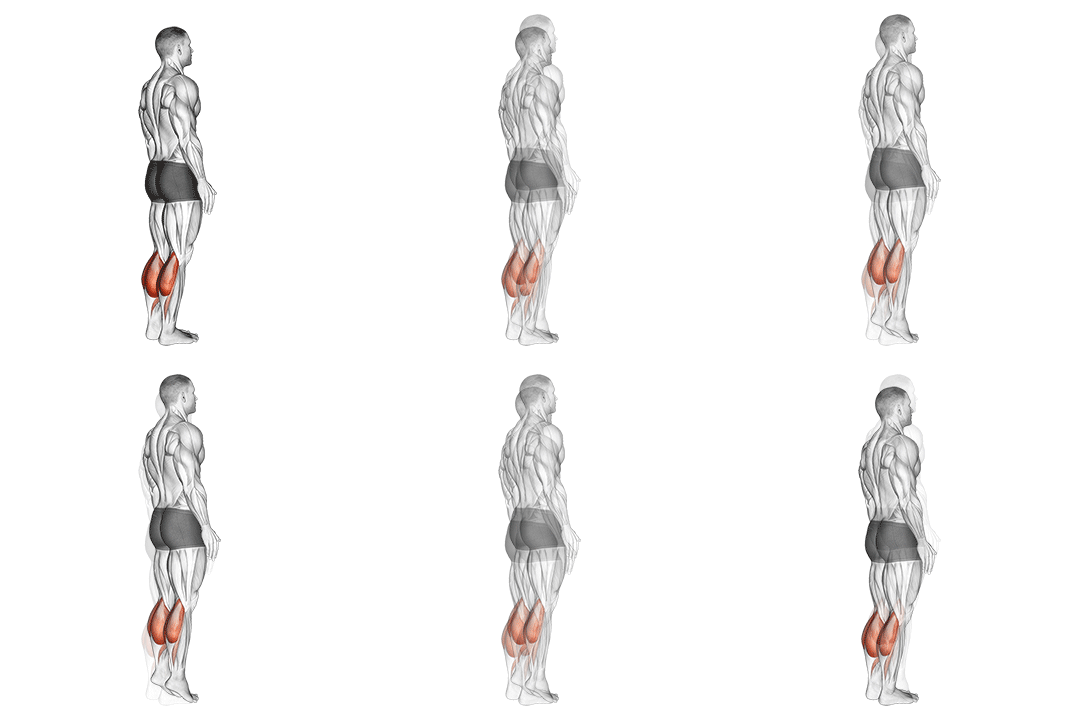
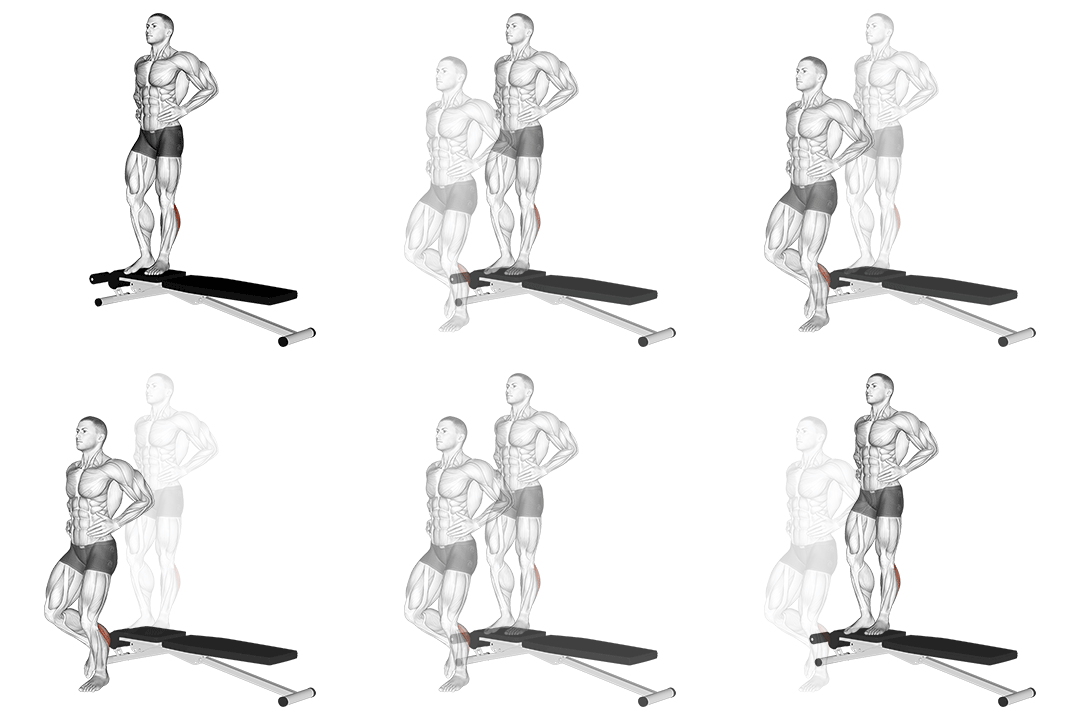
Secondary Muscles Activated
Ankle Circles
Calf Stretch With Hands Against Wall
Visual Comparison
Overview
Ankle Circles vs Calf Stretch With Hands Against Wall puts two beginner-friendly calf isolation moves side by side so you can pick what fits your goals. You’ll get clear technique cues, the biomechanics behind muscle length-tension and force vectors, how each movement recruits calves and supporting muscles, plus practical sets, reps, and progressions. Read on and you’ll know which exercise to use for mobility, prehab, or to increase muscle stiffness and tension for stronger plantarflexion.
Key Differences
- Both exercises target the Calves using Body-weight. The main differences are in their movement patterns and muscle activation angles.
Pros & Cons
Ankle Circles
+ Pros
- Improves ankle proprioception and stabilizer activation with minimal equipment
- Safe seated option for those with balance or weight-bearing limits
- Easy to repeat: 10–30 reps per direction builds control and endurance
- Can be scaled with bands or single-leg balance drills for progressive overload
− Cons
- Low passive stretch — less effective for increasing calf length or flexibility
- Limited direct hypertrophy stimulus compared with loaded calf work
- May feel ineffective if your primary goal is range-of-motion gains
Calf Stretch With Hands Against Wall
+ Pros
- Places calf on long-length tension improving flexibility and passive range
- Targets gastrocnemius more with knee extended, soleus with knee bent
- Uses bodyweight force vector to produce a strong, safe stretch without equipment
- Clear progression: increase hold time (20s → 60s) or perform single-leg variations
− Cons
- Requires standing balance and a wall or sturdy support
- Can overstretch Achilles/gastrocnemius if technique or range is forced
- Less dynamic activation — limited proprioceptive benefit compared to ankle circling
When Each Exercise Wins
While neither is a primary hypertrophy builder, the wall stretch better loads the calf in long-tension and can be transitioned to loaded eccentric and isometric work. Longer holds (30–60s) at end-range increase time under tension, which supports muscle remodeling when combined with progressive loading.
The wall stretch trains plantarflexion under a significant dorsiflexed position and can be adapted to single-leg or loaded variations that place higher force vectors through the Achilles. That transfers better to loaded calf raises and functional strength than the low-load ankle circles.
Ankle Circles have the simplest motor pattern, minimal balance demand, and immediate proprioceptive feedback. Perform 2–3 sets of 10–20 reps per direction to build control before progressing to standing stretches or loaded work.
You can do ankle circles anywhere—seated on a chair or lying down—no wall or extra space needed. They’re ideal for quick mobility breaks, desk sessions, or travel when a wall and clear floor space aren’t available.
Frequently Asked Questions
Can I do both Ankle Circles and Calf Stretch With Hands Against Wall in the same workout?
Yes. Start with 1–2 sets of ankle circles (10–20 reps per direction) to prime stabilizers, then perform 2–4 wall stretch holds of 20–60 seconds to load the calf at end-range. This sequence improves control first, then applies length-tension for flexibility and strength preparation.
Which exercise is better for beginners?
Ankle Circles are better for absolute beginners because they demand less balance and teach ankle control. They let you build proprioception and basic plantarflexion/dorsiflexion control before introducing standing stretches or loaded calf work.
How do the muscle activation patterns differ?
Ankle Circles use cyclic concentric and eccentric contractions of plantarflexors and ankle stabilizers, producing repeated low-level motor unit recruitment. The wall stretch produces sustained isometric/passive tension with less concentric action, shifting force to passive structures and longer muscle lengths—useful for stretch-induced remodeling and flexibility.
Can Calf Stretch With Hands Against Wall replace Ankle Circles?
Not fully. The wall stretch improves length and passive tension but lacks the proprioceptive and stabilizer training ankle circles provide. If your goal is solely flexibility, the wall stretch can replace circles temporarily, but for control and injury prevention keep ankle circles in your routine.
Expert Verdict
Use Ankle Circles when your priority is ankle mobility, proprioception, and safe, accessible activation — they’re perfect for beginners, desk breaks, and rehab. Do 2–3 sets of 10–30 circles per direction, cue slow controlled motion and full ROM. Choose Calf Stretch With Hands Against Wall when your goal is to increase calf length, passive tension, or to prepare for loaded plantarflexion work; hold 20–60 seconds, 2–4 sets, vary knee angle to emphasize gastrocnemius (knee straight) or soleus (knee bent). Combine both: ankle circles for control, wall stretches for length-tension and readiness for stronger work.
Also Compare
More comparisons with Ankle Circles
More comparisons with Calf Stretch With Hands Against Wall
Compare More Exercises
Use our free comparison tool to analyze any two exercises head-to-head.
Compare Exercises