

Archer Pull Up vs Back Pec Stretch: Complete Comparison Guide
Archer Pull Up vs Back Pec Stretch — you’re comparing a high-skill unilateral pull with a low-intensity lengthening drill. {Exercise1} vs {Exercise2} is included here so you can see the contrasts up front. I’ll walk you through who each move favors, how they load the lats biomechanically, what gear you need, the typical rep/hold ranges, and practical programming tips so you know when to pick one over the other.
Exercise Comparison
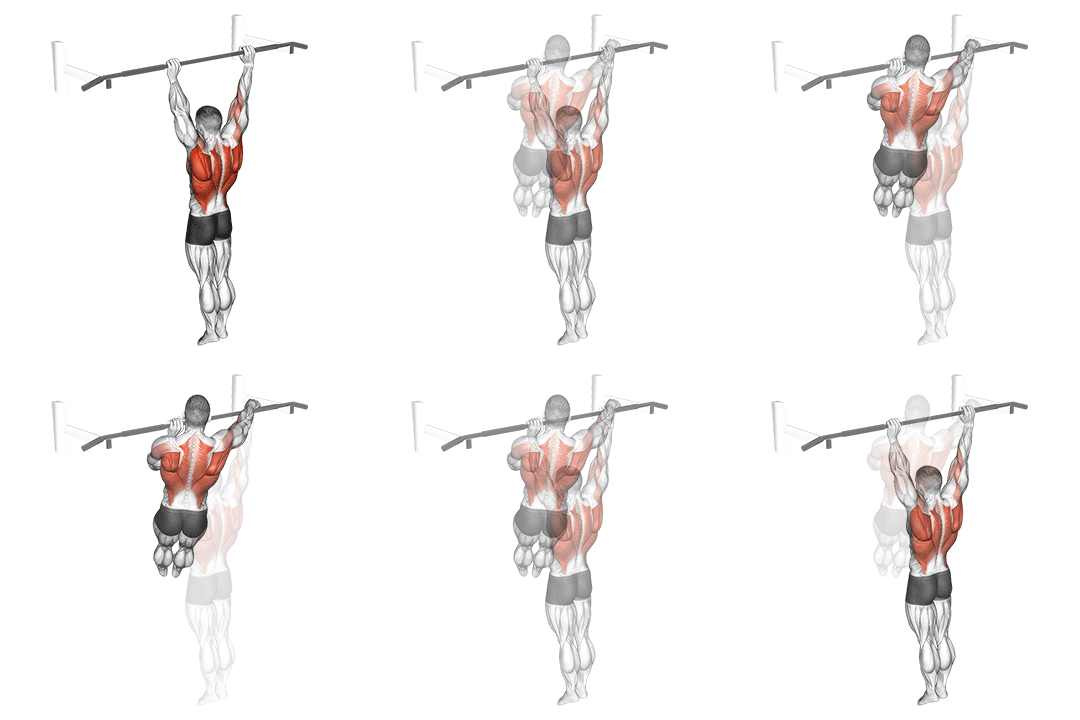
Archer Pull Up
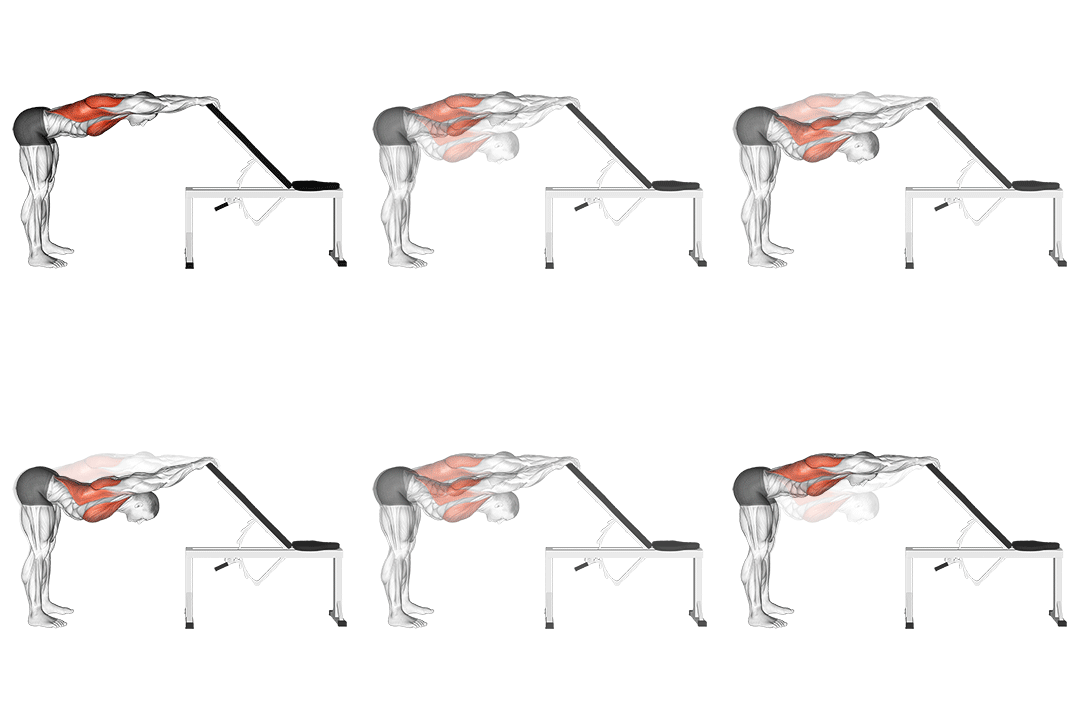
Back Pec Stretch
Head-to-Head Comparison
| Attribute | Archer Pull Up | Back Pec Stretch |
|---|---|---|
| Target Muscle |
Lats
|
Lats
|
| Body Part |
Back
|
Back
|
| Equipment |
Body-weight
|
Body-weight
|
| Difficulty |
Advanced
|
Beginner
|
| Movement Type |
Compound
|
Isolation
|
| Secondary Muscles |
2
|
2
|
Secondary Muscles Activated
Archer Pull Up
Back Pec Stretch
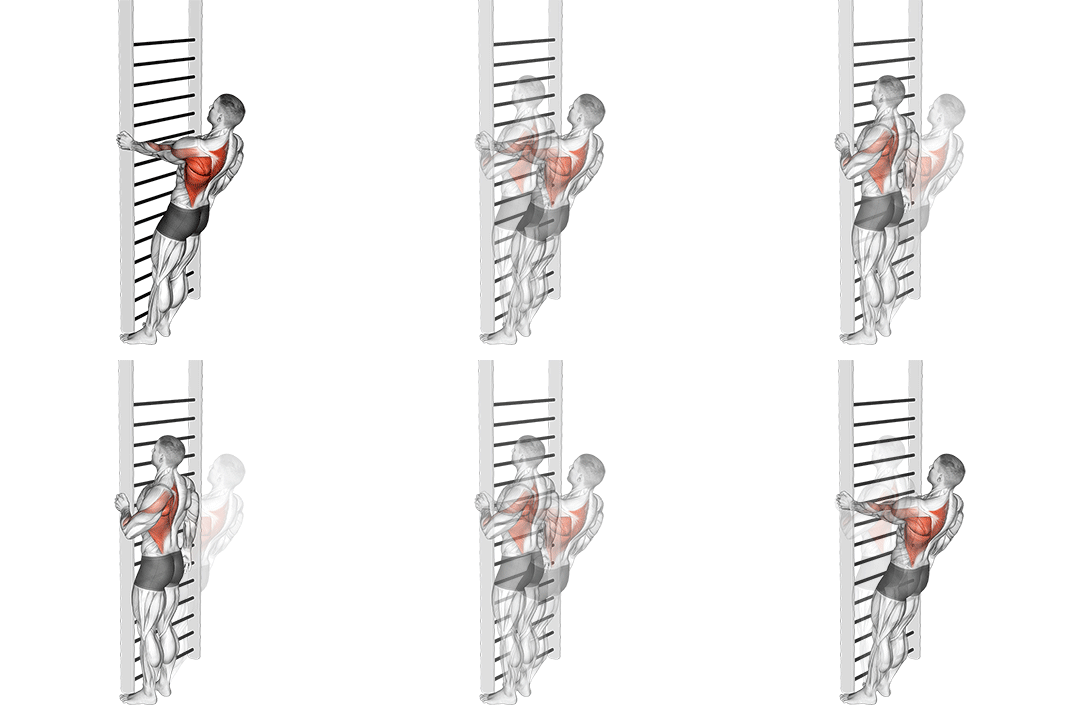
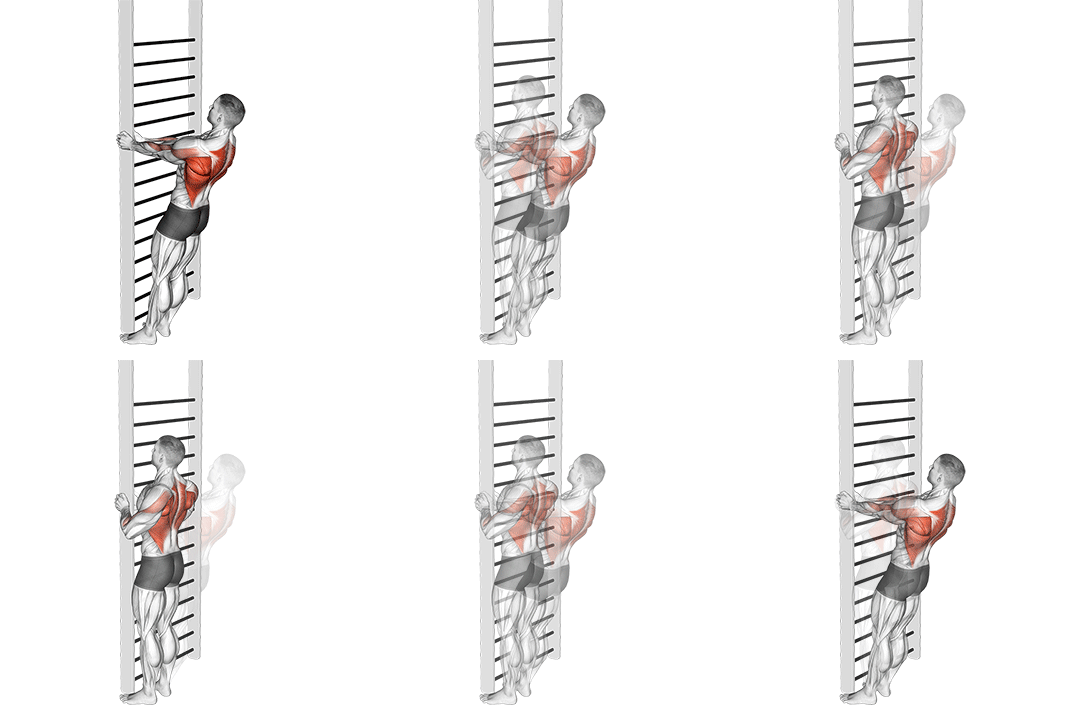
Visual Comparison
Overview
Archer Pull Up vs Back Pec Stretch — you’re comparing a high-skill unilateral pull with a low-intensity lengthening drill. {Exercise1} vs {Exercise2} is included here so you can see the contrasts up front. I’ll walk you through who each move favors, how they load the lats biomechanically, what gear you need, the typical rep/hold ranges, and practical programming tips so you know when to pick one over the other.
Key Differences
- Archer Pull Up is a compound movement, while Back Pec Stretch is an isolation exercise.
- Difficulty levels differ: Archer Pull Up is advanced, while Back Pec Stretch is beginner.
- Both exercises target the Lats using Body-weight. The main differences are in their movement patterns and muscle activation angles.
Pros & Cons
Archer Pull Up
+ Pros
- Massive unilateral lat loading that drives strength and muscle growth when programmed (3–8 reps for strength, 6–12 for hypertrophy).
- Improves scapular and core stability under asymmetric load, enhancing control in compound patterns.
- Easy to scale intensity with assistance, added weight, or grip variations.
- Develops grip strength and biceps/forearm robustness through high-tension pulls.
− Cons
- Requires high baseline pulling strength and a pull-up bar or rings.
- Higher shoulder and tendon stress if technique or scapular control is poor.
- Limited mobility benefits; does not meaningfully improve lat flexibility or pec length.
Back Pec Stretch
+ Pros
- Extremely accessible with almost no equipment—ideal for warm-ups and cooldowns.
- Targets lat and anterior shoulder length, improving scapular posterior tilt and thoracic opening.
- Low strength demand, making it safe for novice users and those rehabbing mobility.
- Can be used daily; effective for improving end-range comfort and preventing rounded-shoulder posture.
− Cons
- Minimal active loading, so it won’t build significant strength or muscle by itself.
- Progression options are limited compared to compound pulling movements.
- If performed too aggressively, can overstretch anterior shoulder structures and cause irritation.
When Each Exercise Wins
Archer Pull Ups place large concentric and eccentric loads on the lats and recruit biceps and forearms—conditions needed for hypertrophy. Program 6–12 reps with controlled eccentrics or add weighted sets to reach metabolic and mechanical tension thresholds.
The unilateral force vector and heavy loading options (weighted or reduced assistance) make the Archer Pull Up ideal for increasing maximal pulling strength. Work in lower rep ranges (3–6) with long rests to accumulate high force outputs.
Back Pec Stretch requires minimal strength and teaches shoulder positioning and lat length awareness safely. It helps correct posture and prepare the shoulder for loaded vertical pulling without exposing novices to high joint loads.
The Back Pec Stretch needs almost no equipment and can be performed in tight spaces, making it a practical choice at home. If you do have a bar and sufficient strength, Archer Pull Ups are possible but less universally accessible.
Frequently Asked Questions
Can I do both Archer Pull Up and Back Pec Stretch in the same workout?
Yes. Do the Back Pec Stretch as part of your warm-up or cool-down to increase shoulder and lat length-tension readiness, then train Archer Pull Ups as the heavy compound work. Stretching before heavy loading should be gentle—limit intense end-range holds until after hard sets.
Which exercise is better for beginners?
Back Pec Stretch is better for beginners because it requires no pulling strength and teaches shoulder positioning. Beginners should build basic scapular control and vertical pulling capacity (assisted pull-ups) before attempting Archer Pull Ups.
How do the muscle activation patterns differ?
Archer Pull Ups create high, phasic activation with peak contractions during concentric and high-tension eccentrics, engaging lats, biceps and forearms. The Back Pec Stretch produces low-amplitude, sustained length tension with minimal concentric activation—more passive tissue loading and mobility benefit than force production.
Can Back Pec Stretch replace Archer Pull Up?
No—Back Pec Stretch cannot replace Archer Pull Ups for strength or hypertrophy because it lacks the concentric and eccentric overload needed for adaptation. Use the stretch to complement pulling work by improving range and reducing injury risk, but rely on compound pulls for progressive strength gains.
Expert Verdict
Use Archer Pull Ups when your primary goal is lat-focused strength or muscle growth and you have the requisite pulling foundation and a secure bar or rings. They produce high concentric/eccentric tension and reliable overload pathways (weighted, partials, controlled eccentrics). Use Back Pec Stretch when you need to restore or preserve lat/pec length, improve thoracic opening, or warm up the shoulders; hold 30–90 seconds and focus on scapular posterior tilt. For most trainees, pair them: prioritize Archer Pull Ups for progressive overload within your pulling days and add Back Pec Stretch as a mobility/hot-up tool to improve range and reduce shoulder stress.
Also Compare
More comparisons with Archer Pull Up
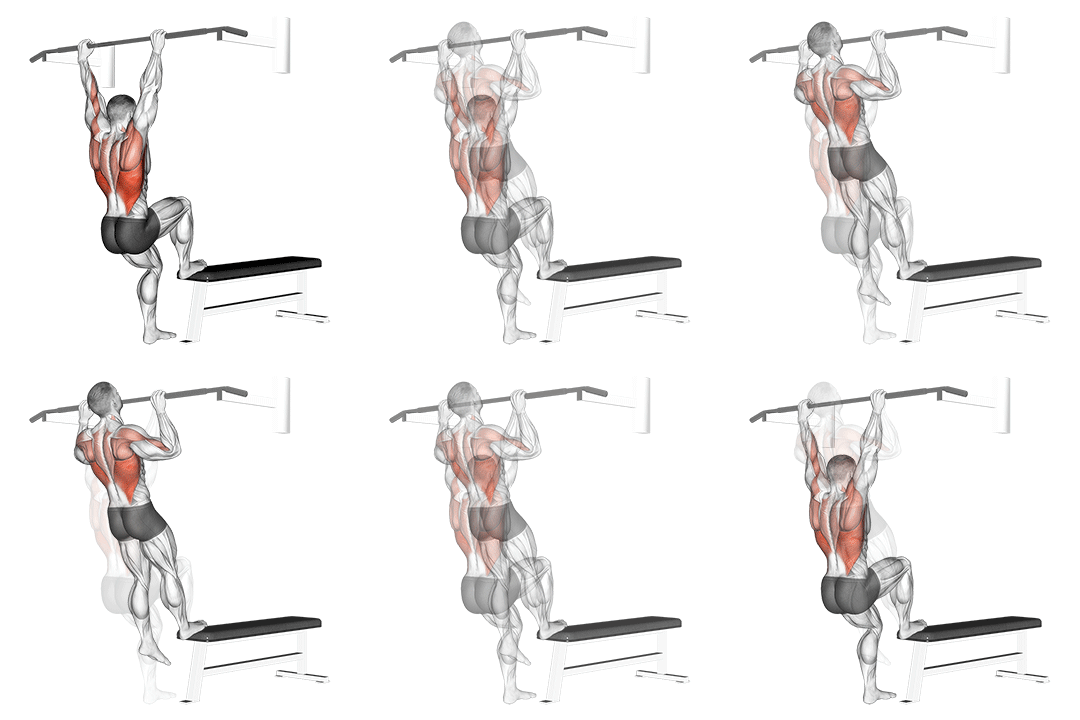

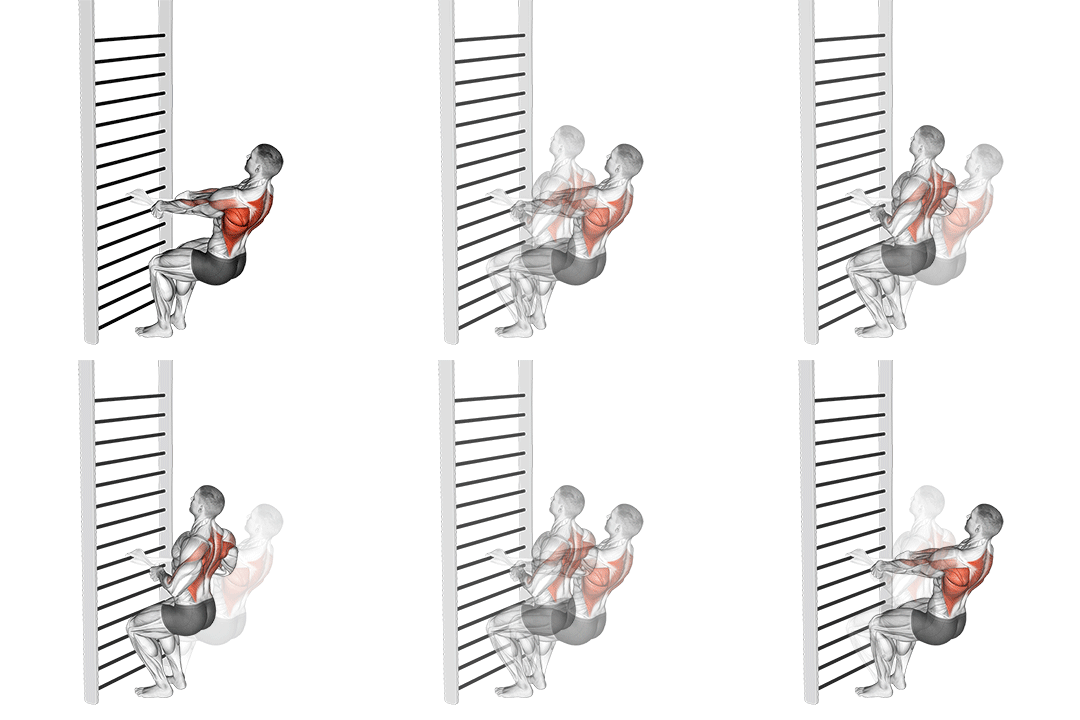
More comparisons with Back Pec Stretch
Compare More Exercises
Use our free comparison tool to analyze any two exercises head-to-head.
Compare Exercises