

Archer Pull Up vs Bench Pull-ups: Complete Comparison Guide
Archer Pull Up vs Bench Pull-ups — two bodyweight back builders with different mechanics. If you want clearer guidance on which to use, you’re in the right place. I’ll walk you through muscle activation, equipment needs, difficulty, injury risk, and programming so you can pick the right move for hypertrophy, strength, or a home routine. You’ll get concrete cues (hand width, torso angle, elbow path), recommended rep ranges (3–6 for strength, 6–12 for hypertrophy), and progressions to move from one to the other.
Exercise Comparison
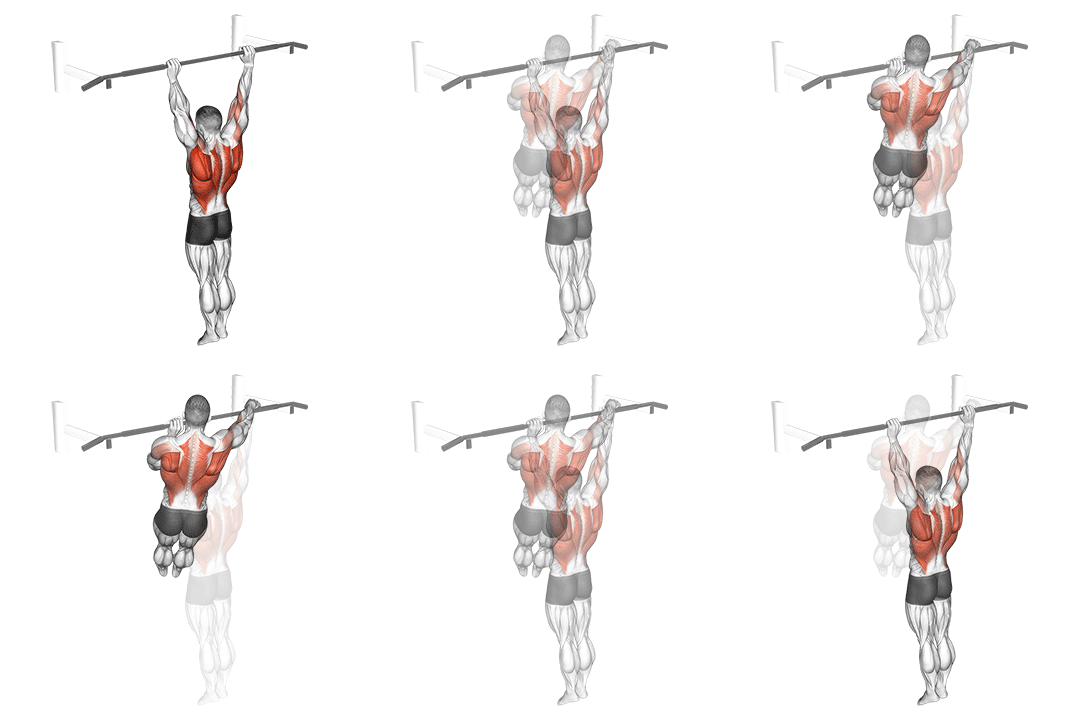
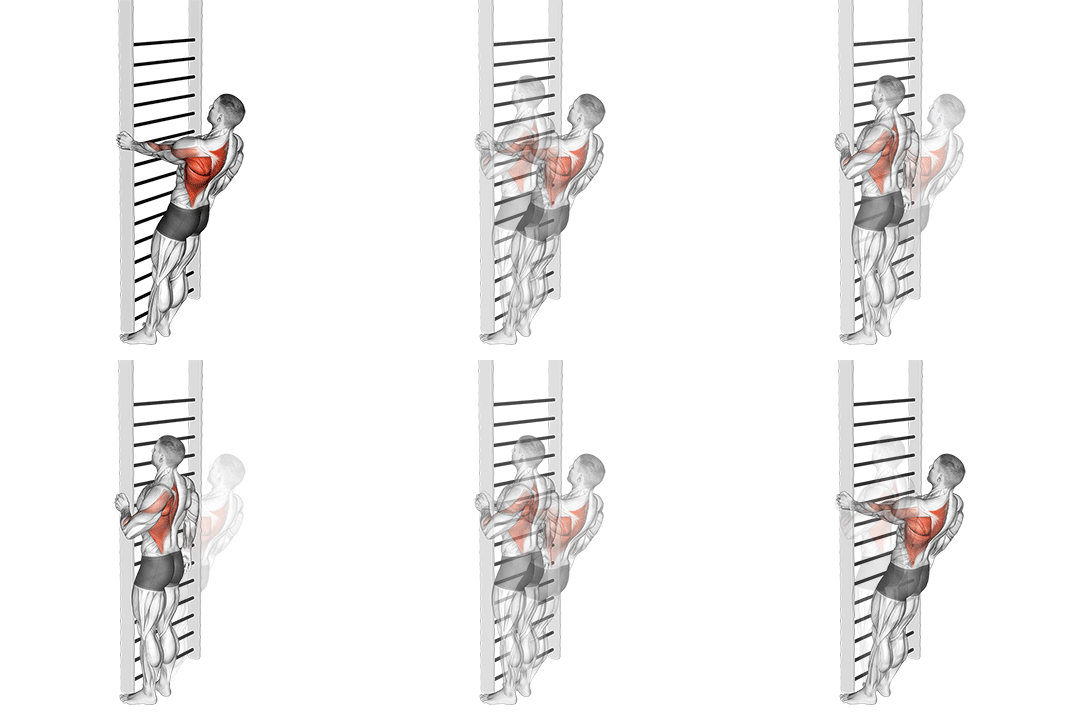
Archer Pull Up
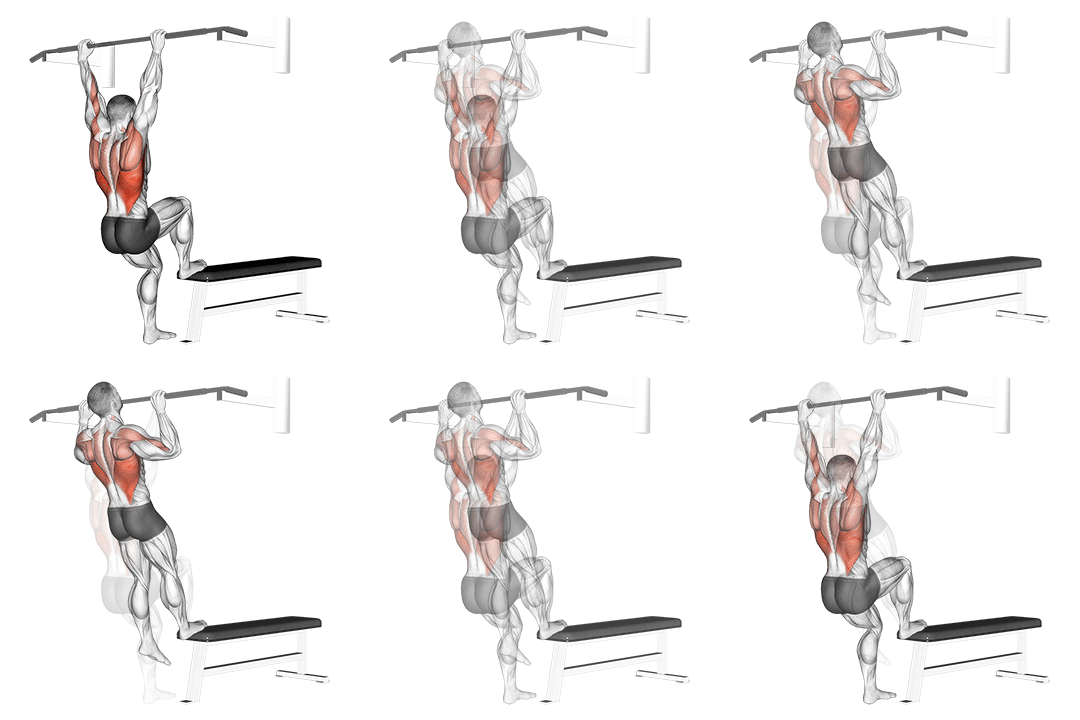
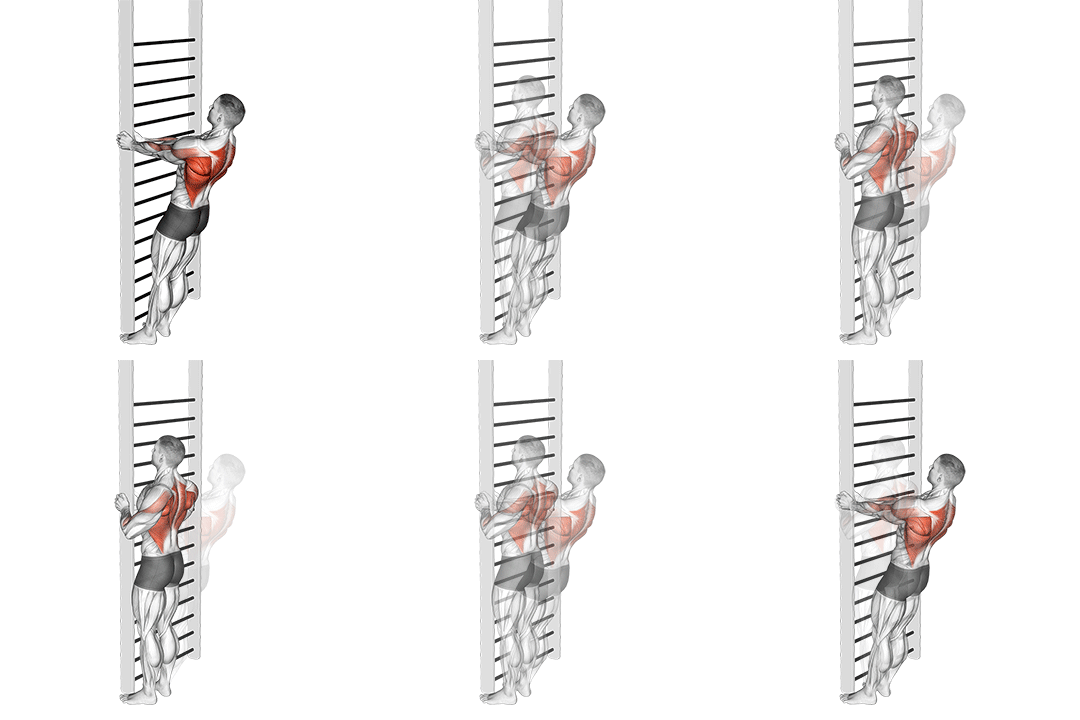
Bench Pull-ups
Head-to-Head Comparison
| Attribute | Archer Pull Up | Bench Pull-ups |
|---|---|---|
| Target Muscle |
Lats
|
Lats
|
| Body Part |
Back
|
Back
|
| Equipment |
Body-weight
|
Body-weight
|
| Difficulty |
Advanced
|
Intermediate
|
| Movement Type |
Compound
|
Compound
|
| Secondary Muscles |
2
|
2
|
Secondary Muscles Activated
Archer Pull Up
Bench Pull-ups
Visual Comparison
Overview
Archer Pull Up vs Bench Pull-ups — two bodyweight back builders with different mechanics. If you want clearer guidance on which to use, you’re in the right place. I’ll walk you through muscle activation, equipment needs, difficulty, injury risk, and programming so you can pick the right move for hypertrophy, strength, or a home routine. You’ll get concrete cues (hand width, torso angle, elbow path), recommended rep ranges (3–6 for strength, 6–12 for hypertrophy), and progressions to move from one to the other.
Key Differences
- Difficulty levels differ: Archer Pull Up is advanced, while Bench Pull-ups is intermediate.
- Both exercises target the Lats using Body-weight. The main differences are in their movement patterns and muscle activation angles.
Pros & Cons
Archer Pull Up
+ Pros
- High unilateral overload — can shift ~60–80% of bodyweight onto the working side for strength carryover
- Develops anti-rotation core strength (obliques and lats work together)
- Direct progression toward one-arm pull-up and advanced skill work
- Greater lat stretch at the bottom increases mechanical tension at longer muscle lengths
− Cons
- Advanced skill — steep technical learning curve and higher joint stress
- Requires a wide, sturdy bar or rings and space to extend the non-working arm
- Harder to accumulate high-volume sets for hypertrophy due to fatigue on one side
Bench Pull-ups
+ Pros
- Highly accessible — easy setup with bench or low bar and simple scaling via torso angle
- Lower joint stress; easier to perform high-volume sets for hypertrophy (6–15 reps)
- Balanced bilateral loading trains scapular retractors evenly
- Great for beginners and rehab phases due to controllable intensity
− Cons
- Less unilateral overload — harder to produce the same single-arm strength carryover
- More emphasis on posterior deltoid and mid-traps than a fully vertical pull
- Limited vertical range-of-motion compared with a full pull-up unless bar height is adjusted
When Each Exercise Wins
Bench Pull-ups allow you to accumulate more volume with controlled tempo and adjustable difficulty. Their bilateral pattern and ability to use 6–15 rep ranges make them better for steady time under tension across both lats.
Archer Pull Up places a higher unilateral load and increases the moment arm on the working side, which drives maximal force development and transfers well to one-arm strength progressions and heavier weighted work.
Bench Pull-ups reduce the lever arm and let you practice scapular retraction and elbow flexion without full bodyweight. You can scale intensity by changing torso angle for gradual strength building.
Most homes have a bench or a sturdy table and space for horizontal pulling, making Bench Pull-ups easier to set up. They also let you progress without needing a wide pull-up bar or rings.
Frequently Asked Questions
Can I do both Archer Pull Up and Bench Pull-ups in the same workout?
Yes. Use Bench Pull-ups early for volume and scapular control (3–4 sets of 6–12), then add 2–4 sets of Archer Pull Ups for unilateral overload or strength work. Order them based on priority: do the exercise you want to improve first to maximize force output.
Which exercise is better for beginners?
Bench Pull-ups are better for beginners because they have a shorter lever arm and scalable difficulty via torso angle. They let you learn scapular retraction and maintain a neutral spine before attempting more demanding archer mechanics.
How do the muscle activation patterns differ?
Archer Pull Up creates asymmetric activation with higher peak tension on the working lat and greater anti-rotation demand on the core; the working side experiences increased length-tension at the bottom. Bench Pull-ups produce a more even bilateral activation and shift some emphasis to mid-traps and posterior deltoids due to a more horizontal force vector.
Can Bench Pull-ups replace Archer Pull Up?
Bench Pull-ups can substitute when you need lower joint stress or higher training volume, but they won’t fully replicate the unilateral overload and specific strength transfer of an Archer Pull Up. Use bench variations for volume and technique, and add archer work when you want targeted unilateral strength.
Expert Verdict
Use Bench Pull-ups when you need a scalable, low-risk way to build lat size and train consistent volume—aim for 3–4 sets of 6–15 reps with a 2–3 second eccentric to maximize hypertrophy. Choose Archer Pull Up when you want unilateral strength, a pathway to one-arm pull-ups, or to add a heavy, high-tension variation—perform 3–6 sets of 3–6 reps per side or include slow eccentrics (3–5 seconds). Program both intelligently: start with bench variations to build scapular control, then add archer work for overload and asymmetry training. Prioritize technique—neutral spine, full scapular retraction, and controlled eccentrics—to reduce injury risk.
Also Compare
More comparisons with Archer Pull Up
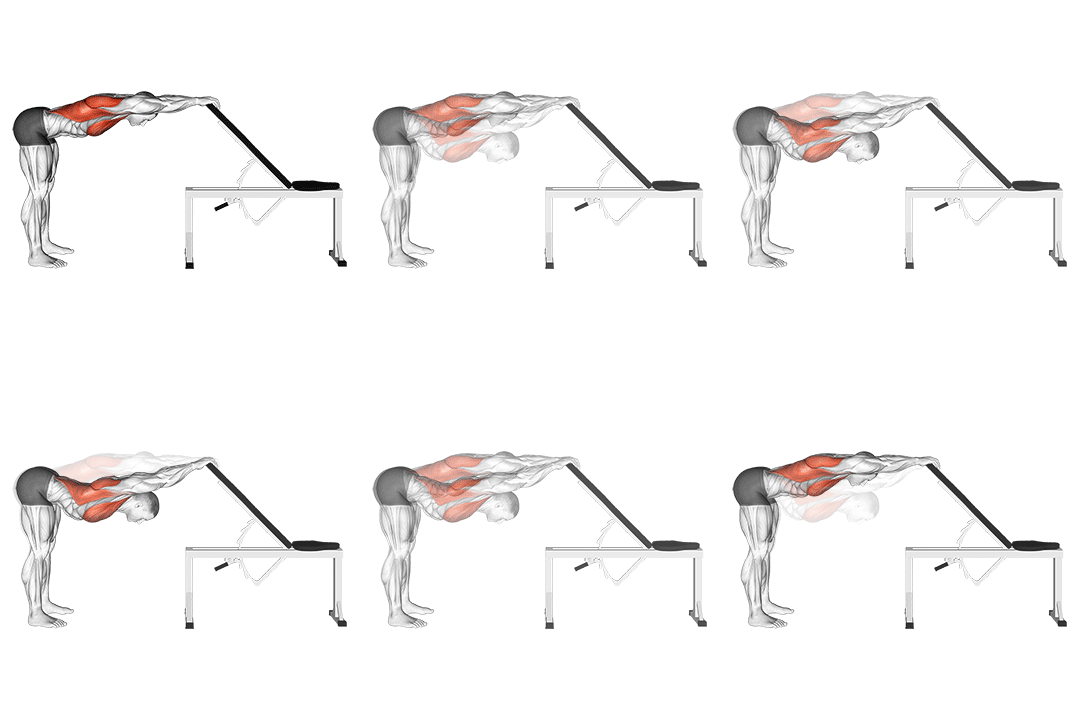

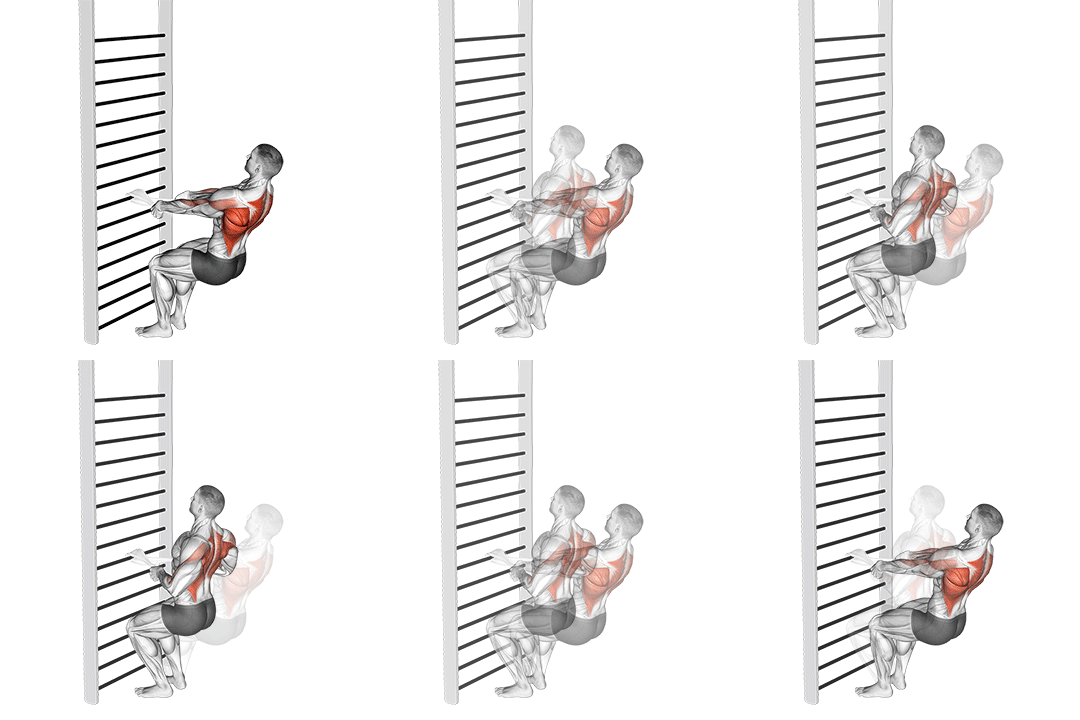
More comparisons with Bench Pull-ups
Compare More Exercises
Use our free comparison tool to analyze any two exercises head-to-head.
Compare Exercises