

Archer Pull Up vs Bodyweight Squatting Row: Complete Comparison Guide
Archer Pull Up vs Bodyweight Squatting Row gives you a clear side-by-side of two bodyweight back builders. You’ll learn how each movement loads the lats, which one shifts force unilaterally versus bilaterally, and which fits your skill level and gear. I’ll cover muscle activation, specific technique cues (scapular set, elbow path, torso angle), practical progressions with rep ranges (4–6, 8–12, 12–20), and programming tips so you can pick the right exercise for hypertrophy, strength, or home training.
Exercise Comparison
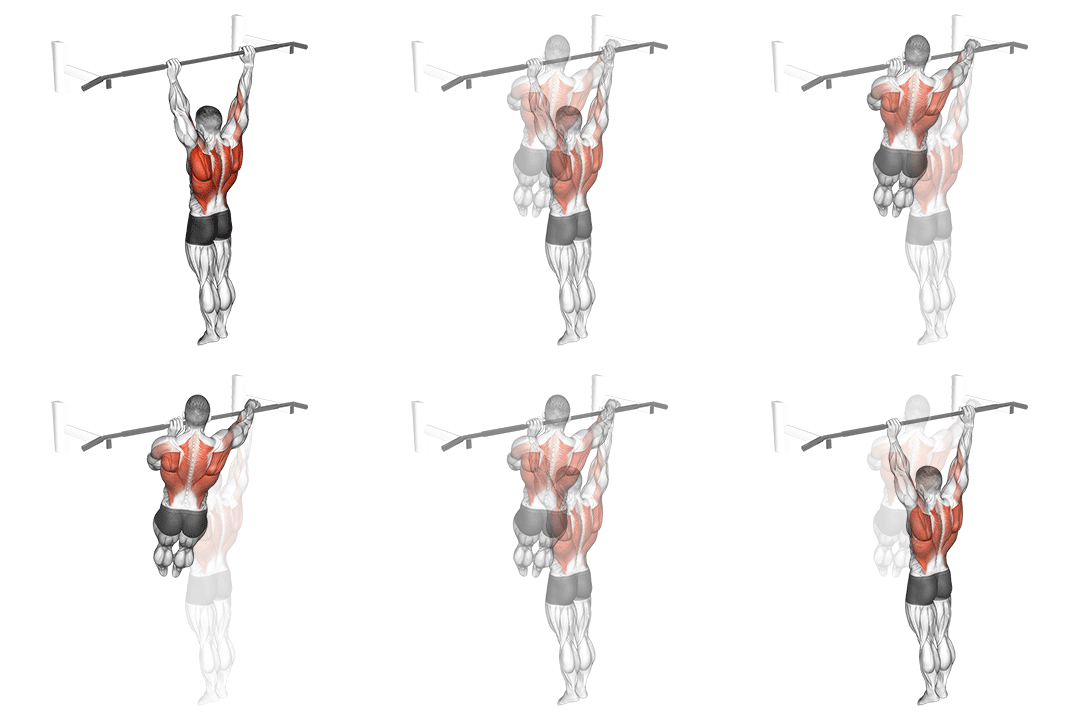
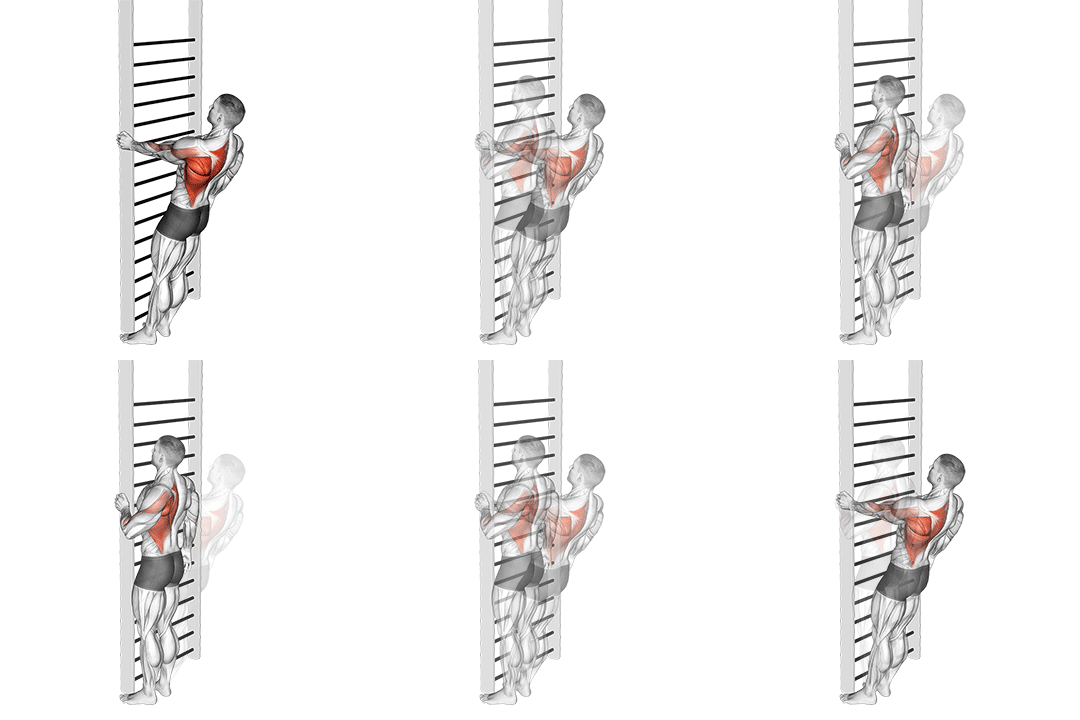
Archer Pull Up
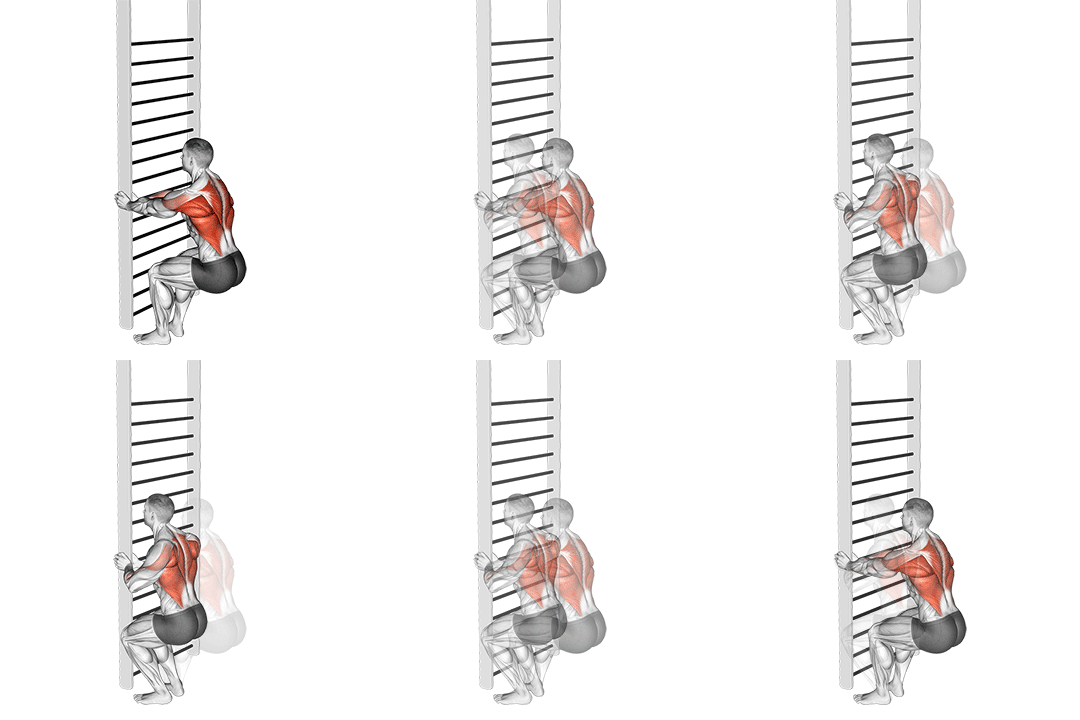
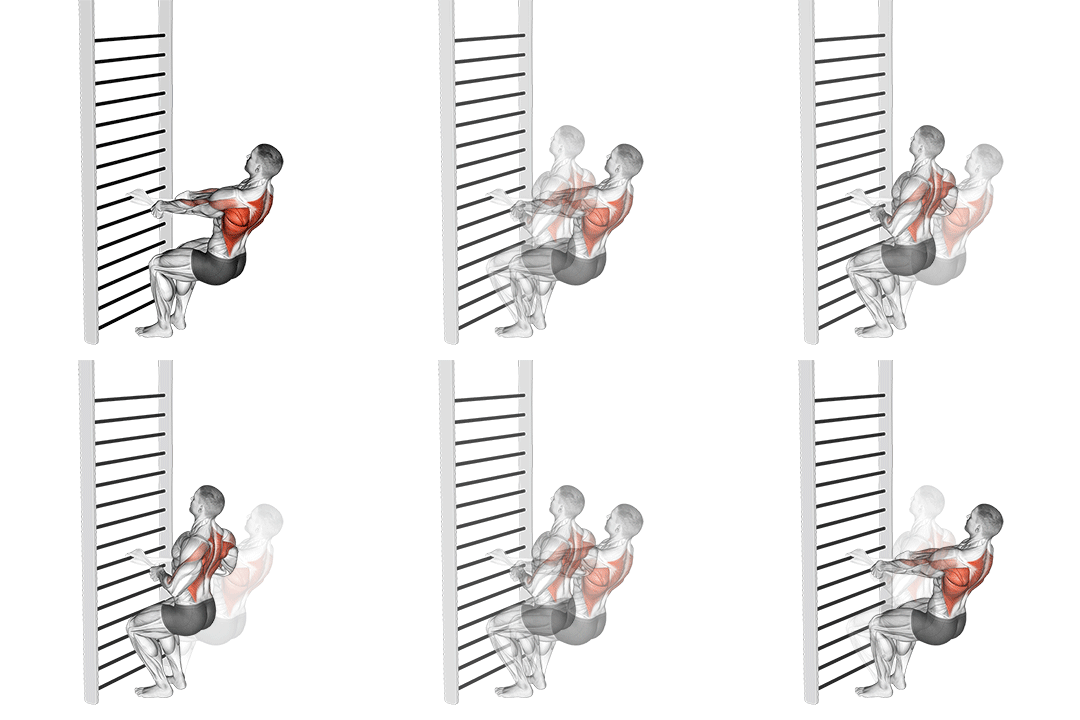
Bodyweight Squatting Row
Head-to-Head Comparison
| Attribute | Archer Pull Up | Bodyweight Squatting Row |
|---|---|---|
| Target Muscle |
Lats
|
Lats
|
| Body Part |
Back
|
Back
|
| Equipment |
Body-weight
|
Body-weight
|
| Difficulty |
Advanced
|
Beginner
|
| Movement Type |
Compound
|
Compound
|
| Secondary Muscles |
2
|
2
|
Secondary Muscles Activated
Archer Pull Up
Bodyweight Squatting Row
Visual Comparison
Overview
Archer Pull Up vs Bodyweight Squatting Row gives you a clear side-by-side of two bodyweight back builders. You’ll learn how each movement loads the lats, which one shifts force unilaterally versus bilaterally, and which fits your skill level and gear. I’ll cover muscle activation, specific technique cues (scapular set, elbow path, torso angle), practical progressions with rep ranges (4–6, 8–12, 12–20), and programming tips so you can pick the right exercise for hypertrophy, strength, or home training.
Key Differences
- Difficulty levels differ: Archer Pull Up is advanced, while Bodyweight Squatting Row is beginner.
- Both exercises target the Lats using Body-weight. The main differences are in their movement patterns and muscle activation angles.
Pros & Cons
Archer Pull Up
+ Pros
- High unilateral lat overload for focused muscle growth
- Builds single-arm strength and anti-rotation control
- Strong biceps and forearm recruitment boosts pulling power
- Transfers to one-arm pull-up progressions and climbing
− Cons
- Requires high shoulder stability and overhead clearance
- Harder to scale for beginners without assistance
- Higher tendon and shoulder load if technique breaks down
Bodyweight Squatting Row
+ Pros
- Easy to set up and scale by changing body angle
- Gentler on shoulders with a horizontal pull vector
- Good time-under-tension for hypertrophy in 8–15 rep range
- Works well in circuits and home setups with minimal gear
− Cons
- Limited maximal overload without external weight
- Less unilateral strength carryover compared with archer pulls
- Can encourage spinal flexion if form is neglected
When Each Exercise Wins
For most lifters, squatting rows allow longer time under tension in 8–15 rep ranges with safer bilateral loading, making them more productive for consistent lat hypertrophy without advanced skill demands.
Archer Pull Ups create higher unilateral loading and mechanical advantage toward one arm, which accelerates strength development in the lats and biceps and translates to one-arm progression work.
Squatting rows have a shallow learning curve, easier progression by adjusting torso angle, and lower risk to the shoulder complex, so beginners can build pulling strength safely.
Requires minimal vertical space and can be done with a low bar, rings, or TRX; you can scale intensity without adding equipment, making it the more practical home option.
Frequently Asked Questions
Can I do both Archer Pull Up and Bodyweight Squatting Row in the same workout?
Yes. Pair squatting rows as a volume exercise (8–15 reps, 3–4 sets) and use archer pulls later as a heavy or intensity lift (3–6 reps per side, 3–5 sets). Put rows first if you need to prioritize hypertrophy-controlled reps, or do archer pulls first when training max strength.
Which exercise is better for beginners?
Bodyweight Squatting Row is better for beginners because you can reduce the load by changing body angle, maintain a neutral spine, and learn scapular retraction without high unilateral demands. Progress to archer pulls after mastering vertical and horizontal pulling mechanics.
How do the muscle activation patterns differ?
Archer Pull Ups produce a more unilateral, peak-force activation on the loaded lat during concentric and eccentric phases, increasing biceps and forearm recruitment. Squatting Rows create bilateral, continuous tension with a stronger emphasis on scapular retraction and posterior deltoid engagement due to the horizontal force vector.
Can Bodyweight Squatting Row replace Archer Pull Up?
For general lat development and beginners, yes—squatting rows can replace archer pulls. For unilateral strength, sport-specific carryover, or one-arm pull-up progressions, squatting rows won’t fully substitute the higher single-arm overload provided by archer pulls.
Expert Verdict
Use Archer Pull Ups when you want unilateral overload, greater peak tension on one lat, and a path toward one-arm pulling strength. Prioritize them for advanced programming, low-rep strength blocks (4–6 reps per side), and accessory work if your shoulder stability and pull strength are solid. Choose Bodyweight Squatting Rows when you need an accessible, scalable lat builder for hypertrophy or general strength, especially in 8–15 rep ranges. If you train at home or are newer to pulling, squatting rows give safer progression and better consistency. Mix both across cycles: use rows for volume phases and archer pulls for intensity and unilateral strength blocks.
Also Compare
More comparisons with Archer Pull Up
More comparisons with Bodyweight Squatting Row
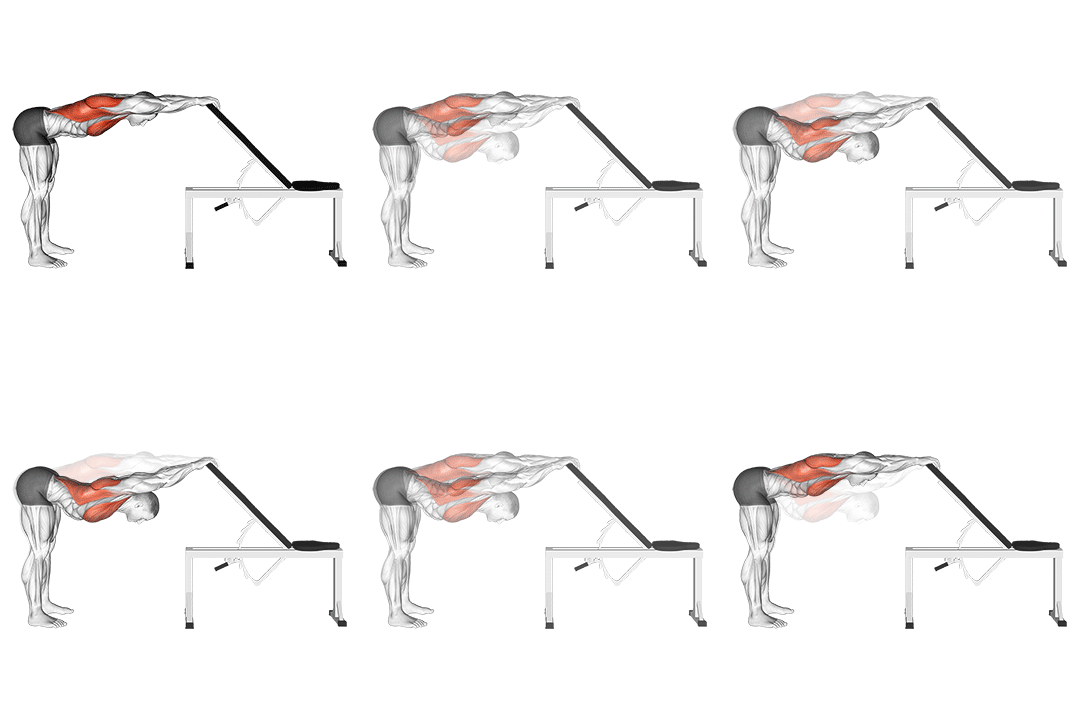
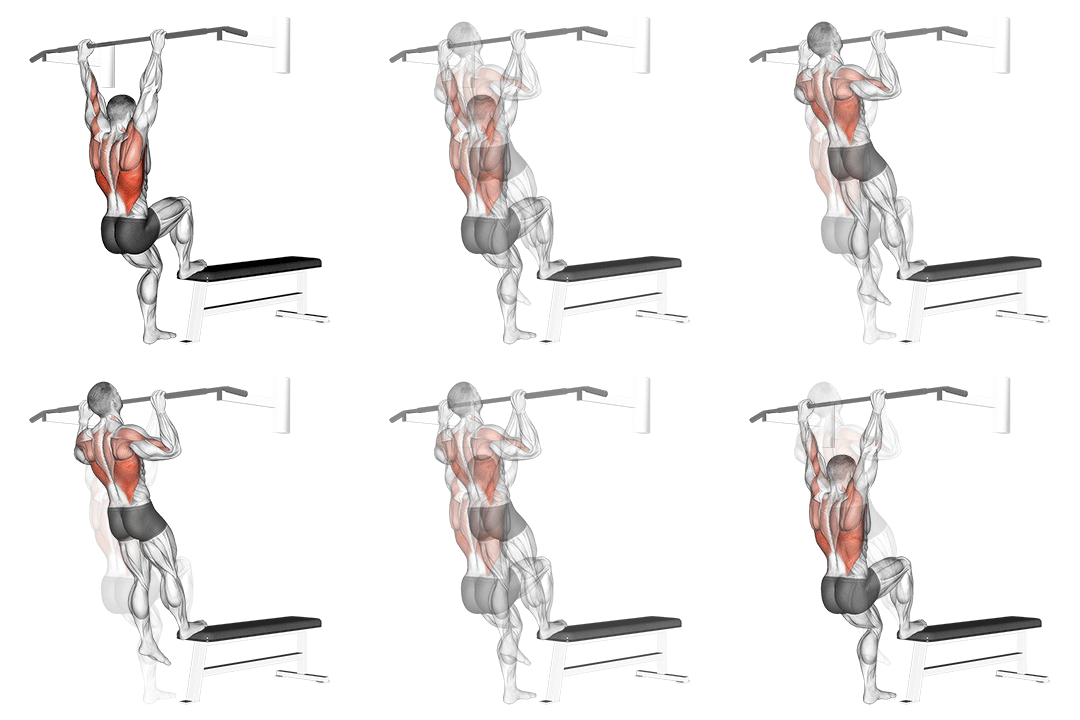
Compare More Exercises
Use our free comparison tool to analyze any two exercises head-to-head.
Compare Exercises