

Archer Pull Up vs Bodyweight Standing Close-grip One Arm Row: Complete Comparison Guide
Archer Pull Up vs Bodyweight Standing Close-grip One Arm Row — you’ve got two solid bodyweight back moves that emphasize the lats but load them differently. In this guide you’ll get clear, usable comparisons of muscle activation, technique cues, equipment needs, and which exercise to pick for hypertrophy, strength, or home training. I’ll show specific rep ranges (3–6 for max strength, 6–12 for size), biomechanical reasons to choose one over the other, and progressions so you can slot either into your weekly plan and track measurable progress.
Exercise Comparison
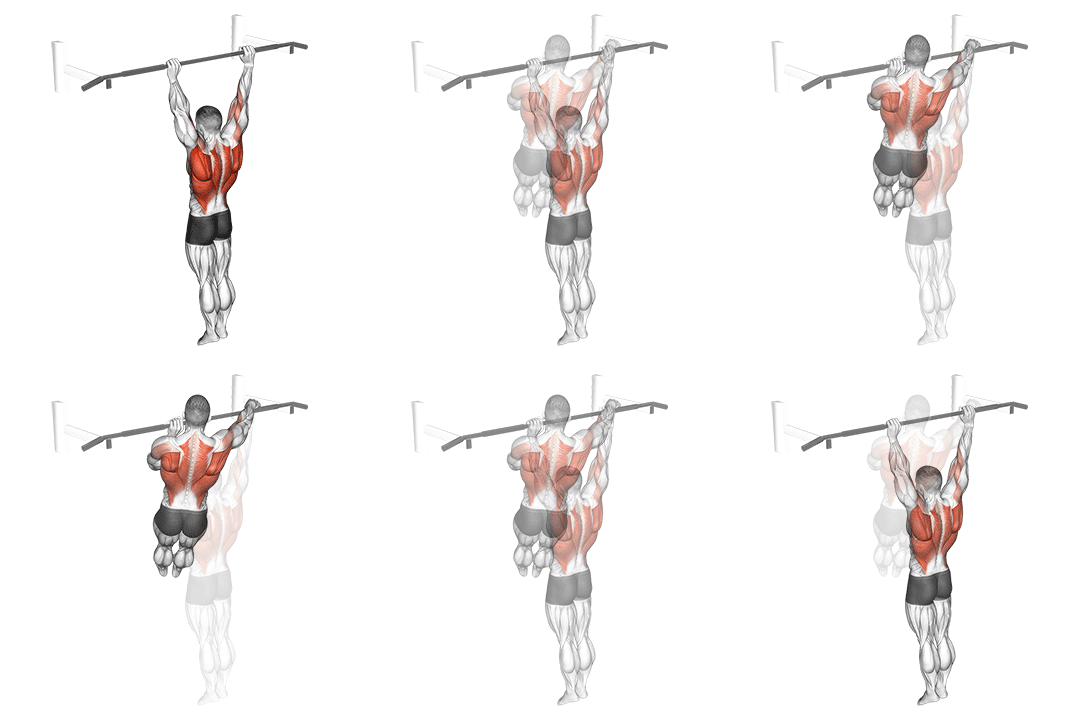
Archer Pull Up
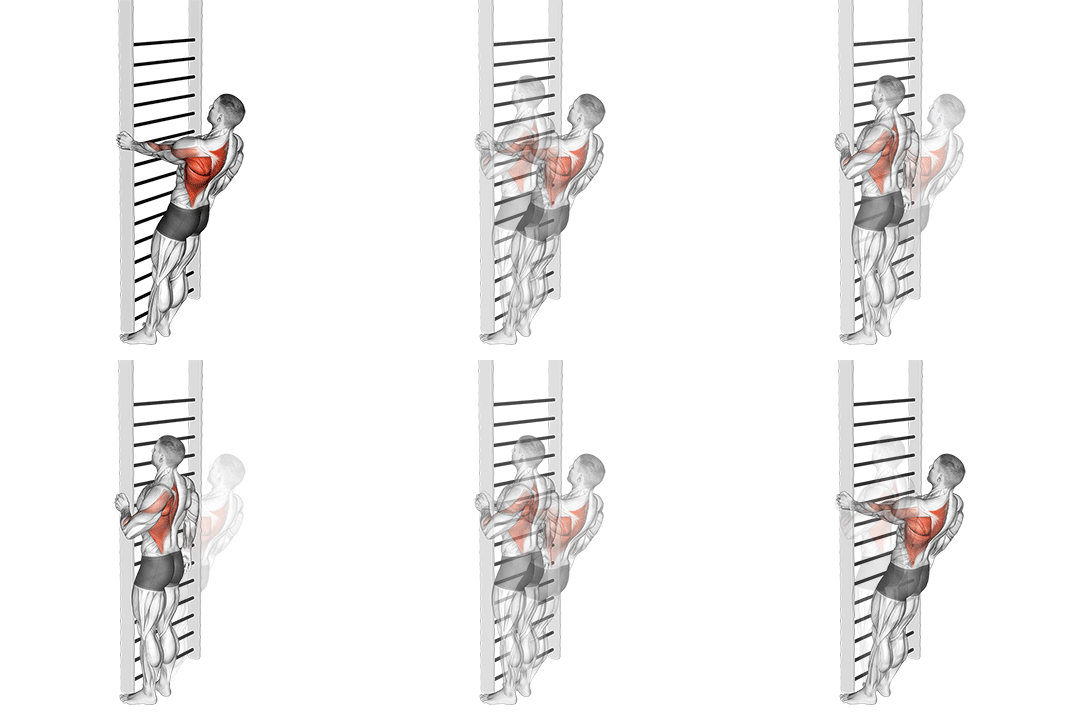
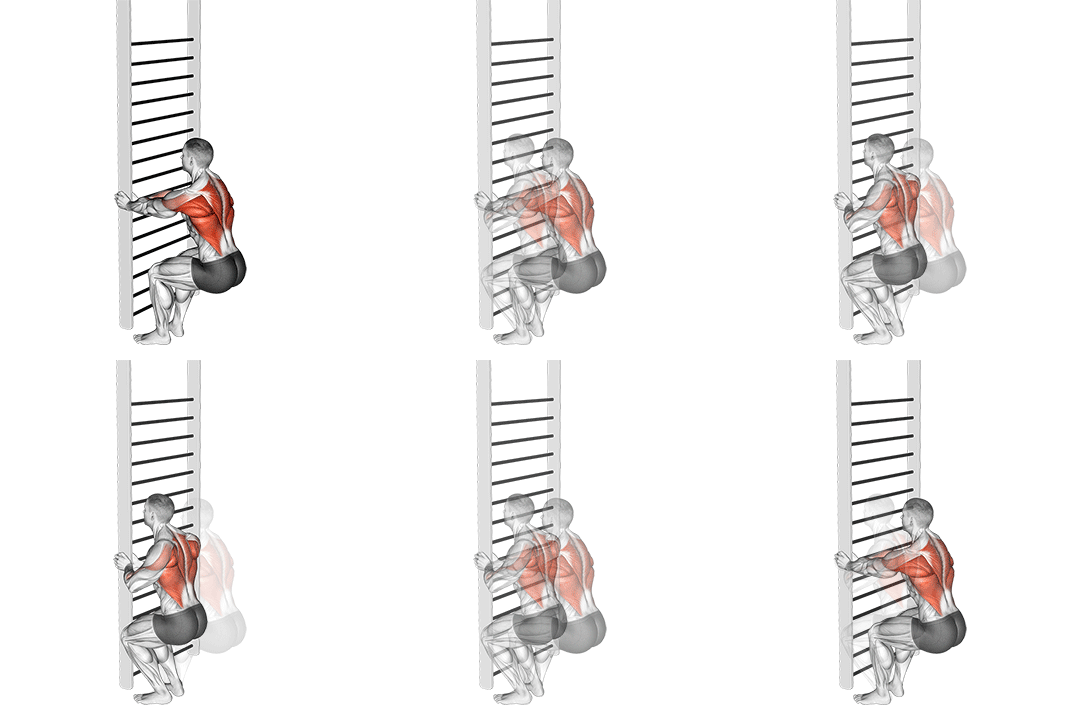
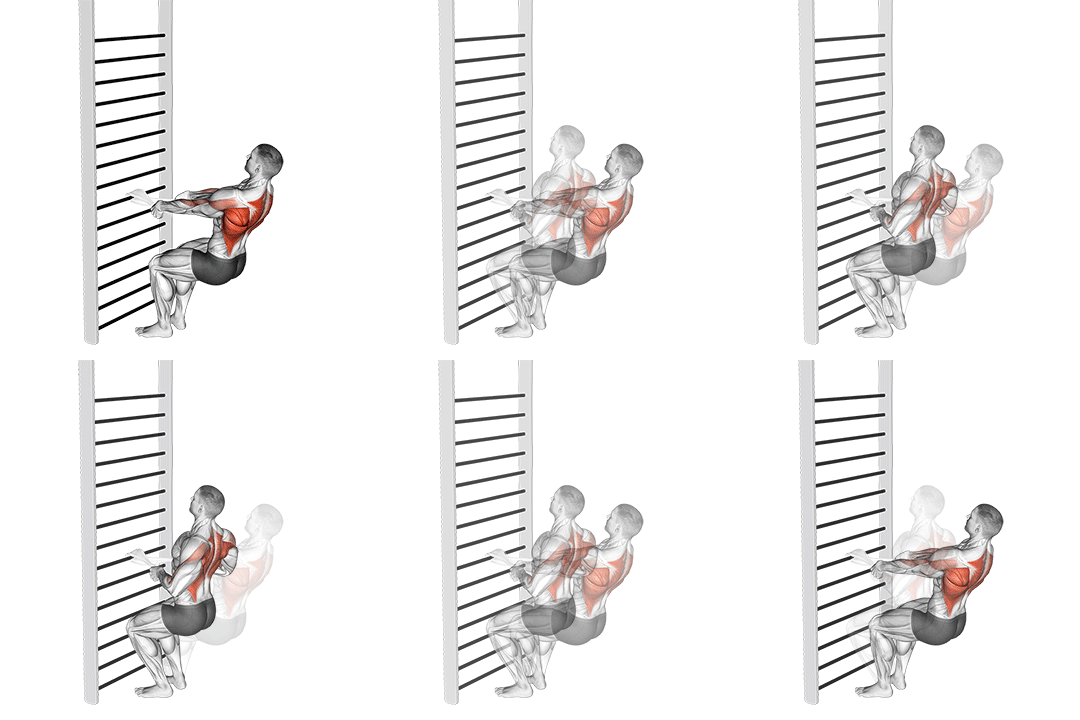
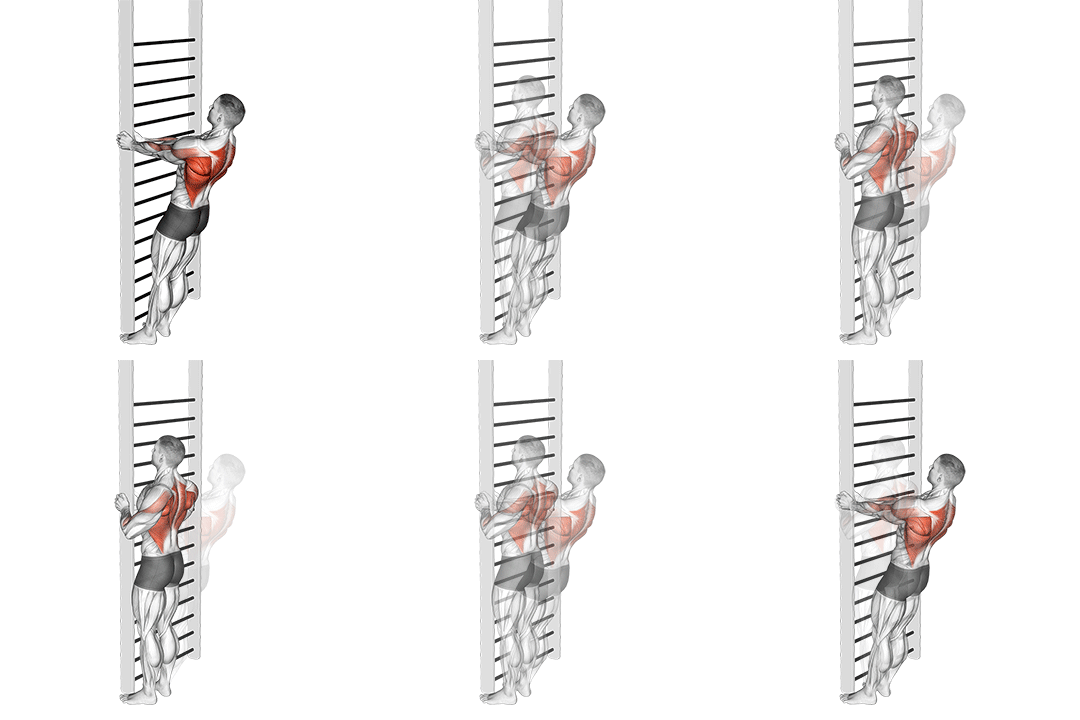
Bodyweight Standing Close-grip One Arm Row
Head-to-Head Comparison
| Attribute | Archer Pull Up | Bodyweight Standing Close-grip One Arm Row |
|---|---|---|
| Target Muscle |
Lats
|
Lats
|
| Body Part |
Back
|
Back
|
| Equipment |
Body-weight
|
Body-weight
|
| Difficulty |
Advanced
|
Intermediate
|
| Movement Type |
Compound
|
Compound
|
| Secondary Muscles |
2
|
2
|
Secondary Muscles Activated
Archer Pull Up
Bodyweight Standing Close-grip One Arm Row
Visual Comparison
Overview
Archer Pull Up vs Bodyweight Standing Close-grip One Arm Row — you’ve got two solid bodyweight back moves that emphasize the lats but load them differently. In this guide you’ll get clear, usable comparisons of muscle activation, technique cues, equipment needs, and which exercise to pick for hypertrophy, strength, or home training. I’ll show specific rep ranges (3–6 for max strength, 6–12 for size), biomechanical reasons to choose one over the other, and progressions so you can slot either into your weekly plan and track measurable progress.
Key Differences
- Difficulty levels differ: Archer Pull Up is advanced, while Bodyweight Standing Close-grip One Arm Row is intermediate.
- Both exercises target the Lats using Body-weight. The main differences are in their movement patterns and muscle activation angles.
Pros & Cons
Archer Pull Up
+ Pros
- Very high unilateral mechanical tension ideal for building unilateral pulling strength
- Strong lat peak activation due to combined adduction and extension
- Progresses toward one-arm pull-up variations and weighted work
- Builds grip and forearm endurance under high load
− Cons
- Requires high baseline strength and a secure overhead bar
- Higher shoulder and biceps strain risk if technique or strength is lacking
- Harder to accumulate high-volume sets for hypertrophy without assistance
Bodyweight Standing Close-grip One Arm Row
+ Pros
- Easily scaled by body angle, great for controlled volume and hypertrophy
- Requires minimal equipment—can be done at home with a table or low bar
- Consistent tension across ROM supports time-under-tension approaches
- Lower injury risk when progressed sensibly
− Cons
- Less peak unilateral overload compared to Archer Pull Up
- Can underload stronger lifters unless body angle is near horizontal
- Requires careful scapular control to avoid using excessive shoulder shrug
When Each Exercise Wins
The one-arm row lets you easily manipulate volume and time under tension by adjusting body angle and tempo. Because you can perform 8–15+ controlled reps per set and accumulate total work, it’s more practical for targeted lat hypertrophy.
Archer Pull Ups generate higher peak mechanical tension on one side and better transfer to one-arm pull strength; use low-rep sets (3–6) and weighted progressions to maximize neural and maximal-strength adaptations.
Beginners can start more upright and slowly increase difficulty while learning scapular retraction and elbow path. It develops the lat–biceps coordination with lower risk than attempting near-unilateral overhead pulls.
It requires less specialized gear and is simple to scale using a door frame, table, or suspension trainer. You can match training volume to goals without needing a high pull-up bar.
Frequently Asked Questions
Can I do both Archer Pull Up and Bodyweight Standing Close-grip One Arm Row in the same workout?
Yes. Use the one-arm row early for higher-volume sets (8–12 reps) to pre-fatigue and reinforce form, then perform Archer Pull Ups later for heavy, low-rep strength work (3–6 reps) or as a focused skill set. Monitor total volume to avoid overtaxing the shoulder complex.
Which exercise is better for beginners?
Bodyweight Standing Close-grip One Arm Row is better for beginners because you can reduce load by standing more upright and gradually increase difficulty. It teaches scapular control and elbow path with lower risk before attempting asymmetric overhead pulls.
How do the muscle activation patterns differ?
Archer Pull Ups produce a spike in lat activation near the top as the working side performs strong adduction and extension, creating short-duration peak tension. The one-arm row keeps the lat under steadier tension throughout the pull because the force vector is more horizontal and muscle length-tension remains more consistent.
Can Bodyweight Standing Close-grip One Arm Row replace Archer Pull Up?
For hypertrophy and general back strength, yes—the one-arm row is a practical substitute. For maximal unilateral pulling strength and transfer to one-arm pull-ups, the Archer Pull Up is not fully replaceable because of its higher peak unilateral load and lever mechanics.
Expert Verdict
If your priority is raw pulling strength and you already have solid pull-up capacity, prioritize Archer Pull Ups for the unilateral overload and high peak tension—use low reps (3–6), slow eccentrics, and progress toward assisted one-arm pulls. If you want reliable lat hypertrophy, safer progressions, or you train at home, choose the Bodyweight Standing Close-grip One Arm Row: control body angle to hit 6–12 reps per set, emphasize scapular retraction, and increase horizontal load over time. Both moves complement each other: use rows to build volume and technique, then add archer pulls for heavy single-side stress and strength transfer.
Also Compare
More comparisons with Archer Pull Up
More comparisons with Bodyweight Standing Close-grip One Arm Row
Compare More Exercises
Use our free comparison tool to analyze any two exercises head-to-head.
Compare Exercises