

Archer Pull Up vs Bodyweight Standing Close-grip Row: Complete Comparison Guide
Archer Pull Up vs Bodyweight Standing Close-grip Row — pick the right lat builder for your training. If you want clearer direction, this guide breaks down muscle activation, equipment needs, difficulty, progression options, and injury risks so you can choose based on your goals. You’ll get specific cues (elbow path, torso angle), rep ranges (3–6, 6–12), and biomechanics (force vectors, length–tension) to help design workouts. Read on to see which exercise fits your current strength, whether you train at home, and how to progress safely.
Exercise Comparison
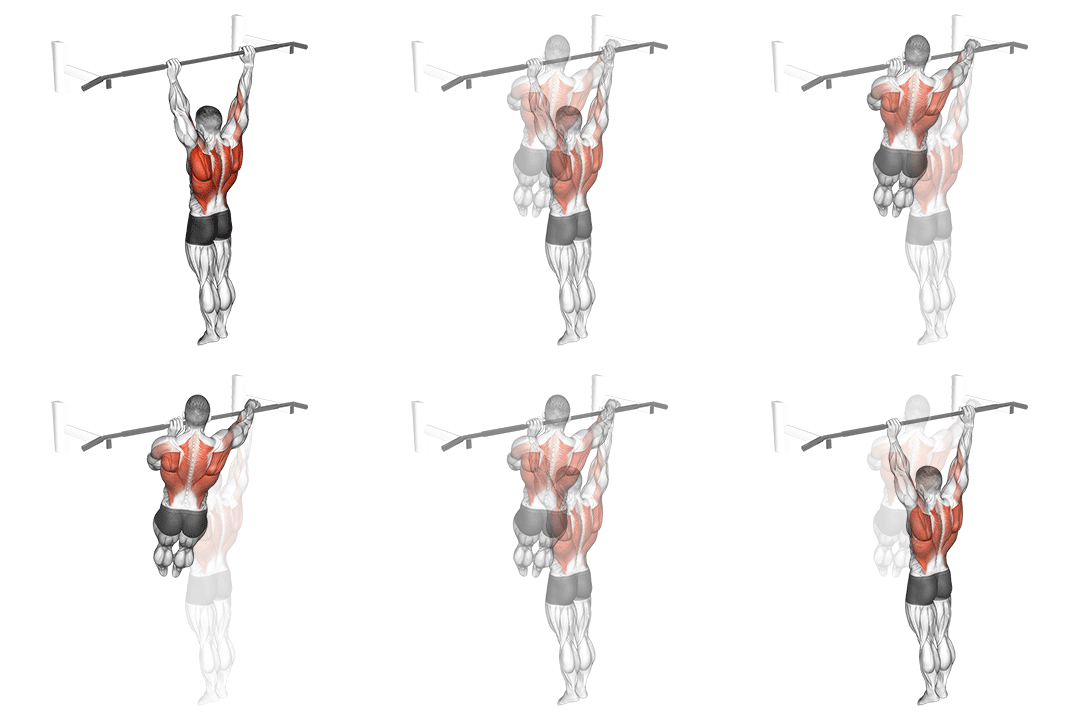
Archer Pull Up
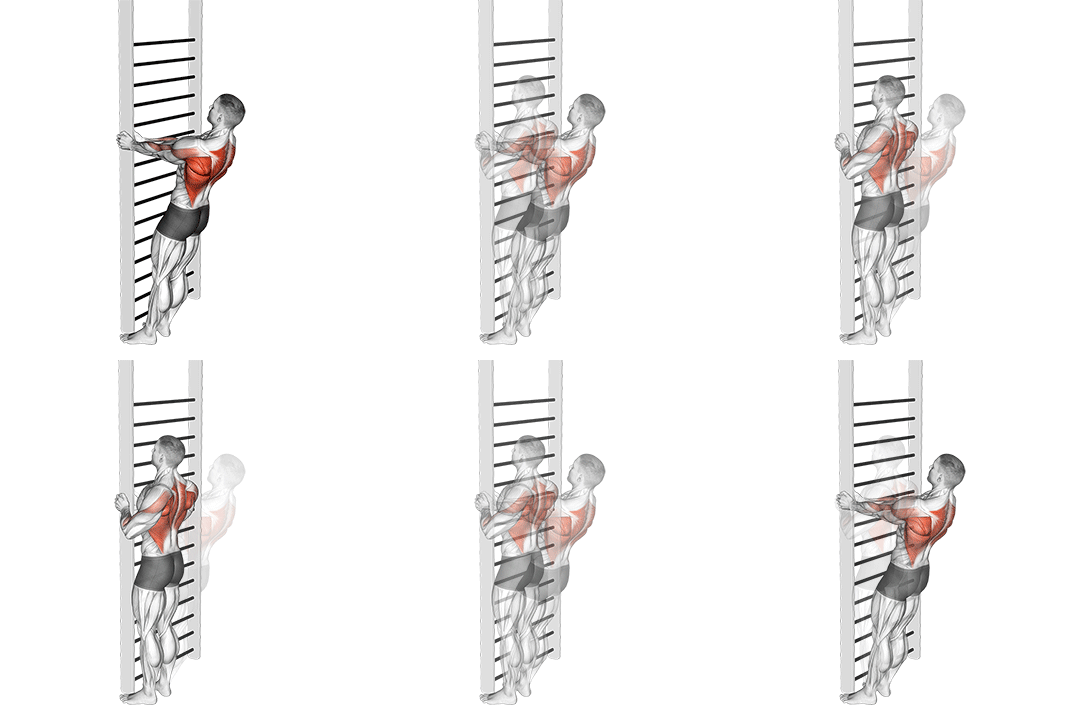
Bodyweight Standing Close-grip Row
Head-to-Head Comparison
| Attribute | Archer Pull Up | Bodyweight Standing Close-grip Row |
|---|---|---|
| Target Muscle |
Lats
|
Lats
|
| Body Part |
Back
|
Back
|
| Equipment |
Body-weight
|
Body-weight
|
| Difficulty |
Advanced
|
Beginner
|
| Movement Type |
Compound
|
Compound
|
| Secondary Muscles |
2
|
2
|
Secondary Muscles Activated
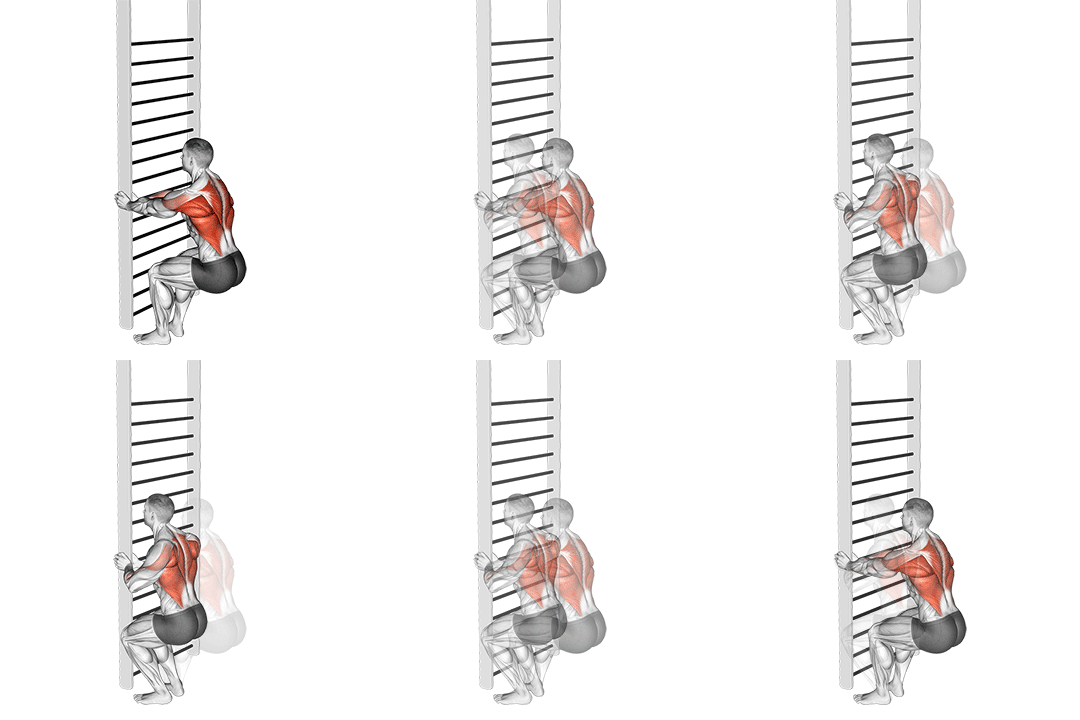
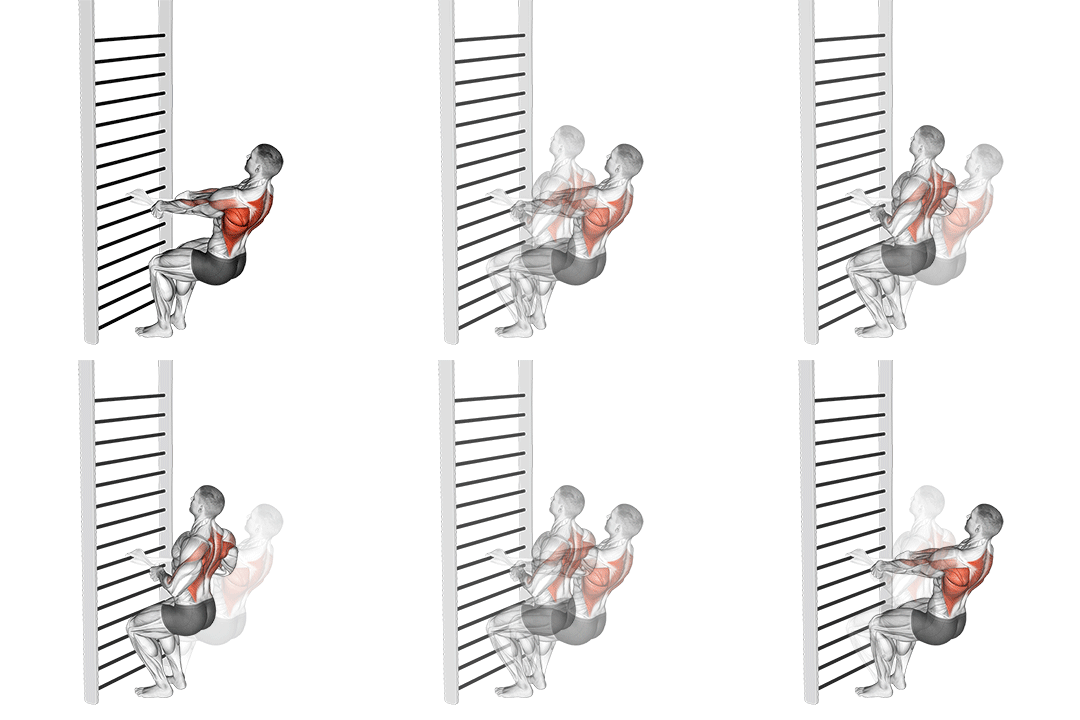
Archer Pull Up
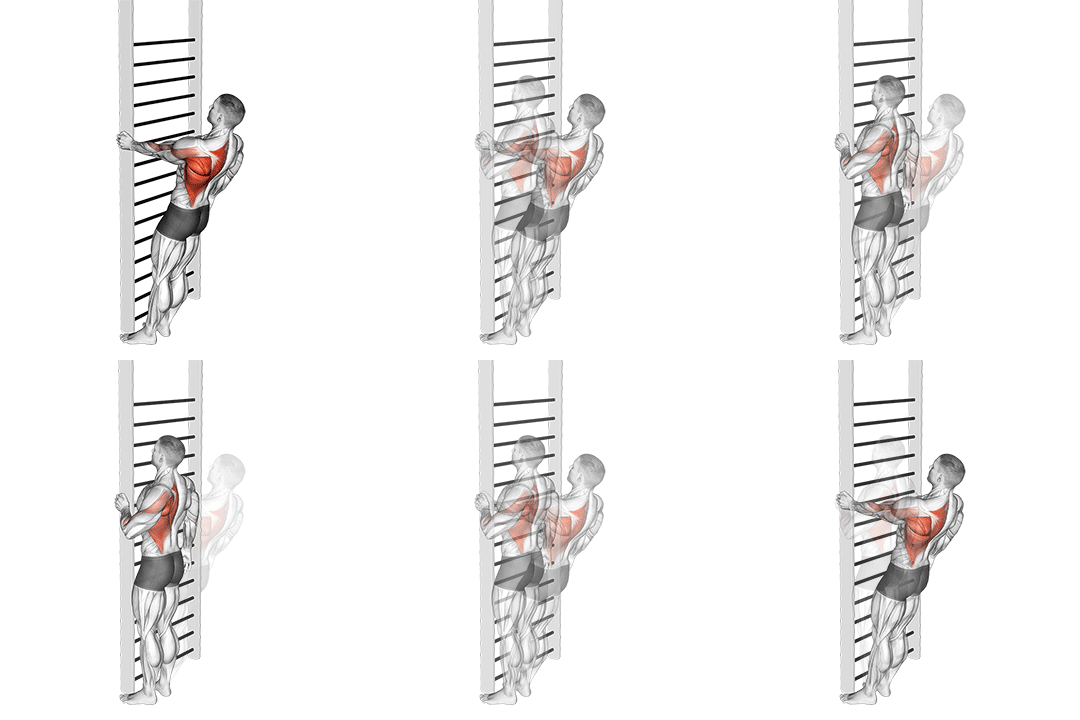
Bodyweight Standing Close-grip Row
Visual Comparison
Overview
Archer Pull Up vs Bodyweight Standing Close-grip Row — pick the right lat builder for your training. If you want clearer direction, this guide breaks down muscle activation, equipment needs, difficulty, progression options, and injury risks so you can choose based on your goals. You’ll get specific cues (elbow path, torso angle), rep ranges (3–6, 6–12), and biomechanics (force vectors, length–tension) to help design workouts. Read on to see which exercise fits your current strength, whether you train at home, and how to progress safely.
Key Differences
- Difficulty levels differ: Archer Pull Up is advanced, while Bodyweight Standing Close-grip Row is beginner.
- Both exercises target the Lats using Body-weight. The main differences are in their movement patterns and muscle activation angles.
Pros & Cons
Archer Pull Up
+ Pros
- High unilateral tension — excellent for building single-arm pulling strength and addressing imbalances
- Strong neural demand boosts maximal strength; useful for low-rep work (3–6 reps)
- Increases scapular stability and anti-rotation core work
- Requires minimal equipment — just a high bar or rings
− Cons
- Advanced skill; hard to learn without solid pull-up strength
- Higher shoulder and elbow stress due to long moment arms
- Limited volume capacity for beginners; not ideal for high-rep hypertrophy sets
Bodyweight Standing Close-grip Row
+ Pros
- Very accessible and scalable by changing body angle (30°–70°) for progressive overload
- Better suited to moderate-high rep ranges for hypertrophy (6–15 reps)
- Lower shoulder stress when performed with neutral scapular mechanics
- Easily performed at home with rings, TRX, or a table
− Cons
- Less peak unilateral tension compared with the archer, which limits absolute one-arm strength carryover
- Can underload strong athletes unless angle or external load is manipulated
- May rely more on biceps if technique lets elbows flare forward, reducing lat emphasis
When Each Exercise Wins
Rows let you accumulate more quality volume at 6–15 reps and control time under tension. Adjust body angle or add tempo (3–4s eccentrics) to increase metabolic stress and mechanical tension on the lats.
Archer Pull Ups create higher peak tension and unilateral overload, which transfers well to maximal pulling strength and progression toward one-arm pull-ups through low-rep (3–6) heavy work.
Rows are easier to scale by changing angle and teach hip-braced, elbow-driven pulling mechanics with lower shoulder load, letting you build strength safely before attempting advanced pull variations.
Close-grip rows require minimal, adaptable equipment (rings, TRX, or a table) and allow instant difficulty tweaks, making them the practical choice for home training.
Frequently Asked Questions
Can I do both Archer Pull Up and Bodyweight Standing Close-grip Row in the same workout?
Yes. Pair the Close-grip Row early for volume-based work (8–12 reps) and finish with Archer Pull Ups for heavy, low-rep sets (3–6) to target maximal strength. Watch fatigue—perform archers fresh to protect shoulder integrity.
Which exercise is better for beginners?
The Bodyweight Standing Close-grip Row is better for beginners because you can scale difficulty by changing body angle and focus on clean scapular retraction and elbow drive before progressing to advanced pull-ups.
How do the muscle activation patterns differ?
Archer Pull Ups load the working lat with higher peak tension and greater anti-rotation core demand due to unilateral mechanics and long moment arms. Close-grip Rows produce steadier bilateral lat activation with increased biceps contribution because of the horizontal force vector and elbows kept close.
Can Bodyweight Standing Close-grip Row replace Archer Pull Up?
For hypertrophy and general back conditioning, yes—the row can replace archers. For maximal unilateral strength and one-arm pull-up progressions, the archer is superior and should be included when your pulling strength allows it.
Expert Verdict
Use the Archer Pull Up when your goal is to develop unilateral pulling strength and move toward one-arm variations. Cue a vertical elbow path, full scapular retraction, and control the eccentric (2–4s) — work in 3–6 rep ranges and add weight when technique is solid. Choose the Bodyweight Standing Close-grip Row when you want reliable lat hypertrophy, lower injury risk, and easier progression; keep elbows tight, torso at 30°–60° to adjust intensity, and use 6–15 reps or slow eccentrics for volume. If you train at home or are newer to pulling, prioritize rows; if you’re advanced and chasing strength, add archers into your program.
Also Compare
More comparisons with Archer Pull Up
More comparisons with Bodyweight Standing Close-grip Row
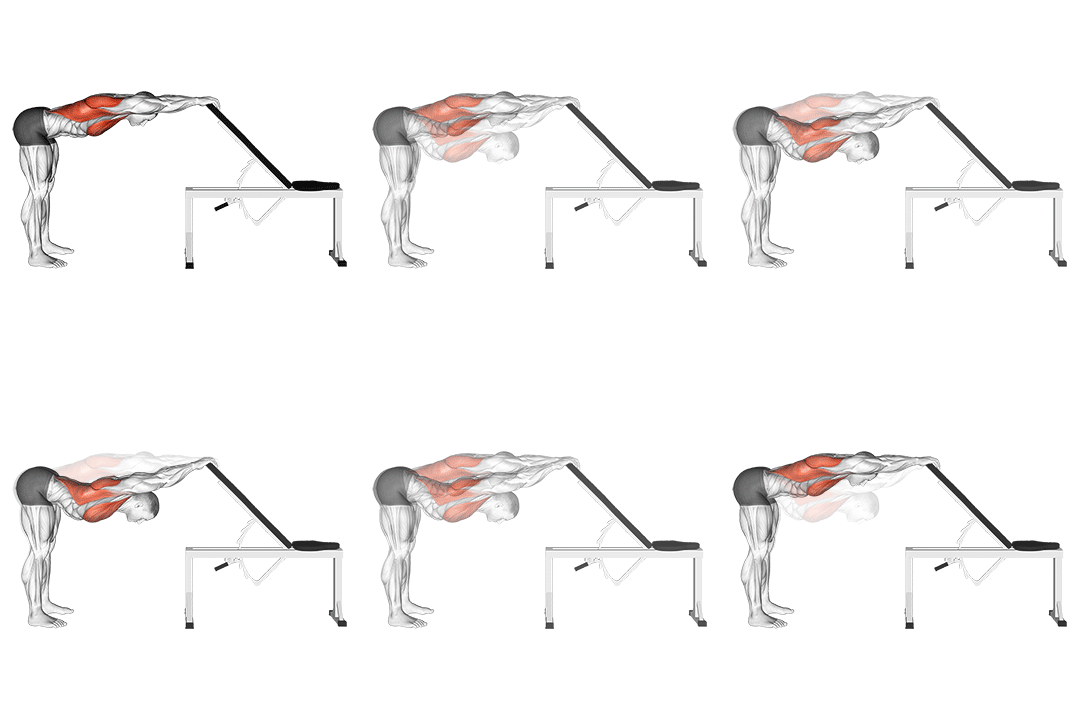
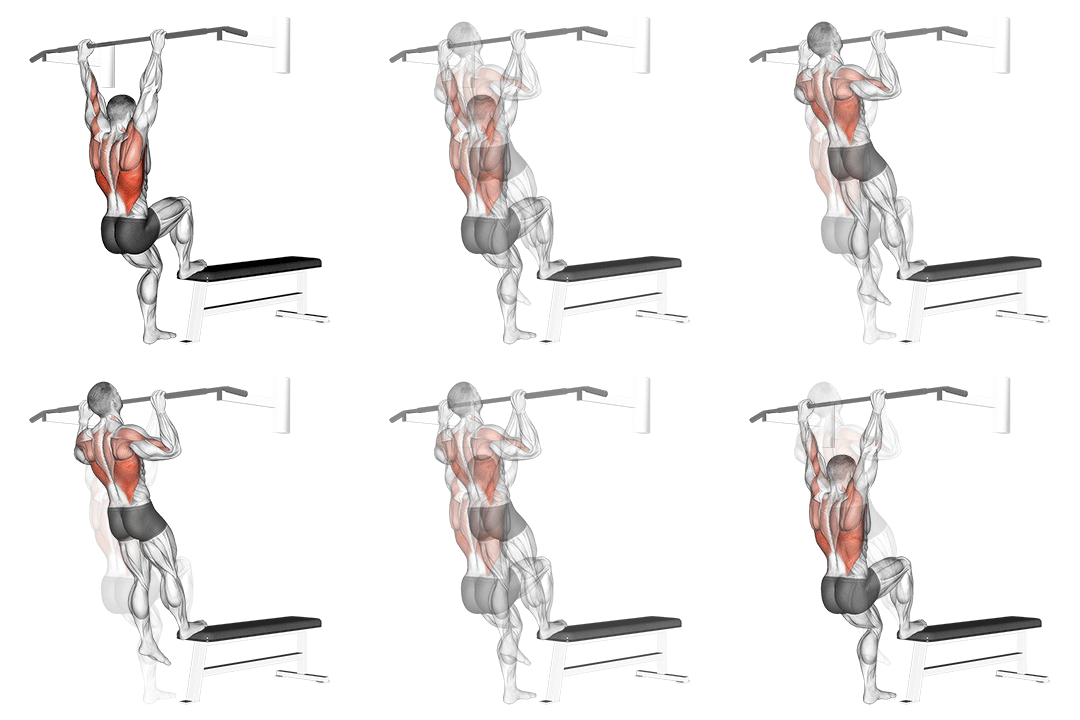
Compare More Exercises
Use our free comparison tool to analyze any two exercises head-to-head.
Compare Exercises