

Archer Push Up vs Chest And Front Of Shoulder Stretch: Complete Comparison Guide
Archer Push Up vs Chest And Front Of Shoulder Stretch — two moves that both touch the pectorals but serve very different jobs. If you want clear guidance on which to use for muscle growth, strength, mobility, or rehab, you’re in the right place. I’ll compare primary muscle activation, secondary recruitment, equipment needs, learning curve, and injury risk. You’ll get technique cues (elbow angle, torso position, hold times), rep and hold recommendations, and biomechanical rationale so you can choose the right move for your session.
Exercise Comparison
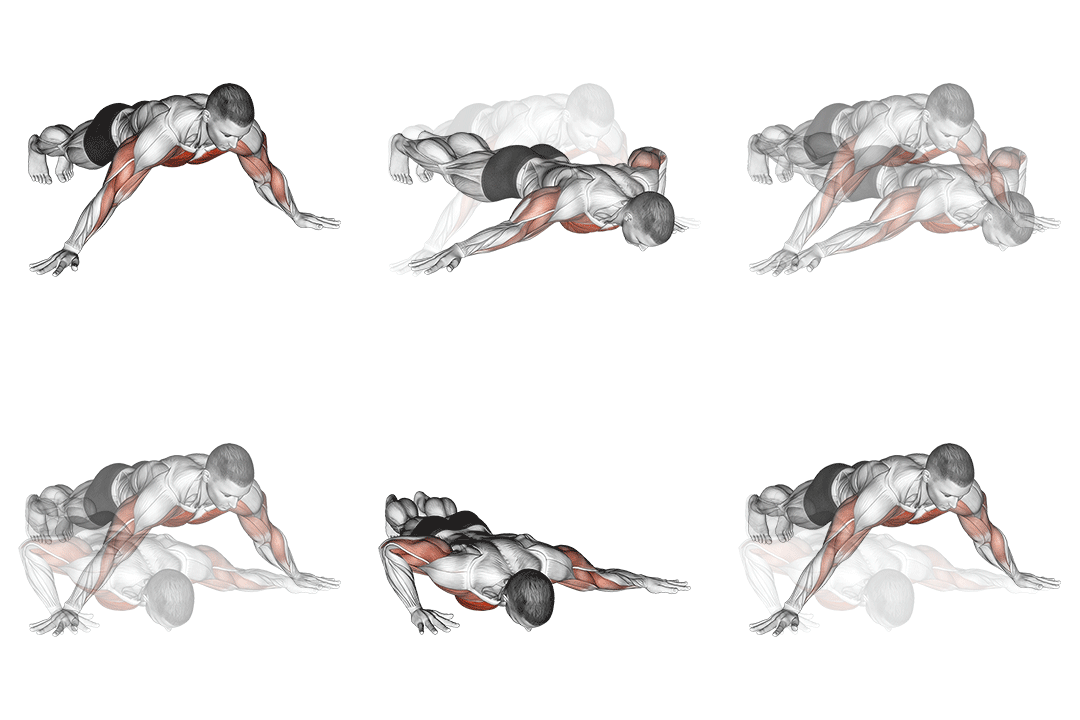
Archer Push Up
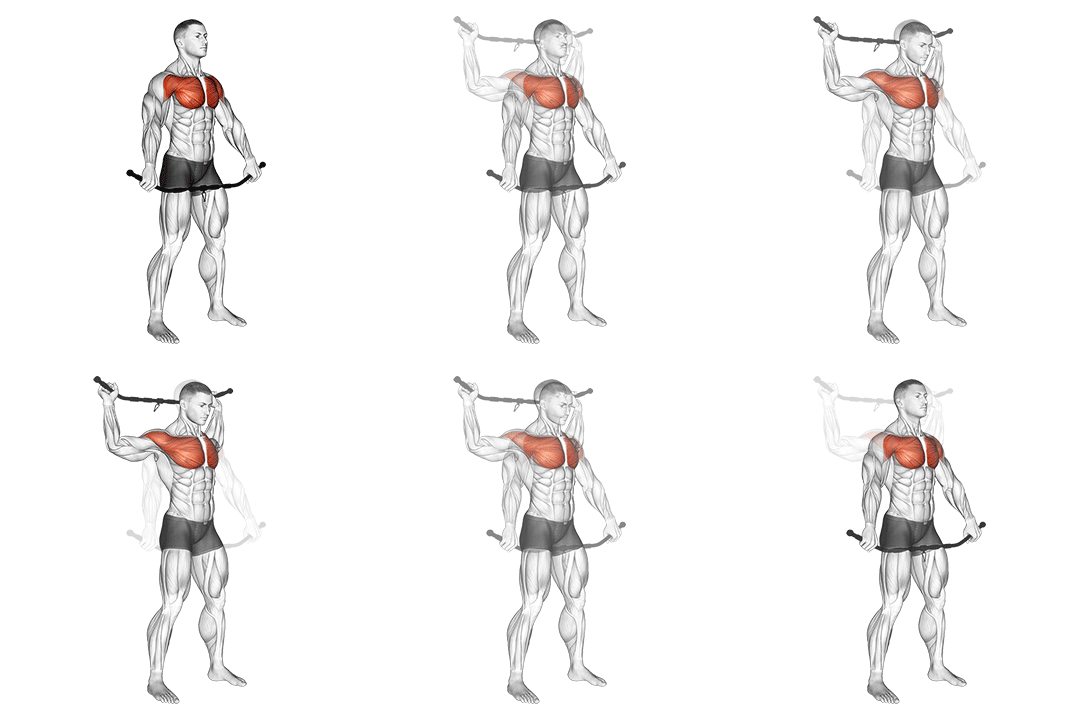
Chest And Front Of Shoulder Stretch
Head-to-Head Comparison
| Attribute | Archer Push Up | Chest And Front Of Shoulder Stretch |
|---|---|---|
| Target Muscle |
Pectorals
|
Pectorals
|
| Body Part |
Chest
|
Chest
|
| Equipment |
Body-weight
|
Body-weight
|
| Difficulty |
Advanced
|
Beginner
|
| Movement Type |
Compound
|
Isolation
|
| Secondary Muscles |
3
|
1
|
Secondary Muscles Activated
Archer Push Up
Chest And Front Of Shoulder Stretch
Visual Comparison
Overview
Archer Push Up vs Chest And Front Of Shoulder Stretch — two moves that both touch the pectorals but serve very different jobs. If you want clear guidance on which to use for muscle growth, strength, mobility, or rehab, you’re in the right place. I’ll compare primary muscle activation, secondary recruitment, equipment needs, learning curve, and injury risk. You’ll get technique cues (elbow angle, torso position, hold times), rep and hold recommendations, and biomechanical rationale so you can choose the right move for your session.
Key Differences
- Archer Push Up is a compound movement, while Chest And Front Of Shoulder Stretch is an isolation exercise.
- Difficulty levels differ: Archer Push Up is advanced, while Chest And Front Of Shoulder Stretch is beginner.
- Both exercises target the Pectorals using Body-weight. The main differences are in their movement patterns and muscle activation angles.
Pros & Cons
Archer Push Up
+ Pros
- High mechanical tension on the pectorals for muscle growth and strength
- Develops unilateral strength and addresses side-to-side imbalances
- Builds core anti-rotation and shoulder stability under load
- Scalable with elevation, tempo changes, and added resistance
− Cons
- Requires solid base push-up strength and good scapular control
- Higher compressive and shear forces at the shoulder—risk if technique fails
- Harder to master technique; poor form shifts load to triceps or lateral deltoid
Chest And Front Of Shoulder Stretch
+ Pros
- Improves pectoral and anterior shoulder flexibility and joint range of motion
- Low effort and low injury risk when performed correctly
- Excellent for warm-up, cooldown, and rehab protocols
- Requires no equipment and is easy to program into mobility work
− Cons
- Minimal concentric load—won’t build meaningful muscle mass or maximal strength
- Can aggravate anterior shoulder pain or impingement if done with poor scapular alignment
- Limited progression beyond increased hold or end-range emphasis
When Each Exercise Wins
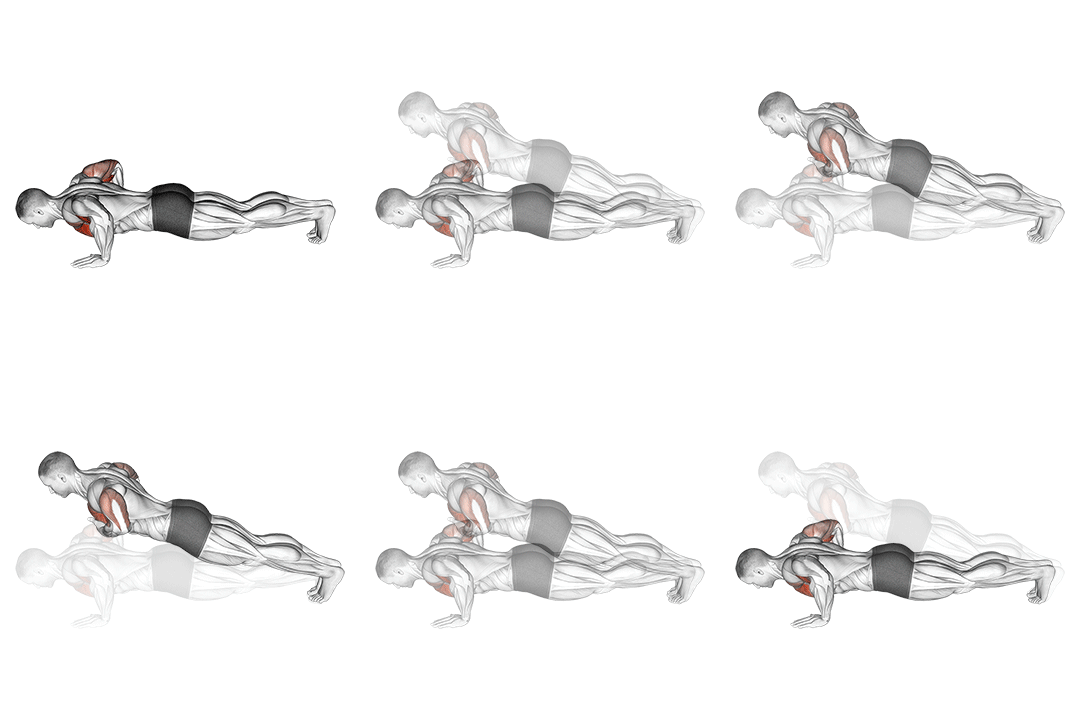
The Archer Push Up produces higher mechanical tension and time under load—key drivers for hypertrophy. Aim for 6–12 reps per side, 3–5 sets, and vary tempo (2–3s eccentric) to maximize fiber recruitment.
Its asymmetrical load increases joint torque and neuromuscular demand, translating to greater strength adaptations. Focus on 3–6 reps per side with longer rests and progressive overload (incline to flat to weighted).
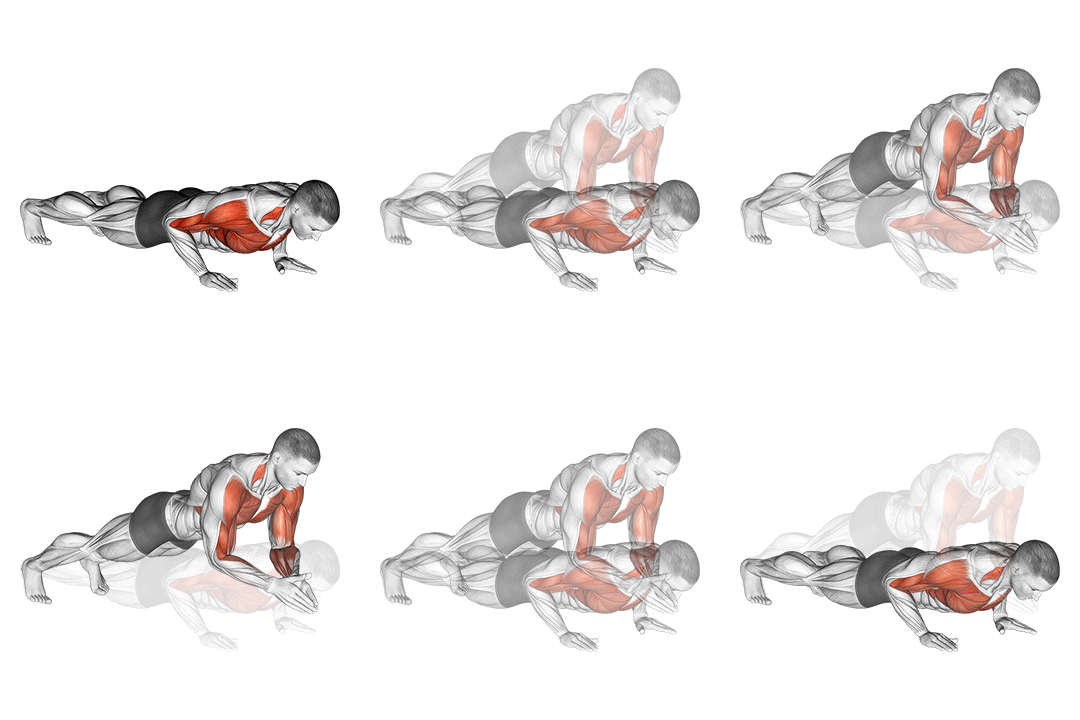
Beginners benefit from the low-load introduction to shoulder mechanics and improved tissue length before load. Use 30–60 second holds to restore range and reduce risk prior to loading movements.
You can get a high-intensity, compound stimulus at home with no gear using archer push-ups and regressions. Pair with bodyweight rows and single-leg work for a balanced home session.
Frequently Asked Questions
Can I do both Archer Push Up and Chest And Front Of Shoulder Stretch in the same workout?
Yes. Use the stretch as a dynamic warm-up or cooldown to improve tissue length and scapular positioning, then perform archer push-ups for strength or hypertrophy. Keep the stretch brief (30–60s) before heavy sets to avoid reducing short-term force output.
Which exercise is better for beginners?
Chest And Front Of Shoulder Stretch is better for absolute beginners because it requires no strength and improves range of motion. Once you establish scapular control and baseline push-up strength, introduce regressions toward the Archer Push Up.
How do the muscle activation patterns differ?
Archer Push Ups produce high active concentric and eccentric activation in the pectoralis major, triceps, and anterior deltoid with strong core engagement for anti-rotation. The stretch produces low active EMG but increases passive tension at long muscle lengths, improving length-tension characteristics rather than producing force.
Can Chest And Front Of Shoulder Stretch replace Archer Push Up?
No, not if your goal is strength or hypertrophy. The stretch improves mobility and prepares tissue but does not provide the necessary mechanical tension for muscle growth—use both strategically rather than as direct substitutes.
Expert Verdict
Use the Archer Push Up when your goal is progressive muscle growth or strength in the chest and anterior shoulder. Its force vector—strong horizontal adduction with unilateral loading—creates high mechanical tension and core demand; program it for 3–5 sets of 3–12 reps depending on strength or hypertrophy focus. Reserve the Chest And Front Of Shoulder Stretch for mobility, warm-ups, and rehab: 30–60 second holds to improve pec length-tension and shoulder range. If you’re new or managing shoulder pain, start with the stretch and build scapular control before adding archer progressions.
Also Compare
More comparisons with Archer Push Up
More comparisons with Chest And Front Of Shoulder Stretch
Compare More Exercises
Use our free comparison tool to analyze any two exercises head-to-head.
Compare Exercises