

Archer Push Up vs Chest Dip: Complete Comparison Guide
Archer Push Up vs Chest Dip — two advanced bodyweight presses that both hammer your pectorals but do it in different ways. If you want clear guidance on which to use for muscle growth, raw pressing strength, shoulder health, or home training, you’re in the right place. I’ll walk you through how each move loads the chest, how secondary muscles are recruited, equipment needs, progression strategies (rep ranges: 3–6 for strength, 6–12 for hypertrophy), and injury risk so you can pick the best tool for your goals.
Exercise Comparison
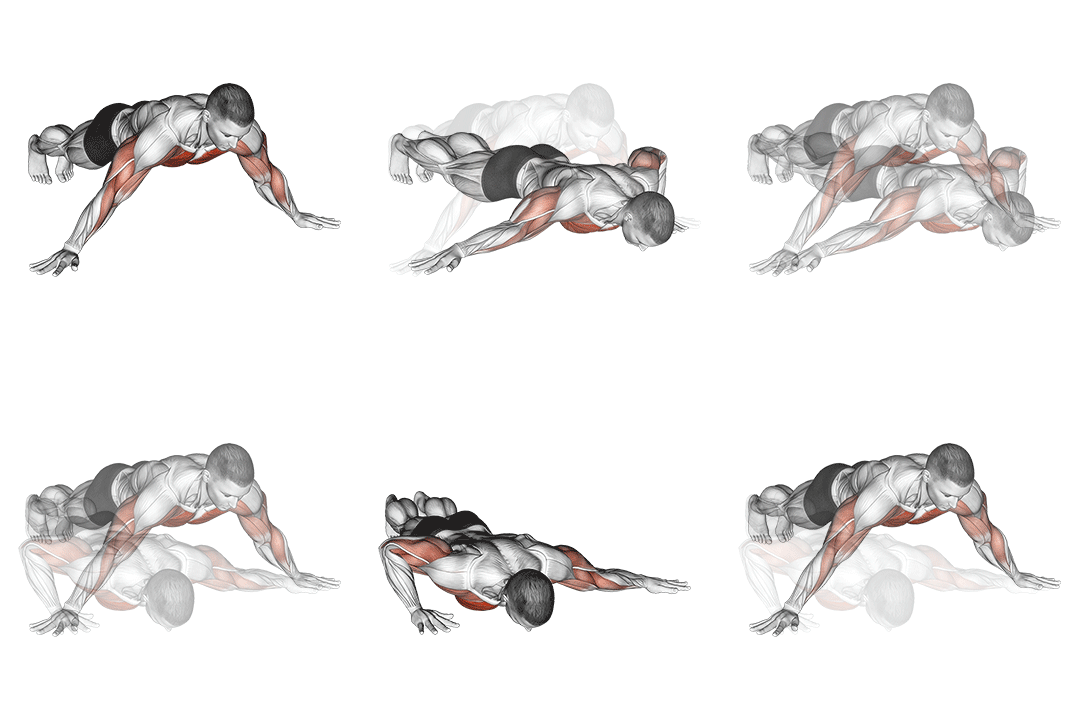
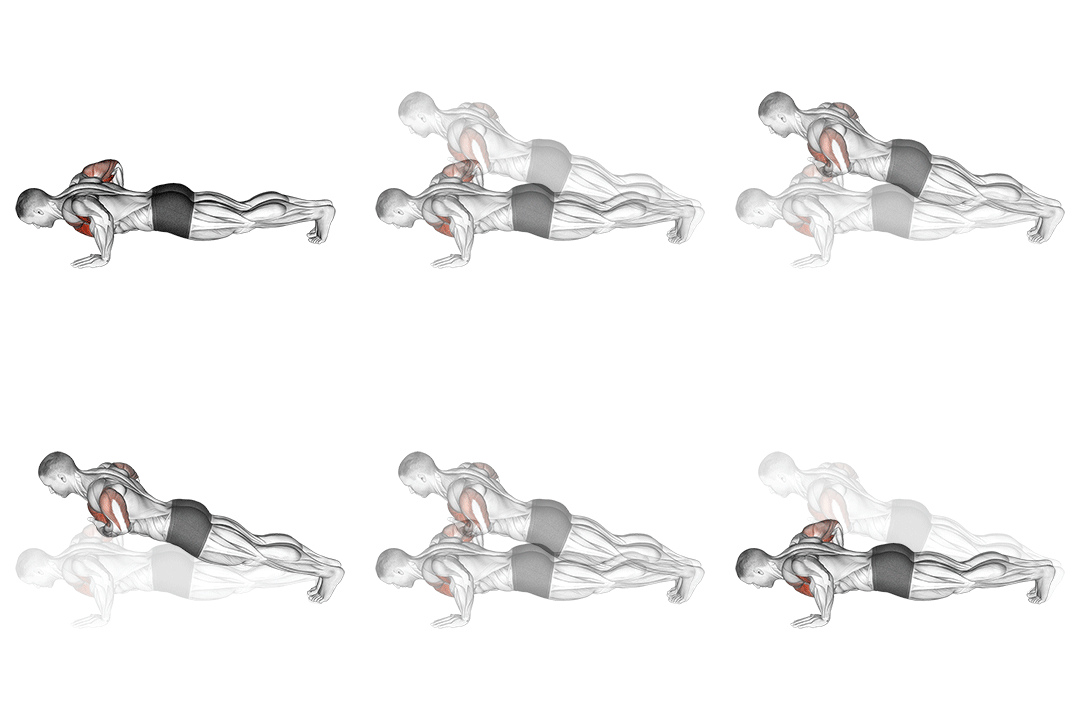
Archer Push Up
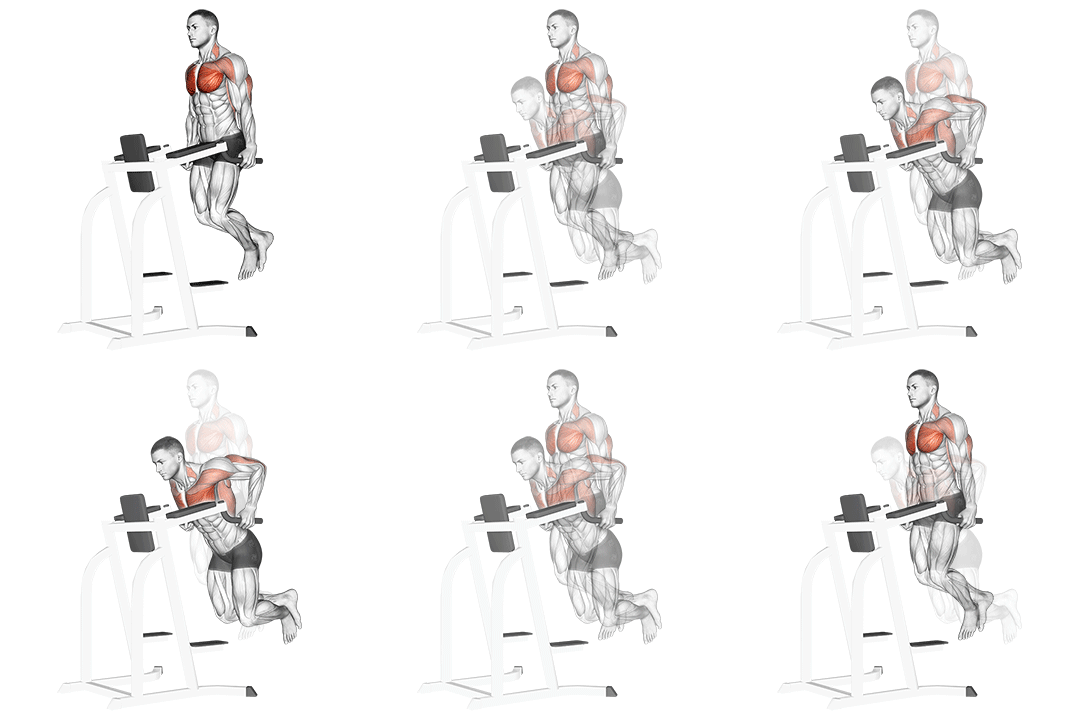
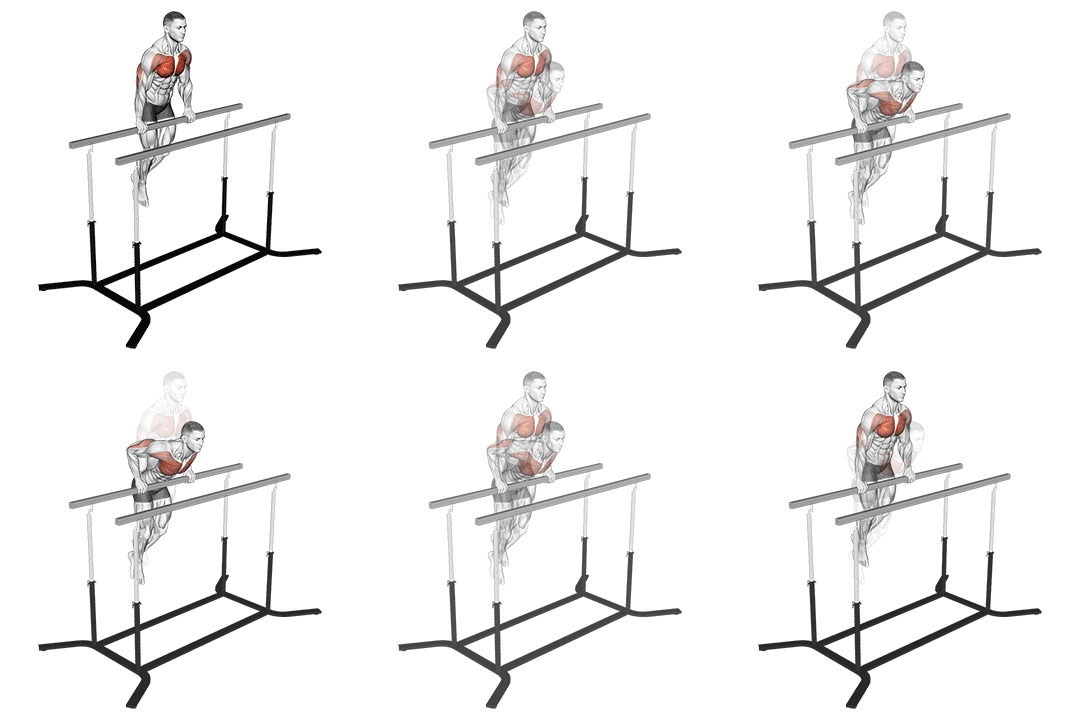
Chest Dip
Head-to-Head Comparison
| Attribute | Archer Push Up | Chest Dip |
|---|---|---|
| Target Muscle |
Pectorals
|
Pectorals
|
| Body Part |
Chest
|
Chest
|
| Equipment |
Body-weight
|
Body-weight
|
| Difficulty |
Advanced
|
Advanced
|
| Movement Type |
Compound
|
Compound
|
| Secondary Muscles |
3
|
2
|
Secondary Muscles Activated
Archer Push Up
Chest Dip
Visual Comparison
Overview
Archer Push Up vs Chest Dip — two advanced bodyweight presses that both hammer your pectorals but do it in different ways. If you want clear guidance on which to use for muscle growth, raw pressing strength, shoulder health, or home training, you’re in the right place. I’ll walk you through how each move loads the chest, how secondary muscles are recruited, equipment needs, progression strategies (rep ranges: 3–6 for strength, 6–12 for hypertrophy), and injury risk so you can pick the best tool for your goals.
Key Differences
- Both exercises target the Pectorals using Body-weight. The main differences are in their movement patterns and muscle activation angles.
Pros & Cons
Archer Push Up
+ Pros
- Minimal equipment — only floor space required
- High unilateral core and scapular stability demand improves imbalance correction
- Strong horizontal force vector that targets mid-chest and sternal fibers
- Easy to modify tempo and leverage to change loading
− Cons
- Hard to quantify and progressively overload precisely with weights
- High technical demand — requires strong anti-rotation core and shoulder control
- Can be tough on wrists without handles or proper alignment
Chest Dip
+ Pros
- Excellent for progressive overload with added weight
- Greater eccentric stretch for lower-pec development
- Simple loading symmetry for bilateral strength
- Easy to program into 3–6 rep strength and 6–12 rep hypertrophy schemes
− Cons
- Requires parallel bars or rings — less accessible at home
- Higher anterior shoulder stress in deep ranges of motion
- Less core anti-rotation demand compared with unilateral presses
When Each Exercise Wins
Chest dips allow you to add measurable external load and drive a big eccentric stretch at the bottom, both potent hypertrophy stimuli. Use 6–12 reps with a 2–3 second eccentric to exploit length-tension and mechanical tension in the pecs.
Because you can progressively overload dips with plates or a weighted vest, they scale better for raw pressing strength in the 3–6 rep range. Their vertical force vector and bilateral loading let you push heavier absolute loads safely when you have good shoulder mechanics.
Assisted chest dips (bands or machine) are easier to scale while teaching a clear vertical press pattern and triceps engagement. Archer push-ups are advanced and demand unilateral control that most novices haven’t developed yet.
Archer push-ups need only floor space and can be progressed via incline, tempo, or deficit without specialized gear. They give unilateral overload and core carryover when bars or dip stations aren’t available.
Frequently Asked Questions
Can I do both Archer Push Up and Chest Dip in the same workout?
Yes — combining them is a solid strategy. Use dips as your heavy compound (3–6 reps or weighted 6–10) and finish with archer push-ups for unilateral volume and core demand, or alternate days to manage fatigue and shoulder load.
Which exercise is better for beginners?
Chest dips are generally easier to scale for beginners with band assistance or a dip machine, and they teach a clear pressing pattern. Archer push-ups are advanced and require stronger scapular control and core anti-rotation, so save them until you have a solid push-up base.
How do the muscle activation patterns differ?
Archer push-ups bias horizontal adduction and create high unilateral torque on the working pec and anterior deltoid, increasing stability demand. Chest dips place the pecs under greater length at the bottom with a more vertical/oblique force vector, shifting load into the lower sternal fibers and the triceps during the concentric phase.
Can Chest Dip replace Archer Push Up?
Chest dips can replace archer push-ups if your goal is hypertrophy or absolute pressing strength and you can load the dip safely. If you need unilateral carryover, core anti-rotation, or you train at home without bars, archer push-ups offer benefits dips don’t replicate.
Expert Verdict
Use chest dips when your priority is measurable overload and lower-pec development — they’re the go-to if you can load the movement and have healthy shoulder mobility. Pick rep ranges of 3–6 for maximal strength and 6–12 for hypertrophy, and avoid dropping past painful end-ranges. Choose archer push-ups when you train at home, want unilateral strength and core anti-rotation, or need to correct left-right imbalances; they mimic single-arm mechanics and emphasize horizontal force. For balanced programming, alternate both across blocks: a 4–8 week dip-focused block for size/strength, then a 4–8 week archer block for stability and unilateral power.
Also Compare
More comparisons with Archer Push Up
Compare More Exercises
Use our free comparison tool to analyze any two exercises head-to-head.
Compare Exercises