

Archer Push Up vs Chest Dip (on Dip-pull-up Cage): Complete Comparison Guide
Archer Push Up vs Chest Dip (on Dip-pull-up Cage) — if you want a stronger, fuller chest you need to pick the right move for your setup and goals. I’ll walk you through how each exercise loads the pectorals, which secondary muscles take the hit, the equipment and progression options, and clear technique cues so you perform them safely. By the end you’ll know which one to prioritize for muscle growth, strength, skill, or home workouts and how to program reps and progressions effectively.
Exercise Comparison
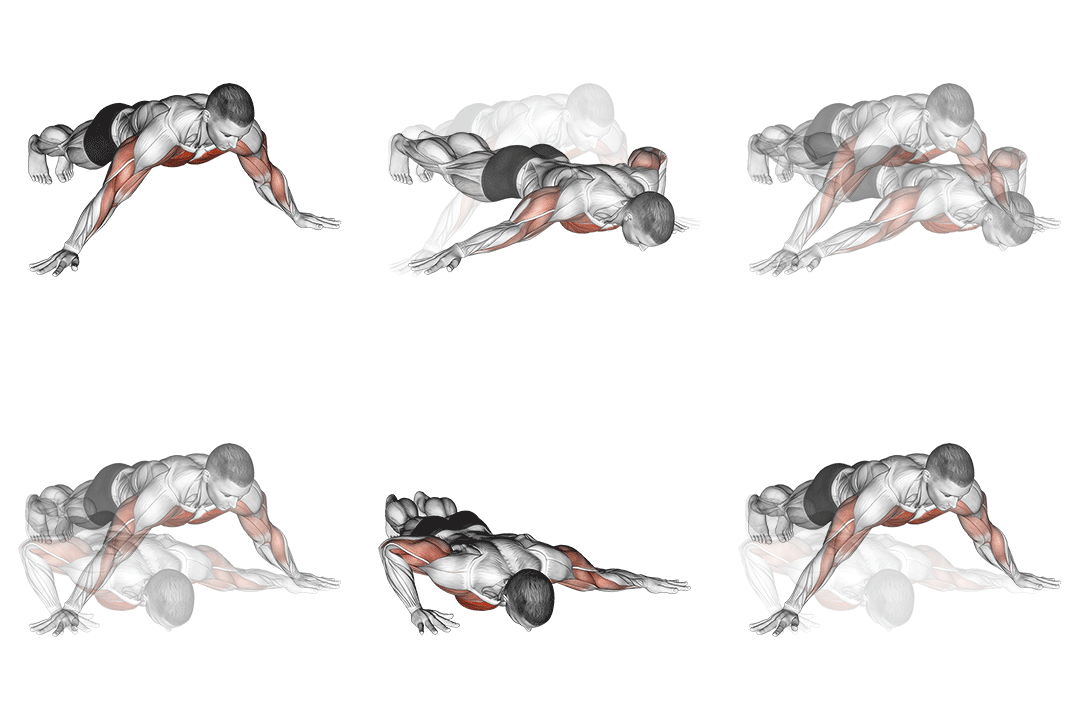
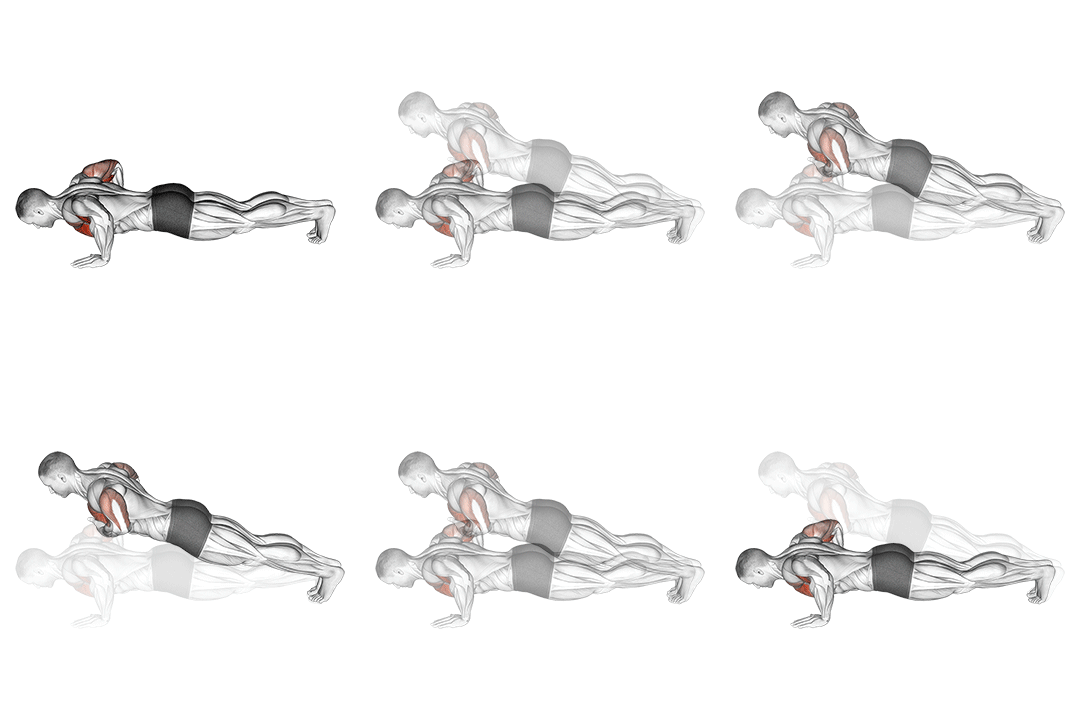
Archer Push Up
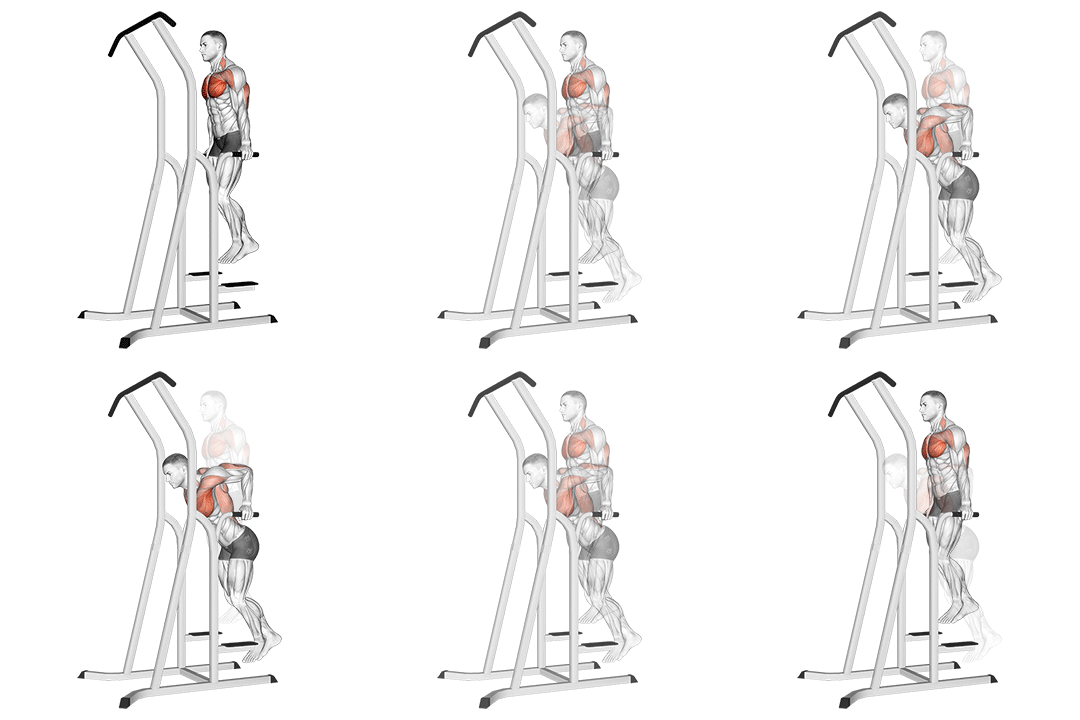
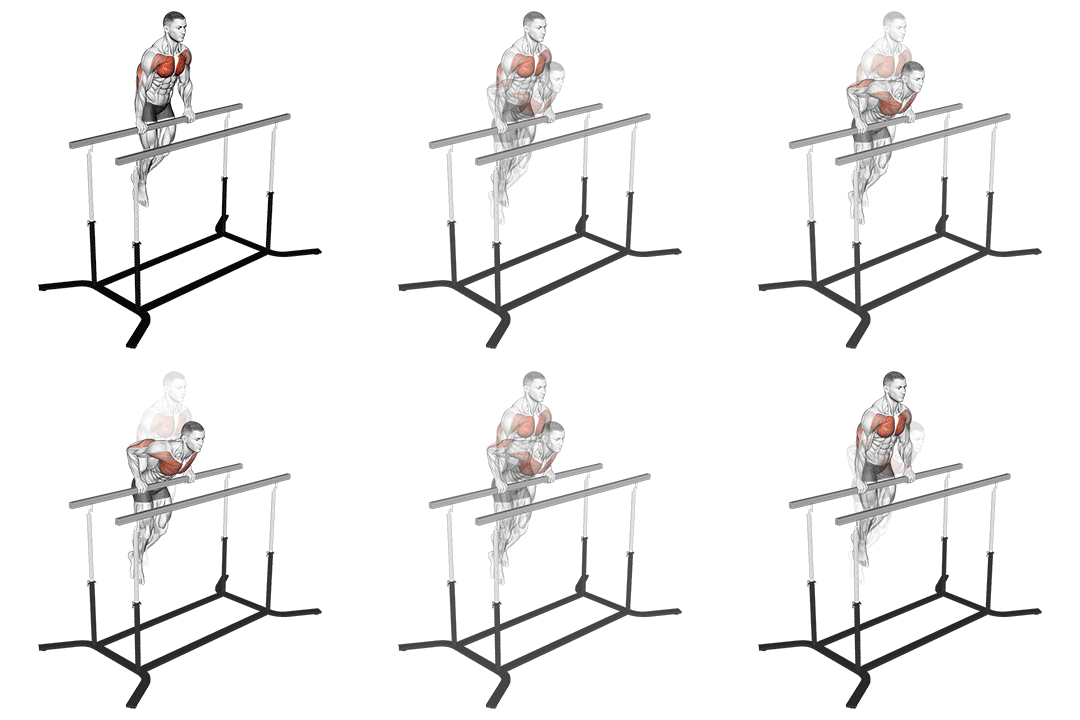
Chest Dip (on Dip-pull-up Cage)
Head-to-Head Comparison
| Attribute | Archer Push Up | Chest Dip (on Dip-pull-up Cage) |
|---|---|---|
| Target Muscle |
Pectorals
|
Pectorals
|
| Body Part |
Chest
|
Chest
|
| Equipment |
Body-weight
|
Body-weight
|
| Difficulty |
Advanced
|
Intermediate
|
| Movement Type |
Compound
|
Compound
|
| Secondary Muscles |
3
|
2
|
Secondary Muscles Activated
Archer Push Up
Chest Dip (on Dip-pull-up Cage)
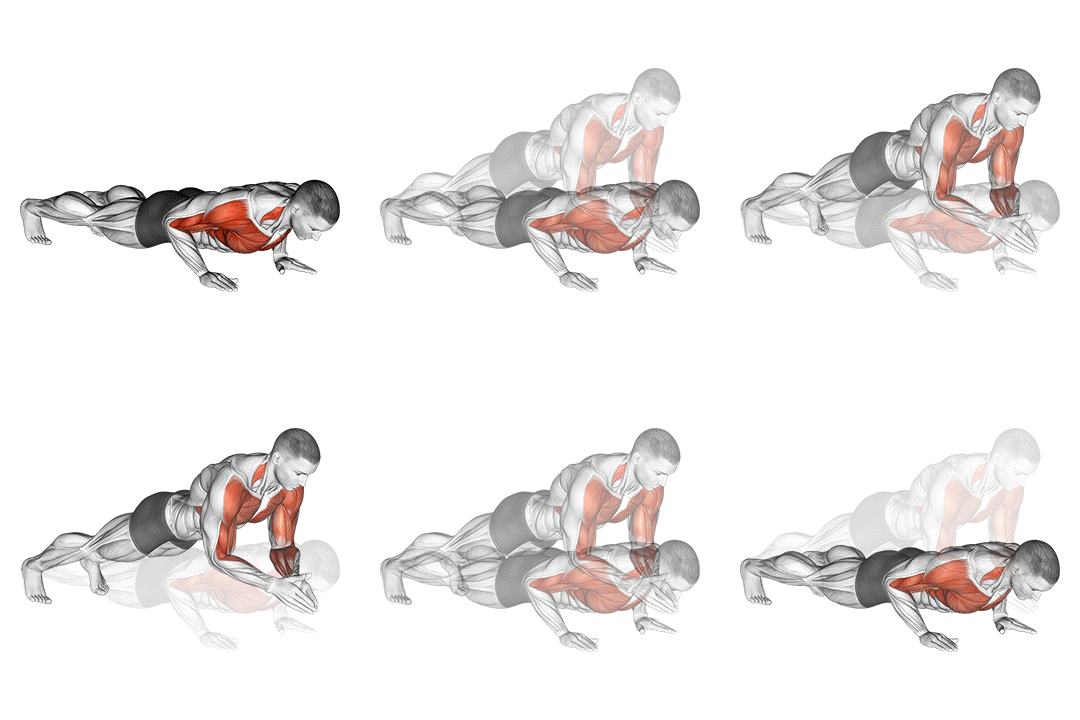
Visual Comparison
Overview
Archer Push Up vs Chest Dip (on Dip-pull-up Cage) — if you want a stronger, fuller chest you need to pick the right move for your setup and goals. I’ll walk you through how each exercise loads the pectorals, which secondary muscles take the hit, the equipment and progression options, and clear technique cues so you perform them safely. By the end you’ll know which one to prioritize for muscle growth, strength, skill, or home workouts and how to program reps and progressions effectively.
Key Differences
- Difficulty levels differ: Archer Push Up is advanced, while Chest Dip (on Dip-pull-up Cage) is intermediate.
- Both exercises target the Pectorals using Body-weight. The main differences are in their movement patterns and muscle activation angles.
Pros & Cons
Archer Push Up
+ Pros
- No equipment needed — usable anywhere
- High unilateral overload for each pec, useful for correcting imbalances
- Develops core anti-rotation and scapular stability
- Progresses toward one-arm push-up skill and bodyweight strength
− Cons
- Advanced movement with steep technical demand
- Harder to add external load for pure strength progression
- Wrist and shoulder stability limits may restrict volume
Chest Dip (on Dip-pull-up Cage)
+ Pros
- Easy to progressively overload with added weight
- Strong stimulus for lower/inner pectorals when leaning forward 20°–30°
- Simple bilateral movement that builds pressing strength efficiently
- Accessible regressions (assisted band) and clear rep/weight progressions
− Cons
- Requires dip bars or a cage — less home-friendly
- Can aggravate anterior shoulder issues if taken too deep
- Higher triceps dominance can reduce isolated pec emphasis for some lifters
When Each Exercise Wins
Chest dips allow easy progressive overload with added weight and put the pecs through a long, heavy range of motion—ideal for 6–12 rep hypertrophy blocks. The vertical force vector and forward lean bias the sternal head, making dips efficient for building overall chest mass.
Because you can add substantial external load (10–50+ lbs) and train low rep ranges (3–6), dips are superior for absolute pressing strength. The bilateral, symmetrical pattern lets you target maximal force production without the balance and skill ceiling of unilateral push-ups.
With band assistance or a step, dips provide a simpler, more controlled path to build pressing strength and triceps capacity. Archer push-ups require advanced stability and unilateral strength, so beginners should start with assisted dips and progressions.
Archer push-ups need no specialized equipment and can be regressed by changing body angle (incline/decline). This makes them the clear choice when you lack access to dip bars or want a unilateral chest stimulus at home.
Frequently Asked Questions
Can I do both Archer Push Up and Chest Dip (on Dip-pull-up Cage) in the same workout?
Yes — pairing them is effective. Use dips as the heavy compound (e.g., 3–6 sets of 4–8 reps) and finish with archer push-ups for unilateral volume and stability (2–4 sets of 6–10 reps per side). Watch total shoulder volume and program rest to avoid overuse.
Which exercise is better for beginners?
Chest dips with band assistance or partial ROM are generally better for beginners because they offer a more straightforward loading pathway. Beginners can build baseline pressing strength and technique before attempting advanced unilateral moves like the archer push-up.
How do the muscle activation patterns differ?
Archer push-ups emphasize unilateral horizontal adduction with high anti-rotation demand, producing concentrated load on one pectoral while the other arm stabilizes. Chest dips create a vertical load with more triceps torque and greater activation of the sternal portion of the pecs when you lean forward.
Can Chest Dip (on Dip-pull-up Cage) replace Archer Push Up?
They overlap but don’t fully replace each other: dips are superior for adding load and building mass, while archer push-ups develop unilateral control and core anti-rotation. If your goal is only hypertrophy and you have a dip station, dips can be primary; keep archers for balance and skill work.
Expert Verdict
Choose chest dips when your priority is raw chest hypertrophy or maximal pressing strength and you have access to dip bars and the ability to add load; they let you manipulate weight, reps (3–6 for strength, 6–12 for size), and torso angle (forward lean ~20°–30°) to bias the pecs. Choose archer push-ups when you train at home, need unilateral overload to fix imbalances, or want to progress toward a one-arm push-up — they build stability and core control while keeping training equipment-free. If possible, include both: use dips for heavy loading phases and archer push-ups for skill, stability, and unilateral work.
Also Compare
More comparisons with Archer Push Up
More comparisons with Chest Dip (on Dip-pull-up Cage)
Compare More Exercises
Use our free comparison tool to analyze any two exercises head-to-head.
Compare Exercises