

Archer Push Up vs Chest Dip On Straight Bar: Complete Comparison Guide
Archer Push Up vs Chest Dip On Straight Bar is a direct test of horizontal push mechanics vs a mixed vertical-horizontal press. You’ll get clear, actionable guidance on which exercise targets the pectorals more effectively, how each stresses the shoulders and triceps, what equipment you need, and practical progressions and rep ranges. Read on if you want to pick the right chest-builder for hypertrophy, unilateral control, strength, or a simple home routine — you’ll leave with specific technique cues and when to choose each move.
Exercise Comparison
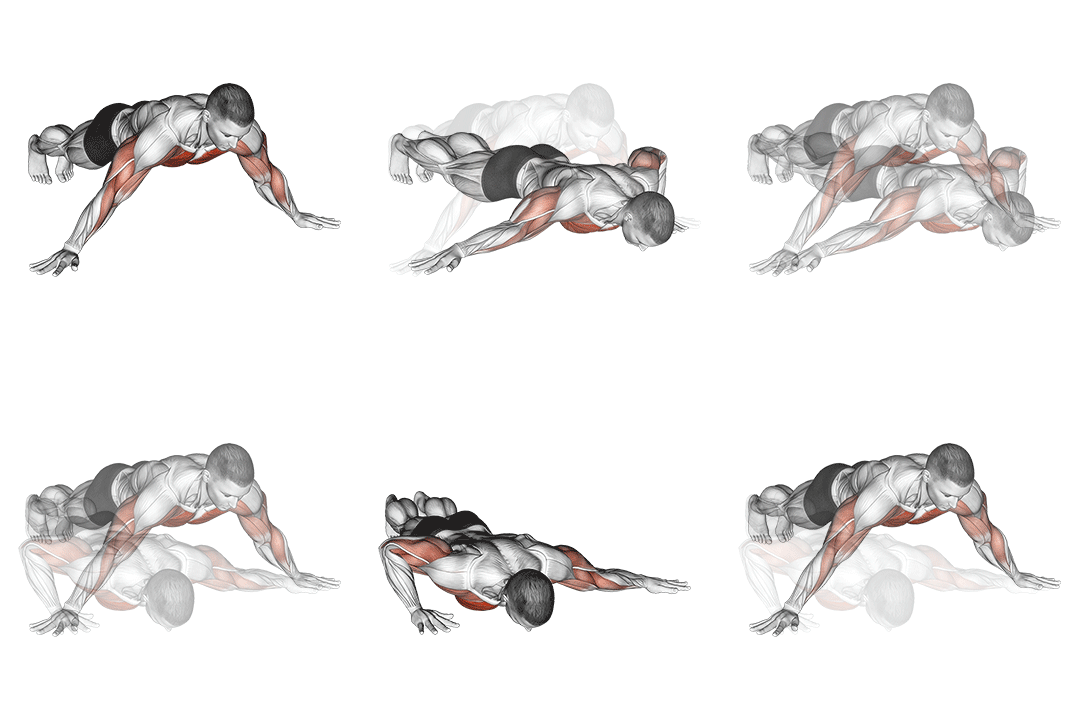
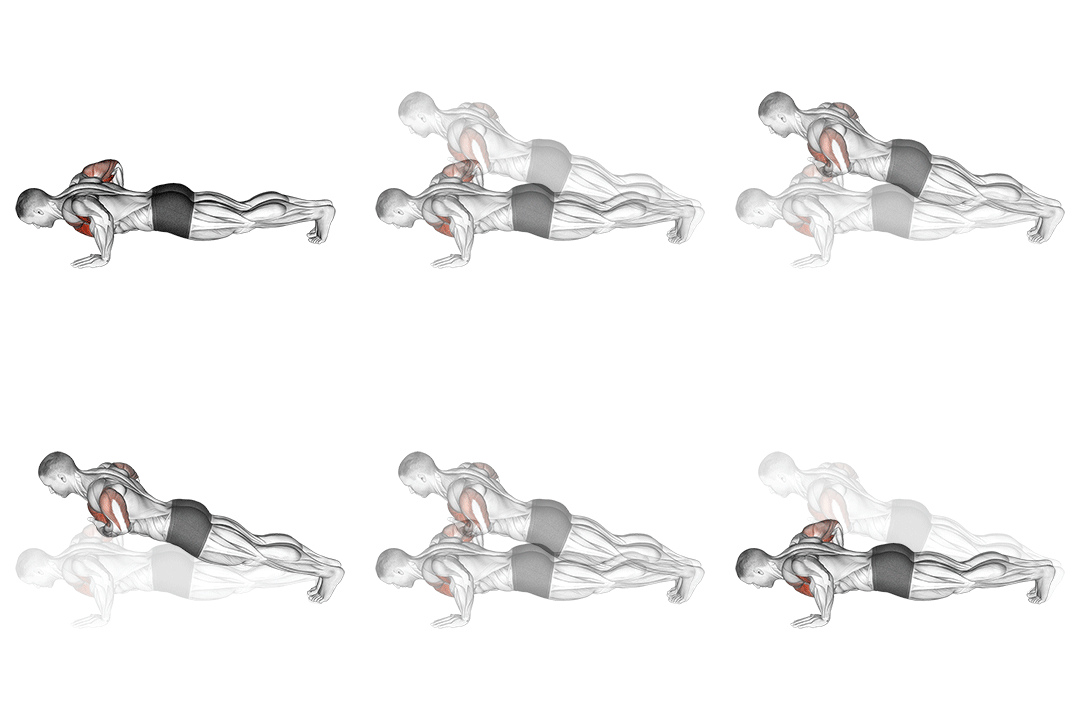
Archer Push Up
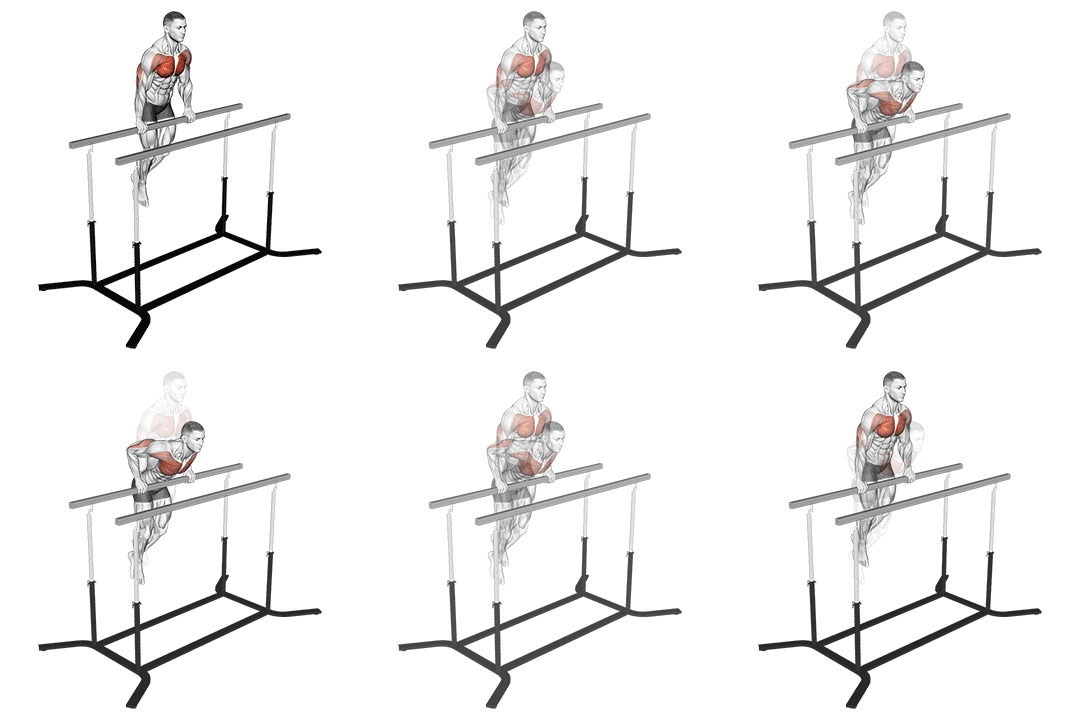
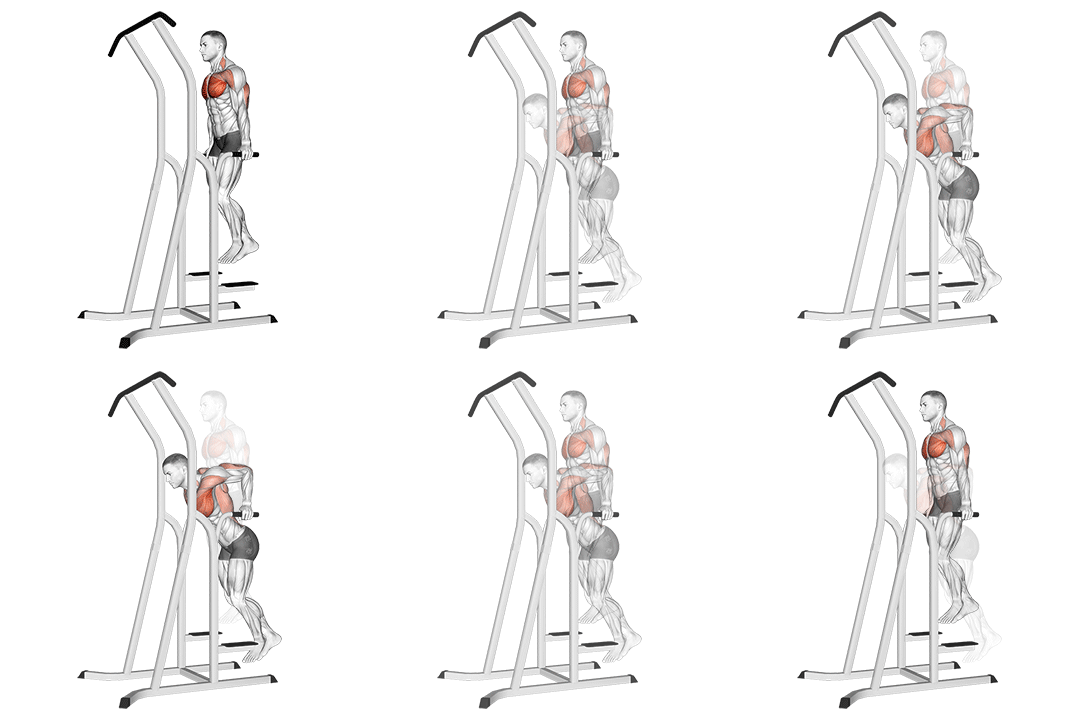
Chest Dip On Straight Bar
Head-to-Head Comparison
| Attribute | Archer Push Up | Chest Dip On Straight Bar |
|---|---|---|
| Target Muscle |
Pectorals
|
Pectorals
|
| Body Part |
Chest
|
Chest
|
| Equipment |
Body-weight
|
Body-weight
|
| Difficulty |
Advanced
|
Intermediate
|
| Movement Type |
Compound
|
Compound
|
| Secondary Muscles |
3
|
2
|
Secondary Muscles Activated
Archer Push Up
Chest Dip On Straight Bar
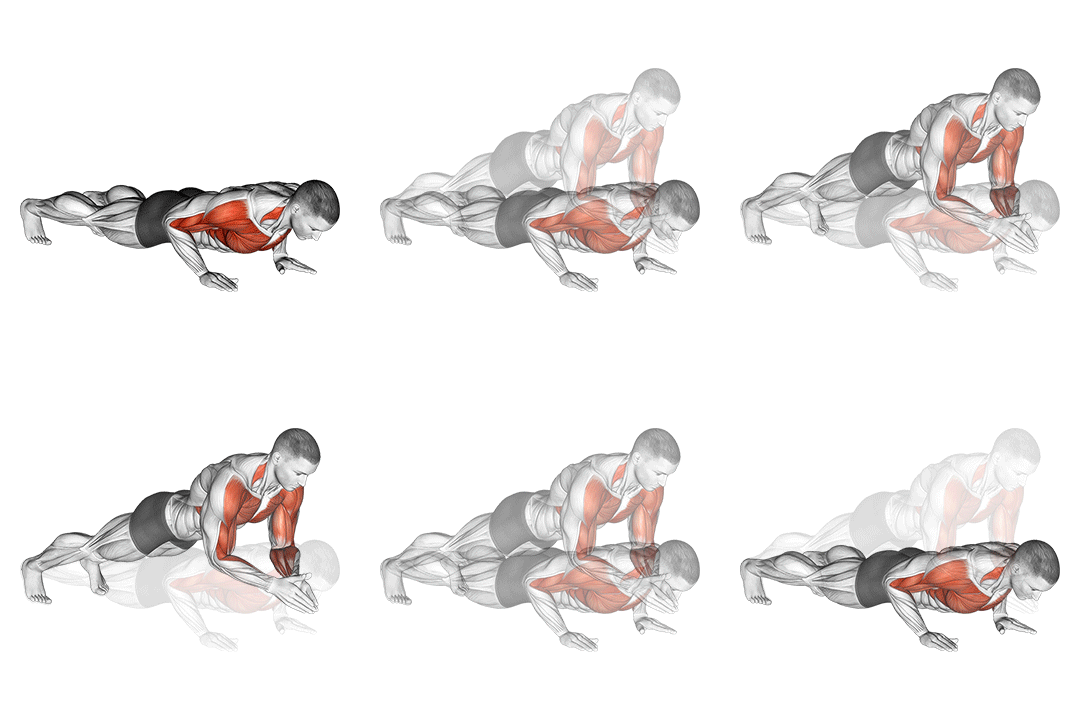
Visual Comparison
Overview
Archer Push Up vs Chest Dip On Straight Bar is a direct test of horizontal push mechanics vs a mixed vertical-horizontal press. You’ll get clear, actionable guidance on which exercise targets the pectorals more effectively, how each stresses the shoulders and triceps, what equipment you need, and practical progressions and rep ranges. Read on if you want to pick the right chest-builder for hypertrophy, unilateral control, strength, or a simple home routine — you’ll leave with specific technique cues and when to choose each move.
Key Differences
- Difficulty levels differ: Archer Push Up is advanced, while Chest Dip On Straight Bar is intermediate.
- Both exercises target the Pectorals using Body-weight. The main differences are in their movement patterns and muscle activation angles.
Pros & Cons
Archer Push Up
+ Pros
- Requires no special equipment—easy to do at home
- Builds unilateral strength and corrects left-right imbalances
- Strong core and anti-rotation demand improves stability
- Horizontal adduction torque produces concentrated pec activation
− Cons
- Advanced skill; steep learning curve for many lifters
- Hard to progressively overload with precise weight increments
- High wrist and elbow stress if form or mobility are poor
Chest Dip On Straight Bar
+ Pros
- Straightforward loading options with weight belts or vests
- Powerful stimulus for lower and sternal pec fibers with torso lean
- Simpler technique pattern for many lifters compared to unilateral pushes
- High potential for building raw pressing strength
− Cons
- Greater anterior shoulder stress at deep ranges of motion
- Requires a stable bar setup or dip station
- Less core anti-rotation challenge compared with unilateral pushes
When Each Exercise Wins
Chest dips let you add external load easily and stress the pecs through a larger range of shoulder extension, making them ideal for progressive overload and 6–12 rep hypertrophy blocks.
The ability to add heavy, measurable load (5–20+ kg) and maintain stable bilateral mechanics makes dips superior for increasing maximal pressing strength and force production.
As an intermediate movement with a simpler bilateral pattern, dips are easier to scale with assistance bands or partial ROM, while archer push-ups demand more unilateral control and baseline strength.
No bar required—archer push-ups let you get intense chest stimulus with only floor space and optional handles, making them ideal when equipment is limited.
Frequently Asked Questions
Can I do both Archer Push Up and Chest Dip On Straight Bar in the same workout?
Yes. Pair chest dips as the main heavy movement (3–6 sets of 6–10 reps) and use archer push-ups as a unilateral accessory (3–4 sets of 4–8 reps per side) to address imbalances and core stability. Schedule dips first when you’re fresh to protect technique and use archer pushes later for skill and stability work.
Which exercise is better for beginners?
Chest Dip On Straight Bar is generally better for beginners with access to a dip station because it’s easier to scale using assistance bands or partial ROM. Archer push-ups demand more unilateral strength and core control, so they suit advanced trainees.
How do the muscle activation patterns differ?
Archer push-ups create high unilateral horizontal adduction torque with strong anti-rotation core activation; the working pec operates at a shorter muscle length under large lateral force. Dips produce greater shoulder extension torque and lengthen the sternocostal fibers under load, combining vertical and horizontal vectors to hit lower pec regions more intensely.
Can Chest Dip On Straight Bar replace Archer Push Up?
It can replace archer push-ups for pure hypertrophy and strength because dips allow heavier loading, but you’ll lose unilateral control and anti-rotation benefits. If you need symmetry work, keep archer or other unilateral pushes in the program alongside dips.
Expert Verdict
Choose Chest Dip On Straight Bar when your goal is measurable progressive overload, targeted lower-pec development, or raw pressing strength—use forward lean and 6–12 rep sets, add 2–5 seconds eccentric work for tension. Pick Archer Push Up when you want unilateral control, core anti-rotation carryover, and minimal equipment; work in 4–10 rep ranges per side and prioritize scapular stability and neutral wrist position. If shoulder health or loading capacity is a concern, build to dips slowly with partial ROM and controlled scapula mechanics. Use both in a program: dips for heavy loading cycles, archer push-ups as accessory work for symmetry and stability.
Also Compare
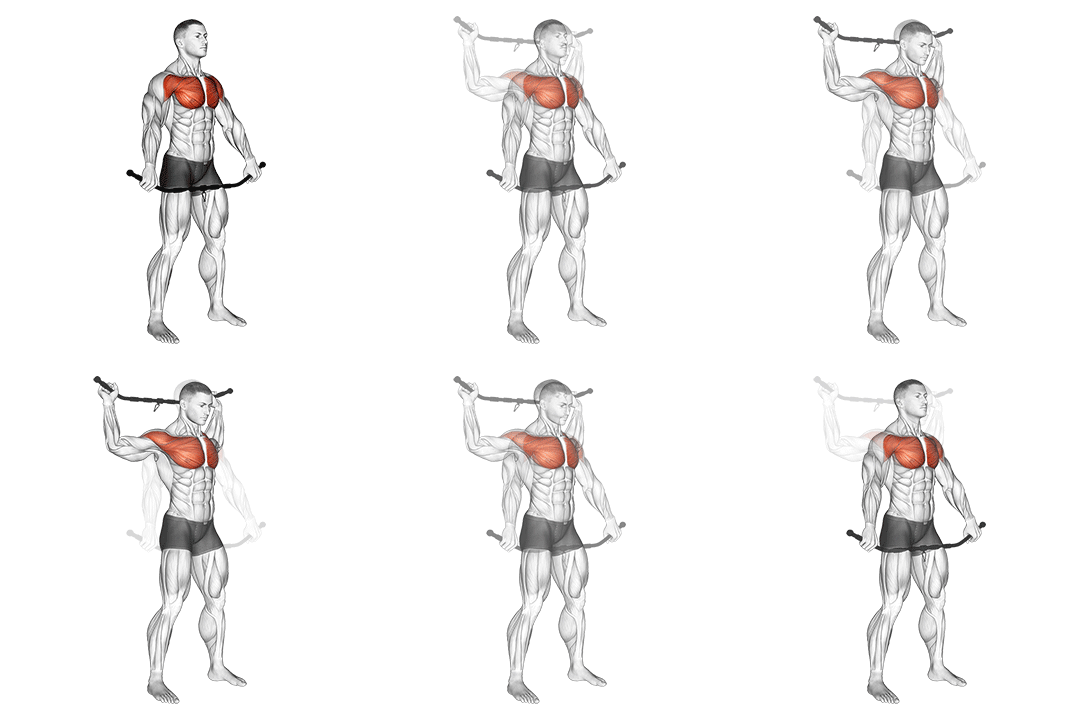
More comparisons with Archer Push Up
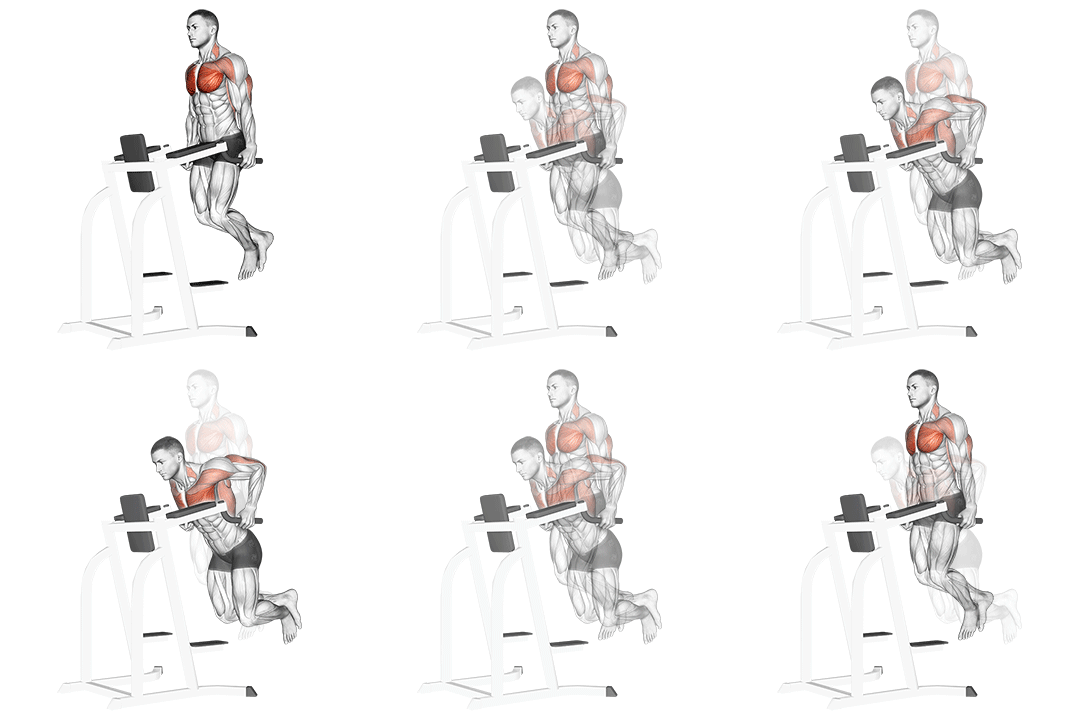
More comparisons with Chest Dip On Straight Bar
Compare More Exercises
Use our free comparison tool to analyze any two exercises head-to-head.
Compare Exercises