

Archer Push Up vs Clap Push Up: Complete Comparison Guide
Archer Push Up vs Clap Push Up — you’re comparing two advanced bodyweight chest moves that both hit the pectorals hard but in different ways. You’ll get clear technical cues, biomechanical differences, equipment needs, and programming guidance so you can pick the best move for muscle growth, strength, or power. I’ll cover primary and secondary muscle recruitment, how force vectors and length-tension relationships change between the two, progressions and regressions, injury considerations, and specific rep ranges to use in your workouts.
Exercise Comparison
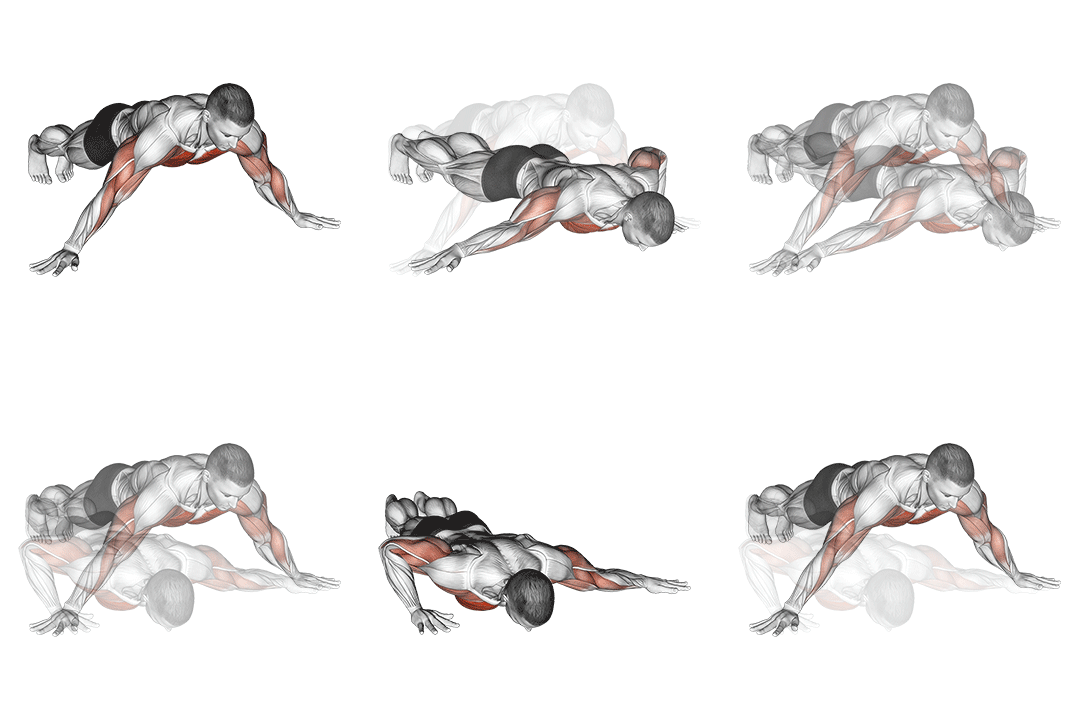
Archer Push Up
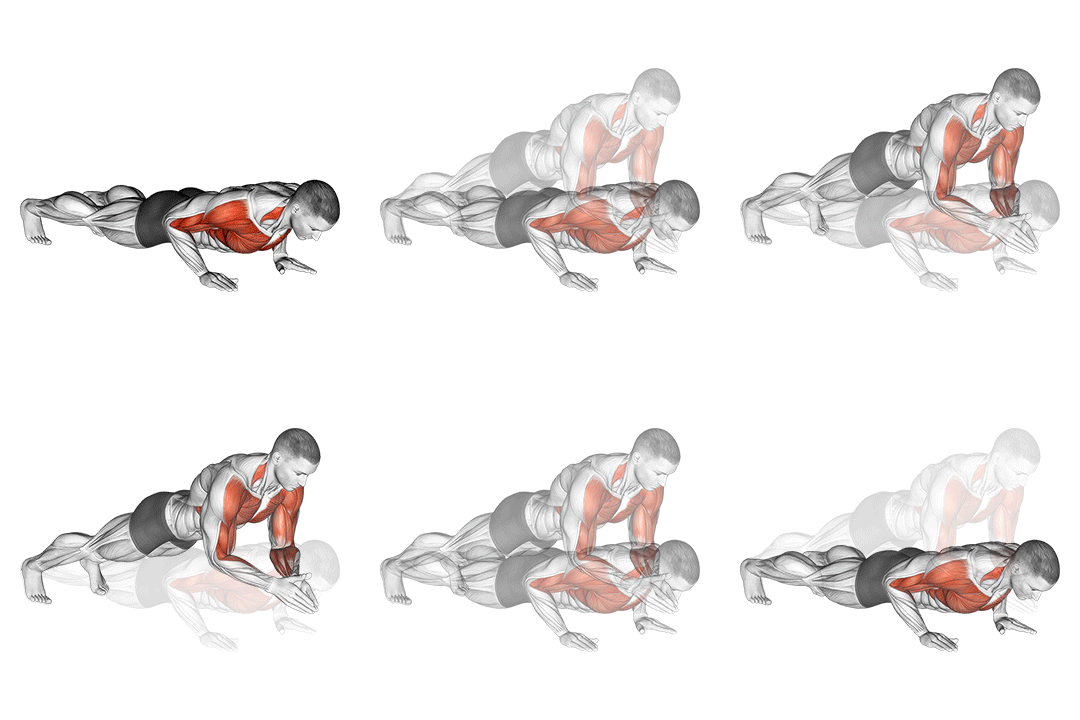
Clap Push Up
Head-to-Head Comparison
| Attribute | Archer Push Up | Clap Push Up |
|---|---|---|
| Target Muscle |
Pectorals
|
Pectorals
|
| Body Part |
Chest
|
Chest
|
| Equipment |
Body-weight
|
Body-weight
|
| Difficulty |
Advanced
|
Advanced
|
| Movement Type |
Compound
|
Compound
|
| Secondary Muscles |
3
|
2
|
Secondary Muscles Activated
Archer Push Up
Clap Push Up
Visual Comparison
Overview
Archer Push Up vs Clap Push Up — you’re comparing two advanced bodyweight chest moves that both hit the pectorals hard but in different ways. You’ll get clear technical cues, biomechanical differences, equipment needs, and programming guidance so you can pick the best move for muscle growth, strength, or power. I’ll cover primary and secondary muscle recruitment, how force vectors and length-tension relationships change between the two, progressions and regressions, injury considerations, and specific rep ranges to use in your workouts.
Key Differences
- Both exercises target the Pectorals using Body-weight. The main differences are in their movement patterns and muscle activation angles.
Pros & Cons
Archer Push Up
+ Pros
- High unilateral overload that builds strength and muscle growth on the working side
- Greater time under tension and eccentric stretch for the pectoral fibers
- Strong core anti-rotation demand improves transverse stability
- Easy to scale toward one-arm push-up or add progressive load (weighted vest)
− Cons
- Requires substantial shoulder mobility and unilateral strength
- Can create uneven loading if technique breaks down
- Harder to develop explosive power compared to plyometrics
Clap Push Up
+ Pros
- Excellent for developing upper-body power and rate of force development
- Short, explosive reps recruit fast-twitch fibers effectively
- Minimal equipment — just a safe surface and space
- Can be regressed/progressed via incline/decline or added claps
− Cons
- High impact on wrists and shoulders increases injury risk
- Short time under tension makes it less optimal for hypertrophy alone
- Requires precise timing and landing control to avoid technique breakdown
When Each Exercise Wins
Archer push-ups increase eccentric range and time under tension, stressing the pectorals at longer muscle lengths. Aim for 6–12 reps per side, 3–5 sets, and use slow 2–3 second eccentrics to maximize hypertrophy via optimal length-tension and mechanical tension.
Because you can progressively overload the working arm (add weight, elevate feet, narrow support), archer push-ups offer clearer linear strength progressions. Train 3–6 reps per side with heavy-loaded or deficit variations to increase maximal pushing strength.
With regressions like incline explosive push-ups and kneeling claps, clap progressions let beginners develop concentric speed safely. Start with 6–8 explosive reps in controlled progressions to build RFD before moving to advanced unilateral strength work.
Archer push-ups require no special landing surface and scale easily with hand placement or incline, making them safer and more versatile for small spaces. They give both strength and hypertrophy benefits without impact hazards.
Frequently Asked Questions
Can I do both Archer Push Up and Clap Push Up in the same workout?
Yes. Pair them strategically: use archer push-ups earlier to target strength and hypertrophy (3–5 sets of 6–12 reps per side), then add low-volume clap push-ups (2–4 sets of 3–6 explosive reps) to train power. Separate them by at least one heavy set to avoid technique breakdown from fatigue.
Which exercise is better for beginners?
Beginners should start with regressions rather than the full advanced moves. Clap progressions (incline or kneeling explosive push-ups) are generally easier to scale for novices, while archer progressions require more unilateral strength and core control before attempting full-range versions.
How do the muscle activation patterns differ?
Archer push-ups increase eccentric loading and unilateral pec activation through greater horizontal abduction, boosting time under tension. Clap push-ups create a rapid concentric burst and use the stretch–shortening cycle to maximize RFD and fast-twitch recruitment but reduce per-rep time under tension.
Can Clap Push Up replace Archer Push Up?
Not fully. Clap push-ups improve power and fast-twitch recruitment but provide less sustained mechanical tension for hypertrophy and less unilateral overload. Use clap push-ups to supplement power work, but keep archer variations for strength and muscle-building progressions.
Expert Verdict
Use the archer push-up when your goal is unilateral strength, increased time under tension, and progressive overload for muscle growth. Its biomechanics—greater horizontal abduction and longer eccentric range—make it superior for developing chest size and one-arm strength. Choose the clap push-up when you want to train power and rate of force development; use it for short explosive sets (3–8 reps) and include plenty of landing control work. If you train at home with limited space or have shoulder concerns, prioritize archer variations and regressions. If you want explosiveness for sports, include controlled clap progressions after building a solid strength base.
Also Compare
More comparisons with Archer Push Up
Compare More Exercises
Use our free comparison tool to analyze any two exercises head-to-head.
Compare Exercises