

Archer Push Up vs Dips - Chest Version: Complete Comparison Guide
Archer Push Up vs Dips - Chest Version — which one should you use to build a thicker chest and stronger pressing mechanics? You’ll get a clear head-to-head that covers primary muscle activation, secondary recruitment, equipment needs, skill level, injury considerations, and exact progressions. I’ll give specific technique cues (body angles, rep ranges, tempo), explain the biomechanics (force vectors, length–tension, ROM), and tell you which to pick for hypertrophy, strength, beginners, or home training so you can plan your next chest session.
Exercise Comparison
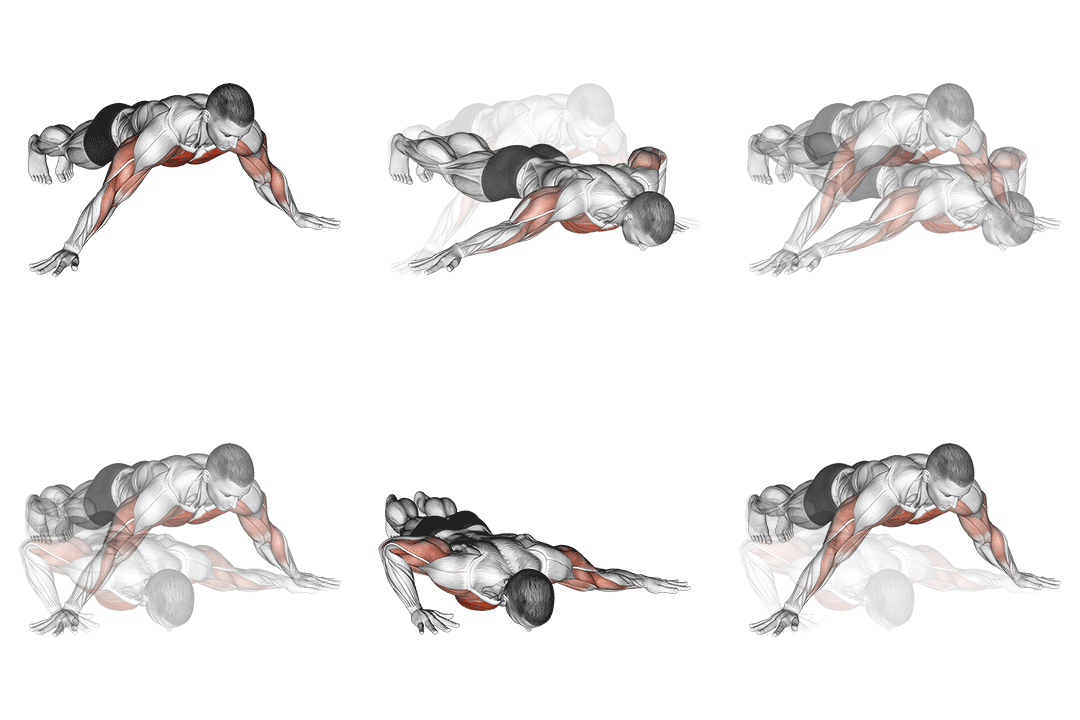
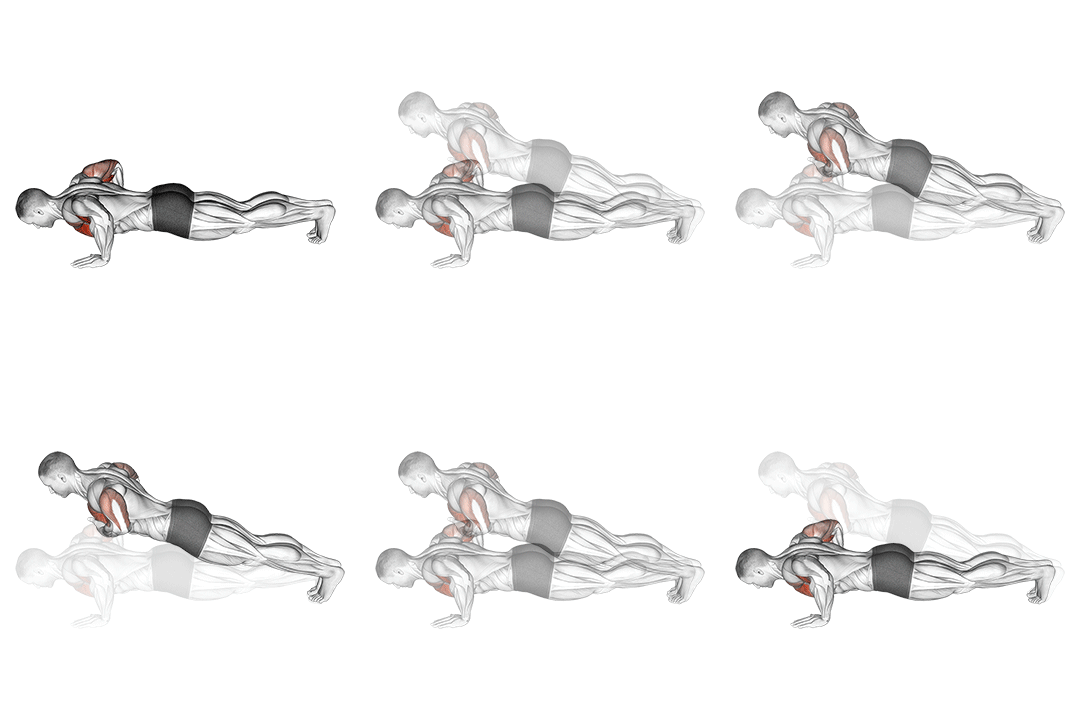
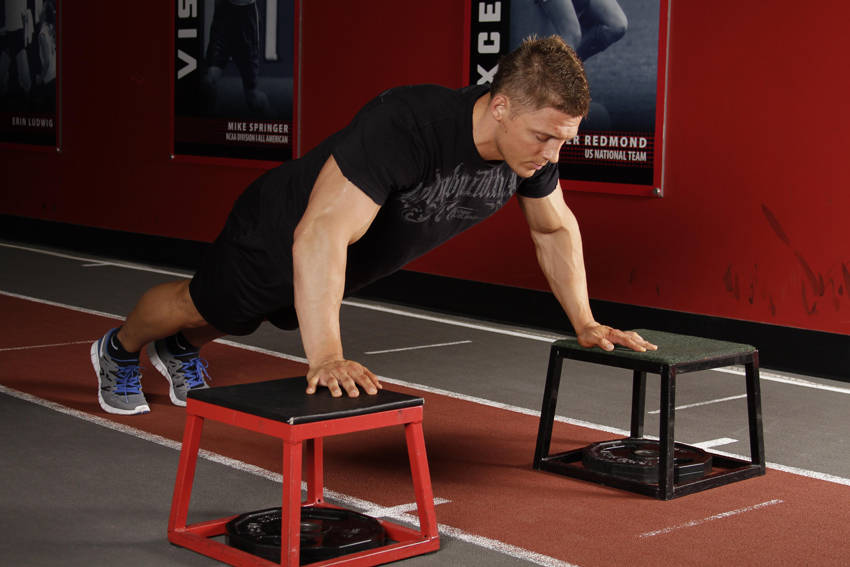
Archer Push Up
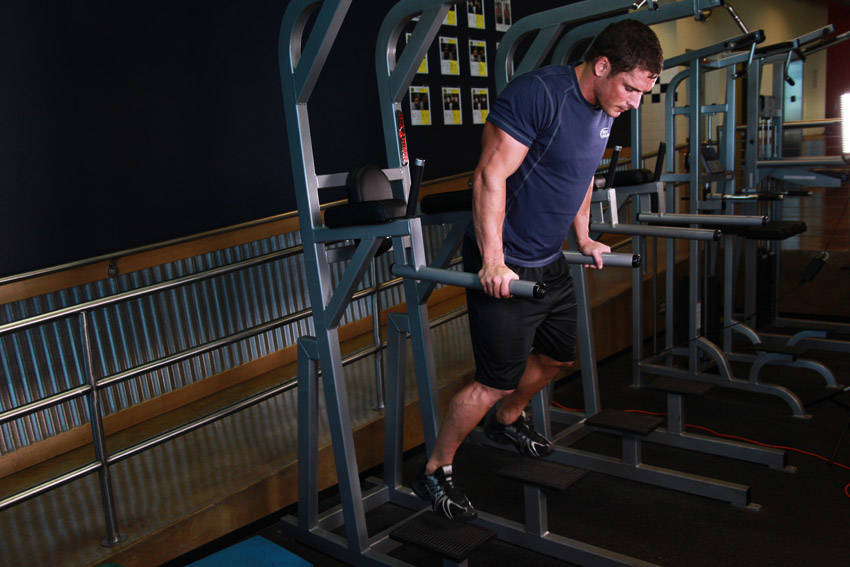
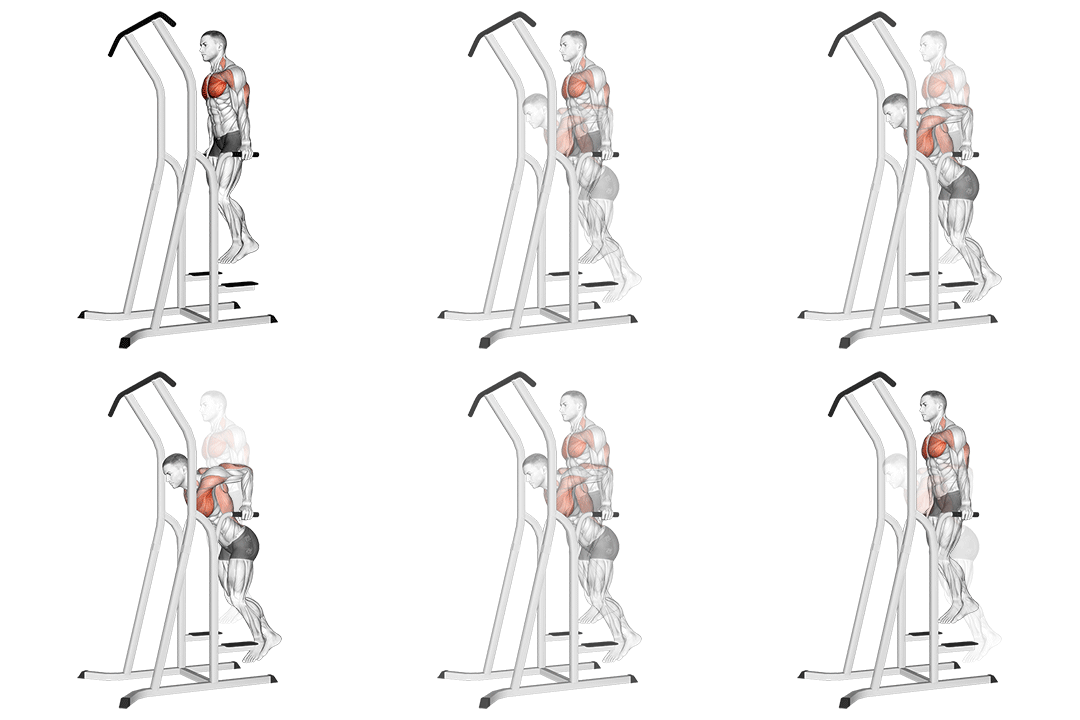
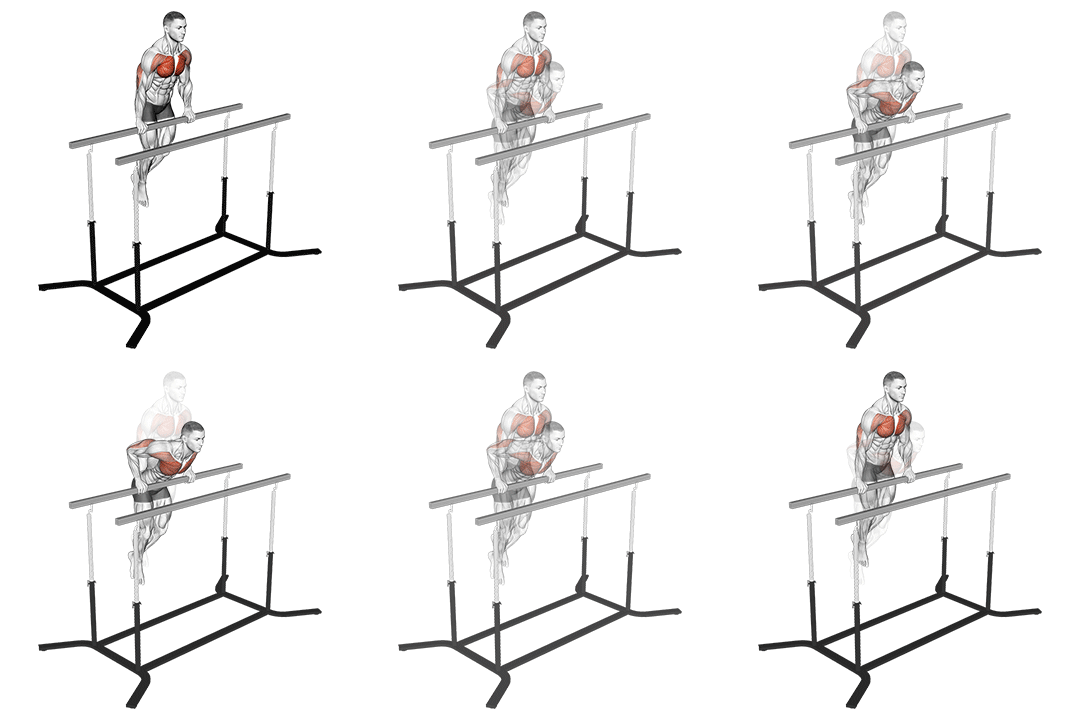
Dips - Chest Version
Head-to-Head Comparison
| Attribute | Archer Push Up | Dips - Chest Version |
|---|---|---|
| Target Muscle |
Pectorals
|
Pectorals
|
| Body Part |
Chest
|
Chest
|
| Equipment |
Body-weight
|
Other
|
| Difficulty |
Advanced
|
Intermediate
|
| Movement Type |
Compound
|
Compound
|
| Secondary Muscles |
3
|
2
|
Secondary Muscles Activated
Archer Push Up
Dips - Chest Version
Visual Comparison
Overview
Archer Push Up vs Dips - Chest Version — which one should you use to build a thicker chest and stronger pressing mechanics? You’ll get a clear head-to-head that covers primary muscle activation, secondary recruitment, equipment needs, skill level, injury considerations, and exact progressions. I’ll give specific technique cues (body angles, rep ranges, tempo), explain the biomechanics (force vectors, length–tension, ROM), and tell you which to pick for hypertrophy, strength, beginners, or home training so you can plan your next chest session.
Key Differences
- Equipment differs: Archer Push Up uses Body-weight, while Dips - Chest Version requires Other.
- Difficulty levels differ: Archer Push Up is advanced, while Dips - Chest Version is intermediate.
Pros & Cons
Archer Push Up
+ Pros
- No equipment needed — great for home training
- High unilateral strength and stability carryover
- Strong core and anti-rotation demand increases overall athleticism
- Easier to scale via hand elevation or incline angle
− Cons
- Hard to add heavy progressive overload for maximal strength
- Requires high shoulder and scapular control — technical
- Can cause wrist discomfort without handles or modifications
Dips - Chest Version
+ Pros
- Easy to progressively overload with weight belts or plates
- Strong mechanical stretch on sternal pecs for hypertrophy
- Simple bilateral pattern that many lifters learn quickly
- Can be varied (rings, parallel bars, bench variations) to change stimulus
− Cons
- Higher shoulder strain if you go too deep or lack scapular control
- Requires equipment (bars, rings, or benches)
- Forward lean needed to bias chest — otherwise triceps dominate
When Each Exercise Wins
Dips allow progressive overload (add 5–45+ lbs) and use a deep eccentric that increases time under tension and sternal pec stretch—ideal for 6–12 rep hypertrophy blocks.
You can load dips heavily and train low reps (3–6) with long rests; the bilateral, weighted pattern transfers directly to raw pressing strength more effectively than bodyweight-only archer variations.
With band assistance or machine-supported dips beginners can learn a stable, symmetrical pressing pattern and gradually add load, whereas archer push ups demand advanced stability and unilateral control.
Archer push ups require no specialized equipment and let you challenge the chest unilaterally by adjusting incline or hand position — perfect for limited-space training.
Frequently Asked Questions
Can I do both Archer Push Up and Dips - Chest Version in the same workout?
Yes. Use dips as your primary heavy compound (3–6 or 6–12 reps) and add archer push ups later for unilateral strength and stability. Pairing works well as heavy bilateral work followed by bodyweight unilateral volume for balanced muscle recruitment.
Which exercise is better for beginners?
Dips - Chest Version is typically better because you can use band assistance or a machine and learn symmetrical pressing mechanics. Start with assisted sets and 8–12 reps before progressing to unassisted dips or advanced variations.
How do the muscle activation patterns differ?
Archer push ups create a near-unilateral peak contraction with high isometric stabilization of the scapula and core, while dips produce a long eccentric stretch and more even concentric activation across pecs and triceps—especially when you add forward lean to bias the chest.
Can Dips - Chest Version replace Archer Push Up?
Dips can replace archer push ups for hypertrophy and strength because they allow loading, but they won’t develop the same unilateral stability and anti-rotation core strength. Use dips as a substitute if your priority is load and size, and keep archer push ups for balance and stability work.
Expert Verdict
Use Dips - Chest Version when your priority is progressive overload and maximal pectoral hypertrophy or bilateral pressing strength. Lean the torso ~20–35°, control a 2–3 second eccentric to ~90° shoulder flexion, and use 6–12 reps for size or 3–6 reps with added weight for strength. Choose Archer Push Up when you train at home, want unilateral control, or need to emphasize anti-rotation core strength; perform 6–12 reps per side, brace your core, and keep hips level to avoid rotation. Both moves have a place: program dips as a heavy compound and archer push ups as a stability and unilateral strength accessory.
Also Compare
More comparisons with Archer Push Up

Compare More Exercises
Use our free comparison tool to analyze any two exercises head-to-head.
Compare Exercises