

Archer Push Up vs Forward Drag With Press: Complete Comparison Guide
Archer Push Up vs Forward Drag With Press puts two different compound chest builders head-to-head. You’ll get a clear breakdown of how each loads the pectorals, which secondary muscles light up, what equipment you need, and practical cues to perform each move safely. I’ll cover biomechanics (moment arms, force vectors, length-tension), exact tech cues you can use today, rep ranges for hypertrophy and strength, and decisive recommendations so you can pick the best exercise for your goals.
Exercise Comparison
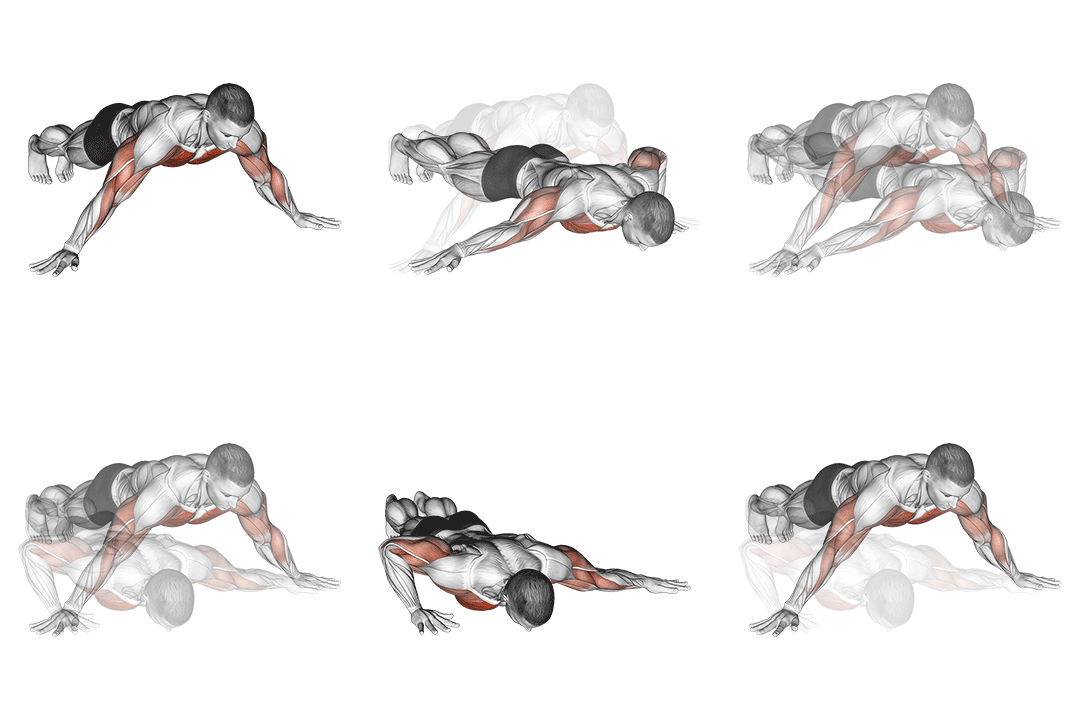
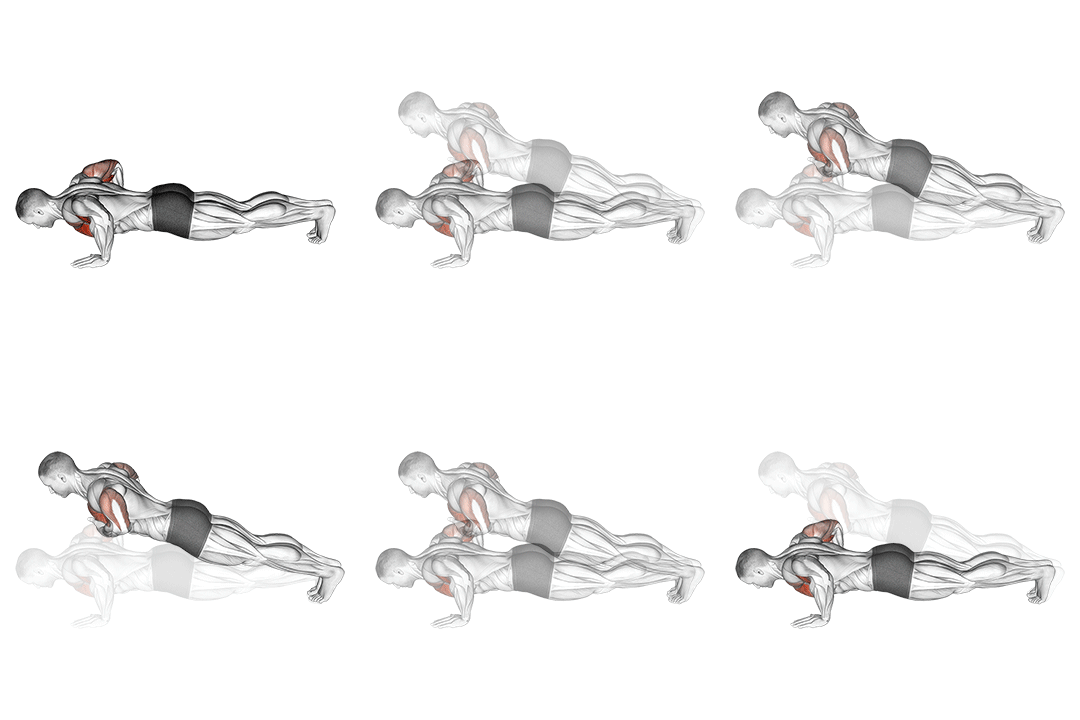
Archer Push Up
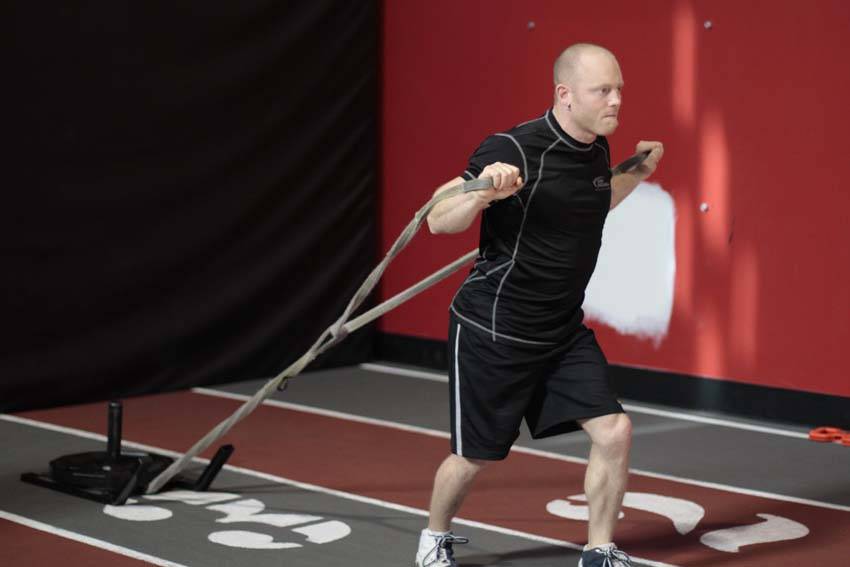
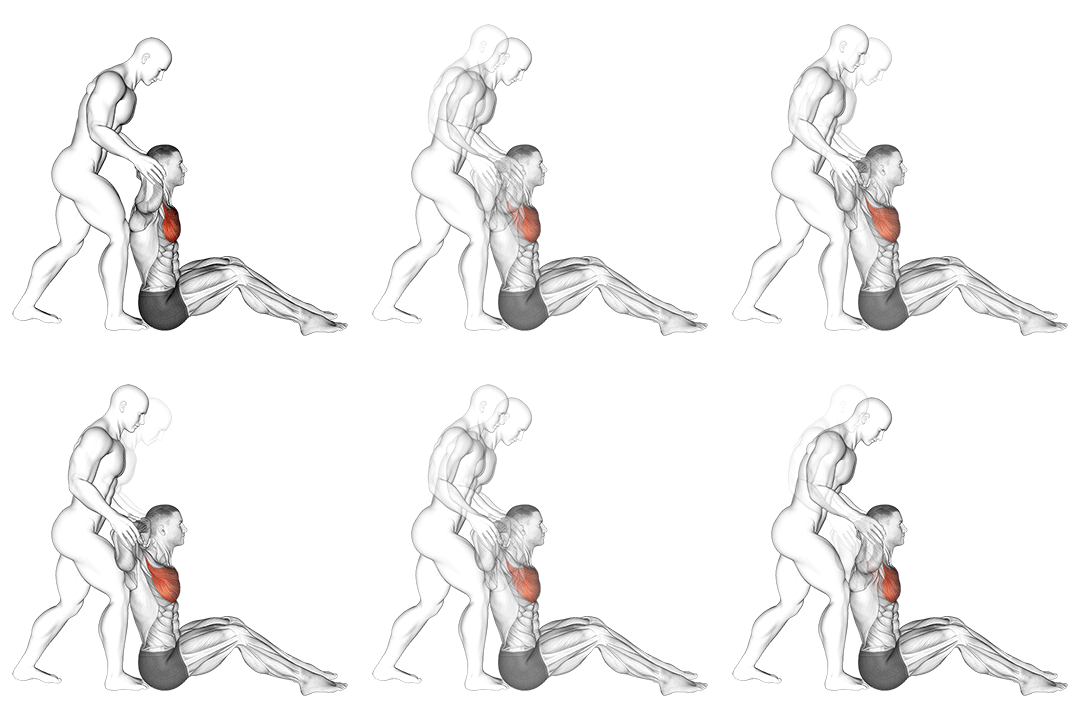
Forward Drag With Press
Head-to-Head Comparison
| Attribute | Archer Push Up | Forward Drag With Press |
|---|---|---|
| Target Muscle |
Pectorals
|
Pectorals
|
| Body Part |
Chest
|
Chest
|
| Equipment |
Body-weight
|
Other
|
| Difficulty |
Advanced
|
Intermediate
|
| Movement Type |
Compound
|
Compound
|
| Secondary Muscles |
3
|
6
|
Secondary Muscles Activated
Archer Push Up
Forward Drag With Press
Visual Comparison
Overview
Archer Push Up vs Forward Drag With Press puts two different compound chest builders head-to-head. You’ll get a clear breakdown of how each loads the pectorals, which secondary muscles light up, what equipment you need, and practical cues to perform each move safely. I’ll cover biomechanics (moment arms, force vectors, length-tension), exact tech cues you can use today, rep ranges for hypertrophy and strength, and decisive recommendations so you can pick the best exercise for your goals.
Key Differences
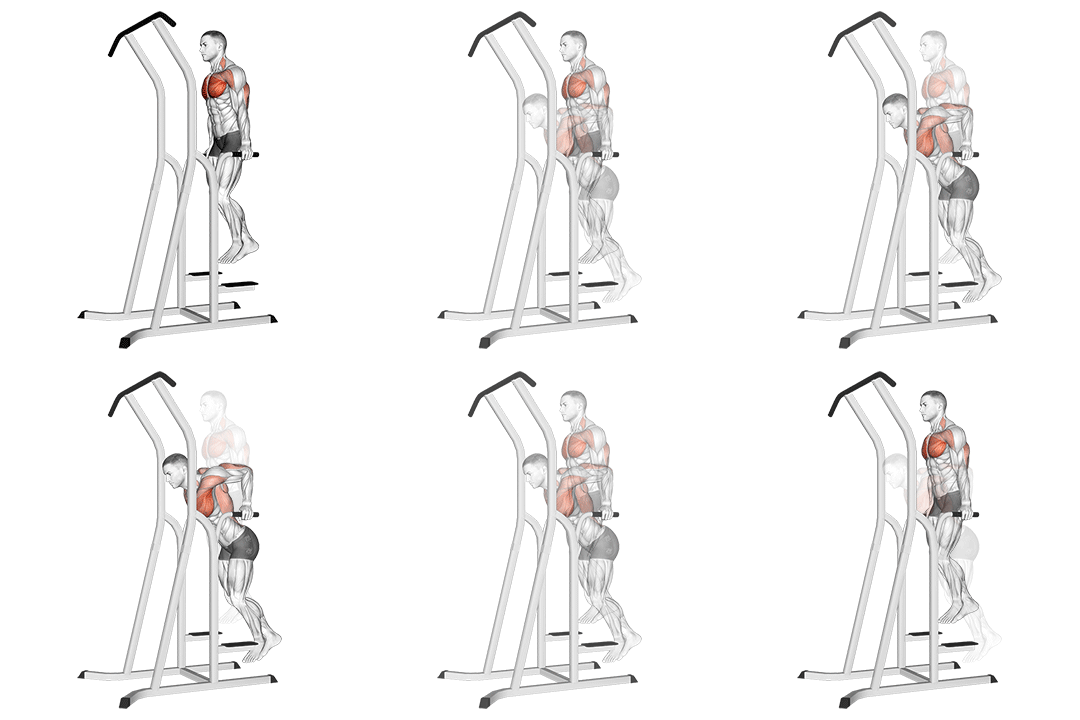
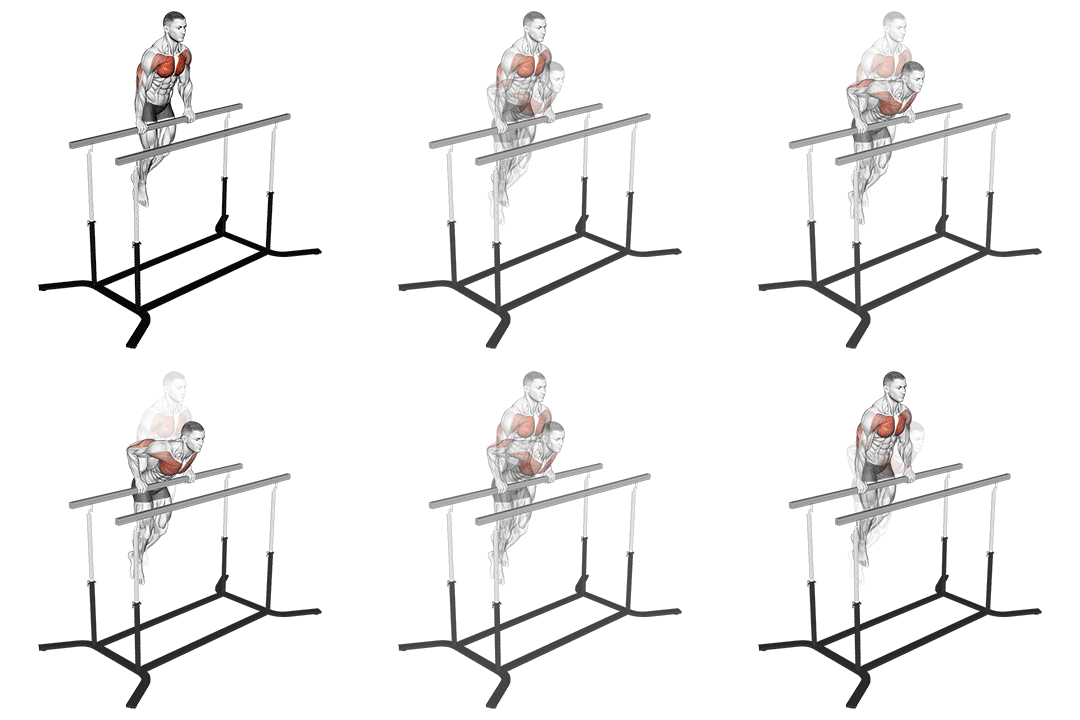
- Equipment differs: Archer Push Up uses Body-weight, while Forward Drag With Press requires Other.
- Difficulty levels differ: Archer Push Up is advanced, while Forward Drag With Press is intermediate.
Pros & Cons
Archer Push Up
+ Pros
- Requires no equipment—ideal for travel or bodyweight-focused programs
- High unilateral chest tension and core anti-rotation demand
- Improves scapular control and horizontal pushing strength
- Easy to scale by elevation, tempo, or weighted vest
− Cons
- Advanced skill—harder to learn and control for many lifters
- Limited absolute progressive overload without equipment
- Higher shoulder/wrist stress if performed with poor mechanics
Forward Drag With Press
+ Pros
- Easier to incrementally load for steady progressive overload
- Develops full-body power—hips, legs and upper-body coordination
- Excellent for hypertrophy given ability to increase weight and reps (6–12 range)
- Lower technical ceiling for basic movement pattern once learning hip hinge
− Cons
- Requires specialized equipment (sled/sandbag) and space
- Less emphasis on single-arm scapular control and anti-rotation
- Technique errors under heavy load can stress lumbar spine
When Each Exercise Wins
Forward Drag With Press wins because you can apply progressive overload more precisely and work in hypertrophy ranges (6–12 reps) with added load. The combined press and drag sequence produces high time-under-tension and allows heavier absolute loading of the pectorals.
For raw strength, Forward Drag With Press lets you add external weight in small increments so force production improves predictably. Its multi-joint pattern trains both lower- and upper-body force transfer needed for heavier presses.
Forward Drag With Press is easier to scale for beginners: start light, focus on hip hinge and press mechanics, and increase load gradually. Archer Push Up demands unilateral control and shoulder strength that many beginners lack.
Archer Push Up requires no equipment and can be done in tight spaces, making it the better home option. Even though it’s advanced, regressions (incline archer or band-assisted) let you use the movement at home safely.
Frequently Asked Questions
Can I do both Archer Push Up and Forward Drag With Press in the same workout?
Yes—pairing them works well: use the Forward Drag With Press early as a loaded compound (3–5 sets of 6–10) and finish with Archer Push Up variations for unilateral control and core work (3–4 sets of 4–8 per side). Monitor fatigue to protect shoulders and low back.
Which exercise is better for beginners?
Forward Drag With Press is better for most beginners because it scales with external weight and builds coordination between hips and upper body. Start light, practice hinge and press mechanics, and progress load before attempting advanced bodyweight archer variations.
How do the muscle activation patterns differ?
Archer Push Up biases unilateral pectoral loading with long lever eccentric stress and high core anti-rotation demand, producing peak activation on the working side at deep elbow flexion. Forward Drag With Press produces a sequential activation: posterior chain and hip extensors during the drag, then bilateral chest and deltoid activation during the press, yielding more even chest recruitment per rep.
Can Forward Drag With Press replace Archer Push Up?
Forward Drag With Press can replace Archer Push Up if your goal is progressive overload, hypertrophy, or full-body strength. If you specifically need unilateral control, scapular stability, or bodyweight pushing skill, keep archer variations in your program alongside the drag.
Expert Verdict
Use Archer Push Ups when you want to develop unilateral chest strength, scapular control, and core anti-rotation without gear—especially if you’re training bodyweight strength or prepping for single-arm progressions. Use Forward Drag With Press when your priority is progressive overload, full-body power transfer, or hypertrophy; its external loading lets you manipulate weight, tempo, and volume precisely. If you train at home with no equipment, prioritize archer progressions. If you have access to a sled or sandbag and want steady strength or hypertrophy gains, program the forward drag with press into your compound lifting days.
Also Compare
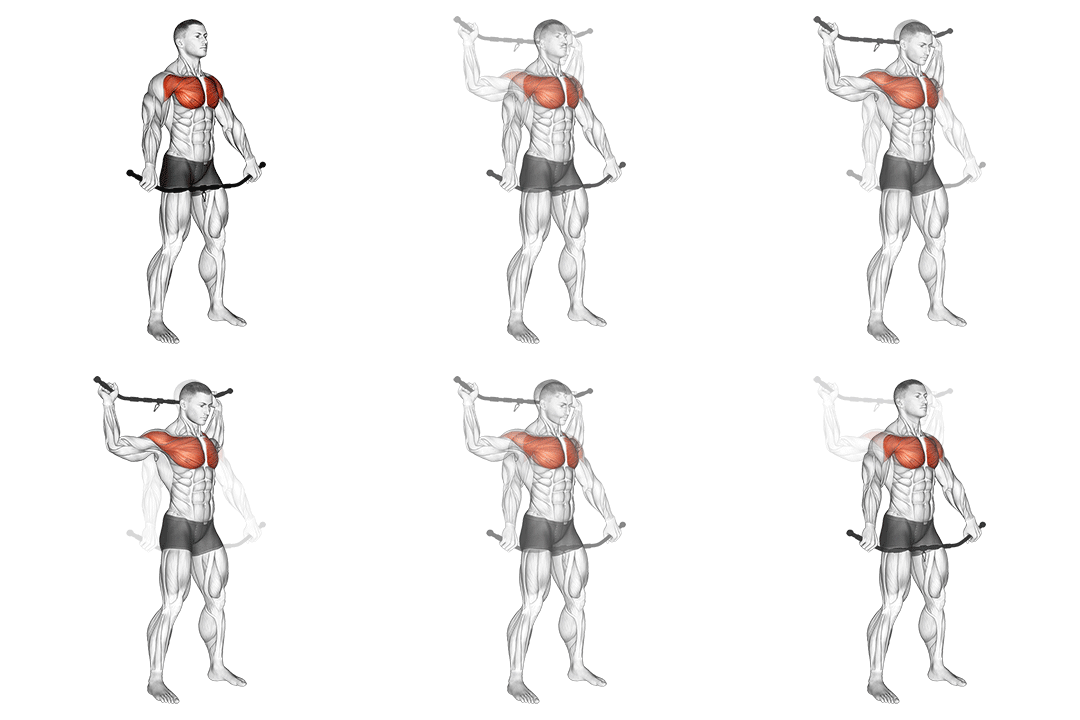
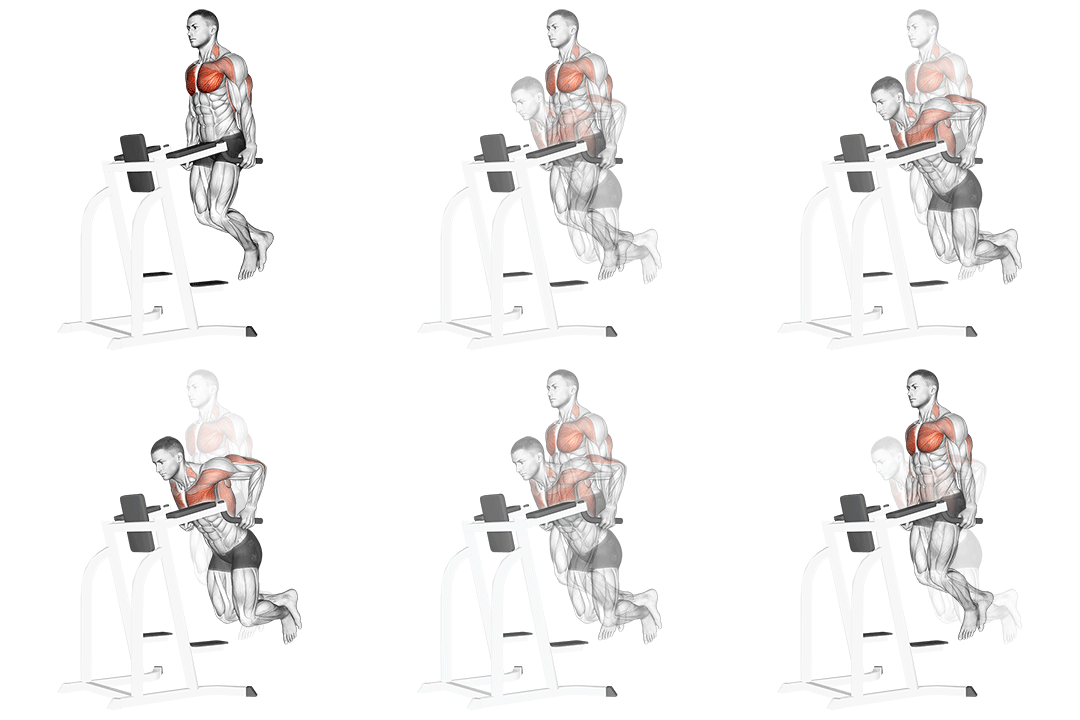
More comparisons with Archer Push Up
Compare More Exercises
Use our free comparison tool to analyze any two exercises head-to-head.
Compare Exercises