

Archer Push Up vs Heavy Bag Thrust: Complete Comparison Guide
Archer Push Up vs Heavy Bag Thrust puts two chest-builders head-to-head so you can pick the right tool for your goals. I’ll walk you through how each hits the pectorals, which secondary muscles light up, what equipment you need, and which movement better supports hypertrophy, strength, or home training. You'll get clear technique cues — how to set wrist angle, elbow tracking, torso angle — plus rep ranges and progression pathways. Read on for practical programming tips and decisive recommendations so you can choose the exercise that fits your biomechanics, access to gear, and training phase.
Exercise Comparison
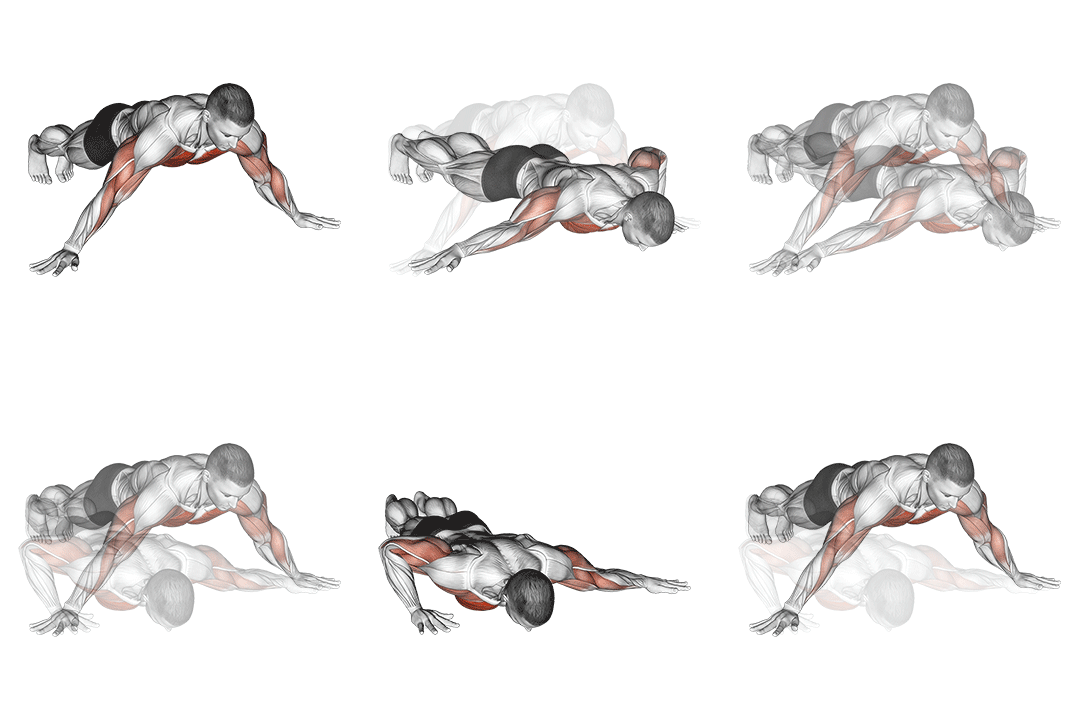
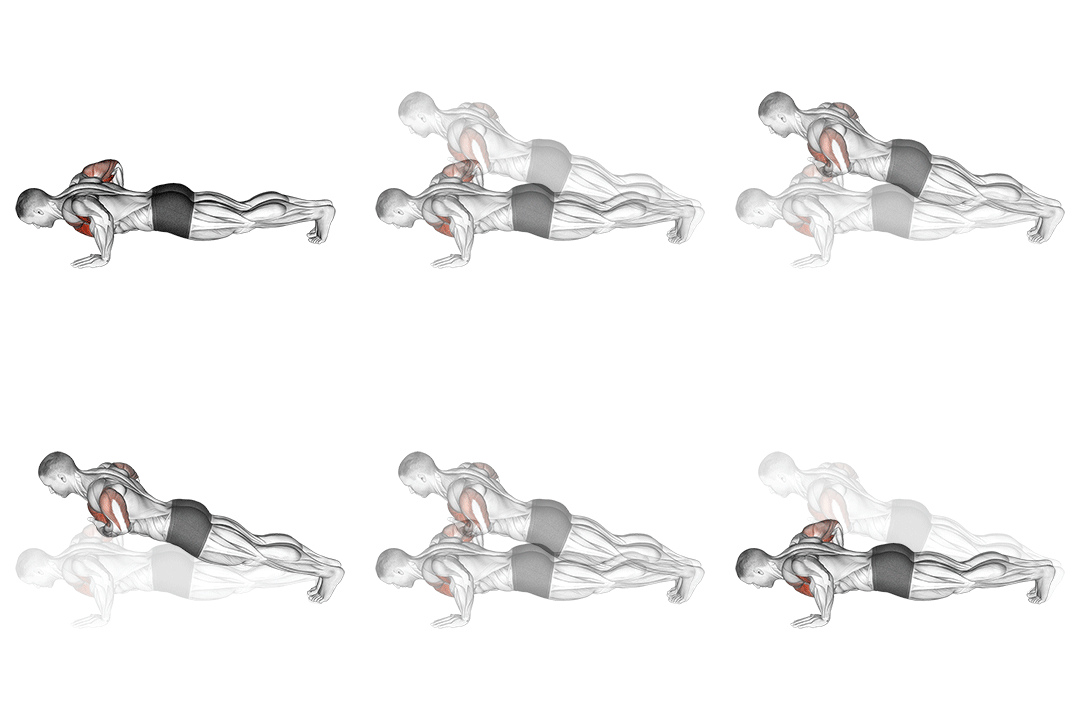
Archer Push Up
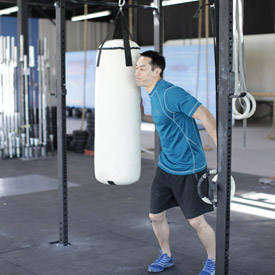
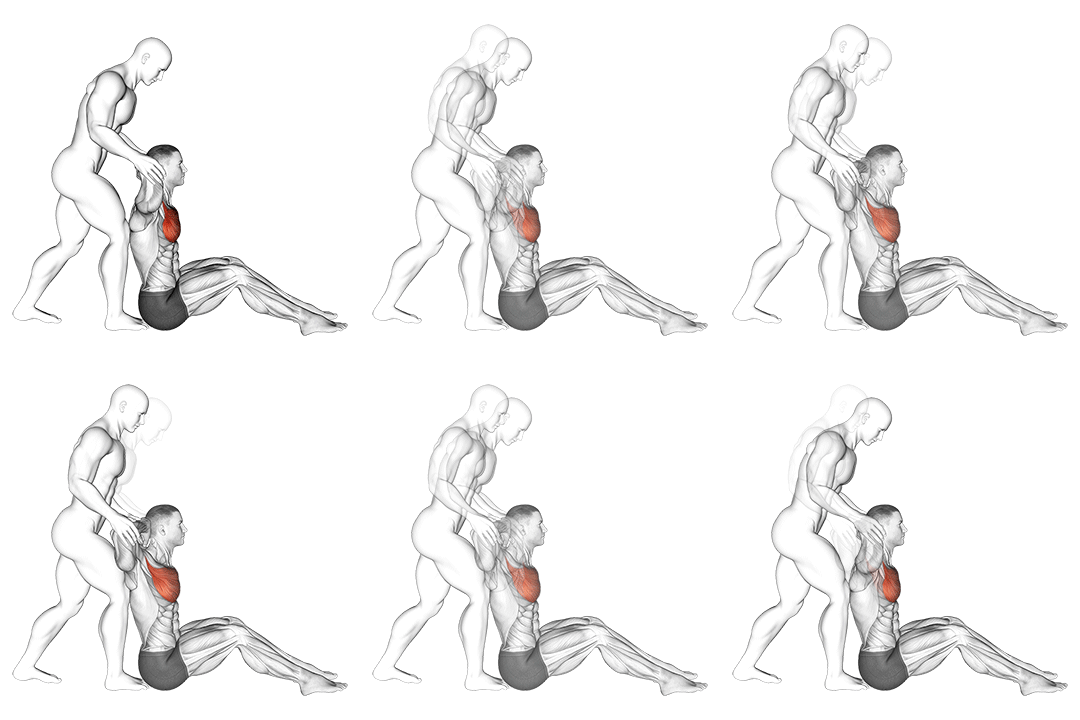
Heavy Bag Thrust
Head-to-Head Comparison
| Attribute | Archer Push Up | Heavy Bag Thrust |
|---|---|---|
| Target Muscle |
Pectorals
|
Pectorals
|
| Body Part |
Chest
|
Chest
|
| Equipment |
Body-weight
|
Other
|
| Difficulty |
Advanced
|
Intermediate
|
| Movement Type |
Compound
|
Compound
|
| Secondary Muscles |
3
|
3
|
Secondary Muscles Activated
Archer Push Up
Heavy Bag Thrust
Visual Comparison
Overview
Archer Push Up vs Heavy Bag Thrust puts two chest-builders head-to-head so you can pick the right tool for your goals. I’ll walk you through how each hits the pectorals, which secondary muscles light up, what equipment you need, and which movement better supports hypertrophy, strength, or home training. You'll get clear technique cues — how to set wrist angle, elbow tracking, torso angle — plus rep ranges and progression pathways. Read on for practical programming tips and decisive recommendations so you can choose the exercise that fits your biomechanics, access to gear, and training phase.
Key Differences
- Equipment differs: Archer Push Up uses Body-weight, while Heavy Bag Thrust requires Other.
- Difficulty levels differ: Archer Push Up is advanced, while Heavy Bag Thrust is intermediate.
Pros & Cons
Archer Push Up
+ Pros
- High unilateral tension improves left-right balance and anti-rotational core control
- No equipment needed—easy to do anywhere
- Great for building joint stability in the shoulder and scapula when performed with control
- Can emphasize mid-range pec tension and long eccentric control for hypertrophy
− Cons
- Very advanced—hard to load beyond body weight for absolute strength
- High technical demand increases injury risk if scapular control is poor
- Limited progressive overload options compared with external loading
Heavy Bag Thrust
+ Pros
- Easily progressive—add heavier bags or increase force for more overload
- Symmetrical bilateral loading lowers rotational stress and can build absolute pressing strength
- Engages abdominals and hip drive for full-body power transfer
- Simpler movement pattern for intermediate trainees to learn and train explosively
− Cons
- Requires equipment and secure setup—less accessible for home-only trainees
- Stress distribution can be awkward on the hands/forearms without padding
- Poor technique or excessive load can transmit force into the lower back and shoulders
When Each Exercise Wins
Heavy Bag Thrust wins because you can progressively overload the pecs by increasing bag mass or time under tension and work in hypertrophy rep ranges (6–12 or 8–15). The ability to scale absolute load produces greater mechanical tension across the entire pec.
Heavy Bag Thrust allows higher absolute loads and heavier concentric work, which are critical for strength adaptations. You can train lower rep ranges (3–6) with heavier bags to develop maximal force and rate of force development.
Heavy Bag Thrust is easier to learn because it uses bilateral mechanics and simpler force vectors; beginners can produce safe, progressive overload with a lighter bag and focus on technique before increasing load.
Archer Push Up requires no equipment and can be scaled with incline versions or tempo work, making it ideal for home training where a heavy bag isn't available.
Frequently Asked Questions
Can I do both Archer Push Up and Heavy Bag Thrust in the same workout?
Yes. Sequence them so the heavy bag thrusts come first for maximal strength or power (3–6 reps), then use Archer Push Ups as a unilateral accessory for 3–4 sets of 6–12 reps to target symmetry and core stability.
Which exercise is better for beginners?
Heavy Bag Thrust is generally better for beginners because it uses bilateral pressing mechanics and allows gradual overload. Start light, master bracing and scapular control, then increase bag mass.
How do the muscle activation patterns differ?
Archer Push Ups concentrate tension unilaterally with prolonged mid-range loading and high oblique/core activation to resist rotation. Heavy Bag Thrusts create more symmetric anterior-posterior force with greater potential for high absolute concentric force depending on bag weight.
Can Heavy Bag Thrust replace Archer Push Up?
If your goal is pure strength or hypertrophy and you have a heavy bag, it can replace Archer Push Ups. If you need unilateral control, anti-rotation training, or no-equipment options, keep Archer Push Ups in the program.
Expert Verdict
Use Archer Push Ups when you want unilateral control, anti-rotation core work, and to correct left-right imbalances—program 3–5 sets of 6–12 controlled reps with 2–4 second eccentrics, focusing on scapular stability and elbow tracking at roughly 30°–60° of horizontal adduction. Choose Heavy Bag Thrusts when your priority is progressive overload, absolute pressing strength, or power—use 3–6 sets in 3–6 reps for strength or 6–12 for hypertrophy, increasing bag mass systematically. Both movements have value: pick Archer for accessibility and stability, Heavy Bag for load and progression.
Also Compare
More comparisons with Archer Push Up
Compare More Exercises
Use our free comparison tool to analyze any two exercises head-to-head.
Compare Exercises