

Archer Push Up vs Push-up: Complete Comparison Guide
Archer Push Up vs Push-up is the matchup that separates unilateral overload from classic volume work. If you want clearer chest shape, more single-side strength, or a scalable path to one-arm pressing, this comparison will help. I’ll cover how each exercise loads the pectorals, what the movement does to your triceps, shoulders, and core, the equipment and space you need, difficulty and progression strategies, plus when to pick one over the other based on hypertrophy, strength, and home training.
Exercise Comparison
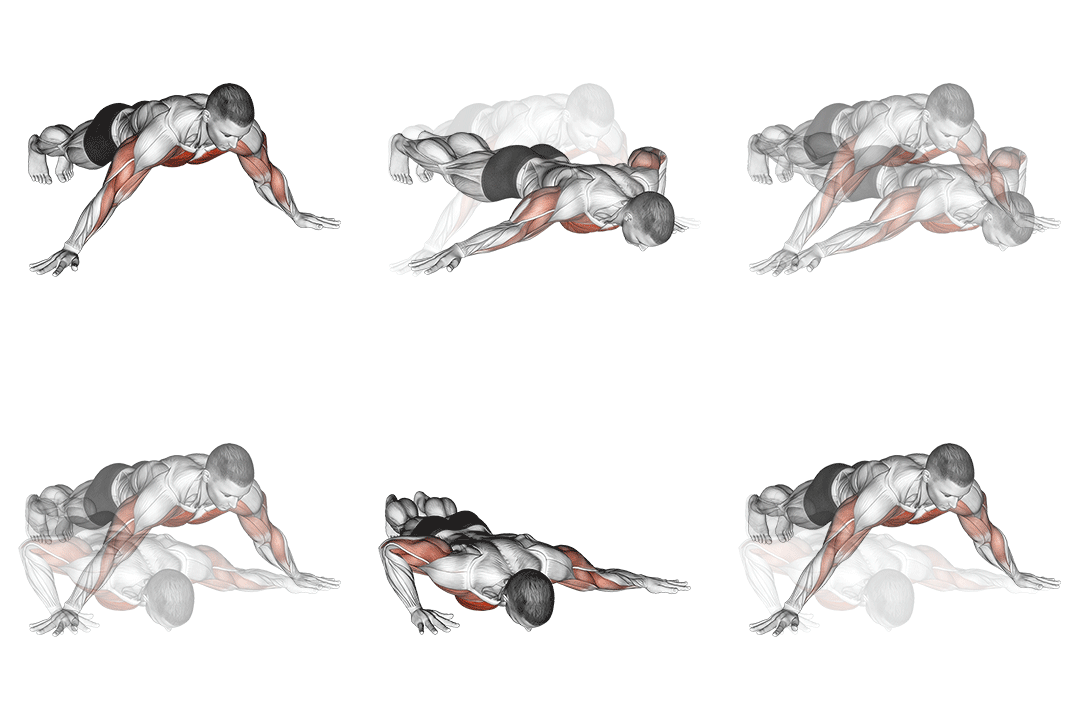
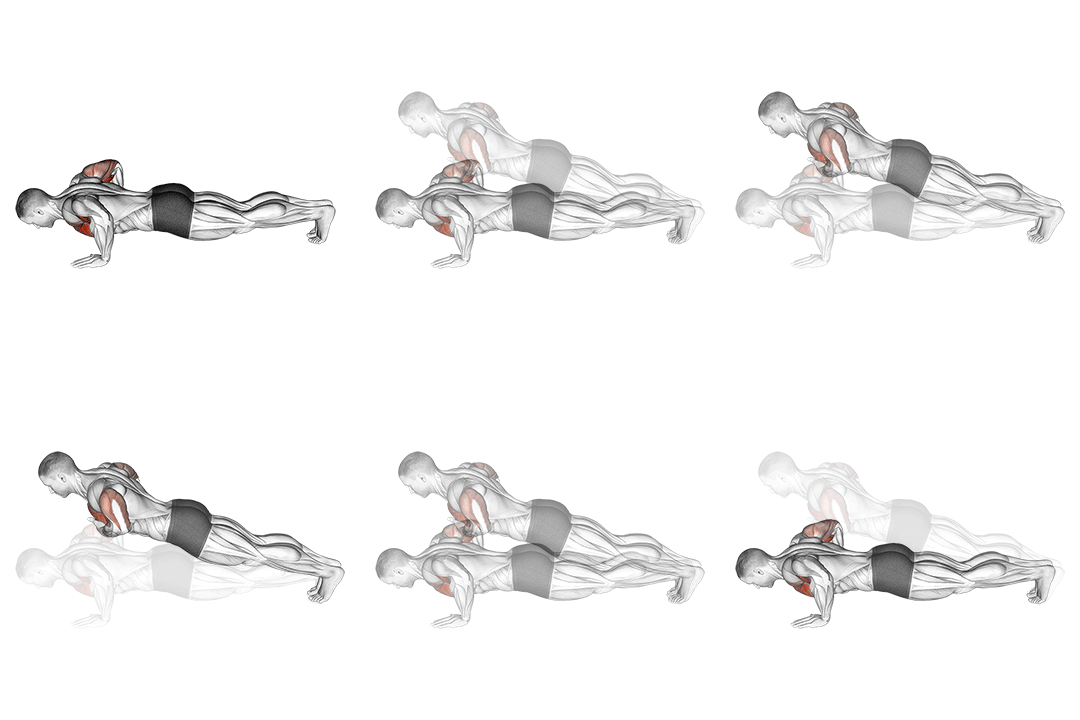
Archer Push Up
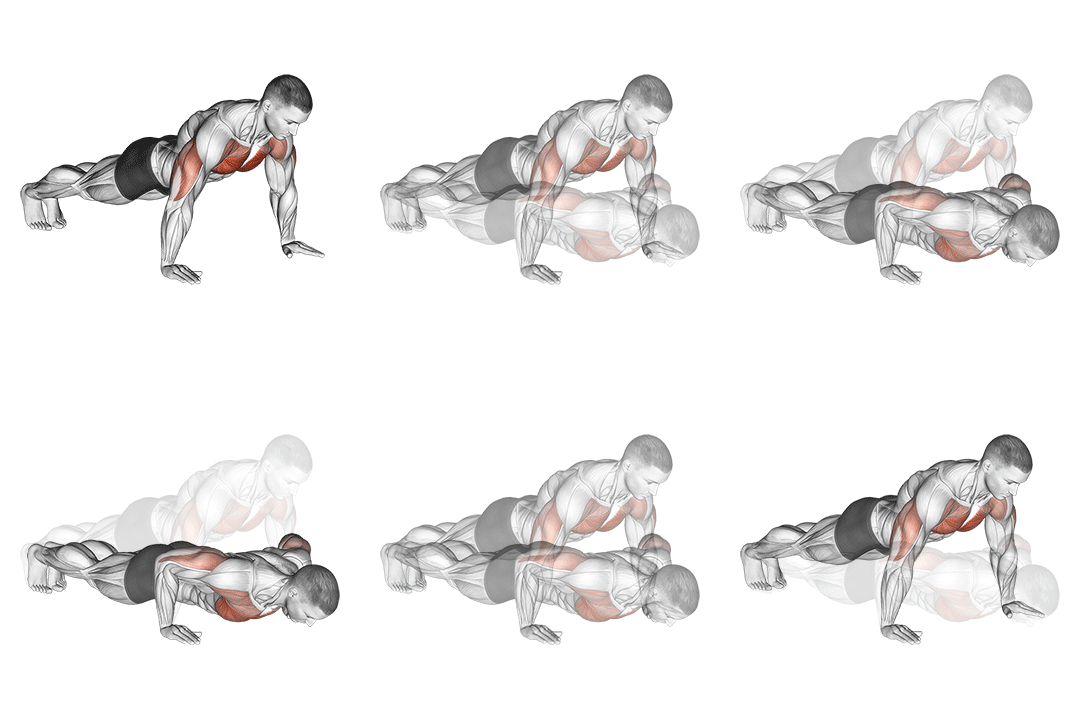
Push-up
Head-to-Head Comparison
| Attribute | Archer Push Up | Push-up |
|---|---|---|
| Target Muscle |
Pectorals
|
Pectorals
|
| Body Part |
Chest
|
Chest
|
| Equipment |
Body-weight
|
Body-weight
|
| Difficulty |
Advanced
|
Intermediate
|
| Movement Type |
Compound
|
Compound
|
| Secondary Muscles |
3
|
3
|
Secondary Muscles Activated
Archer Push Up
Push-up
Visual Comparison
Overview
Archer Push Up vs Push-up is the matchup that separates unilateral overload from classic volume work. If you want clearer chest shape, more single-side strength, or a scalable path to one-arm pressing, this comparison will help. I’ll cover how each exercise loads the pectorals, what the movement does to your triceps, shoulders, and core, the equipment and space you need, difficulty and progression strategies, plus when to pick one over the other based on hypertrophy, strength, and home training.
Key Differences
- Difficulty levels differ: Archer Push Up is advanced, while Push-up is intermediate.
- Both exercises target the Pectorals using Body-weight. The main differences are in their movement patterns and muscle activation angles.
Pros & Cons
Archer Push Up
+ Pros
- High unilateral loading that accelerates single-arm strength progressions
- Stronger stimulus for chest thickness on the working side via larger moment arm
- Improves anti-rotational core strength and scapular stability
- Requires no equipment while offering clear overload mechanics
− Cons
- Higher shoulder and elbow stress; needs good scapular control
- Steeper learning curve and less suited to beginners
- Harder to accumulate high-volume hypertrophy sets compared to bilateral push-ups
Push-up
+ Pros
- Extremely accessible with many regressions and progressions
- Excellent for accumulating volume for chest hypertrophy (8–20 rep range)
- Lower unilateral joint stress and easier to maintain tight mechanics
- Scales with simple tools (incline, decline, weight vest, bands)
− Cons
- Limited unilateral overload without added equipment or advanced variations
- Can mask left-right imbalances unless unilateral work is added
- Plateaus unless you manipulate load, tempo, or leverage
When Each Exercise Wins
Push-ups allow greater cumulative volume and easier tempo manipulation across sets (8–20 reps), which favors time under tension and muscle growth. Use varied hand positions and added load to progressively increase stimulus.
The archer variant shifts ~30–50% more load to one side, creating a stronger mechanical overload per rep and a clearer path to one-arm pressing. That unilateral overload drives neural adaptations and force production at higher intensities (3–6 reps when weighted).
Standard push-ups offer regressions (knees, incline) that preserve technique while you build chest, triceps, and core strength. They let you control elbow angle (about 30–60 degrees) and gradually increase load safely.
Push-ups need no space or extra gear and scale with simple adjustments like elevation or a backpack for resistance. They deliver consistent chest stimulus for hypertrophy and endurance in small spaces.
Frequently Asked Questions
Can I do both Archer Push Up and Push-up in the same workout?
Yes. Pair push-ups early for volume sets (3–5 sets of 8–15) and use archer push-ups later as a heavier unilateral accessory (3–6 reps per side). That sequencing preserves technical quality and places greater neural demand on the archer work.
Which exercise is better for beginners?
Push-ups are better for beginners because they have clear regressions (knees, incline) that let you maintain proper elbow tracking and scapular control. Start there and only introduce archer push-ups after you can perform 15–20 strict standard push-ups with good form.
How do the muscle activation patterns differ?
Push-ups produce symmetric bilateral activation with steady horizontal adduction; archer push-ups create unilateral peak activation on the loaded side and increased isometric work on the support side. The archer increases moment arm and rotational demand, shifting force vectors toward the working pec and obliques.
Can Push-up replace Archer Push Up?
Push-ups can substitute when you need volume, easier progression, or less joint stress, but they won’t replicate the unilateral overload and anti-rotation stimulus of the archer. If your goal is single-arm strength or correcting side-to-side imbalance, add archer variations rather than replace them.
Expert Verdict
Choose push-ups if you need a reliable, accessible exercise to build chest size and endurance with scalable regressions and simple loading (8–20 reps for hypertrophy). Pick archer push-ups when you’ve mastered the standard push-up and want unilateral overload to fix imbalances and pursue higher single-side strength; the archer shifts more load to one pec and forces anti-rotation control, which accelerates progress toward one-arm work. Both belong in a balanced program: use push-ups for volume phases and archer push-ups for strength phases or as an accessory to correct asymmetry.
Also Compare
More comparisons with Archer Push Up
Compare More Exercises
Use our free comparison tool to analyze any two exercises head-to-head.
Compare Exercises