

Assisted Lying Calves Stretch vs Band Single Leg Calf Raise: Complete Comparison Guide
Assisted Lying Calves Stretch vs Band Single Leg Calf Raise — two beginner-friendly band exercises that both target your calves but deliver very different results. You’ll learn how each hits the gastrocnemius and soleus, which one improves ankle dorsiflexion and hamstring tension, the equipment and setup each requires, and clear programming cues (reps, angles, tempo) so you can pick the right move for mobility, strength, or hypertrophy. Read on for technique tips, biomechanics-based recommendations, and quick protocol examples you can use in your next session.
Exercise Comparison
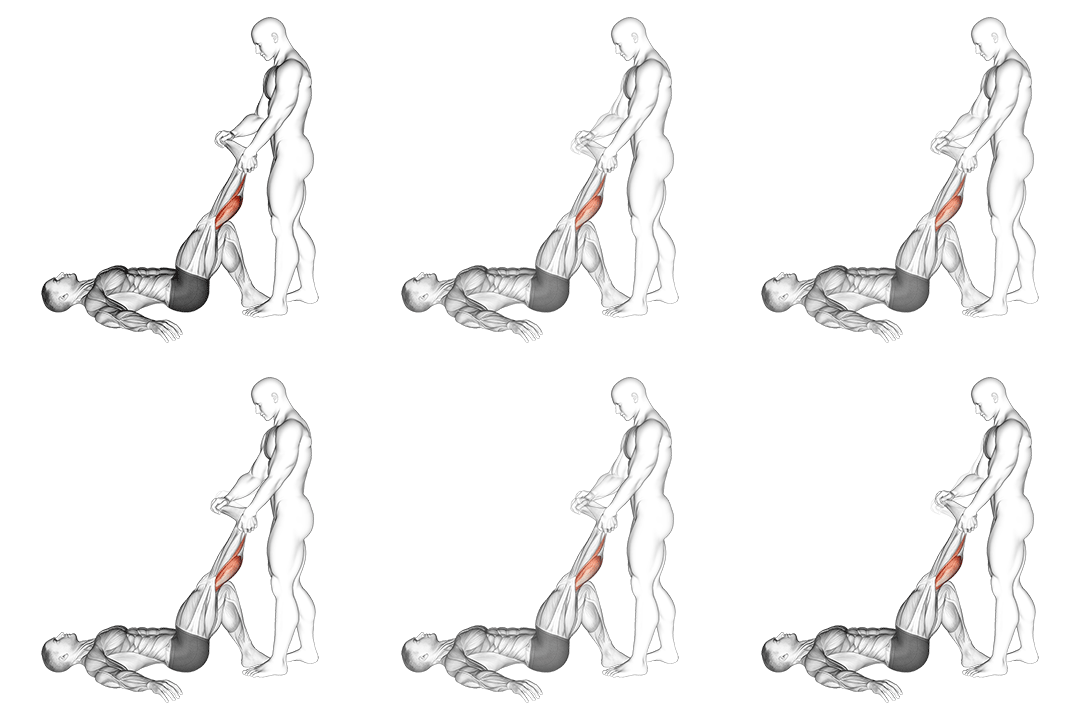
Assisted Lying Calves Stretch
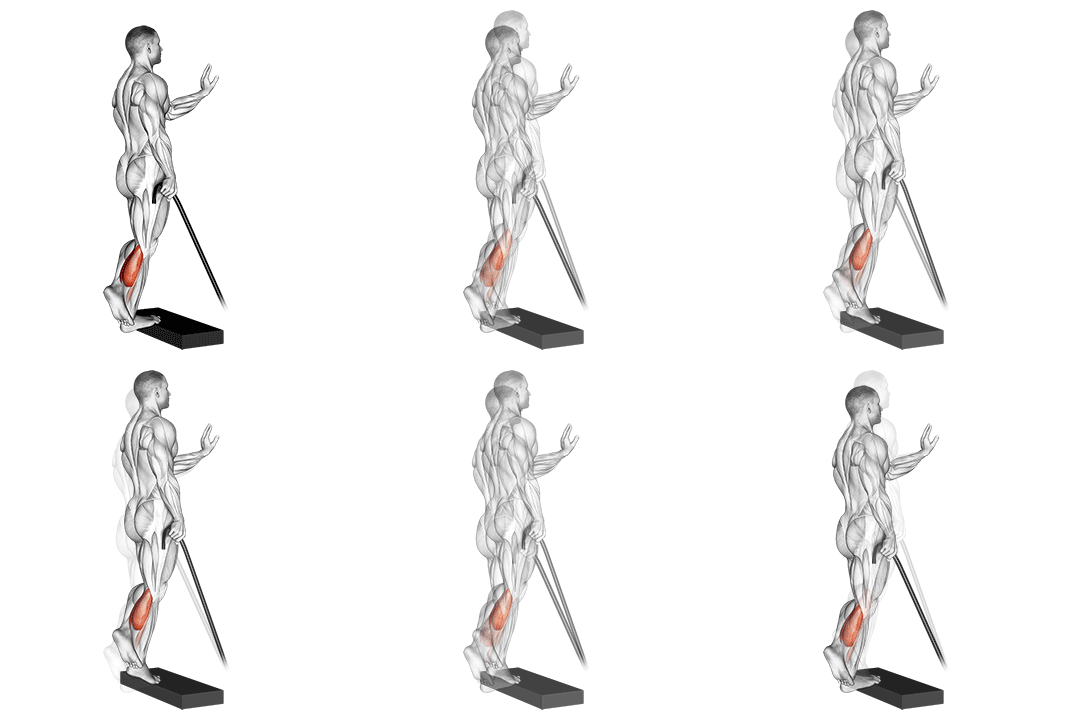
Band Single Leg Calf Raise
Head-to-Head Comparison
| Attribute | Assisted Lying Calves Stretch | Band Single Leg Calf Raise |
|---|---|---|
| Target Muscle |
Calves
|
Calves
|
| Body Part |
Lower-legs
|
Lower-legs
|
| Equipment |
Band
|
Band
|
| Difficulty |
Beginner
|
Beginner
|
| Movement Type |
Isolation
|
Isolation
|
| Secondary Muscles |
1
|
2
|
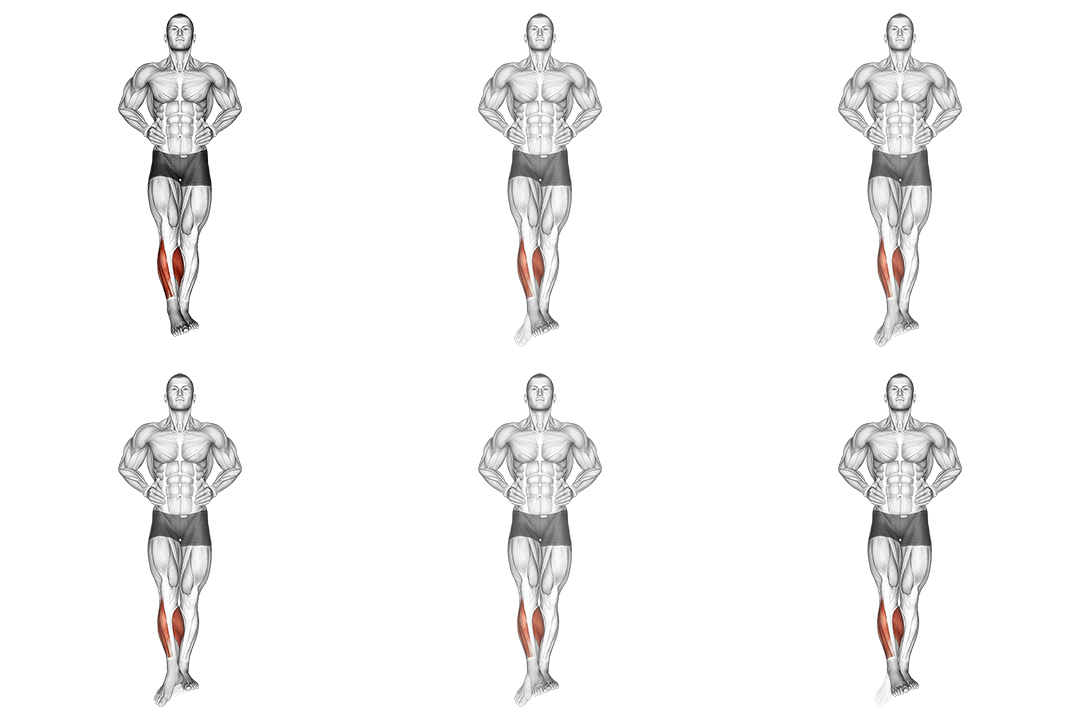
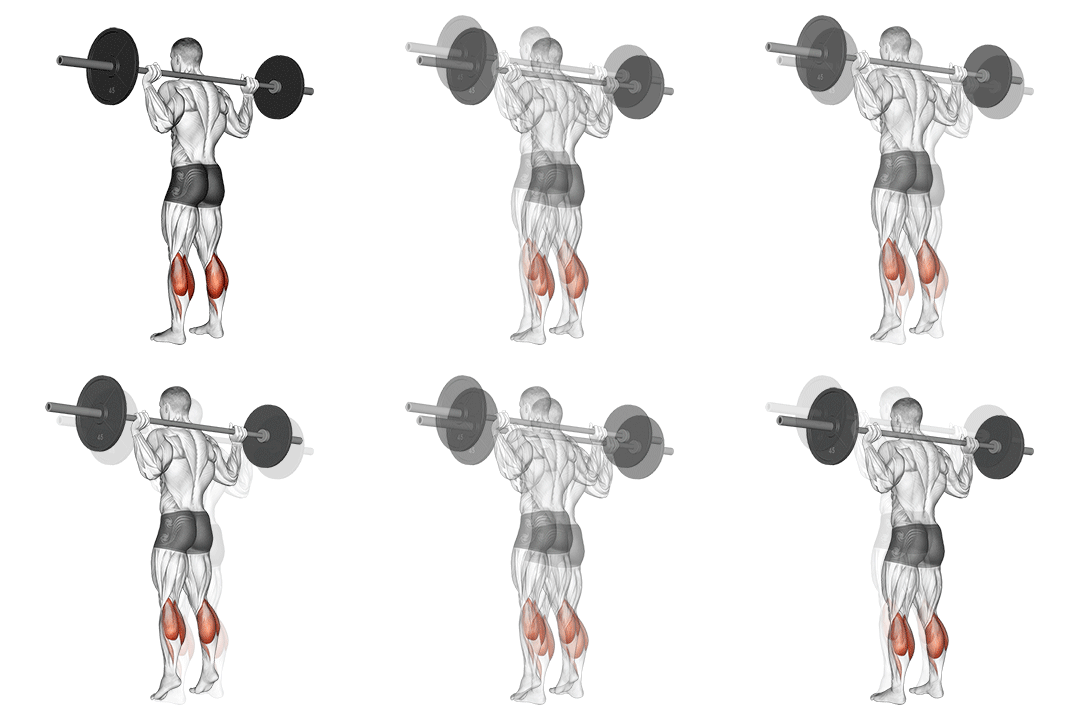
Secondary Muscles Activated
Assisted Lying Calves Stretch
Band Single Leg Calf Raise
Visual Comparison
Overview
Assisted Lying Calves Stretch vs Band Single Leg Calf Raise — two beginner-friendly band exercises that both target your calves but deliver very different results. You’ll learn how each hits the gastrocnemius and soleus, which one improves ankle dorsiflexion and hamstring tension, the equipment and setup each requires, and clear programming cues (reps, angles, tempo) so you can pick the right move for mobility, strength, or hypertrophy. Read on for technique tips, biomechanics-based recommendations, and quick protocol examples you can use in your next session.
Key Differences
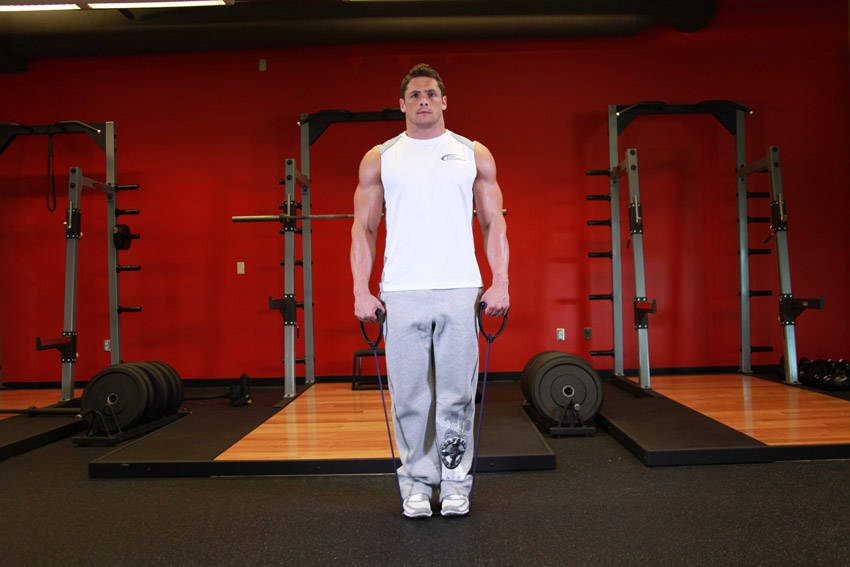
- Both exercises target the Calves using Band. The main differences are in their movement patterns and muscle activation angles.
Pros & Cons
Assisted Lying Calves Stretch
+ Pros
- Provides strong passive end-range dorsiflexion to improve ROM
- Low coordination and balance demands—good for beginners
- Easily targets soleus with knee-flexed variations
- Useful for reducing passive calf stiffness and improving mobility
− Cons
- Minimal concentric/eccentric strength stimulus for hypertrophy
- Limited progressive overload options compared to active raises
- Requires a secure band anchor and floor space for effective tension
Band Single Leg Calf Raise
+ Pros
- Delivers active concentric and eccentric loading for muscle growth
- Isolates each calf and corrects left-right imbalances
- Simple progression by increasing band tension or reps (8–20)
- Builds ankle and intrinsic foot strength alongside calves
− Cons
- Requires single-leg balance and coordination
- Can overload the Achilles if volume or tension is excessive
- Band can slip underfoot if not positioned carefully
When Each Exercise Wins
The single-leg raise produces measurable concentric/eccentric work, lets you apply progressive overload, and increases time under tension (8–20 reps, 3–4 sets). Force vectors align with plantarflexion, maximizing mechanical stress on gastrocnemius and soleus for muscle growth.
Strength requires active force production and eccentric control. The single-leg raise loads the calf through full ROM and lets you increase resistance and slow eccentrics (2–4s) to build tendon and muscle force capacity.
Beginners benefit from low-skill, low-load options that improve ROM and reduce stiffness. The lying stretch teaches end-range dorsiflexion and prepares tissues for loaded work without balance or heavy force demands.
With a single band and a small footprint you can effectively load each calf at home. The drill scales easily by using thicker bands or increasing reps, making it ideal for limited-equipment training.
Frequently Asked Questions
Can I do both Assisted Lying Calves Stretch and Band Single Leg Calf Raise in the same workout?
Yes. Start with the lying stretch as a mobility primer—2–3 sets of 30–60s—to increase dorsiflexion and reduce passive stiffness, then perform 3–4 sets of single-leg raises for strength or hypertrophy. Doing the stretch first improves starting muscle length and can allow better loading during raises.
Which exercise is better for beginners?
For absolute beginners the Assisted Lying Calves Stretch is better because it minimizes balance and load, teaches end-range dorsiflexion, and prepares the calf for loaded work. Once mobility and basic tendon tolerance improve, progress to single-leg raises.
How do the muscle activation patterns differ?
The Band Single Leg Calf Raise produces active concentric and eccentric activation across the gastrocnemius and soleus with high motor unit recruitment during plantarflexion. The Assisted Lying Calves Stretch increases passive tension and sarcomere length at end-range, producing less active force but greater stretch-induced loading of the tendon and muscle-tendon unit.
Can Band Single Leg Calf Raise replace Assisted Lying Calves Stretch?
Not entirely. If your priority is mobility and reducing passive tightness, the lying stretch is more effective at increasing dorsiflexion. For strength and hypertrophy you can replace the stretch with raises, but include periodic end-range stretches if limited ankle ROM becomes a bottleneck.
Expert Verdict
Use the Assisted Lying Calves Stretch when your goal is to improve ankle dorsiflexion, reduce passive calf tightness, or introduce very low-load tissue tolerance—hold stretches 30–60 seconds and repeat 2–3 times per side. Choose the Band Single Leg Calf Raise when you want strength or hypertrophy: perform 3–4 sets of 8–20 reps, emphasize a 2–4s eccentric, full plantarflexion, and controlled balance. Be decisive: prioritize the stretch in warm-ups and rehab, and prioritize the single-leg raise for progressive loading and measurable strength or muscle growth outcomes.
Also Compare
More comparisons with Assisted Lying Calves Stretch
More comparisons with Band Single Leg Calf Raise
Compare More Exercises
Use our free comparison tool to analyze any two exercises head-to-head.
Compare Exercises