

Assisted Lying Glutes Stretch vs Band Hip Lift: Complete Comparison Guide
Assisted Lying Glutes Stretch vs Band Hip Lift — which should you pick for your glute work? You’ll get a clear, practical comparison that covers muscle activation, biomechanics, equipment needs, difficulty, and progressions. I’ll show you technique cues (hip hinge, knee angle, band placement), recommended rep ranges or hold times, and specific scenarios where one exercise outperforms the other. Read on so you can choose the right move for muscle growth, mobility, or home training and apply concrete coaching tips immediately.
Exercise Comparison
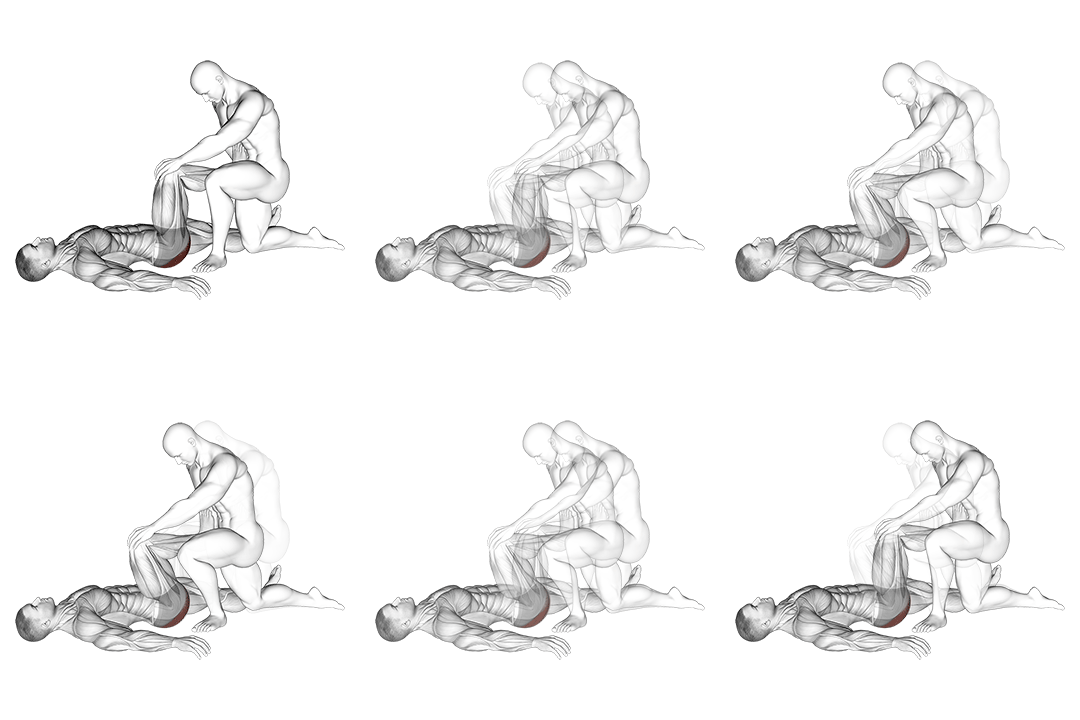
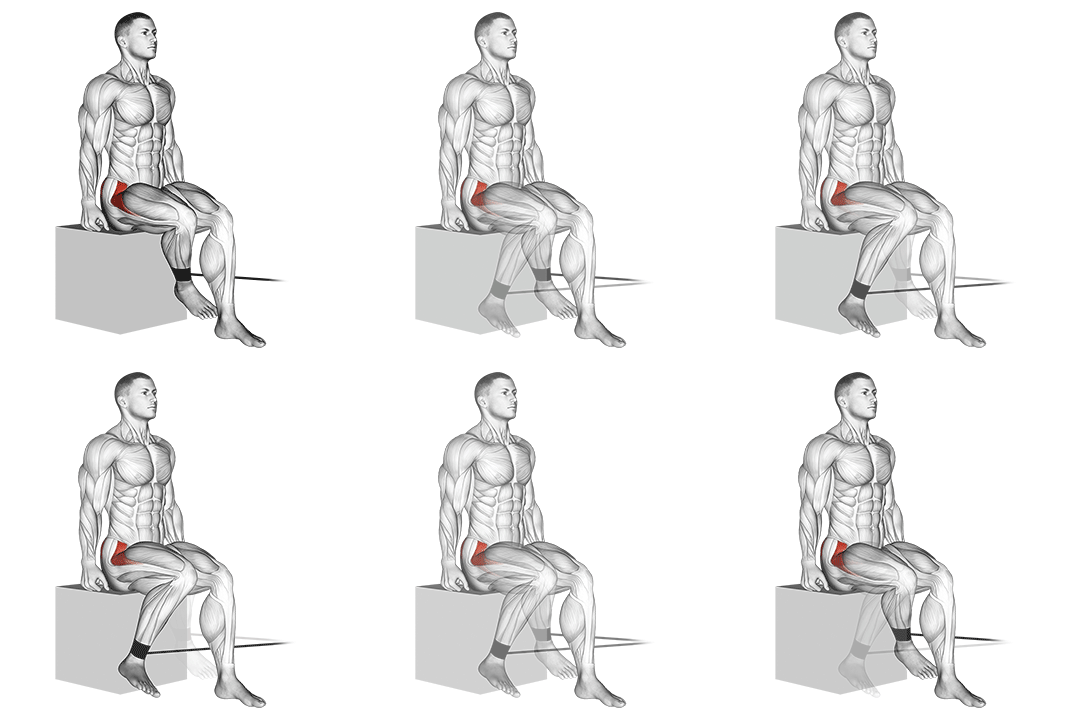
Assisted Lying Glutes Stretch
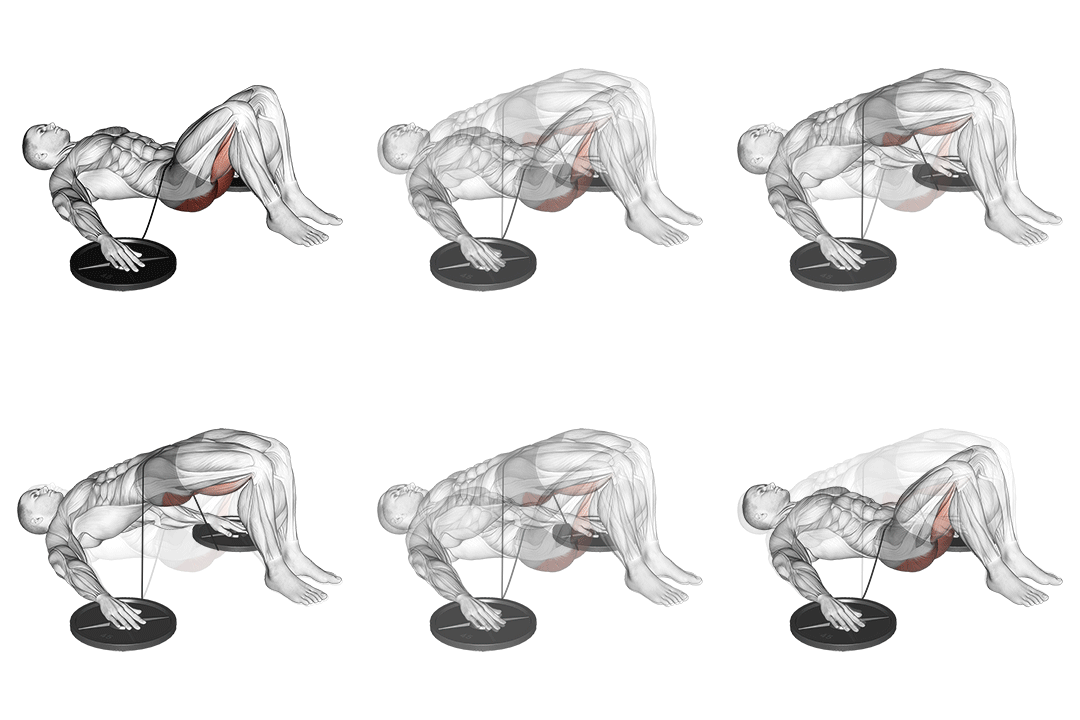
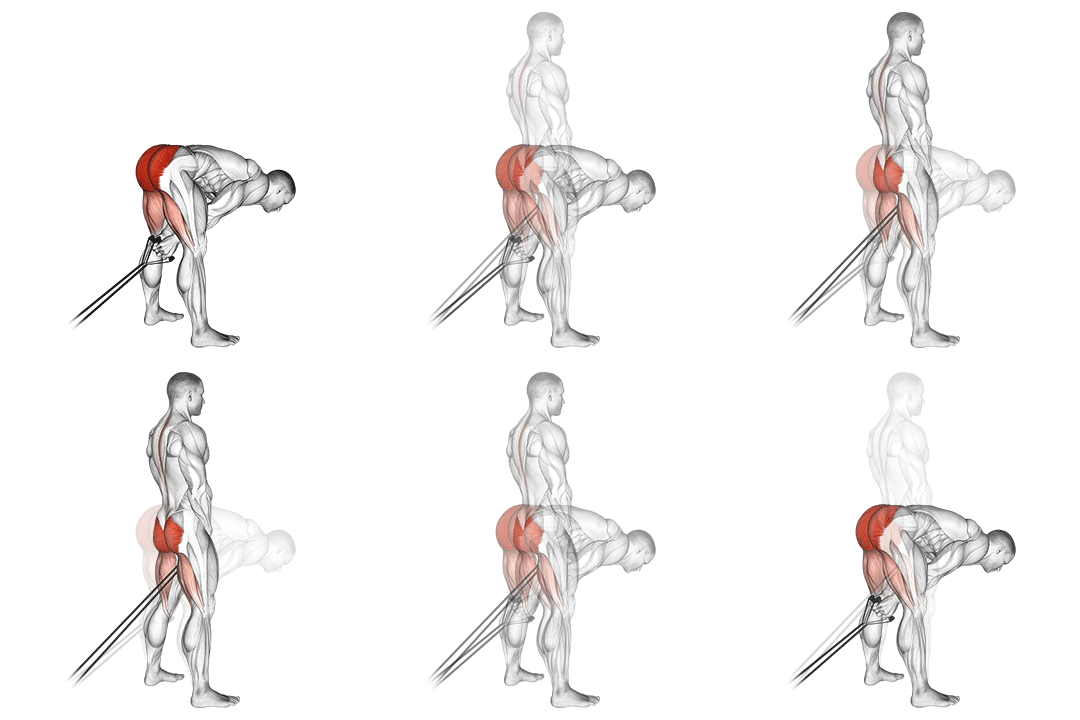
Band Hip Lift
Head-to-Head Comparison
| Attribute | Assisted Lying Glutes Stretch | Band Hip Lift |
|---|---|---|
| Target Muscle |
Glutes
|
Glutes
|
| Body Part |
Upper-legs
|
Upper-legs
|
| Equipment |
Band
|
Band
|
| Difficulty |
Beginner
|
Beginner
|
| Movement Type |
Isolation
|
Compound
|
| Secondary Muscles |
1
|
2
|
Secondary Muscles Activated
Assisted Lying Glutes Stretch
Band Hip Lift
Visual Comparison
Overview
Assisted Lying Glutes Stretch vs Band Hip Lift — which should you pick for your glute work? You’ll get a clear, practical comparison that covers muscle activation, biomechanics, equipment needs, difficulty, and progressions. I’ll show you technique cues (hip hinge, knee angle, band placement), recommended rep ranges or hold times, and specific scenarios where one exercise outperforms the other. Read on so you can choose the right move for muscle growth, mobility, or home training and apply concrete coaching tips immediately.
Key Differences
- Assisted Lying Glutes Stretch is an isolation exercise, while Band Hip Lift is a compound movement.
- Both exercises target the Glutes using Band. The main differences are in their movement patterns and muscle activation angles.
Pros & Cons
Assisted Lying Glutes Stretch
+ Pros
- Isolates glute medius and glute max in a lengthened position, improving mobility and muscle relaxation
- Very low-impact and beginner-friendly; minimal dynamic loading reduces joint stress
- Excellent for pre-activity warm-ups and post-workout recovery (hold 30–60 seconds)
- Requires minimal space and a simple strap or band
− Cons
- Low mechanical tension—poor stimulus for hypertrophy compared with loaded hip extension
- Limited progression options for strength (mainly longer holds or PNF)
- May irritate deep external rotators (piriformis) in some individuals if performed aggressively
Band Hip Lift
+ Pros
- Delivers repeatable mechanical tension for hypertrophy and strength (3–4 sets of 8–15 reps)
- Easy to progress by increasing band resistance or using single-leg variations
- Activates hamstrings and core for better transfer to standing movements
- Compact, ideal for home workouts and circuits
− Cons
- Higher demand on lumbar stability—risk of compensation if core is weak
- Band tension can alter hip mechanics; too strong a band may shift load to quads or low back
- Requires coaching on pelvic tilt and alignment to avoid ineffective reps
When Each Exercise Wins
Band Hip Lifts provide higher mechanical tension and clear progression (heavier bands, single-leg). Perform 3–4 sets of 8–15 controlled reps with a 2:0:1 tempo to maximize time under tension and hypertrophic stimulus.
The compound hip-extension pattern recruits more motor units and allows overload via stronger bands or unilateral work. Its concentric/eccentric loading builds force production, which transfers to standing lifts.
It’s simpler to perform with minimal coordination and teaches hip awareness and glute activation in a safe, supine position. Start with 30–60s holds and progress to gentle active pulls before trying loaded hip extensions.
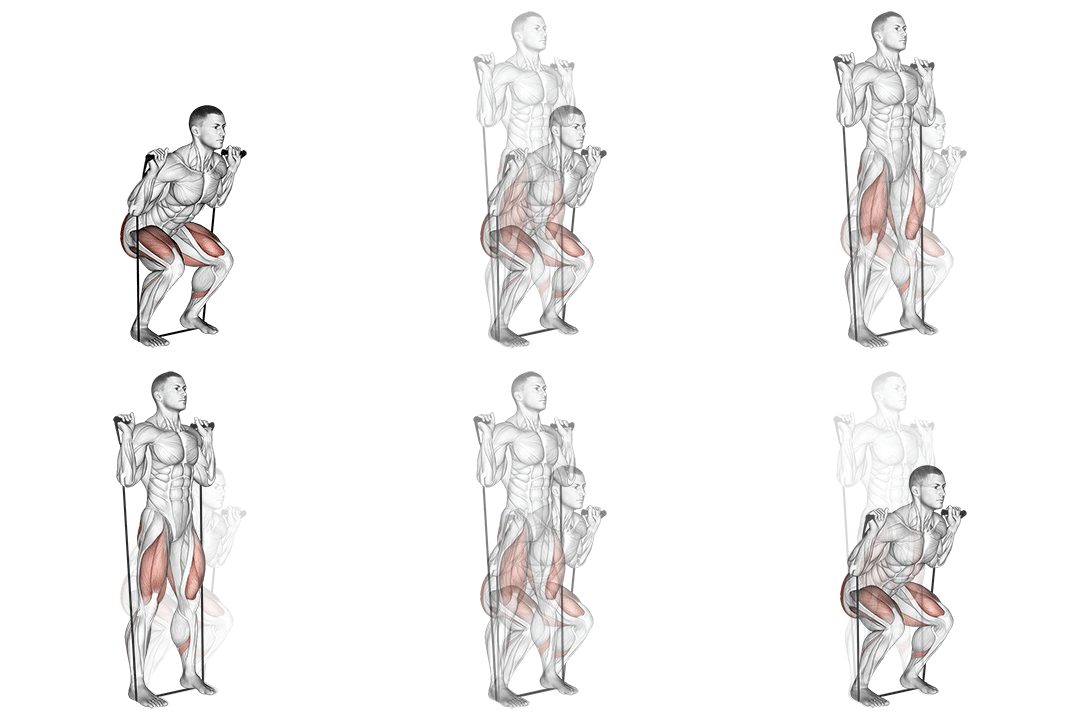
It’s versatile, space-efficient, and scales across resistance levels for progressive overload. You can pair hip lifts with bodyweight squats or lunges for a full lower-body session.
Frequently Asked Questions
Can I do both Assisted Lying Glutes Stretch and Band Hip Lift in the same workout?
Yes. Use the Assisted Lying Glutes Stretch as a warm-up or mobility drill (30–60s per side) to prime the muscle length and neural drive, then perform Band Hip Lifts for loaded work (3–4 sets of 8–15 reps). That order helps you maintain full hip range and reduce compensation.
Which exercise is better for beginners?
Assisted Lying Glutes Stretch is easier for absolute beginners because it isolates the glute in a supine, low-coordinate position. It builds hip awareness; once you can activate the glute reliably, add Band Hip Lifts to introduce progressive loading.
How do the muscle activation patterns differ?
Band Hip Lifts produce high concentric and eccentric activation with peak force near full hip extension (0–20° extension), engaging hamstrings for posterior chain synergy. Assisted Lying Glutes Stretch emphasizes length-tension and isometric/passive activation at ~90° hip flexion, stressing flexibility and neural relaxation rather than high force.
Can Band Hip Lift replace Assisted Lying Glutes Stretch?
Band Hip Lift can replace the stretch if your goal is strength or hypertrophy, but it won’t provide the same length-focused mobility benefits. Keep the assisted stretch in your routine if you need improved hip range of motion or targeted glute activation before heavy sets.
Expert Verdict
Use the Assisted Lying Glutes Stretch when your priority is mobility, targeted glute activation, or low-impact preparation—hold 30–60 seconds per side and focus on a controlled pull to lengthen the glute fibers. Choose the Band Hip Lift when you want muscle growth, strength, and practical progression: perform 3–4 sets of 8–15 reps with a band that challenges you on the last 2 reps, keep a neutral spine, and cue posterior pelvic tilt. For a balanced program, start beginners with the assisted stretch to build awareness, then add band hip lifts as you progress to higher loads and unilateral variations.
Also Compare
More comparisons with Assisted Lying Glutes Stretch
Compare More Exercises
Use our free comparison tool to analyze any two exercises head-to-head.
Compare Exercises