

Assisted Lying Glutes Stretch vs Band Lying Hip Internal Rotation: Complete Comparison Guide
Assisted Lying Glutes Stretch vs Band Lying Hip Internal Rotation — both look similar on the floor, but they serve different purposes. You’ll get clear guidance on how each exercise loads the glutes, what secondary muscles come into play, simple technique cues, and practical progressions. Read on to learn which one to use for mobility, targeted activation, or rehab-style work, plus exact rep ranges, hold times, and common setup mistakes so you can pick the right move for your goals.
Exercise Comparison
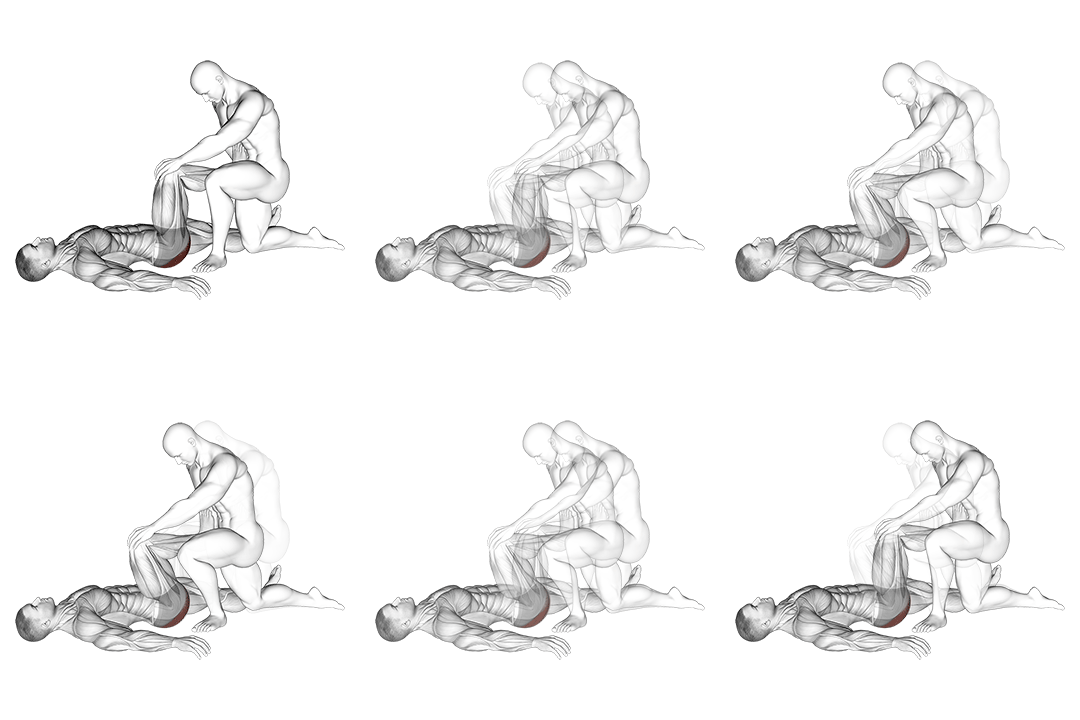
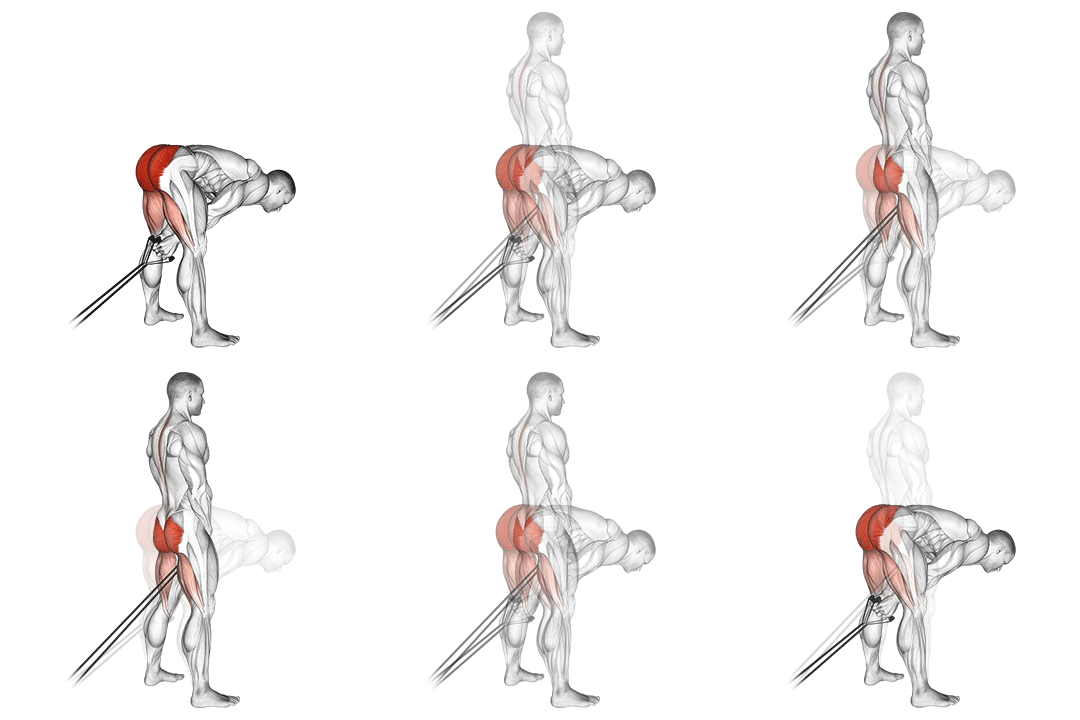
Assisted Lying Glutes Stretch
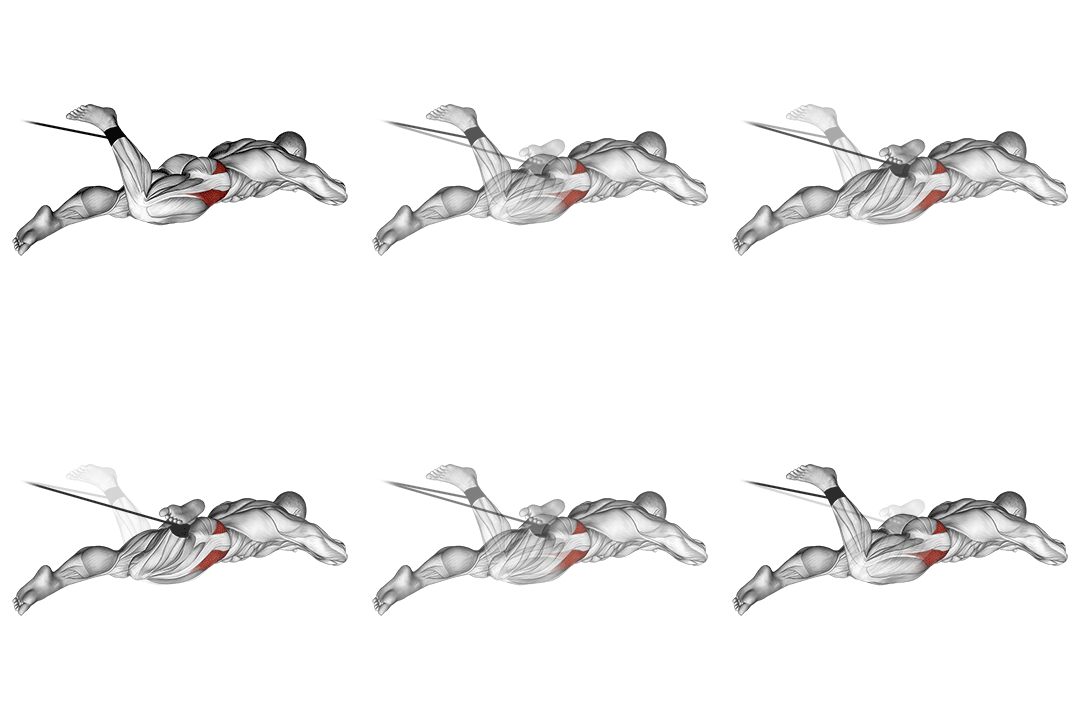
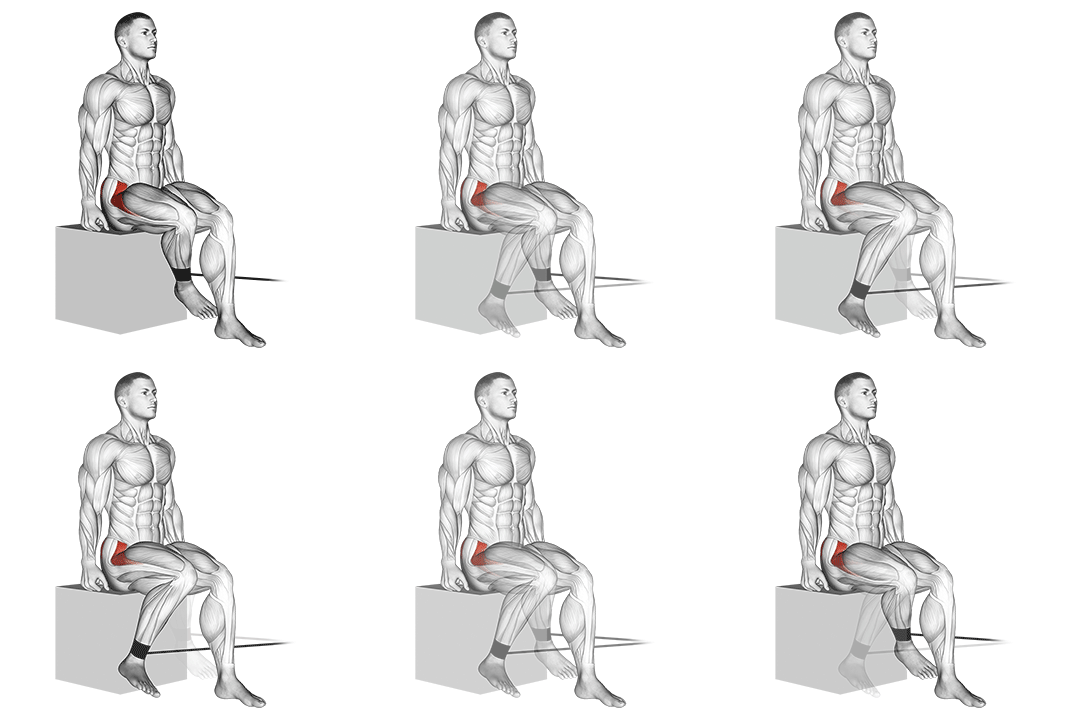
Band Lying Hip Internal Rotation
Head-to-Head Comparison
| Attribute | Assisted Lying Glutes Stretch | Band Lying Hip Internal Rotation |
|---|---|---|
| Target Muscle |
Glutes
|
Glutes
|
| Body Part |
Upper-legs
|
Upper-legs
|
| Equipment |
Band
|
Band
|
| Difficulty |
Beginner
|
Beginner
|
| Movement Type |
Isolation
|
Isolation
|
| Secondary Muscles |
1
|
2
|
Secondary Muscles Activated
Assisted Lying Glutes Stretch
Band Lying Hip Internal Rotation
Visual Comparison
Overview
Assisted Lying Glutes Stretch vs Band Lying Hip Internal Rotation — both look similar on the floor, but they serve different purposes. You’ll get clear guidance on how each exercise loads the glutes, what secondary muscles come into play, simple technique cues, and practical progressions. Read on to learn which one to use for mobility, targeted activation, or rehab-style work, plus exact rep ranges, hold times, and common setup mistakes so you can pick the right move for your goals.
Key Differences
- Both exercises target the Glutes using Band. The main differences are in their movement patterns and muscle activation angles.
Pros & Cons
Assisted Lying Glutes Stretch
+ Pros
- Easy setup with a single band or partner
- Effective at lengthening glute max and deep rotators via sustained holds
- Low neuromuscular demand — good for mobility and cool-downs
- Useful as an introductory movement for people with tight hips or piriformis symptoms
− Cons
- Limited capacity to build strength or progressive overload
- Passive nature yields low active glute activation compared to resisted work
- Can be misused as a quick stretch without addressing motor control
Band Lying Hip Internal Rotation
+ Pros
- Active targeting of glute medius/minimus anterior fibers for internal rotation
- Clear progression via band tension, placement, and tempo
- Builds neuromuscular control of femoral rotation and knee stability
- Can be programmed for strength-endurance (8–20 reps) with measurable load
− Cons
- Requires precise band placement and coaching for clean movement
- Greater demand on joint stability — potential knee stress if alignment is poor
- Less effective as a pure mobility/stretching tool
When Each Exercise Wins
Band Lying Hip Internal Rotation creates active concentric and eccentric loading you can progressively overload (increase band tension or moment arm). Aim for 3–4 sets of 8–15 controlled reps to stimulate muscle growth in the glute med/min and related stabilizers.
Strength improvements require active force production and progressive tension. The band variation provides measurable resistance and eccentric control, allowing you to load the internal rotators and stabilizers over time — use heavier bands and slow eccentrics (3–5s) for best transfer.
Beginners benefit from the lower technical demand and immediate mobility gains of the assisted stretch. It helps normalize hip range (hold 30–60s) and reduces guarding before teaching active control via banded rotations.
Home setups often lack anchors or varied bands; the assisted stretch needs only a light band or partner and a mat. It’s simple, safe, and useful for daily mobility sessions without precise band placement.
Frequently Asked Questions
Can I do both Assisted Lying Glutes Stretch and Band Lying Hip Internal Rotation in the same workout?
Yes. Use the Assisted Lying Glutes Stretch as a mobility primer (1–2 sets of 30–60s) and follow with Band Lying Hip Internal Rotation for active control and loading (2–4 sets of 8–15 reps). This order uses the stretch to increase range, then strengthens through that new range.
Which exercise is better for beginners?
Assisted Lying Glutes Stretch is better for most beginners because it requires less motor control and immediately improves hip range. After comfort and mobility improve, add banded internal rotations to teach active stabilization.
How do the muscle activation patterns differ?
The assisted stretch produces low-level, sustained tension that lengthens glute max and deep rotators (passive emphasis), while the banded internal rotation produces cyclic concentric/eccentric contractions of glute med/min and TFL with co-contraction of quads/hamstrings to stabilize the knee.
Can Band Lying Hip Internal Rotation replace Assisted Lying Glutes Stretch?
Not completely. If your goal is mobility or releasing tight deep rotators, the assisted stretch is superior. If your goal is to build active control and strength in internal rotators, the banded rotation can replace the stretch in a strengthening circuit but won’t provide the same sustained lengthening effect.
Expert Verdict
Use the Assisted Lying Glutes Stretch when your priority is hip mobility, pain-free range of motion, or as a prehab/cool-down tool — hold 30–60 seconds and keep the pelvis neutral to target glute max and deep rotators. Choose Band Lying Hip Internal Rotation when you want active glute recruitment, neuromuscular control of femoral rotation, and progressive overload; program 2–4 sets of 8–20 reps, increasing band tension or moving the band distally to raise the moment arm. Be decisive: pick the stretch for flexibility and relaxation, pick the banded rotation for strength, motor control, and measurable progression.
Also Compare
More comparisons with Assisted Lying Glutes Stretch
More comparisons with Band Lying Hip Internal Rotation
Compare More Exercises
Use our free comparison tool to analyze any two exercises head-to-head.
Compare Exercises