

Assisted Lying Glutes Stretch vs Band Seated Hip Internal Rotation: Complete Comparison Guide
Assisted Lying Glutes Stretch vs Band Seated Hip Internal Rotation — both target your glutes with a band, but they do it in different ways. In this guide you’ll get clear, actionable comparisons on muscle activation, biomechanics, equipment needs, and which to pick for mobility, muscle growth, or rehabilitation. You’ll learn exact technique cues, recommended rep ranges and hold times (for example 30–60s holds or 8–15 controlled reps), and simple progressions so you can choose the move that matches your goals and training environment.
Exercise Comparison
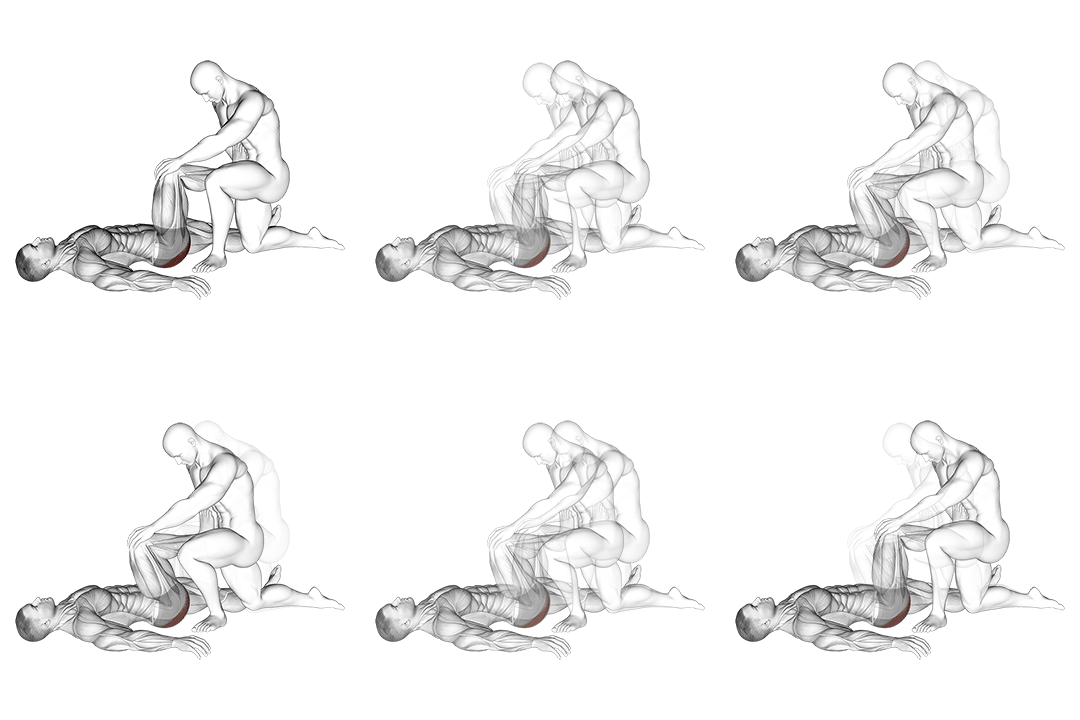
Assisted Lying Glutes Stretch
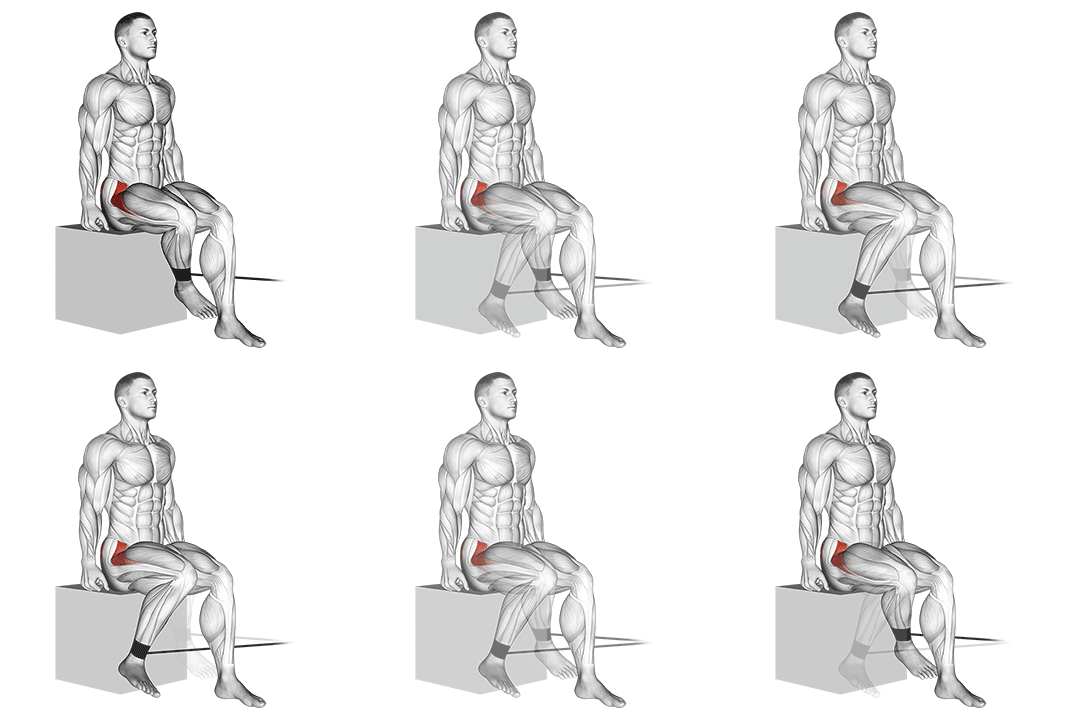
Band Seated Hip Internal Rotation
Head-to-Head Comparison
| Attribute | Assisted Lying Glutes Stretch | Band Seated Hip Internal Rotation |
|---|---|---|
| Target Muscle |
Glutes
|
Glutes
|
| Body Part |
Upper-legs
|
Upper-legs
|
| Equipment |
Band
|
Band
|
| Difficulty |
Beginner
|
Beginner
|
| Movement Type |
Isolation
|
Isolation
|
| Secondary Muscles |
1
|
2
|
Secondary Muscles Activated
Assisted Lying Glutes Stretch
Band Seated Hip Internal Rotation
Visual Comparison
Overview
Assisted Lying Glutes Stretch vs Band Seated Hip Internal Rotation — both target your glutes with a band, but they do it in different ways. In this guide you’ll get clear, actionable comparisons on muscle activation, biomechanics, equipment needs, and which to pick for mobility, muscle growth, or rehabilitation. You’ll learn exact technique cues, recommended rep ranges and hold times (for example 30–60s holds or 8–15 controlled reps), and simple progressions so you can choose the move that matches your goals and training environment.
Key Differences
- Both exercises target the Glutes using Band. The main differences are in their movement patterns and muscle activation angles.
Pros & Cons
Assisted Lying Glutes Stretch
+ Pros
- Easy to learn: simple setup and passive hold cues
- Excellent for end-range glute stretch and length-tension loading
- Very portable: only a band and floor space needed
- Low joint compression — ideal for rehab and mobility days
− Cons
- Limited progressive overload for muscle growth
- Primarily passive — less carryover to active strength
- Less targeted activation of internal-rotator glute fibers
Band Seated Hip Internal Rotation
+ Pros
- Activates internal-rotator fibers of glute medius/minimus effectively
- Easy to load progressively with stronger bands
- Improves rotational control and hip stability under load
- Transfers well to athletic movement patterns requiring hip rotation
− Cons
- Requires more motor control and coaching to isolate correctly
- Potential to irritate hips if taken into extreme ROM
- Needs a stable seat and consistent band anchoring
When Each Exercise Wins
Band seated allows progressive overload via stronger bands and higher-rep ranges (8–20 reps) and produces more active concentric contractions in the glute medius. That active torque stimulates neuromuscular recruitment better than a passive stretch for muscle growth.
Strength requires active force production; the seated band creates rotational torque you must produce under load, which builds motor control and force output more directly than the assisted passive hold.
Beginners benefit from low-load, simple cues and 30–60s holds to learn hip sensation and reduce tissue stiffness before progressing to active rotational drills. It’s easier to coach and has lower technical demand.
It needs only a band and floor space, and setup is faster. If you lack a stable chair or want a quick mobility session, the lying stretch is the more practical home choice.
Frequently Asked Questions
Can I do both Assisted Lying Glutes Stretch and Band Seated Hip Internal Rotation in the same workout?
Yes — sequence them logically: start with 1–2 minutes total of Assisted Lying Glutes Stretch (30–60s per side) to restore range, then do 2–4 sets of Band Seated Hip Internal Rotation for active control. That progression uses stretch to access tissue and the band to train force production.
Which exercise is better for beginners?
Assisted Lying Glutes Stretch is better for beginners because it’s passive and easier to perform with consistent technique. It teaches hip orientation and reduces stiffness before introducing the motor control demands of the seated band drill.
How do the muscle activation patterns differ?
The lying stretch relies on passive length-tension and low-level isometrics in the glute max and proximal hamstring, peaking near end range. The seated band produces phasic concentric activation in the anterior glute medius/minimus as you drive internal rotation against band resistance.
Can Band Seated Hip Internal Rotation replace Assisted Lying Glutes Stretch?
Not entirely — if your priority is restoring range and reducing tightness, the lying stretch is more effective. For strengthening internal rotators and improving rotational control, the band seated version is superior, so use them complementarily based on your goals.
Expert Verdict
Use Assisted Lying Glutes Stretch when your goal is to improve tissue length, reduce posterior hip tightness, or introduce gentle glute loading during rehab and mobility sessions — hold 30–60 seconds and pair with deep diaphragmatic breathing to reduce guarding. Choose Band Seated Hip Internal Rotation when you want active recruitment of internal rotator fibers, progressive overload, and improved hip rotational control; perform 2–4 sets of 8–20 controlled reps with a band that allows clean form. Both have a place: start with the lying stretch to restore range, then add seated band rotations to build strength and coordination.
Also Compare
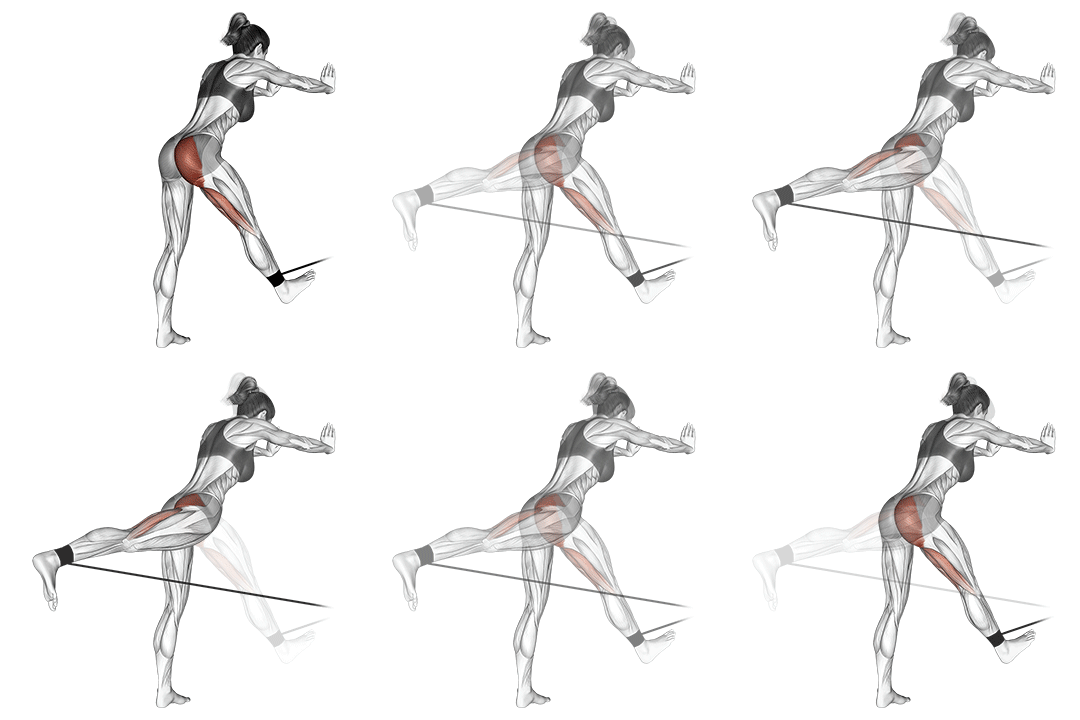
More comparisons with Assisted Lying Glutes Stretch
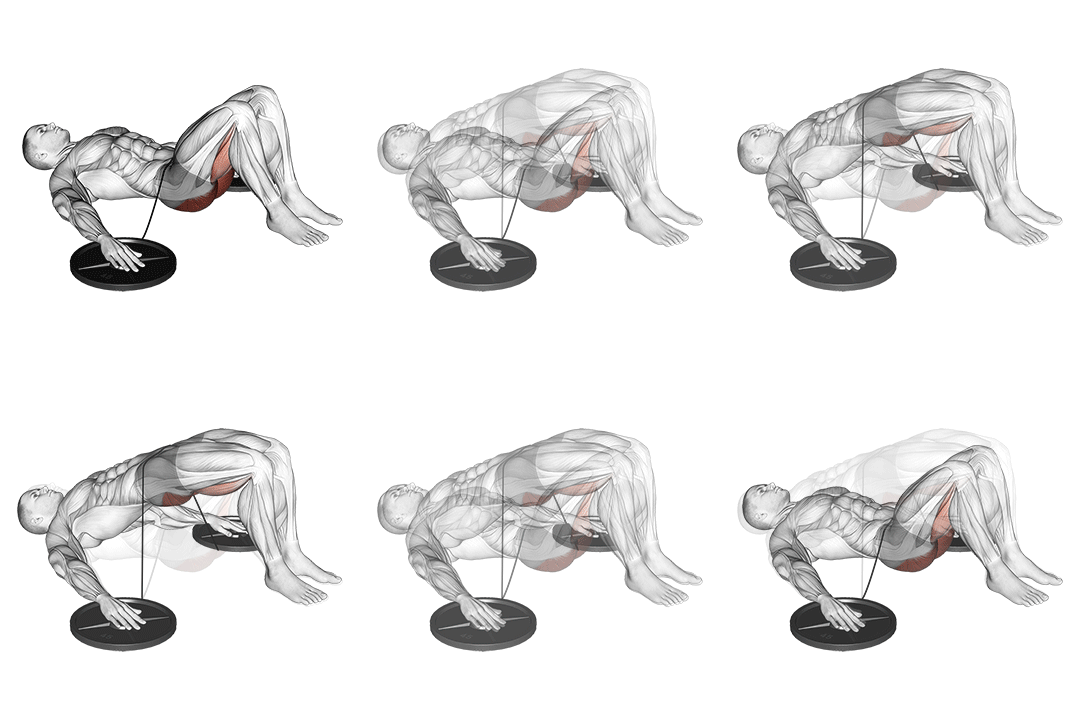
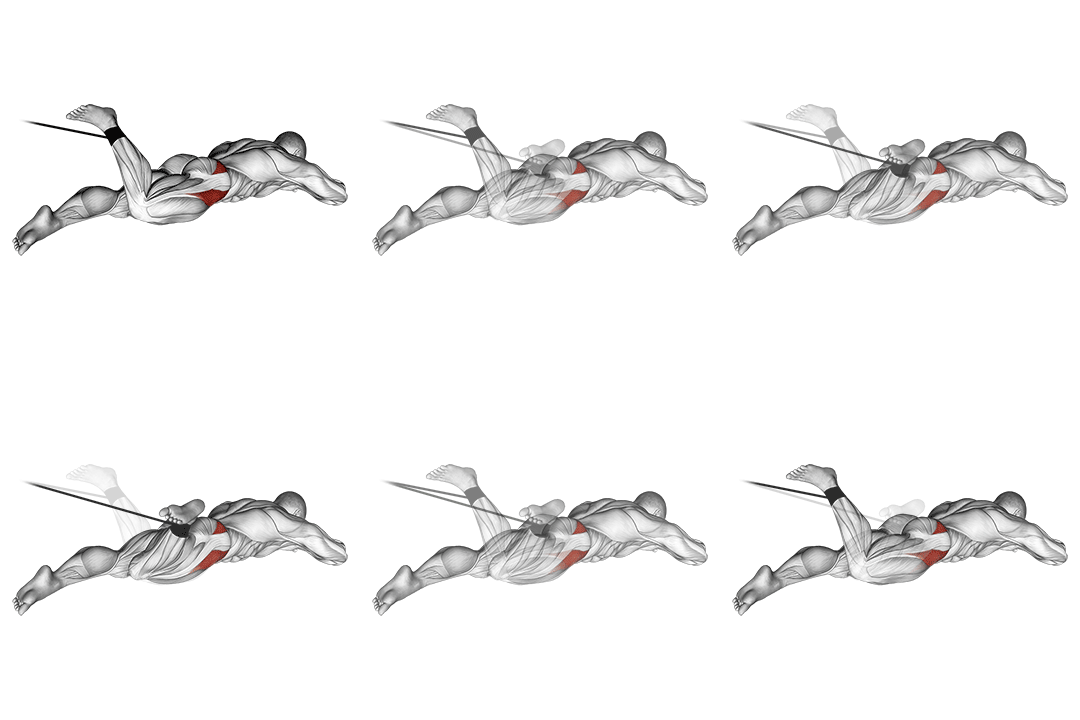
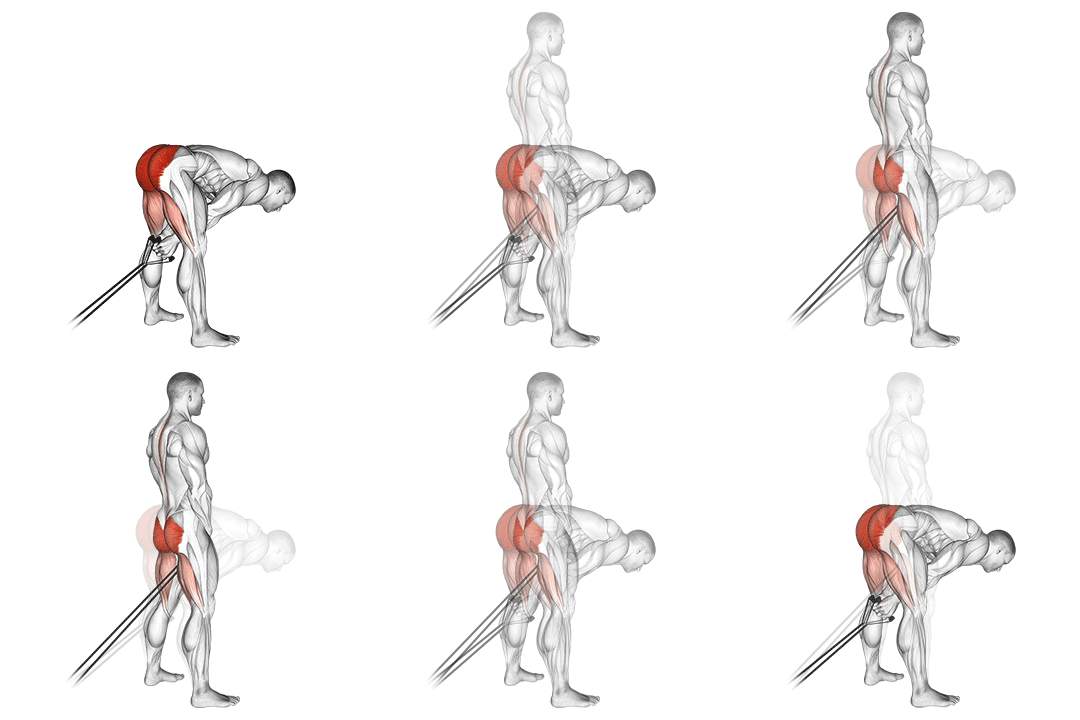
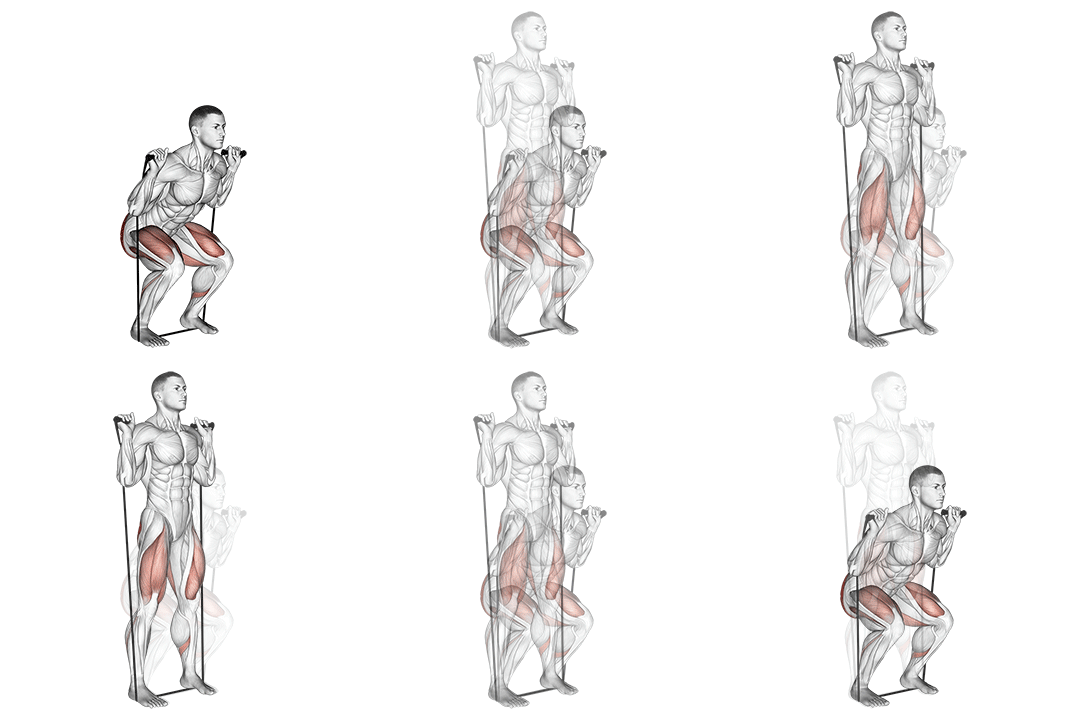
More comparisons with Band Seated Hip Internal Rotation
Compare More Exercises
Use our free comparison tool to analyze any two exercises head-to-head.
Compare Exercises