

Assisted Lying Glutes Stretch vs Band Squat: Complete Comparison Guide
Assisted Lying Glutes Stretch vs Band Squat — you’re comparing two band-based moves that both hit the glutes but in very different ways. I’ll walk you through muscle activation, biomechanics, technique cues, injury risk, and which exercise to choose for hypertrophy, strength, mobility, or recovery. You’ll get concrete rep ranges, angle cues (hip and knee), and progression tips so you can pick the right movement for your goals and set up a simple plan to use them together or separately.
Exercise Comparison
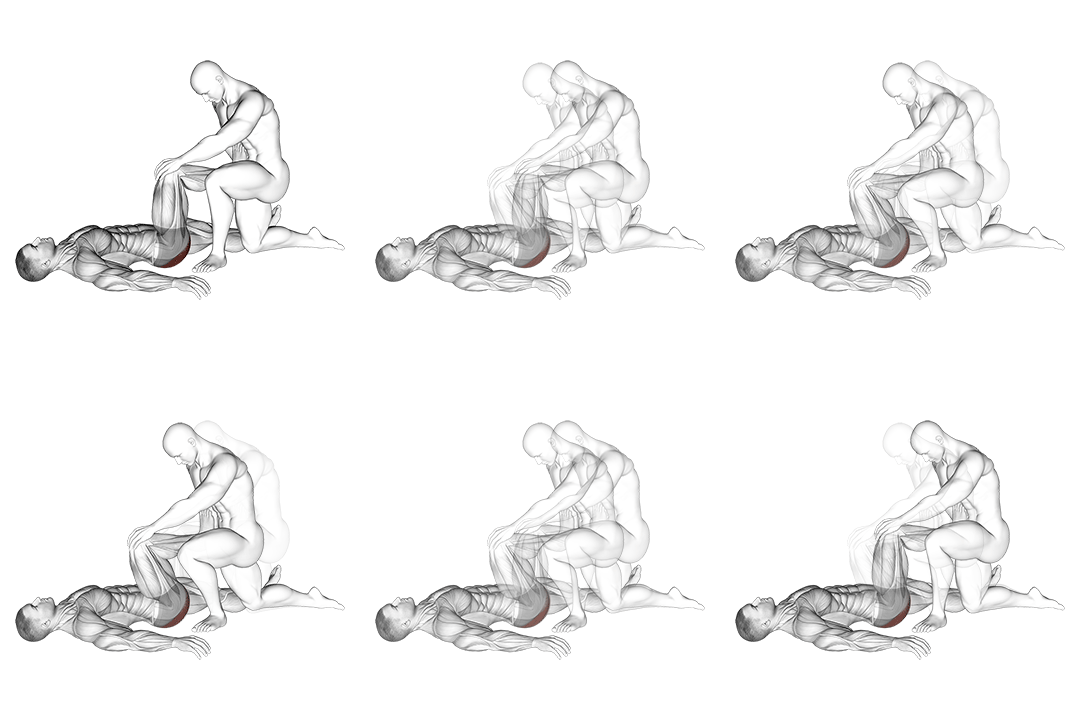
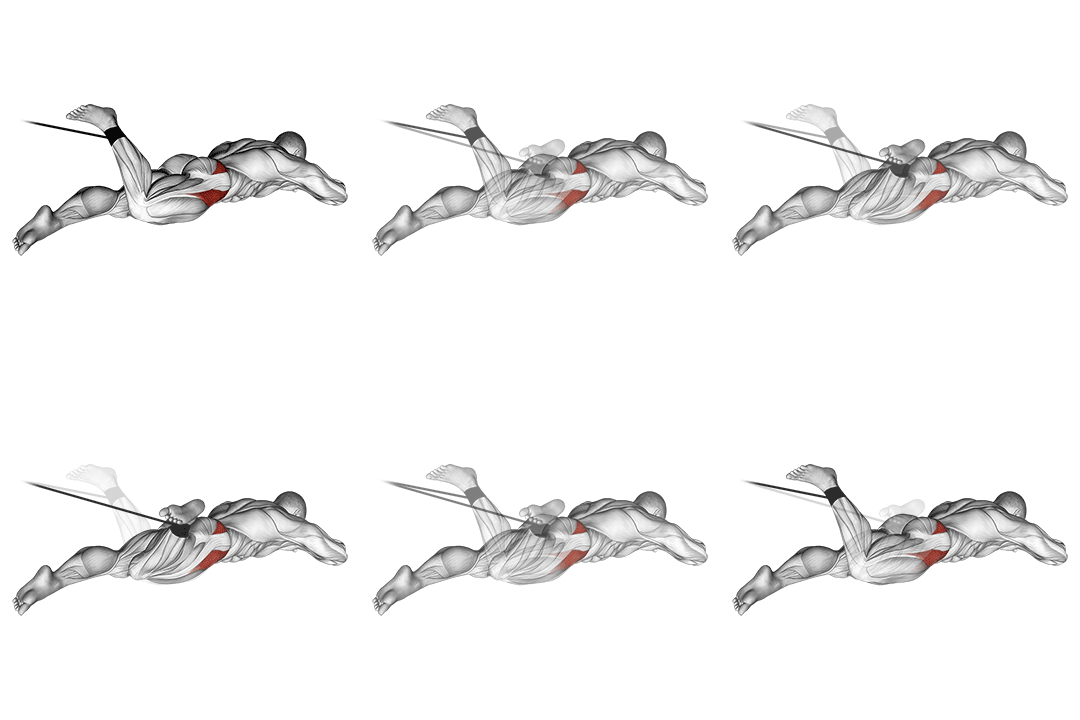
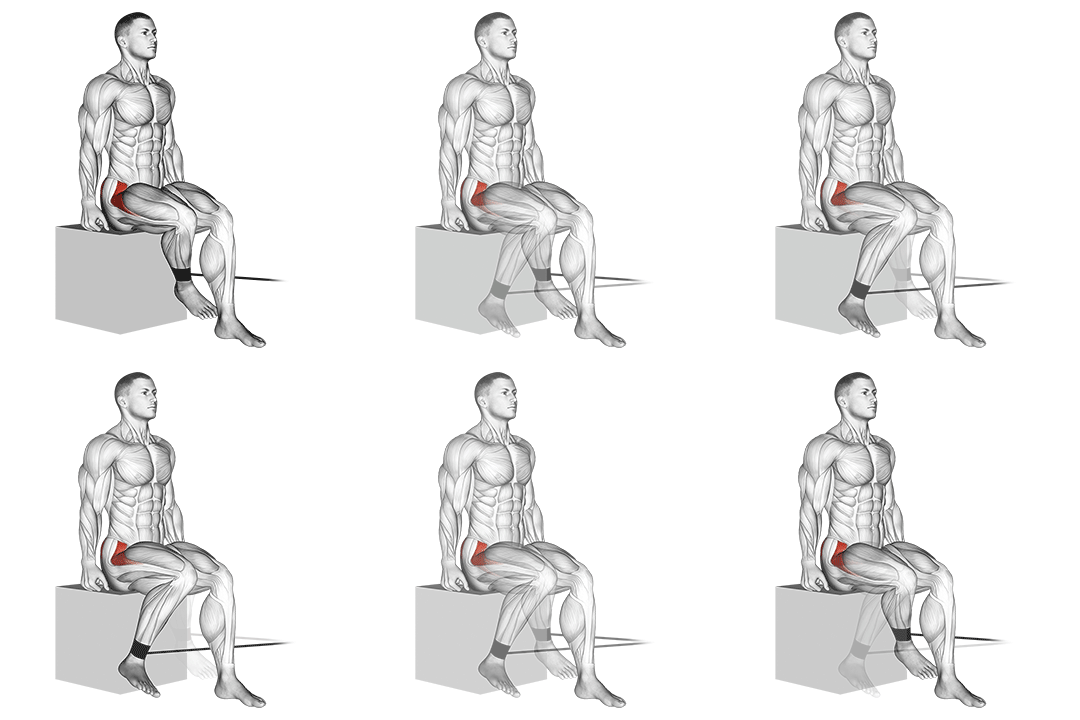
Assisted Lying Glutes Stretch
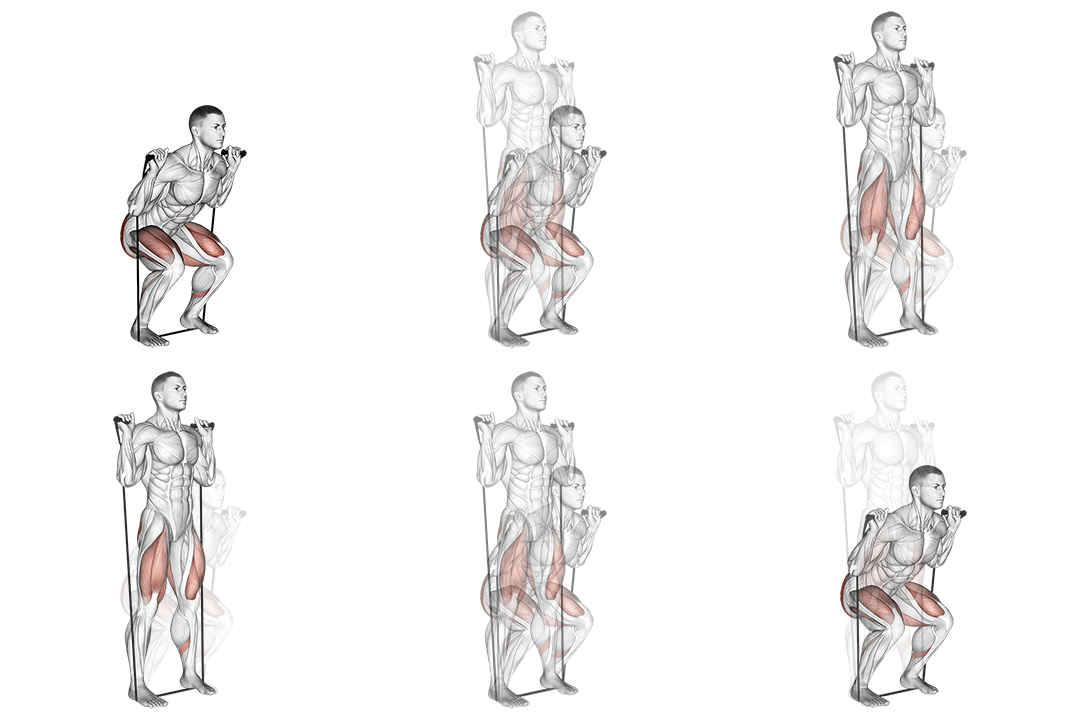
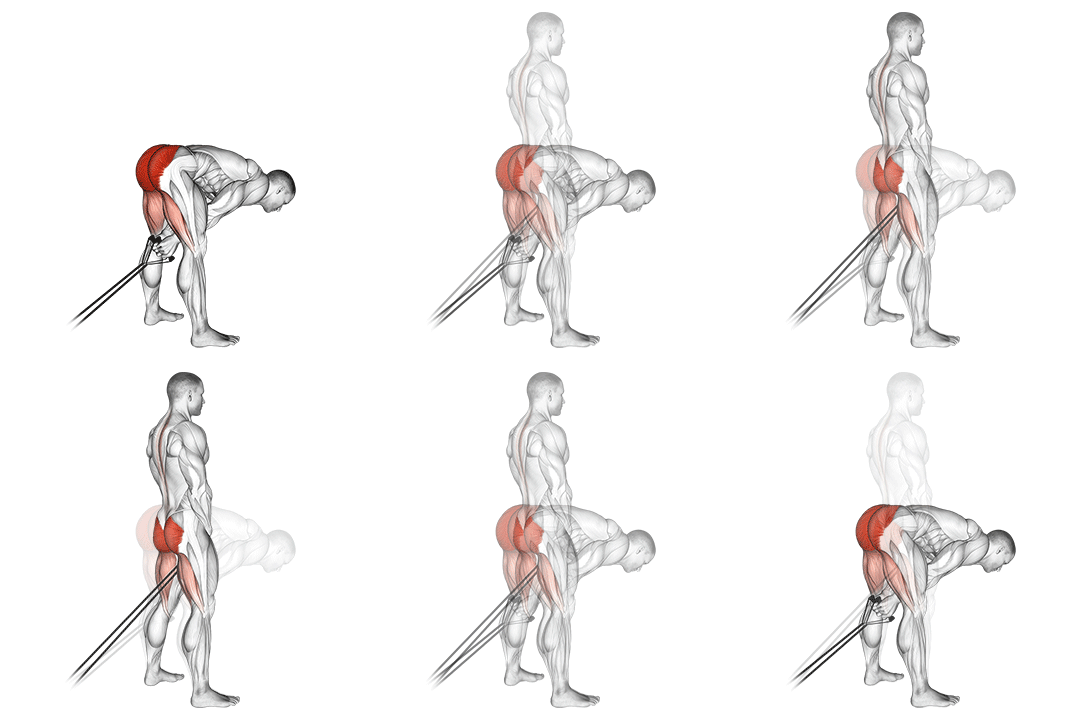
Band Squat
Head-to-Head Comparison
| Attribute | Assisted Lying Glutes Stretch | Band Squat |
|---|---|---|
| Target Muscle |
Glutes
|
Glutes
|
| Body Part |
Upper-legs
|
Upper-legs
|
| Equipment |
Band
|
Band
|
| Difficulty |
Beginner
|
Intermediate
|
| Movement Type |
Isolation
|
Compound
|
| Secondary Muscles |
1
|
3
|
Secondary Muscles Activated
Assisted Lying Glutes Stretch
Band Squat
Visual Comparison
Overview
Assisted Lying Glutes Stretch vs Band Squat — you’re comparing two band-based moves that both hit the glutes but in very different ways. I’ll walk you through muscle activation, biomechanics, technique cues, injury risk, and which exercise to choose for hypertrophy, strength, mobility, or recovery. You’ll get concrete rep ranges, angle cues (hip and knee), and progression tips so you can pick the right movement for your goals and set up a simple plan to use them together or separately.
Key Differences
- Assisted Lying Glutes Stretch is an isolation exercise, while Band Squat is a compound movement.
- Difficulty levels differ: Assisted Lying Glutes Stretch is beginner, while Band Squat is intermediate.
- Both exercises target the Glutes using Band. The main differences are in their movement patterns and muscle activation angles.
Pros & Cons
Assisted Lying Glutes Stretch
+ Pros
- Very low technical demand — easy for beginners and rehab
- Targets glute medius and hamstrings at end-range for mobility and activation
- Requires minimal equipment and space
- Useful as a warm-up or pre-activation drill (hold 30–60 seconds or 8–12 slow pulls)
− Cons
- Limited ability to provide heavy progressive overload for hypertrophy
- Primarily passive or isometric; low concentric force production
- Not ideal as a standalone strength exercise for full lower-body development
Band Squat
+ Pros
- Compound movement that builds glute strength and muscle growth under load
- High progression potential with band tension, volume, and tempo
- Also trains quadriceps and calves for better functional transfer
- Effective for improving hip-knee coordination and force production
− Cons
- Higher technical demand — requires good knee tracking and spinal control
- Greater injury risk when performed with poor form or excessive band recoil
- May need heavier bands or additional load to match barbell squat intensity
When Each Exercise Wins
Band Squat creates more total tension and time under load across hip and knee joints, making it superior for inducing muscle growth in the glutes and quads. Use 6–12 reps with medium-to-heavy bands and controlled 2–3 second eccentrics to maximize hypertrophy.
Strength requires concentric force and neural drive; Band Squat provides progressive overload and multiplanar demand to build hip extension torque. Work in lower rep ranges (4–8) with high-tension bands or add external load for maximal force improvements.
The assisted lying stretch teaches glute engagement with minimal coordination and low compressive load on the spine and knee. Start with 30–60 second holds or 8–12 slow active pulls to establish motor control before advancing to compound moves.
Band Squat delivers the most bang for minimal equipment at home — one heavy band and space for a squat produce both strength and hypertrophy stimulus. It’s efficient for full-leg training when you can maintain knee alignment and progressive band tension.
Frequently Asked Questions
Can I do both Assisted Lying Glutes Stretch and Band Squat in the same workout?
Yes — use the Assisted Lying Glutes Stretch as a warm-up or activation drill (30–60s holds or 8–12 gentle pulls) to prime the glutes, then perform Band Squats for your main strength or hypertrophy sets. That sequence improves muscle recruitment and reduces compensatory knee or lumbar movement.
Which exercise is better for beginners?
Assisted Lying Glutes Stretch is better for absolute beginners because it isolates glute activation with low coordination and no heavy loading. Once you can actively contract the glutes for 8–12 reps and maintain neutral spine, progress to Band Squats for compound strength work.
How do the muscle activation patterns differ?
Band Squat has a dynamic activation pattern: eccentric loading in the descent then peak concentric glute activity from mid to full extension (hip extension torque increases). Assisted Lying Glutes Stretch produces peak passive tension at end-range and modest active/isometric contraction when you pull against the band, emphasizing length-tension and neuromuscular activation rather than high concentric force.
Can Band Squat replace Assisted Lying Glutes Stretch?
Not completely — Band Squat can replace the strength and hypertrophy function, but it won’t provide the same targeted end-range glute activation and mobility benefits. Keep the assisted stretch for warm-ups, glute medius emphasis, or rehab and use Band Squats as the primary loading exercise.
Expert Verdict
Use Assisted Lying Glutes Stretch when your priority is activation, mobility, or pain-free reintroduction to glute work — it’s ideal for pre-activation, posterior chain lengthening, and beginners. Choose Band Squat when you want progressive overload for muscle growth and strength; its force vectors load hip and knee extensors across a large range of motion and allow clear progression (heavier bands, slower eccentrics, lower rep strength phases). For most training blocks pair them: start with 1–3 activation sets of the assisted stretch (30–60s holds or 8–12 pulls) then perform 3–5 sets of Band Squats in your target rep range for strength or hypertrophy.
Also Compare
More comparisons with Assisted Lying Glutes Stretch
Compare More Exercises
Use our free comparison tool to analyze any two exercises head-to-head.
Compare Exercises