

Atlas Stones vs Keg Load: Complete Comparison Guide
Atlas Stones vs Keg Load — two of the toughest strongman moves that hammer your lower back and posterior chain. If you train for raw strength, event prep, or heavy-duty hypertrophy, you need to know how these lifts differ in muscle stress, technical demand, and equipment needs. I’ll walk you through primary and secondary muscle activation, step-by-step technique cues, biomechanics like hip angle and force vectors, accessibility, injury risk, and recommended rep ranges so you can choose which to prioritize in your program.
Exercise Comparison
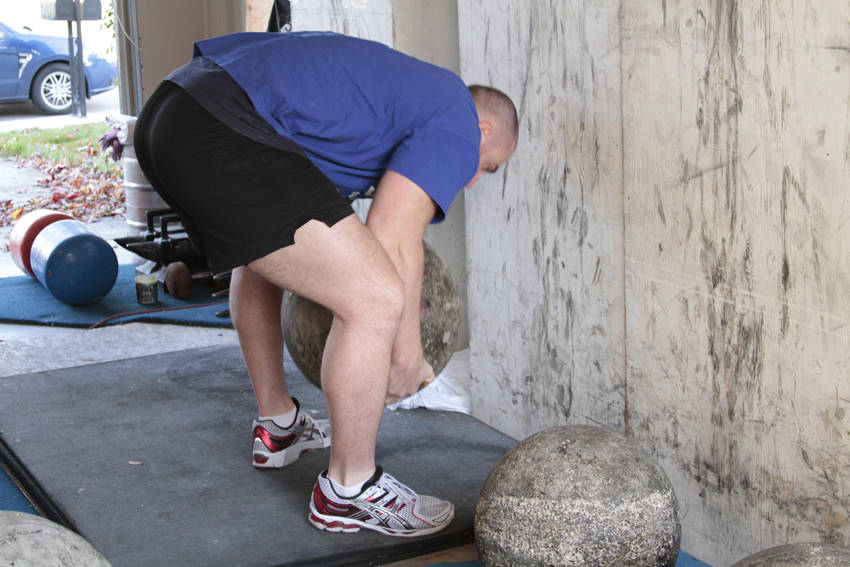
Atlas Stones
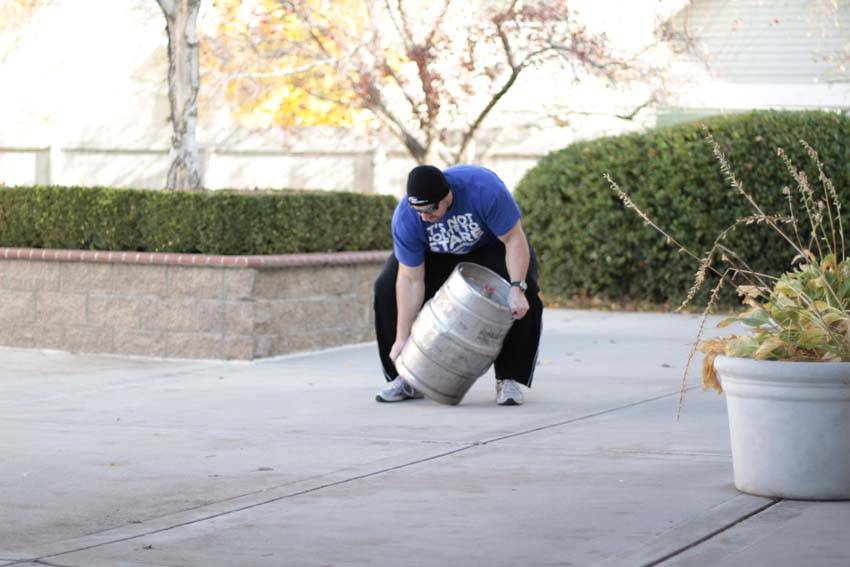
Keg Load
Head-to-Head Comparison
| Attribute | Atlas Stones | Keg Load |
|---|---|---|
| Target Muscle |
Lower-back
|
Lower-back
|
| Body Part |
Back
|
Back
|
| Equipment |
Other
|
Other
|
| Difficulty |
Advanced
|
Advanced
|
| Movement Type |
Compound
|
Compound
|
| Secondary Muscles |
10
|
10
|
Secondary Muscles Activated
Atlas Stones
Keg Load
Visual Comparison
Overview
Atlas Stones vs Keg Load — two of the toughest strongman moves that hammer your lower back and posterior chain. If you train for raw strength, event prep, or heavy-duty hypertrophy, you need to know how these lifts differ in muscle stress, technical demand, and equipment needs. I’ll walk you through primary and secondary muscle activation, step-by-step technique cues, biomechanics like hip angle and force vectors, accessibility, injury risk, and recommended rep ranges so you can choose which to prioritize in your program.
Key Differences
- Both exercises target the Lower-back using Other. The main differences are in their movement patterns and muscle activation angles.
Pros & Cons
Atlas Stones
+ Pros
- Massive posterior-chain overload that drives lower-back and hip strength
- Straightforward progression to very heavy singles for maximal strength
- High middle-back and adductor activation for torso stability
- Event-specific carryover if you compete in strongman
− Cons
- Hard to source stones and platforms for most gyms
- Steeper technical learning curve (grip, lap placement, timing)
- Higher peak compressive and shear forces on the lumbar spine
Keg Load
+ Pros
- More accessible and adjustable—one keg can be filled to many weights
- Easier to learn since the lift splits into press/tilt phases
- Adds shoulder and trap strengthening in addition to posterior chain
- Works well for carries and repeated reps (conditioning + strength)
− Cons
- Can be awkward to secure and may shift fluidly if filled with liquid
- Less direct adductor and mid-back tension compared with stones
- May limit absolute loading compared with very heavy atlas stones
When Each Exercise Wins
Atlas Stones load the posterior chain continuously through the lift and transition, increasing time under tension for erectors, glutes, hamstrings and adductors. Use moderate sets of 6–12 reps or controlled heavy singles with repeated eccentric control to stimulate muscle growth.
Atlas Stones allow larger absolute loads and heavy singles that target maximal force production and neural adaptation. The long moment arms at the hips and spine create high torque demands ideal for improving raw strength with 1–5 rep ranges.
Keg Load breaks down into familiar movement patterns (lift, tilt, place) and can be scaled easily by changing fill, making it faster to learn safe mechanics. Start with submaximal loads and 3–5 sets of 3–6 reps to build technical consistency.
A single adjustable keg is easier to store and cheaper to source than a stone set and platform, and you can use water or sand for incremental loading. Kegs also let you combine carries, tilts, and presses in compact spaces.
Frequently Asked Questions
Can I do both Atlas Stones and Keg Load in the same workout?
Yes — sequence them intelligently: perform the heavier, more technical lift first (usually Atlas Stones for low-rep strength), then use Keg Load for conditioning, volume, or shoulder/placement practice. Keep total heavy spinal loading to a few sets to avoid cumulative fatigue and protect the lumbar spine.
Which exercise is better for beginners?
Keg Load is better for beginners because it separates into simpler phases and can be scaled by filling the keg. Beginners should start with submaximal weights, focus on hip-hinge mechanics, and progress to heavier loads as technique improves.
How do the muscle activation patterns differ?
Atlas Stones produce continuous posterior-chain activation with a large hip-moment and thoracic extension phase, increasing erector and adductor demand. Keg Load shifts force vectors between hip drive and shoulder/press patterns, recruiting more anterior deltoid and trap activity during the tilt and placement.
Can Keg Load replace Atlas Stones?
Keg Load can substitute for Atlas Stones for most strength and conditioning goals, especially if you lack stones, but it won’t perfectly replicate the adductor and mid-back challenge of a stone wrap. If you need maximum transfer to stone events or highest posterior-chain overload, keep stones in your program.
Expert Verdict
Choose Atlas Stones when your priority is heavy posterior-chain overload, event specificity, or maximal strength—stones force coordinated hip extension, thoracic extension, and adductor engagement that builds resilient lower-back strength. Program stones for heavy singles (1–5) and targeted hypertrophy sets (6–12) once you’ve established technique. Choose Keg Load when you need an accessible, versatile tool for building strength plus shoulder stability, conditioning, and carry work; kegs scale easily with fills and are faster to learn. If you must pick one for a general program, use kegs for early-stage strength and conditioning and add stones once you want maximal loading and event transfer.
Also Compare
More comparisons with Atlas Stones
Compare More Exercises
Use our free comparison tool to analyze any two exercises head-to-head.
Compare Exercises