

Axle Deadlift vs Hug Knees To Chest: Complete Comparison Guide
Axle Deadlift vs Hug Knees To Chest — a direct look at two very different ways to train your lower-back. You’ll get clear comparisons of muscle activation, equipment needs, difficulty, and how each fits into a program. I’ll cover biomechanics (hip hinge vs spinal flexion), practical technique cues, rep ranges (4–6 for maximal strength, 6–12 for hypertrophy, 10–20 for bodyweight conditioning), and when to use each move based on your goals and training age. Read on to decide which exercise belongs in your routine and how to implement it safely.
Exercise Comparison
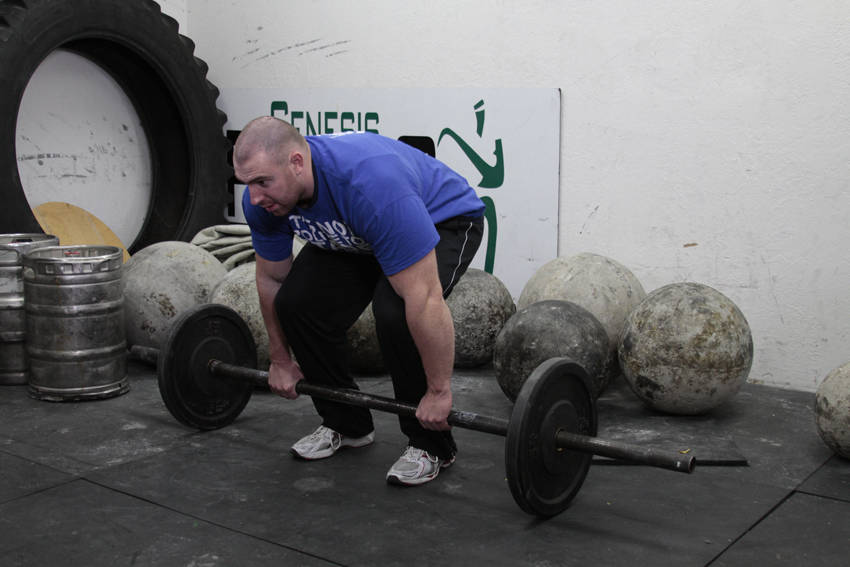
Axle Deadlift
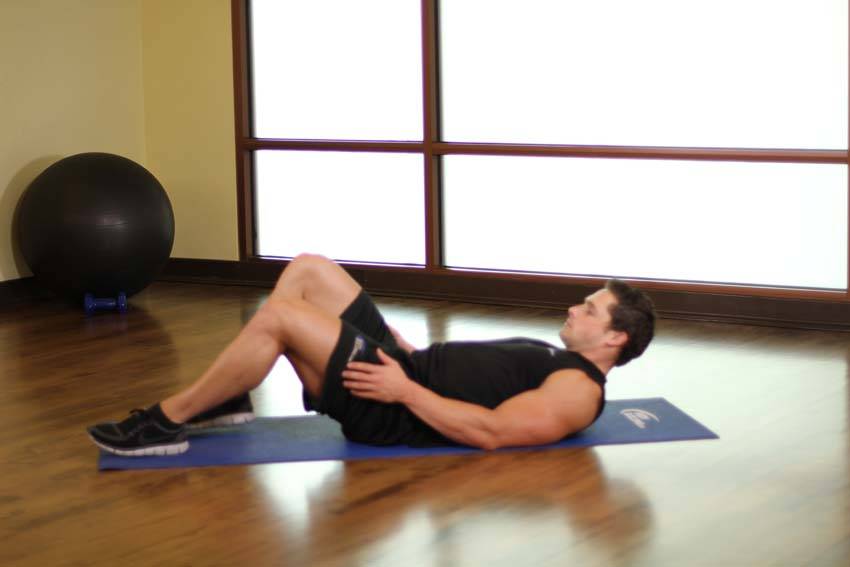
Hug Knees To Chest
Head-to-Head Comparison
| Attribute | Axle Deadlift | Hug Knees To Chest |
|---|---|---|
| Target Muscle |
Lower-back
|
Lower-back
|
| Body Part |
Back
|
Back
|
| Equipment |
Other
|
Body-weight
|
| Difficulty |
Advanced
|
Beginner
|
| Movement Type |
Compound
|
Isolation
|
| Secondary Muscles |
6
|
1
|
Secondary Muscles Activated
Axle Deadlift
Hug Knees To Chest
Visual Comparison
Overview
Axle Deadlift vs Hug Knees To Chest — a direct look at two very different ways to train your lower-back. You’ll get clear comparisons of muscle activation, equipment needs, difficulty, and how each fits into a program. I’ll cover biomechanics (hip hinge vs spinal flexion), practical technique cues, rep ranges (4–6 for maximal strength, 6–12 for hypertrophy, 10–20 for bodyweight conditioning), and when to use each move based on your goals and training age. Read on to decide which exercise belongs in your routine and how to implement it safely.
Key Differences
- Equipment differs: Axle Deadlift uses Other, while Hug Knees To Chest requires Body-weight.
- Axle Deadlift is a compound movement, while Hug Knees To Chest is an isolation exercise.
- Difficulty levels differ: Axle Deadlift is advanced, while Hug Knees To Chest is beginner.
Pros & Cons
Axle Deadlift
+ Pros
- Produces high mechanical tension across the posterior chain for strength and hypertrophy
- Develops full-body force transfer—hips, hamstrings, quads, mid-back and grip
- Easy to quantify and progress with load (percentages, RM targets)
- Improves functional posterior chain strength for lifts and carries
− Cons
- Requires specialized equipment and heavy plates
- Higher spinal loading—greater risk if technique or bracing are poor
- Advanced motor pattern; steep learning curve for novices
Hug Knees To Chest
+ Pros
- No equipment and extremely beginner-friendly
- Good for lumbar mobility, control, and short-range lower-back engagement
- Low systemic fatigue—useful as a warm-up or active recovery
- Safe option for bodyweight training or rehabilitation programs
− Cons
- Limited ability to provide progressive overload for strength
- Minimal recruitment of hamstrings, quads, traps and forearms
- Repeated spinal flexion can irritate disc pathology if used excessively
When Each Exercise Wins
The Axle Deadlift allows heavy external loading and longer muscle length under tension, which produces greater mechanical tension across erectors and posterior chain—use 6–12 reps and 3–4 working sets to maximize hypertrophy.
Axle Deadlift supports progressive overload with 1–5RM phases and specific percentage-based programming. The multi-joint hip hinge pattern transfers to overall posterior chain strength far better than a bodyweight isolation move.
Hug Knees To Chest teaches lumbar control and places minimal technical demand on the hip hinge, making it safer for novices while they develop core stability and learn proper bracing before moving to heavy lifts.
Requires zero equipment and little space, so it’s ideal for home sessions. Use it for mobility, core control, or as part of a bodyweight conditioning circuit.
Frequently Asked Questions
Can I do both Axle Deadlift and Hug Knees To Chest in the same workout?
Yes — sequence matters. Do heavy Axle Deadlifts early when you’re fresh (3–5 sets at strength or hypertrophy rep ranges), then use Hug Knees To Chest later for mobility, lumbar control, or low-load finishers. Avoid heavy repeated spinal flexion immediately before maximal deadlift sets.
Which exercise is better for beginners?
Hug Knees To Chest is better initially because it requires minimal technique and builds lumbar awareness. Beginners should also practice hip-hinge progressions (kettlebell deadlifts, Romanian deadlifts) before advancing to heavy Axle Deadlifts.
How do the muscle activation patterns differ?
Axle Deadlift produces high isometric and eccentric erector activity across a long muscle length while combining hip extension and knee extension forces, creating vertical axial loading. Hug Knees To Chest shortens the lumbar muscles via spinal flexion and emphasizes end-range compression and control rather than heavy tensile loading.
Can Hug Knees To Chest replace Axle Deadlift?
No for strength or hypertrophy goals: Hug Knees cannot match the mechanical tension and systemic stimulus of heavy Axle Deadlifts. It can, however, supplement programming for mobility, rehabilitation, or as a low-load accessory to improve lumbar control.
Expert Verdict
Use the Axle Deadlift when you want measurable strength or muscle growth in the posterior chain: program it with 3–5 sets of 3–6 reps for maximal strength or 3–4 sets of 6–12 reps for hypertrophy, and prioritize bracing, neutral spine, and progressive loading. Choose Hug Knees To Chest when you need accessible lumbar isolation, mobility work, or a low-load option for beginners and recovery days—2–3 sets of 10–20 reps or 20–60 second holds. Combine them smartly: teach core control and mobility with Hug Knees, then build load and force transfer with Axle Deadlifts as your technique and resilience improve.
Also Compare
More comparisons with Axle Deadlift
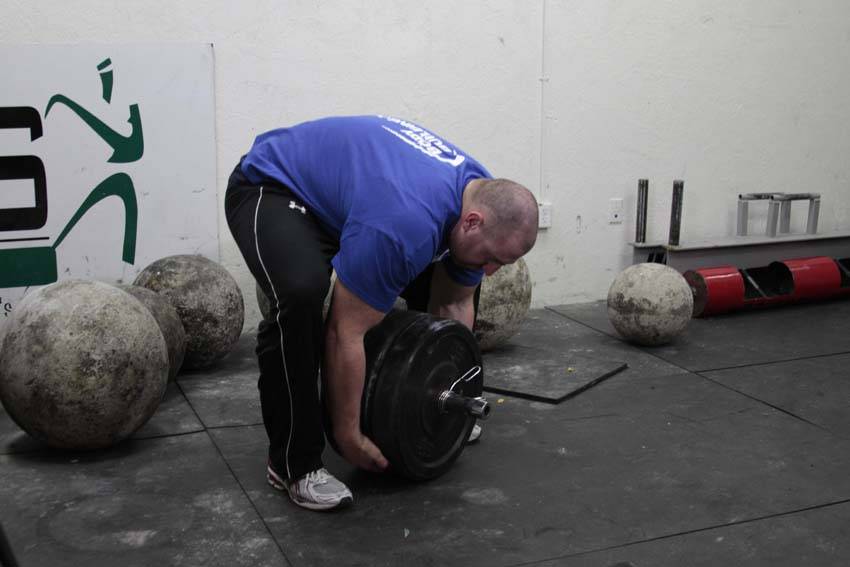
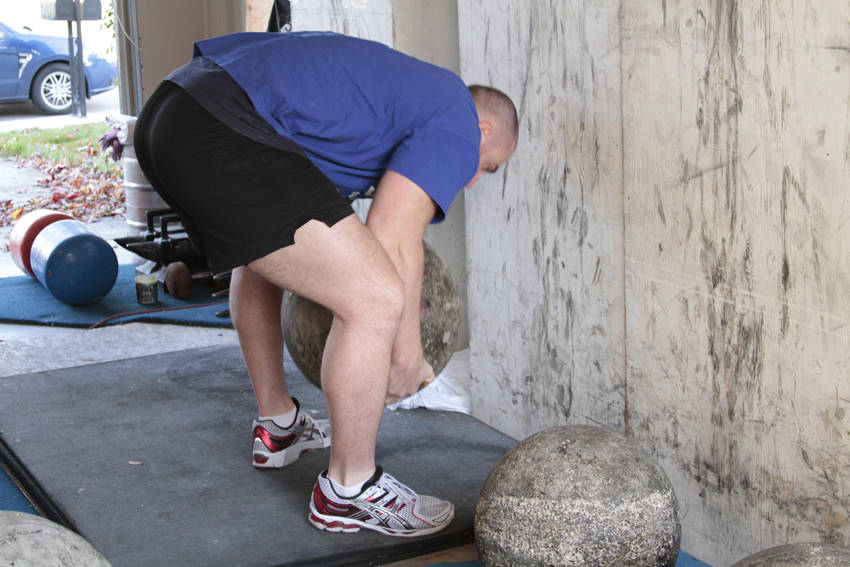
Compare More Exercises
Use our free comparison tool to analyze any two exercises head-to-head.
Compare Exercises