

Back Pec Stretch vs Bench Pull-ups: Complete Comparison Guide
Back Pec Stretch vs Bench Pull-ups — you’re choosing between a beginner isolation stretch that lengthens the lat and a compound pulling move that builds pulling strength. This guide breaks down mechanics, muscle activation, equipment needs, learning curves, and injury risk so you can pick the right tool for flexibility, muscle growth, or strength. You’ll get clear technique cues (scapular retraction, humeral adduction, elbow angle ~90°), rep ranges for hypertrophy (6–12) and strength (3–6), and specific progressions and regressions. Read on to see which exercise fits your current level and goals.
Exercise Comparison
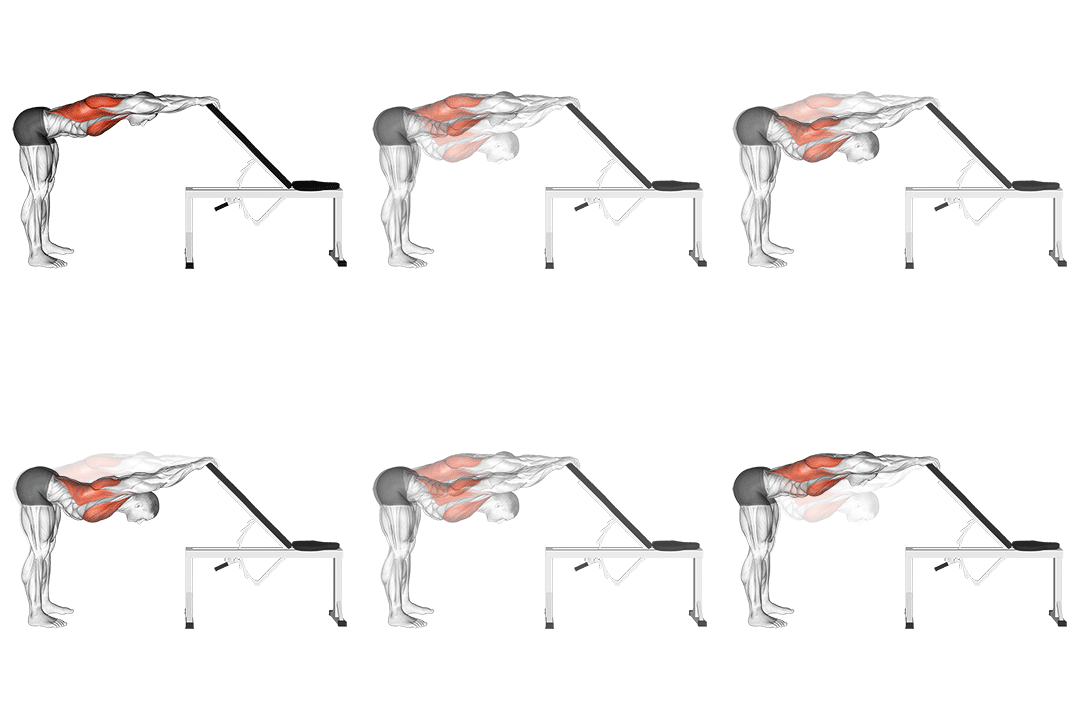
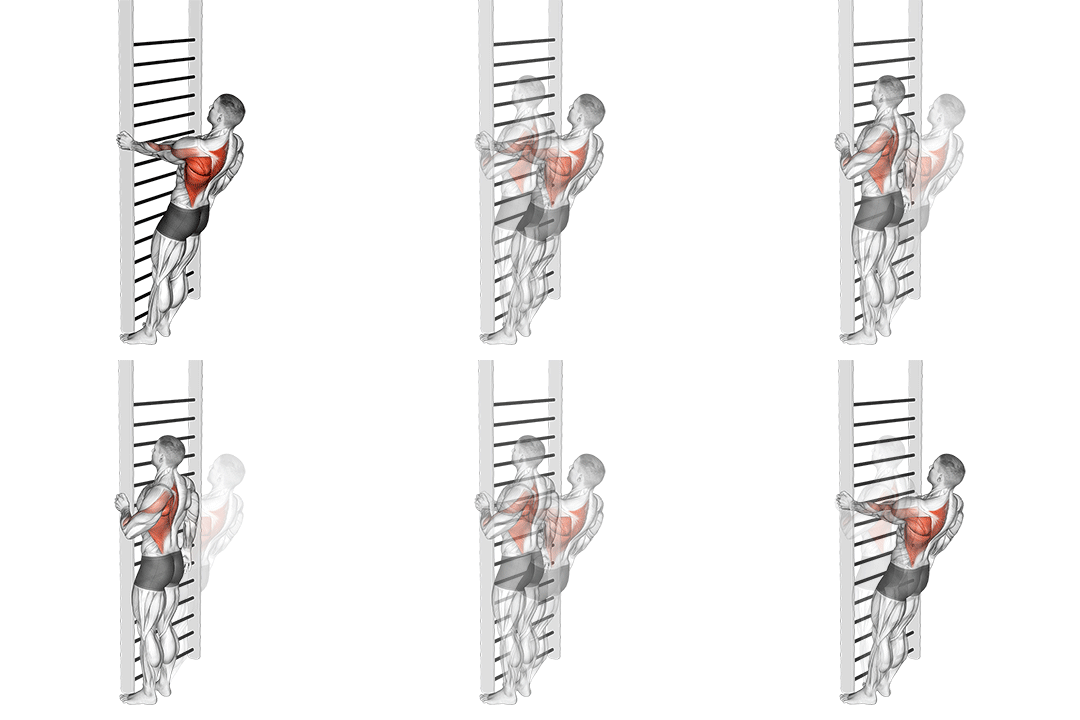
Back Pec Stretch
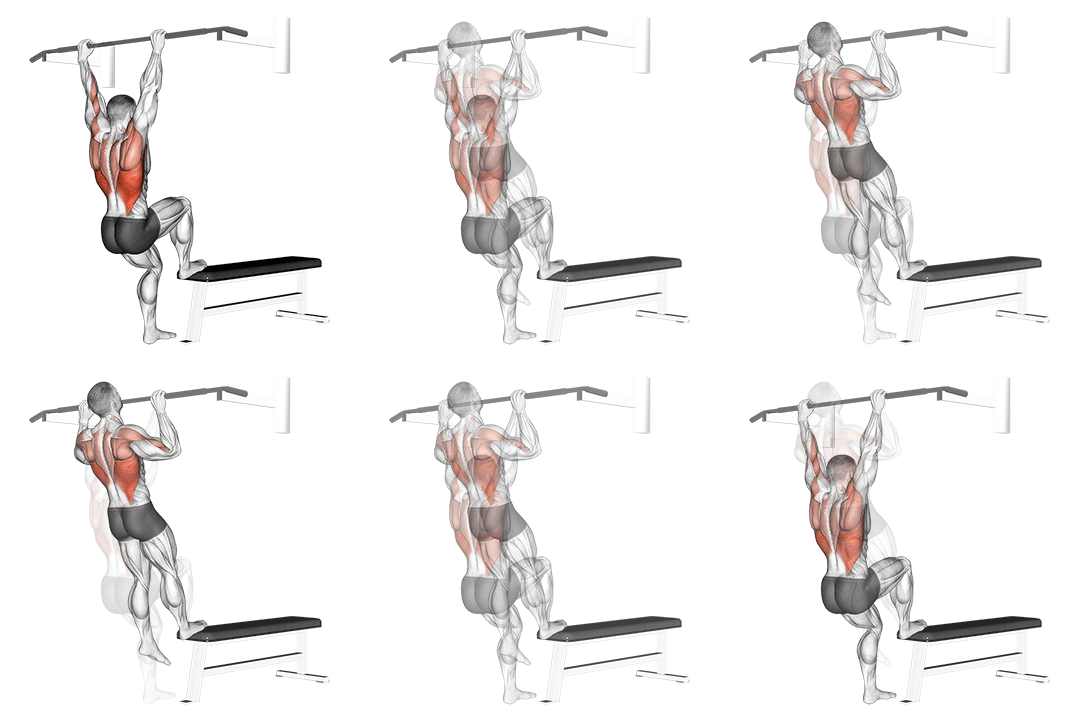
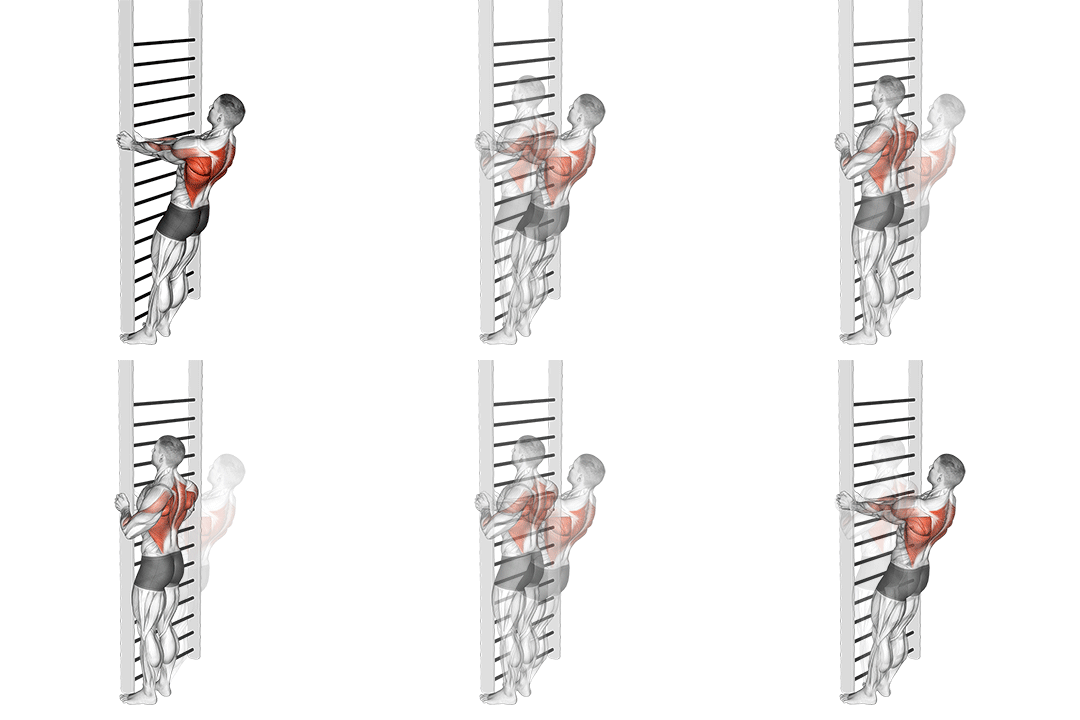
Bench Pull-ups
Head-to-Head Comparison
| Attribute | Back Pec Stretch | Bench Pull-ups |
|---|---|---|
| Target Muscle |
Lats
|
Lats
|
| Body Part |
Back
|
Back
|
| Equipment |
Body-weight
|
Body-weight
|
| Difficulty |
Beginner
|
Intermediate
|
| Movement Type |
Isolation
|
Compound
|
| Secondary Muscles |
2
|
2
|
Secondary Muscles Activated
Back Pec Stretch
Bench Pull-ups
Visual Comparison
Overview
Back Pec Stretch vs Bench Pull-ups — you’re choosing between a beginner isolation stretch that lengthens the lat and a compound pulling move that builds pulling strength. This guide breaks down mechanics, muscle activation, equipment needs, learning curves, and injury risk so you can pick the right tool for flexibility, muscle growth, or strength. You’ll get clear technique cues (scapular retraction, humeral adduction, elbow angle ~90°), rep ranges for hypertrophy (6–12) and strength (3–6), and specific progressions and regressions. Read on to see which exercise fits your current level and goals.
Key Differences
- Back Pec Stretch is an isolation exercise, while Bench Pull-ups is a compound movement.
- Difficulty levels differ: Back Pec Stretch is beginner, while Bench Pull-ups is intermediate.
- Both exercises target the Lats using Body-weight. The main differences are in their movement patterns and muscle activation angles.
Pros & Cons
Back Pec Stretch
+ Pros
- Low equipment requirement—do it anywhere
- Improves lat and thoracic length-tension and shoulder mobility
- Beginner friendly with low concentric load
- Excellent as a warm-up, cooldown, or corrective exercise
− Cons
- Limited stimulus for hypertrophy or strength
- Can overstretch the anterior shoulder if performed without control
- Few clear progressive overload options compared to compound pulls
Bench Pull-ups
+ Pros
- High mechanical tension for lat strengthening and muscle growth
- Significant biceps and forearm recruitment builds pulling capacity
- Many progression options (angle, load, tempo)
- Trains concentric and eccentric control, improving functional pulling
− Cons
- Requires more setup and baseline strength
- Higher risk of shoulder or elbow strain if scapular mechanics are poor
- Technique demands (scapular retraction/depression) can slow early progress
When Each Exercise Wins
Bench Pull-ups produce higher mechanical tension and repeated concentric/eccentric loading—key drivers of muscle growth. Use sets of 6–12 reps with controlled 2–3 second eccentrics and progressive overload to maximize lat hypertrophy.
Bench Pull-ups allow you to overload via body angle adjustments, added weight, and lower rep ranges (3–6) to build maximal pulling strength. Their concentric/ eccentric cycles and force vectors better translate to vertical pulling strength.
Back Pec Stretch is simpler to learn, requires minimal strength, and teaches thoracic mobility and lat lengthening without heavy loading. It’s a safe starting point for improving shoulder range and preparing the tissues for loading later.
Back Pec Stretch needs virtually no equipment and fits small spaces, making it ideal for home or recovery sessions. While you can set up inverted rows under a table for Bench Pull-ups, Back Pec Stretch is faster and more accessible for consistent practice.
Frequently Asked Questions
Can I do both Back Pec Stretch and Bench Pull-ups in the same workout?
Yes. Use Back Pec Stretch as a warm-up or mobility primer to increase lat length and thoracic extension (2 × 30–60 seconds), then follow with Bench Pull-ups for strength or hypertrophy work. The stretch prepares tissues and improves range without fatiguing the pulling muscles if you keep holds controlled.
Which exercise is better for beginners?
Back Pec Stretch is better for absolute beginners because it requires minimal strength and teaches shoulder-thoracic mobility. Once you build basic scapular control and pulling strength, introduce regressions of Bench Pull-ups (shallow body angle, higher reps) to progress.
How do the muscle activation patterns differ?
Bench Pull-ups create high-lat activation during concentric pulls and notable biceps/forearm activity during elbow flexion, following a concentric–eccentric cycle. Back Pec Stretch places the lats at long muscle lengths with low voluntary concentric force, increasing passive tension and stretch-mediated loading rather than repeated high-force contractions.
Can Bench Pull-ups replace Back Pec Stretch?
Bench Pull-ups can reduce the need for some lat-focused drills, but they don’t replicate the end-range lengthening and mobility benefits of a dedicated Back Pec Stretch. If your priority is tissue mobility and thoracic extension, keep the stretch; if strength and hypertrophy are the focus, prioritize Bench Pull-ups.
Expert Verdict
Use Back Pec Stretch when your goal is mobility, tissue preparation, or low-intensity work—it lengthens the lat and improves thoracic/shoulder range with minimal risk and no equipment. Choose Bench Pull-ups when you want to build lat strength and muscle growth: they provide the concentric and eccentric loading, progressive overload options, and biceps/forearm recruitment needed for measurable progress. Program them together: start a session with Back Pec Stretch as a mobility primer (hold 2 × 30–60 seconds per side), then perform 3–5 sets of Bench Pull-ups in your target rep range (3–6 for strength, 6–12 for hypertrophy). That combination addresses tissue quality and strength development efficiently.
Also Compare
More comparisons with Back Pec Stretch

More comparisons with Bench Pull-ups
Compare More Exercises
Use our free comparison tool to analyze any two exercises head-to-head.
Compare Exercises