

Back Pec Stretch vs Bodyweight Squatting Row: Complete Comparison Guide
Back Pec Stretch vs Bodyweight Squatting Row — you need clear guidance to choose the right lat work for your goals. I’ll break down how each exercise loads the latissimus dorsi, which secondary muscles get involved, the equipment you need, and real progression options. You’ll get specific technique cues (joint angles, rep ranges, and tempo), biomechanics explanations (length–tension relationships, force vectors, and moment arms), and practice-ready recommendations so you can pick the move that fits your mobility, strength level, and training plan.
Exercise Comparison
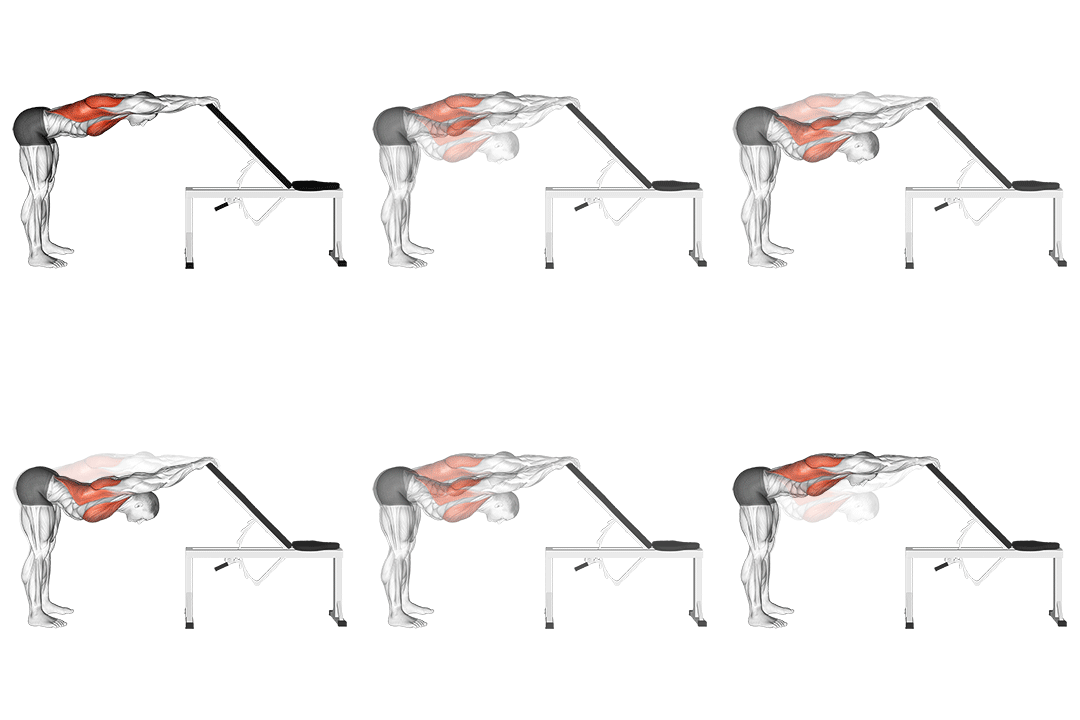
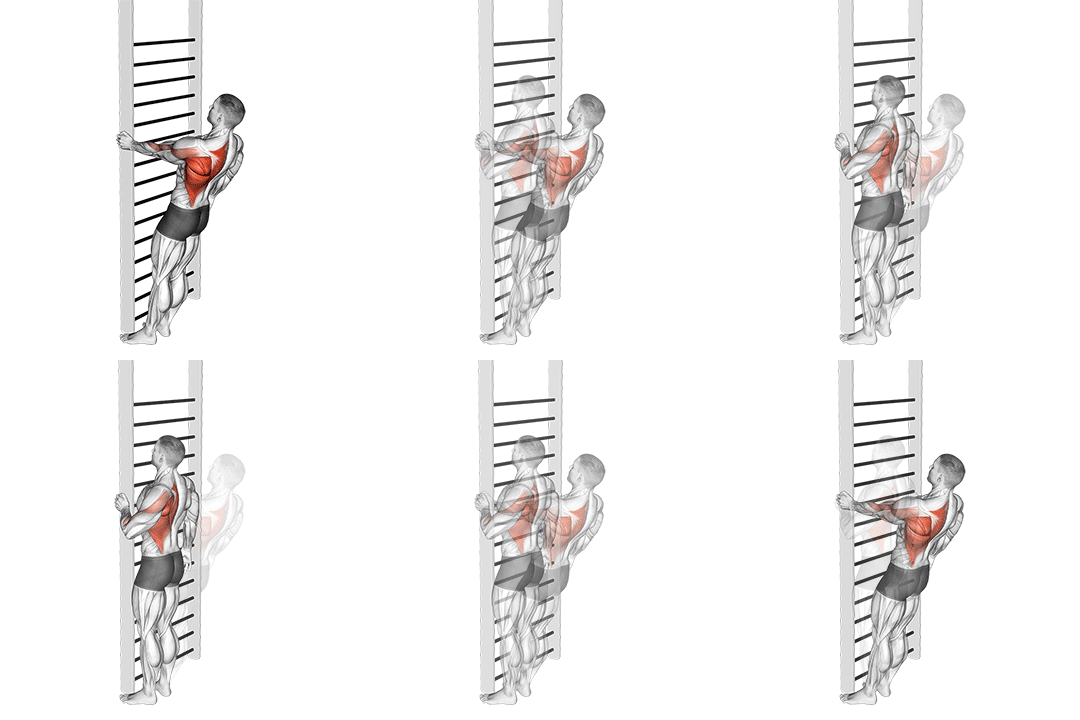
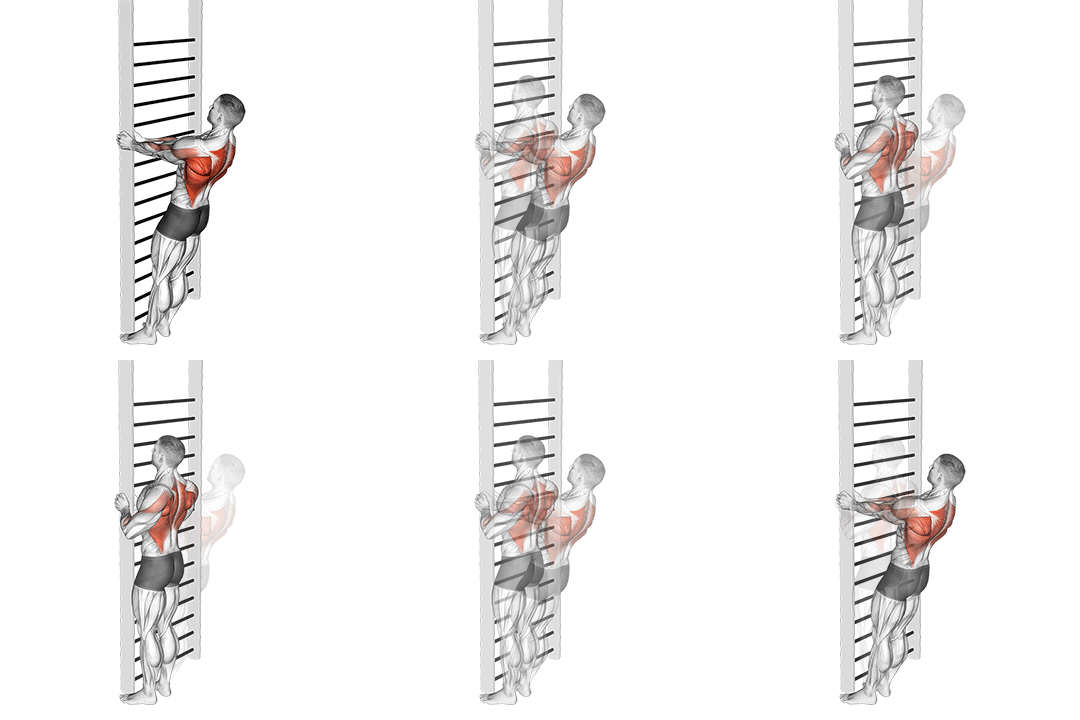
Back Pec Stretch
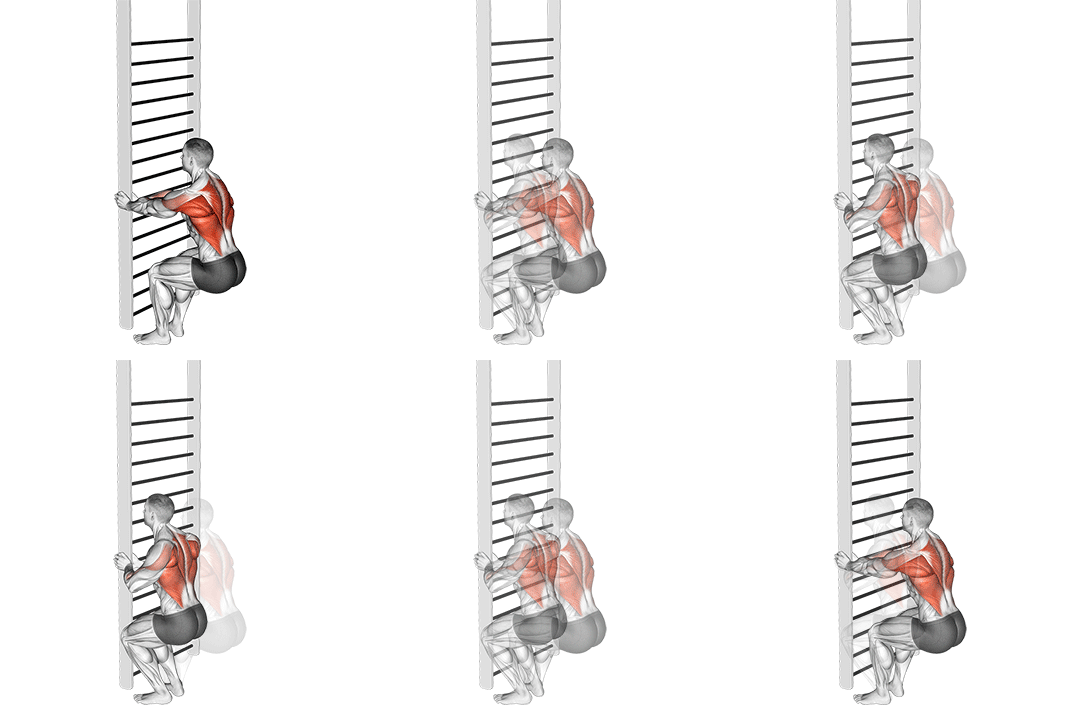
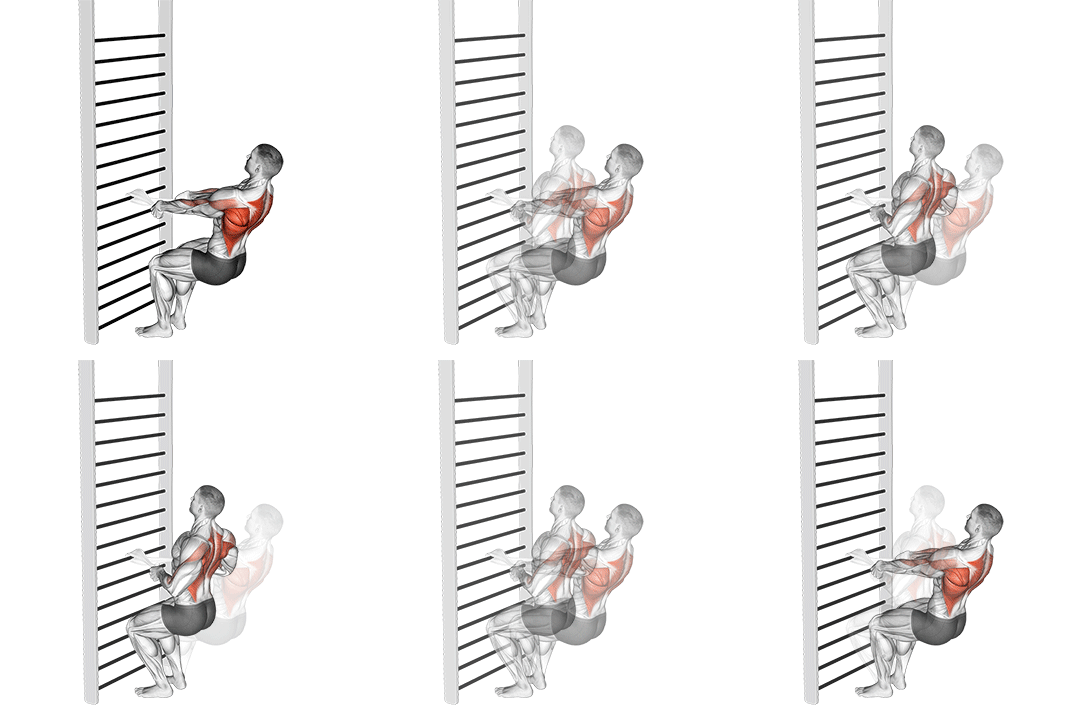
Bodyweight Squatting Row
Head-to-Head Comparison
| Attribute | Back Pec Stretch | Bodyweight Squatting Row |
|---|---|---|
| Target Muscle |
Lats
|
Lats
|
| Body Part |
Back
|
Back
|
| Equipment |
Body-weight
|
Body-weight
|
| Difficulty |
Beginner
|
Beginner
|
| Movement Type |
Isolation
|
Compound
|
| Secondary Muscles |
2
|
2
|
Secondary Muscles Activated
Back Pec Stretch
Bodyweight Squatting Row
Visual Comparison
Overview
Back Pec Stretch vs Bodyweight Squatting Row — you need clear guidance to choose the right lat work for your goals. I’ll break down how each exercise loads the latissimus dorsi, which secondary muscles get involved, the equipment you need, and real progression options. You’ll get specific technique cues (joint angles, rep ranges, and tempo), biomechanics explanations (length–tension relationships, force vectors, and moment arms), and practice-ready recommendations so you can pick the move that fits your mobility, strength level, and training plan.
Key Differences
- Back Pec Stretch is an isolation exercise, while Bodyweight Squatting Row is a compound movement.
- Both exercises target the Lats using Body-weight. The main differences are in their movement patterns and muscle activation angles.
Pros & Cons
Back Pec Stretch
+ Pros
- Zero equipment — usable virtually anywhere
- Improves lat length and shoulder mobility through sustained end-range holds
- Beginner-friendly setup and low technical demand
- Useful as a warm-up, cooldown, or mobility drill to improve overhead mechanics
− Cons
- Limited ability to provide progressive overload for muscle growth
- Primarily passive — lower active lat recruitment compared with rows
- Can overstretch anterior shoulder if done without scapular stability
Bodyweight Squatting Row
+ Pros
- Higher active lat activation for strength and hypertrophy
- Compound pattern recruits biceps and posterior delts for efficient training
- Easy to scale load by changing body angle or using single-arm variations
- Develops scapular control and integrates lower-body stability in squatting position
− Cons
- Requires a sturdy horizontal anchor or suspension trainer
- More technical — needs scapular control and neutral spine to avoid injury
- May overload elbows/shoulders if volume or tempo is unmanaged
When Each Exercise Wins
The squatting row produces active concentric/eccentric lat loading and allows progressive overload (angle changes, single-arm), so it drives hypertrophy better. Aim for 6–12 reps with 2–3 sets and controlled 2 s concentric/3 s eccentric tempo to maximize mechanical tension.
Strength requires force production through full range; the squatting row creates higher peak forces and greater moment arms at the shoulder and elbow. Increase difficulty by lowering the body angle or performing weighted progressions to raise intensity.
Beginners benefit from the low technical demand and mobility emphasis of the Back Pec Stretch to establish shoulder range and lat awareness. It’s easier to perform pain-free holds (20–40 s) before progressing into loaded pulls.
Back Pec Stretch wins for pure accessibility since it needs no rig or bar; you can run it as a warm-up or corrective exercise anywhere. Use the squatting row only if you have a safe anchor or suspension trainer at home.
Frequently Asked Questions
Can I do both Back Pec Stretch and Bodyweight Squatting Row in the same workout?
Yes. Use the Back Pec Stretch as a mobility primer (20–40 s holds) before squatting rows to improve shoulder range and lat length-tension. Follow with 3–4 sets of rows, maintaining a controlled tempo and good scapular mechanics.
Which exercise is better for beginners?
Back Pec Stretch is better initially because it requires minimal coordination and teaches lat length and shoulder positioning. Once you have scapular control and a neutral spine, progress to bodyweight rows for active strength work.
How do the muscle activation patterns differ?
The Back Pec Stretch emphasizes passive lengthening and isometric tension at longer muscle lengths, producing low active EMG but improved mobility. The Bodyweight Squatting Row produces concentric/eccentric contractions with higher peak activation of the lat, biceps, and posterior delts during the pull phase.
Can Bodyweight Squatting Row replace Back Pec Stretch?
Not entirely. The squatting row can strengthen and lengthen the lats through loaded movement, but it won’t provide the same sustained end-range stretch and mobility benefits. Keep the stretch as a supplement for shoulder health and range-of-motion work.
Expert Verdict
Use the Back Pec Stretch when your priority is mobility, scapular range-of-motion, and low-risk lat activation — it’s ideal for warm-ups, recovery days, and beginners working on overhead mechanics. Choose the Bodyweight Squatting Row when you want active lat loading for muscle growth or strength; its horizontal pull and elbow flexion produce higher mechanical tension and scalable progression (adjust body angle, tempo, or switch to single-arm). Pair them: start with 20–40 second Back Pec Stretch holds to prime length-tension, then perform 3–4 sets of 6–12 squatting rows for strength or 8–15 reps for hypertrophy, ensuring scapular retraction and a neutral spine throughout.
Also Compare
More comparisons with Back Pec Stretch
More comparisons with Bodyweight Squatting Row
Compare More Exercises
Use our free comparison tool to analyze any two exercises head-to-head.
Compare Exercises