

Back Pec Stretch vs Bodyweight Squatting Row (with Towel): Complete Comparison Guide
Back Pec Stretch vs Bodyweight Squatting Row (with Towel) — you can use both to work the lats, but they do it very differently. This guide compares muscle activation, biomechanics, equipment needs, difficulty, and when to use each. You’ll get clear technique cues, rep ranges, and actionable progressions so you can choose the right movement for mobility, hypertrophy, or strength work in your program.
Exercise Comparison
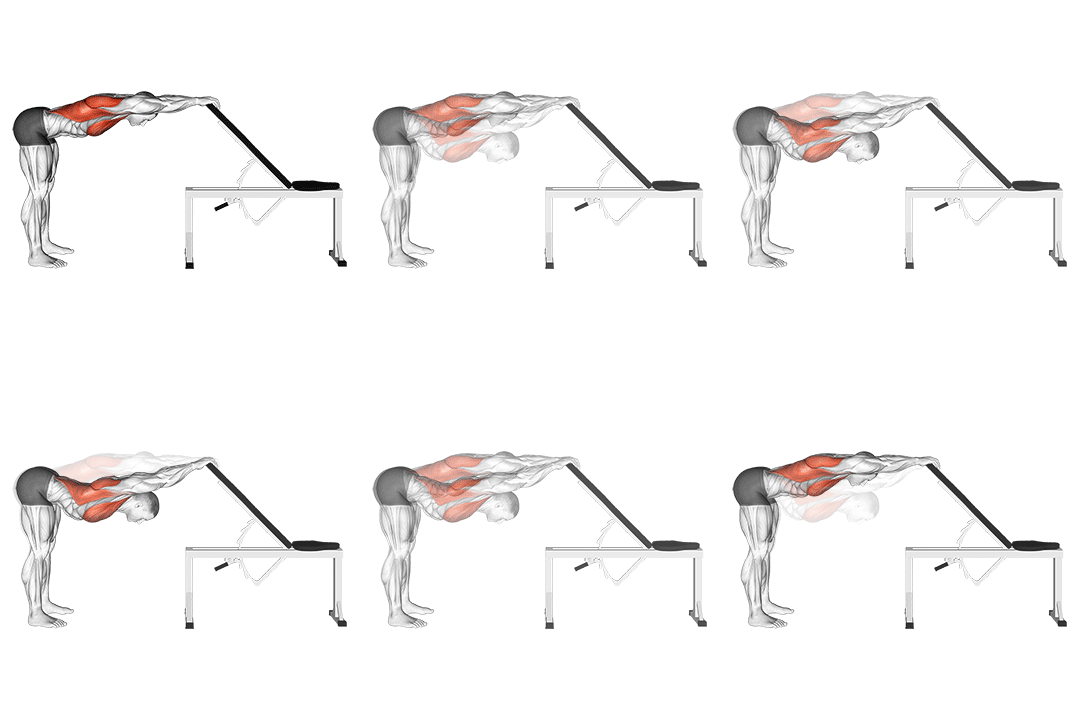
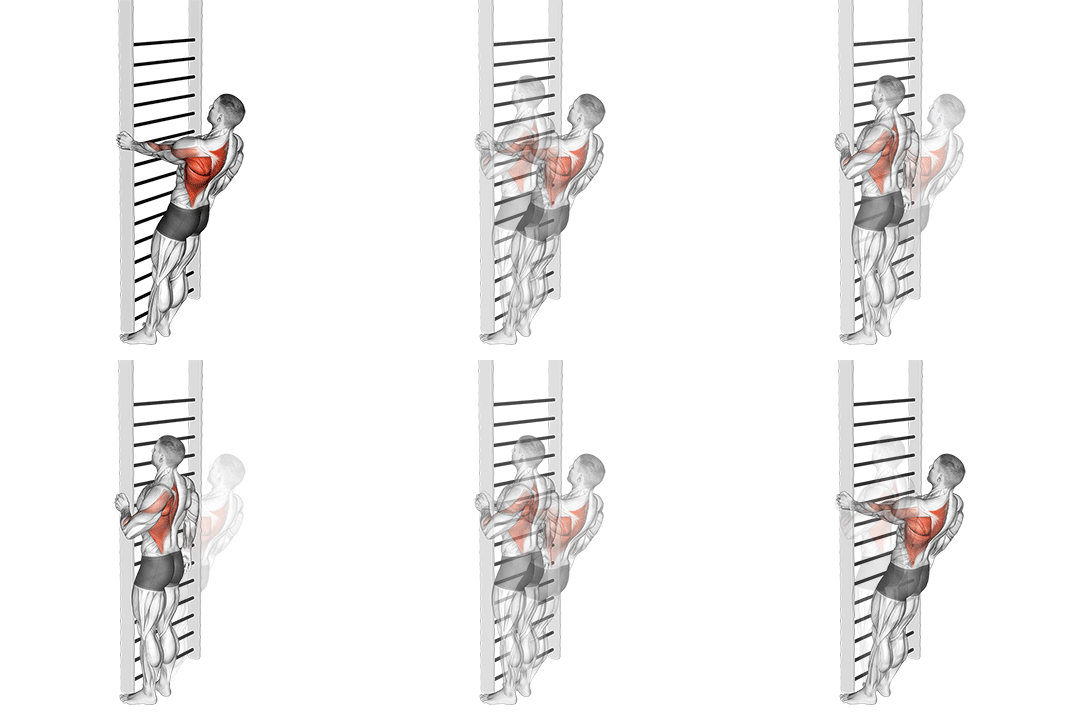
Back Pec Stretch
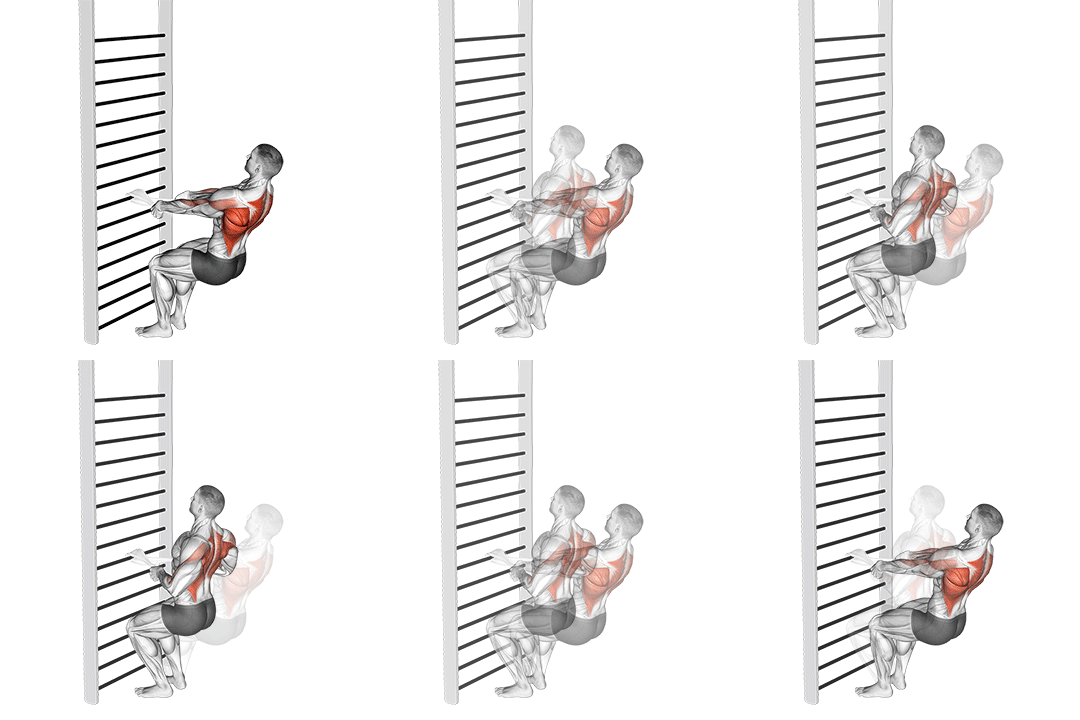
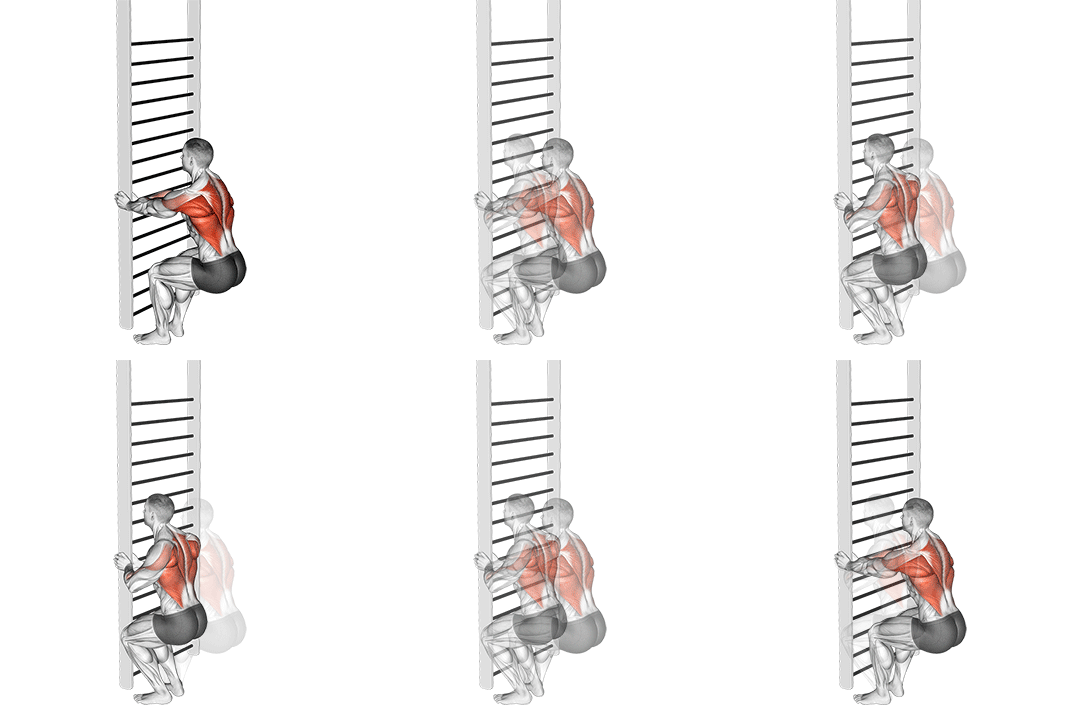
Bodyweight Squatting Row (with Towel)
Head-to-Head Comparison
| Attribute | Back Pec Stretch | Bodyweight Squatting Row (with Towel) |
|---|---|---|
| Target Muscle |
Lats
|
Lats
|
| Body Part |
Back
|
Back
|
| Equipment |
Body-weight
|
Body-weight
|
| Difficulty |
Beginner
|
Intermediate
|
| Movement Type |
Isolation
|
Compound
|
| Secondary Muscles |
2
|
2
|
Secondary Muscles Activated
Back Pec Stretch
Bodyweight Squatting Row (with Towel)
Visual Comparison
Overview
Back Pec Stretch vs Bodyweight Squatting Row (with Towel) — you can use both to work the lats, but they do it very differently. This guide compares muscle activation, biomechanics, equipment needs, difficulty, and when to use each. You’ll get clear technique cues, rep ranges, and actionable progressions so you can choose the right movement for mobility, hypertrophy, or strength work in your program.
Key Differences
- Back Pec Stretch is an isolation exercise, while Bodyweight Squatting Row (with Towel) is a compound movement.
- Difficulty levels differ: Back Pec Stretch is beginner, while Bodyweight Squatting Row (with Towel) is intermediate.
- Both exercises target the Lats using Body-weight. The main differences are in their movement patterns and muscle activation angles.
Pros & Cons
Back Pec Stretch
+ Pros
- Quick lat lengthening and improved shoulder mobility
- No equipment—use anywhere
- Low skill requirement; safe for most beginners
- Good pre- or post-workout for extensibility and scapular control
− Cons
- Limited capacity for building concentric strength or hypertrophy
- Passive emphasis may not translate to higher-force tasks
- Less trusted progression options for long-term overload
Bodyweight Squatting Row (with Towel)
+ Pros
- Active concentric and eccentric loading promotes strength and muscle growth
- Recruits biceps and posterior delts for compound adaptation
- Multiple progression levers: leverage, tempo, reps
- Teaches integrated hip-knee-pull coordination that transfers to many lifts
− Cons
- Requires a secure anchor and a towel/strap
- Higher technical demand—coordination of squat and pull
- Greater injury risk with poor form or weak anchor points
When Each Exercise Wins
The squatting row produces active concentric-eccentric loading and consistent mechanical tension across sets (aim 8–12 reps, 3–4 sets). That repeated length-tension cycling and the added biceps involvement create a stronger hypertrophic stimulus than a passive stretch.
Strength requires producing high force under load and progressive overload. By altering leverage, slowing eccentrics (3–4s), or adding external load, the squatting row increases force output and neural demand more effectively than an isolation stretch.
Beginners benefit from low-skill, low-load movements that teach scapular control and increase lat flexibility. The Back Pec Stretch minimizes joint stress while improving posture and shoulder range before advancing to compound pulls.
For minimal equipment and space the stretch wins: you can perform it anywhere without anchors. If you have a sturdy door anchor and a towel, the squatting row is viable, but the stretch is the simpler home option.
Frequently Asked Questions
Can I do both Back Pec Stretch and Bodyweight Squatting Row (with Towel) in the same workout?
Yes. Perform the Back Pec Stretch as an active mobility primer (1–2 sets of 30–60s) before the squatting rows to improve range of motion, then do 3–4 sets of squatting rows for strength or hypertrophy. The stretch helps ensure safer, fuller reps in the rows.
Which exercise is better for beginners?
Back Pec Stretch is better for absolute beginners because it teaches scapular positioning and lat extensibility with minimal load. Start there, then progress to squatting rows once you can control scapular retraction and maintain a neutral spine in a squat.
How do the muscle activation patterns differ?
The stretch creates passive, high end-range tension in the lats with low concentric demand, while the squatting row produces active concentric and eccentric contractions. The row recruits biceps and posterior delts more due to elbow flexion and a horizontal pull force vector.
Can Bodyweight Squatting Row (with Towel) replace Back Pec Stretch?
Not entirely. The squatting row can improve strength and active range, but it doesn’t replicate the sustained passive lengthening and targeted shoulder mobility you get from the Back Pec Stretch. Keep the stretch for mobility work and use the row for loading.
Expert Verdict
Use the Back Pec Stretch when your goal is mobility, posture correction, or low-load lat lengthening—especially during warm-ups or recovery days. It’s beginner-friendly and requires no gear. Choose the Bodyweight Squatting Row (with Towel) when you want active lat loading, hypertrophy, or strength; focus on controlled scapular retraction, a 30–45° torso angle, and 8–15 reps with slow eccentrics to maximize tension. If you can, pair them: use the stretch to increase range and the squatting row to overload through that new range for best overall development.
Also Compare
More comparisons with Back Pec Stretch
More comparisons with Bodyweight Squatting Row (with Towel)
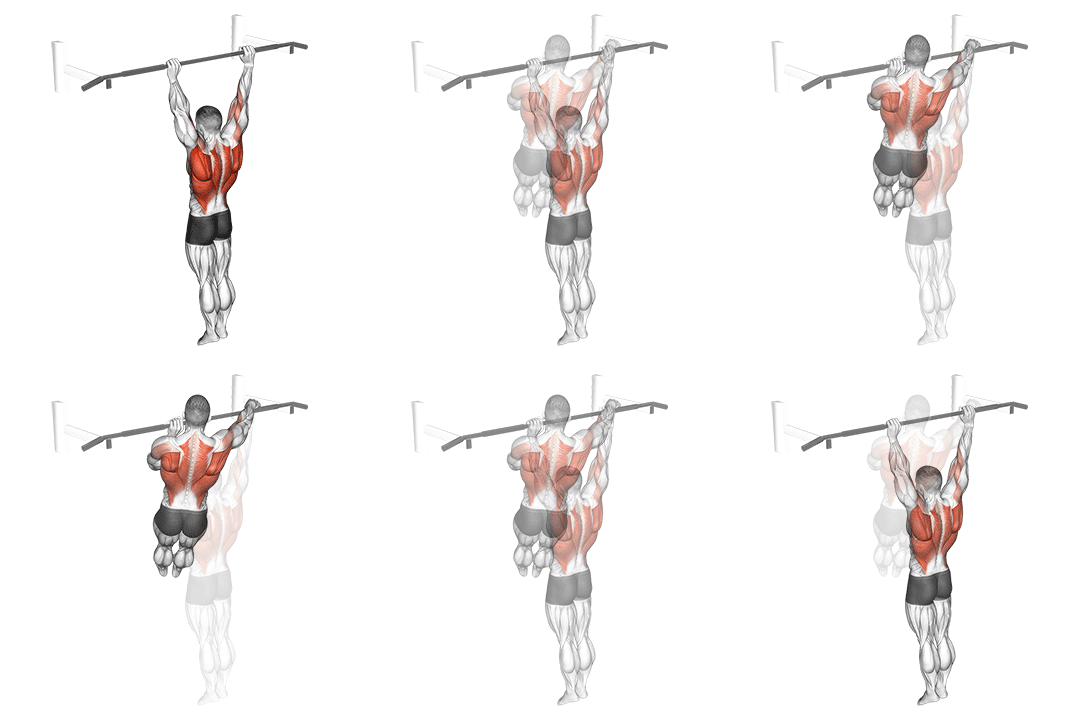
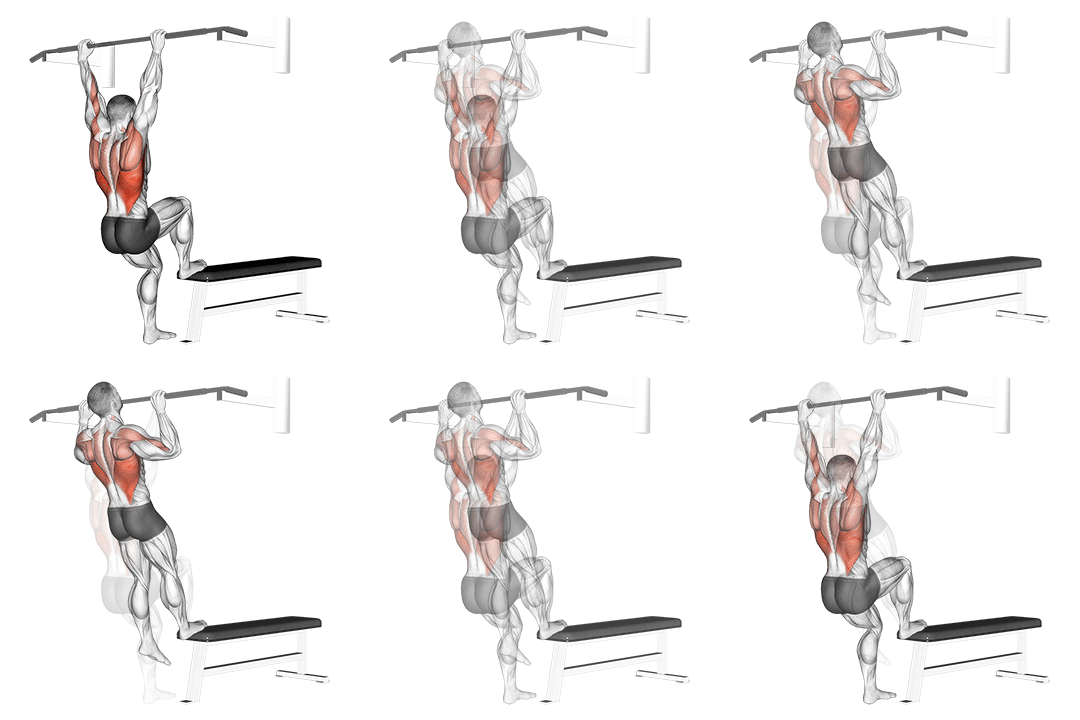
Compare More Exercises
Use our free comparison tool to analyze any two exercises head-to-head.
Compare Exercises