

Back Pec Stretch vs Bodyweight Standing Close-grip One Arm Row: Complete Comparison Guide
Back Pec Stretch vs Bodyweight Standing Close-grip One Arm Row — this head-to-head looks at two bodyweight ways to affect your lats. You’ll get clear technique cues, a breakdown of which muscles each hits, the biomechanics behind the movements (length-tension, force vectors, scapular mechanics), and specific recommendations for reps, hold times, and progressions. I’ll help you decide which to use for stretching, hypertrophy, strength, or simple home-workout utility so you can pick the right movement for your goals.
Exercise Comparison
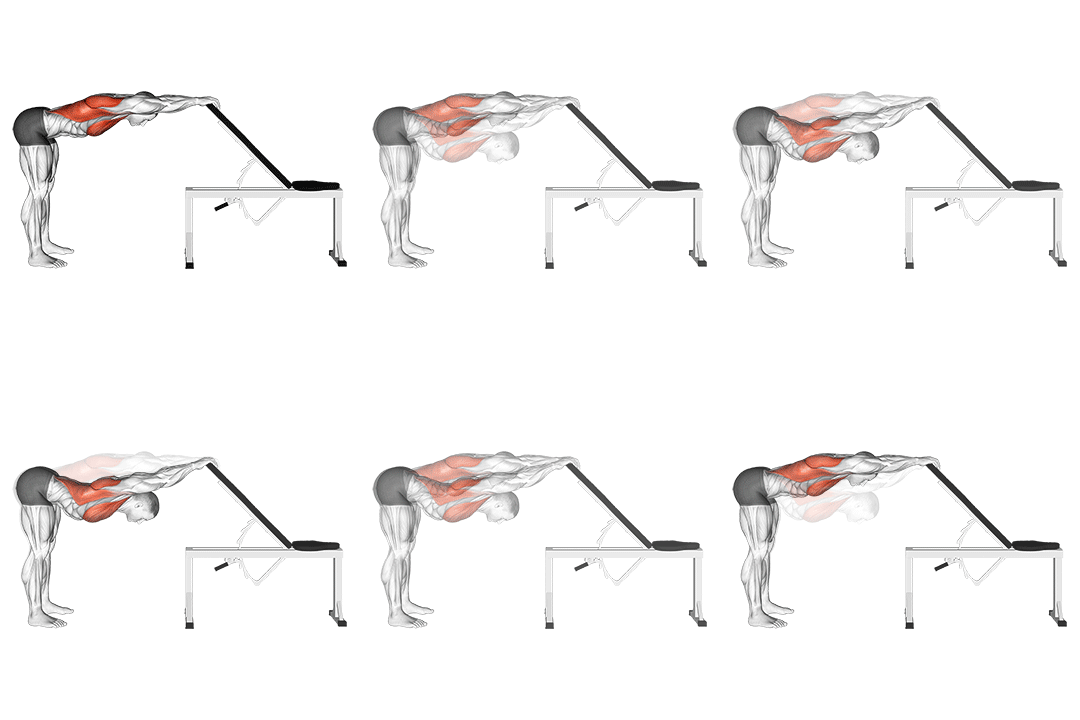
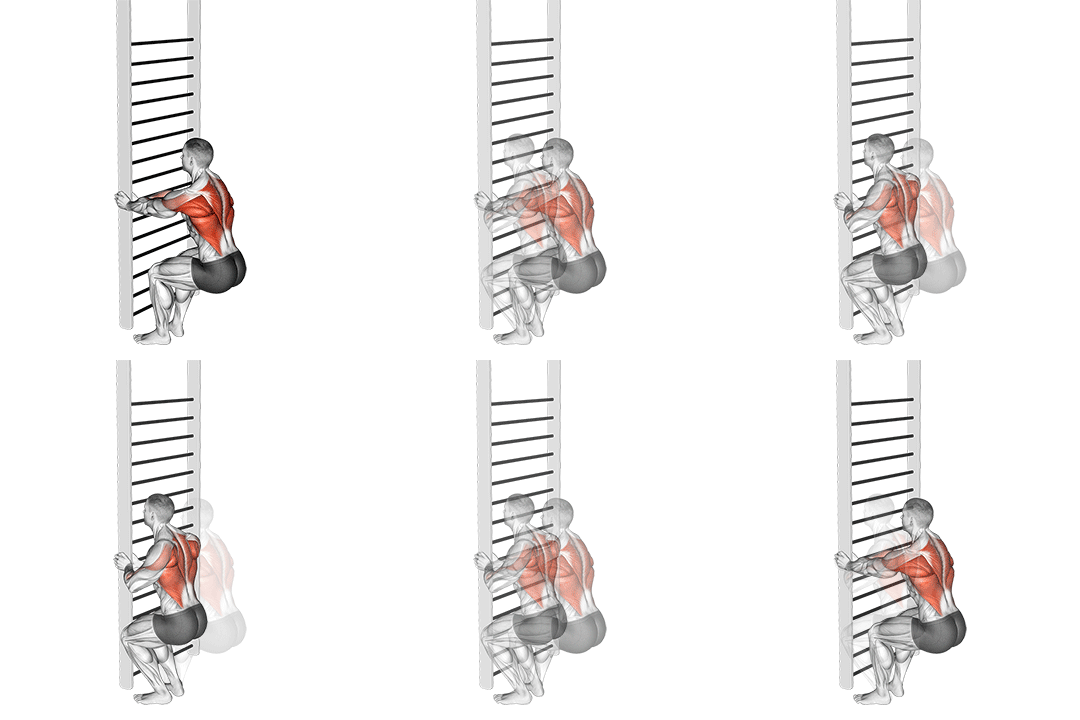
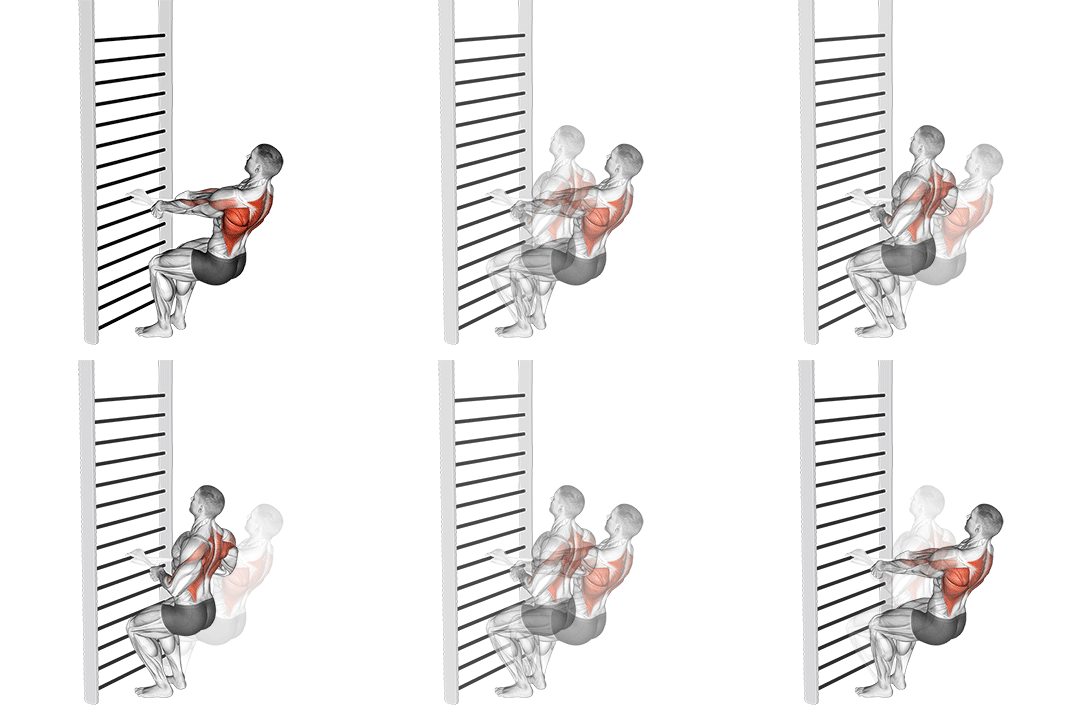
Back Pec Stretch
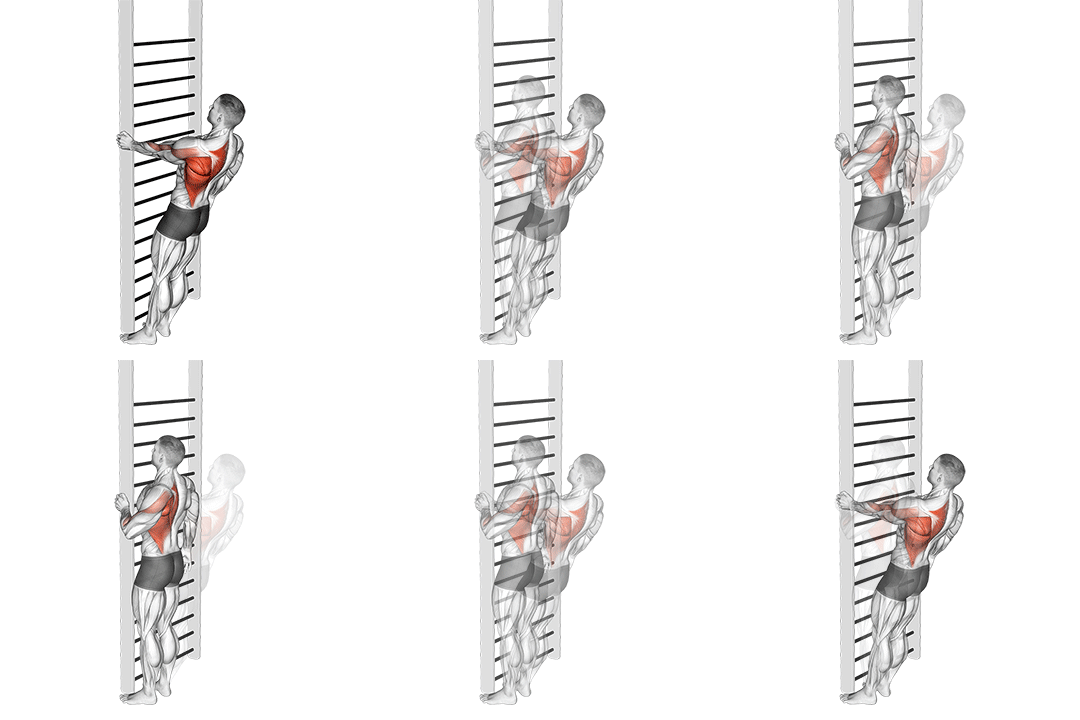
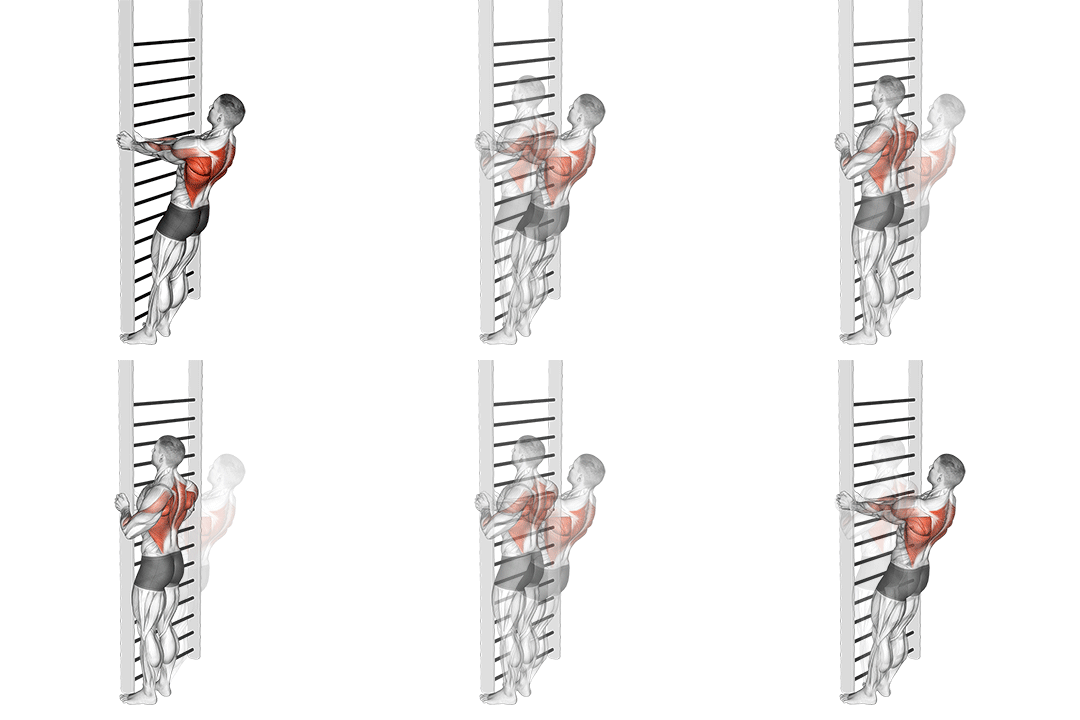
Bodyweight Standing Close-grip One Arm Row
Head-to-Head Comparison
| Attribute | Back Pec Stretch | Bodyweight Standing Close-grip One Arm Row |
|---|---|---|
| Target Muscle |
Lats
|
Lats
|
| Body Part |
Back
|
Back
|
| Equipment |
Body-weight
|
Body-weight
|
| Difficulty |
Beginner
|
Intermediate
|
| Movement Type |
Isolation
|
Compound
|
| Secondary Muscles |
2
|
2
|
Secondary Muscles Activated
Back Pec Stretch
Bodyweight Standing Close-grip One Arm Row
Visual Comparison
Overview
Back Pec Stretch vs Bodyweight Standing Close-grip One Arm Row — this head-to-head looks at two bodyweight ways to affect your lats. You’ll get clear technique cues, a breakdown of which muscles each hits, the biomechanics behind the movements (length-tension, force vectors, scapular mechanics), and specific recommendations for reps, hold times, and progressions. I’ll help you decide which to use for stretching, hypertrophy, strength, or simple home-workout utility so you can pick the right movement for your goals.
Key Differences
- Back Pec Stretch is an isolation exercise, while Bodyweight Standing Close-grip One Arm Row is a compound movement.
- Difficulty levels differ: Back Pec Stretch is beginner, while Bodyweight Standing Close-grip One Arm Row is intermediate.
- Both exercises target the Lats using Body-weight. The main differences are in their movement patterns and muscle activation angles.
Pros & Cons
Back Pec Stretch
+ Pros
- Requires no equipment and minimal space
- Improves lat and anterior shoulder flexibility by placing muscle in long-length tension
- Low-impact; good for tissue preparation and mobility work
- Easy to learn and safe for most fitness levels
− Cons
- Does not provide significant active overload for hypertrophy
- Limited progression options for strength
- Can overstretch the anterior shoulder if done with poor scapular control
Bodyweight Standing Close-grip One Arm Row
+ Pros
- Provides active concentric/eccentric overload to stimulate muscle growth
- Strengthens lats plus biceps and forearms through a functional pulling pattern
- Highly scalable by changing body angle or adding weight
- Improves scapular retraction and unilateral stability
− Cons
- Requires a secure anchor and more setup
- Higher technical demand—needs scapular control and core tension
- Greater acute load increases risk of tendon strain with poor form
When Each Exercise Wins
The row provides active concentric and eccentric loading that drives mechanical tension—key for hypertrophy. You can use 6–15 effective reps, manipulate angle to increase load, and progressively add volume for measurable muscle growth.
Strength requires force production under load; the one-arm row lets you increase external resistance and leverage (lower body angle to add load), which builds neural adaptations and greater contractile force than a static stretch.
Beginners benefit from low technical demand and low-load tissue prep to build range and scapular awareness. The stretch helps improve mobility and reduces risk while you learn basic pulling mechanics.
Because it needs no equipment and little space, the stretch fits most home setups. Use it for warm-ups, mobility circuits, or as a finisher when you lack a reliable anchor for rows.
Frequently Asked Questions
Can I do both Back Pec Stretch and Bodyweight Standing Close-grip One Arm Row in the same workout?
Yes. Use the Back Pec Stretch as a warm-up or between sets to maintain length and reduce stiffness, then perform the one-arm rows as your main work sets. Space them so the stretch doesn’t reduce your ability to produce force—keep warm-up holds to 20–40 seconds and do rows with fresh strength.
Which exercise is better for beginners?
Back Pec Stretch is better for absolute beginners because it’s low-load and teaches scapular awareness and lat lengthening. Once you have basic mobility and control, introduce rows with a supported, less-angled body position to build strength safely.
How do the muscle activation patterns differ?
The row elicits high active EMG in the lats during concentric and eccentric phases, plus strong biceps/forearm activation from elbow flexion. The stretch creates low active EMG but high passive tension at long muscle lengths, influencing fascial mobility and resting length rather than contractile hypertrophy.
Can Bodyweight Standing Close-grip One Arm Row replace Back Pec Stretch?
Not completely. The row can improve strength and some range through loaded movement, but it won’t match the passive long-length tension the Back Pec Stretch provides for mobility. If mobility is your priority, keep the stretch; if strength and hypertrophy are the priority, favor the row.
Expert Verdict
Use the Back Pec Stretch when your goal is mobility, tissue prep, or safe introductory work—hold the stretch 20–60 seconds with controlled breathing and scapular stabilization to improve lat length-tension and chest openness. Choose the Bodyweight Standing Close-grip One Arm Row when you want active overload: perform 3–4 sets of 6–15 reps, focus on a full scapular retraction and controlled 2–3 second eccentrics, and progress by changing angle or adding resistance. For balanced programming, pair them: use the stretch as a warm-up or mobility drill and the row as your primary pulling exercise for strength and muscle growth.
Also Compare
More comparisons with Back Pec Stretch
More comparisons with Bodyweight Standing Close-grip One Arm Row
Compare More Exercises
Use our free comparison tool to analyze any two exercises head-to-head.
Compare Exercises