

Back Pec Stretch vs Bodyweight Standing Close-grip Row: Complete Comparison Guide
Back Pec Stretch vs Bodyweight Standing Close-grip Row — you’re choosing between a mobility-focused lat stretch and a compound lat pull exercise. In this guide you’ll get clear, actionable comparisons so you can pick the right move for your goal: improve lat length and shoulder range of motion, build mechanical tension for muscle growth, or develop pulling strength. I’ll cover muscle activation, biomechanics (length-tension and force vectors), equipment needs, step-by-step technique cues, rep ranges, progression options, and when to use each exercise in your program.
Exercise Comparison
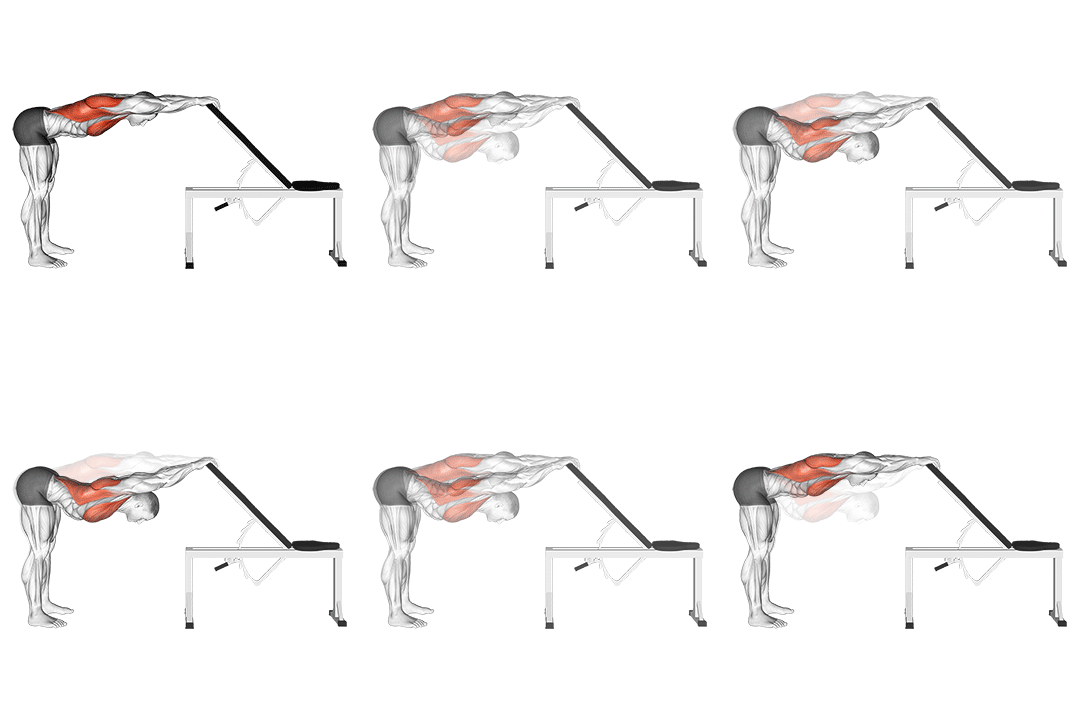
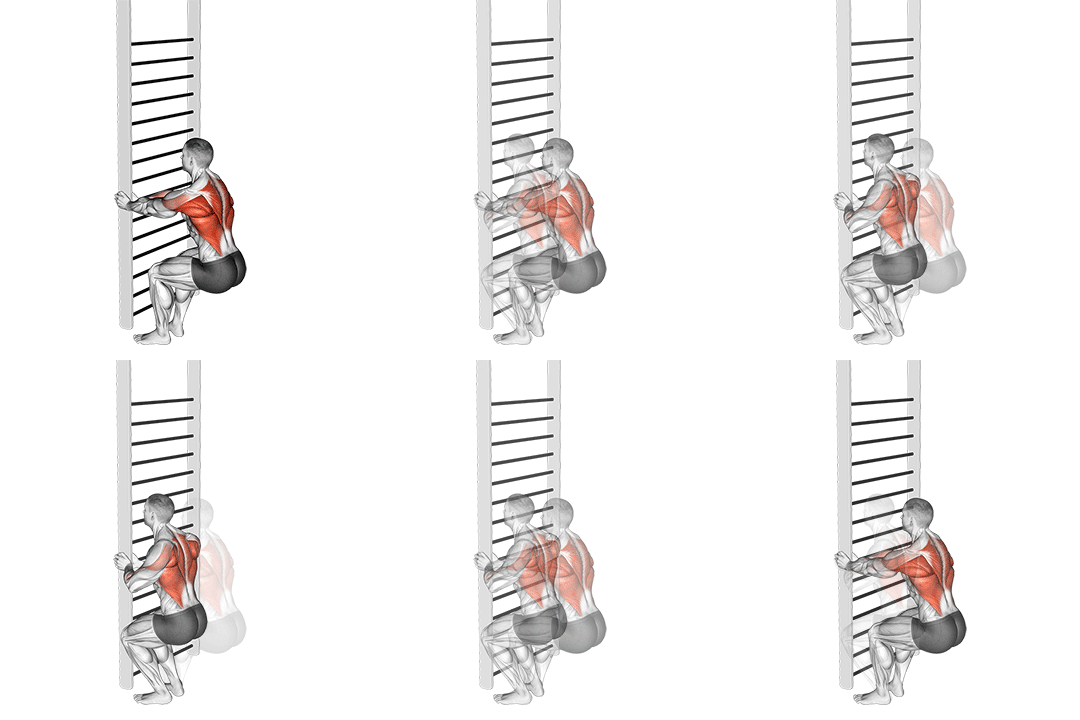
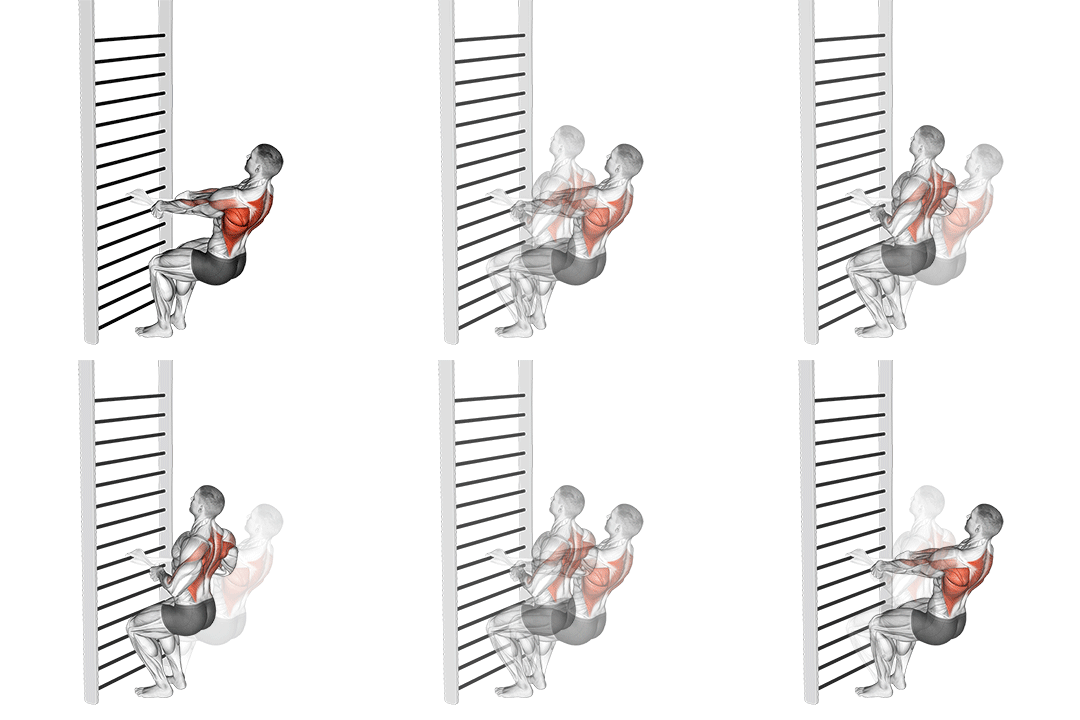
Back Pec Stretch
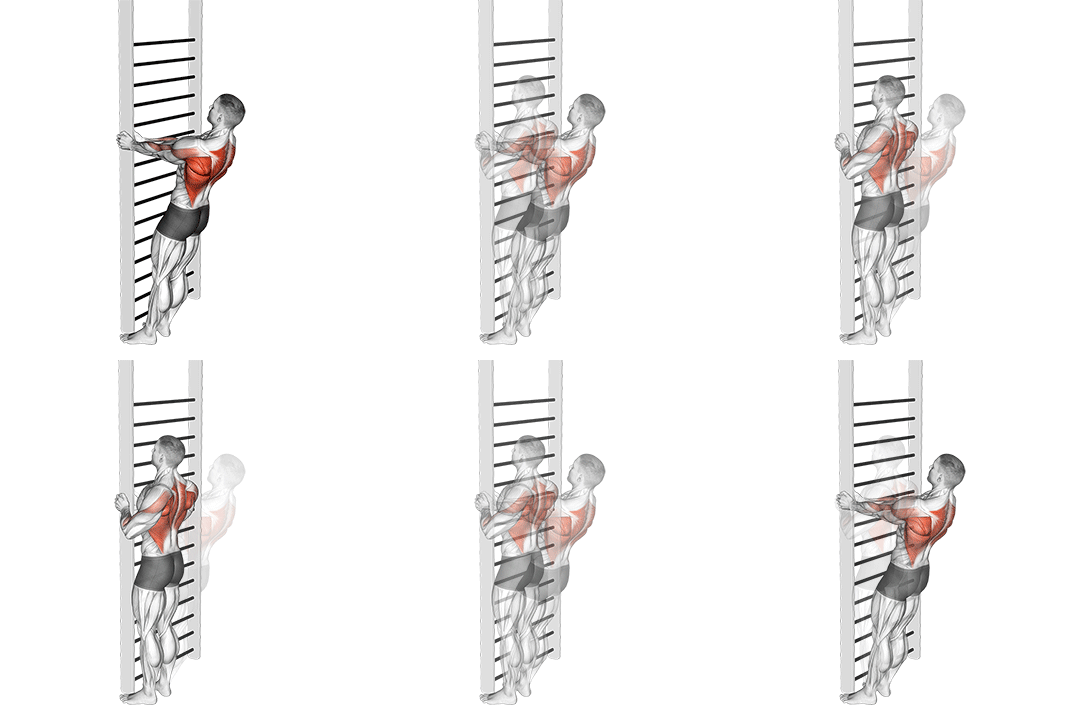
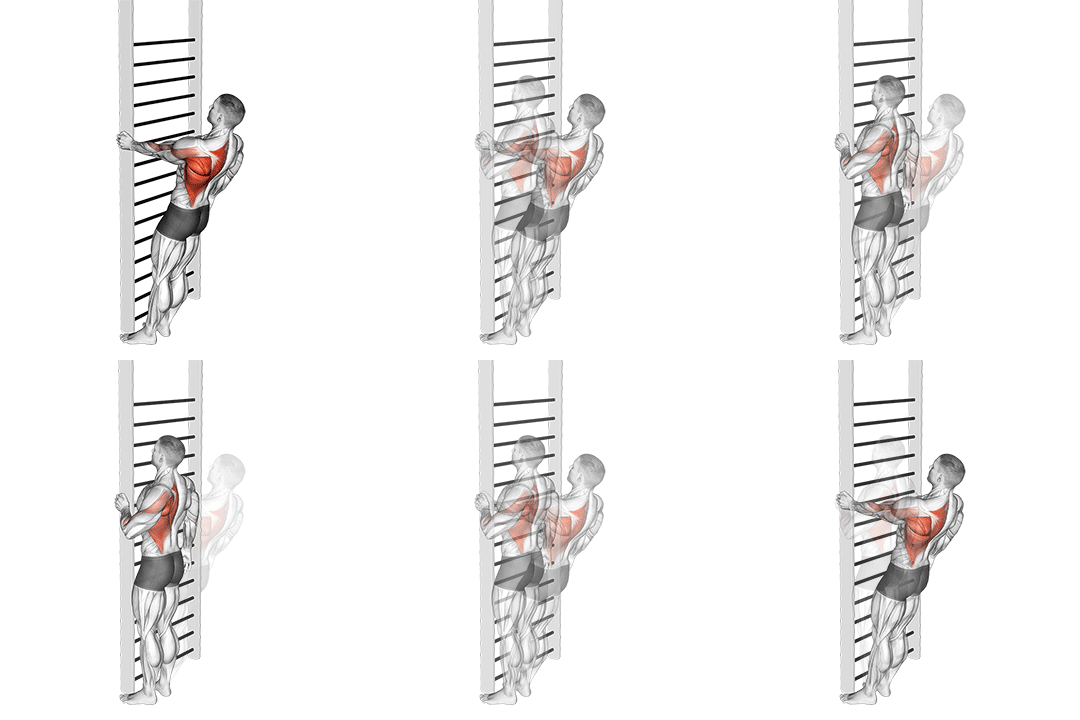
Bodyweight Standing Close-grip Row
Head-to-Head Comparison
| Attribute | Back Pec Stretch | Bodyweight Standing Close-grip Row |
|---|---|---|
| Target Muscle |
Lats
|
Lats
|
| Body Part |
Back
|
Back
|
| Equipment |
Body-weight
|
Body-weight
|
| Difficulty |
Beginner
|
Beginner
|
| Movement Type |
Isolation
|
Compound
|
| Secondary Muscles |
2
|
2
|
Secondary Muscles Activated
Back Pec Stretch
Bodyweight Standing Close-grip Row
Visual Comparison
Overview
Back Pec Stretch vs Bodyweight Standing Close-grip Row — you’re choosing between a mobility-focused lat stretch and a compound lat pull exercise. In this guide you’ll get clear, actionable comparisons so you can pick the right move for your goal: improve lat length and shoulder range of motion, build mechanical tension for muscle growth, or develop pulling strength. I’ll cover muscle activation, biomechanics (length-tension and force vectors), equipment needs, step-by-step technique cues, rep ranges, progression options, and when to use each exercise in your program.
Key Differences
- Back Pec Stretch is an isolation exercise, while Bodyweight Standing Close-grip Row is a compound movement.
- Both exercises target the Lats using Body-weight. The main differences are in their movement patterns and muscle activation angles.
Pros & Cons
Back Pec Stretch
+ Pros
- Improves lat length and shoulder extension range of motion
- Requires no equipment and is easy to do anywhere
- Low acute load makes it safe for rehabilitation and early-stage mobility work
- Helps correct forward-shoulder posture by opening anterior chest and pec minor
− Cons
- Produces minimal active mechanical tension for muscle growth
- Limited progression options for strength or hypertrophy
- Can be performed incorrectly (thoracic flexion) and provide little benefit
Bodyweight Standing Close-grip Row
+ Pros
- Generates significant active lat contraction for muscle growth
- Directly trains pulling mechanics and accessory muscles (biceps, forearms)
- Easy to scale load by changing body angle or adding weight
- Teaches scapular retraction and shoulder extension under tension
− Cons
- Requires an anchor or equipment like TRX, bar, or table edge
- Poor form (rounded thorax, flared ribs) shifts load away from lats to traps and spine
- Higher risk of tendon strain if volume or angle is mismanaged
When Each Exercise Wins
The close-grip row produces active concentric and eccentric loading that creates mechanical tension — the primary driver of hypertrophy. Use 8–15 reps, controlled 2–3s eccentrics, and adjust torso angle to increase load.
Rows allow progressive overload by changing leverage or adding resistance, training force production through the full pull pattern. Emphasize lower rep ranges (4–8) with slow eccentrics and full scapular control.
As a beginner you’ll benefit from restoring lat length and shoulder mobility first; the stretch teaches end-range awareness and reduces the chance of poor pulling mechanics when you start rows.
The stretch needs no gear and can be done anywhere to maintain mobility. If you have an anchor point or suspension trainer, the close-grip row becomes equally viable for strength-focused home sessions.
Frequently Asked Questions
Can I do both Back Pec Stretch and Bodyweight Standing Close-grip Row in the same workout?
Yes. Start with the Back Pec Stretch for 20–40 seconds to prime range of motion, then perform rows for 3–4 sets. Improved shoulder extension from the stretch can help you achieve better lat recruitment during the rows.
Which exercise is better for beginners?
For absolute beginners the Back Pec Stretch is better to build mobility and teach end-range control. Once you can retract the scapula and maintain a neutral ribcage, add Bodyweight Standing Close-grip Rows to build strength and hypertrophy.
How do the muscle activation patterns differ?
The stretch puts the lat at long length with low active contraction, emphasizing passive tensile stimulus and length-tension adaptations. The close-grip row produces high active concentric and eccentric firing of the lat, plus secondary activation of biceps and forearms under load.
Can Bodyweight Standing Close-grip Row replace Back Pec Stretch?
Not entirely. The row can improve strength and some range, but it doesn’t deliver the same passive end-range stretch that improves tissue extensibility. Keep the stretch in your warm-up or rehab work if you need dedicated mobility.
Expert Verdict
Use the Back Pec Stretch when your priority is mobility, posture correction, or pain-limited recovery — hold 20–40 seconds for 2–3 sets, focusing on scapular depression and avoiding thoracic flexion. Choose the Bodyweight Standing Close-grip Row when you want active lat loading, hypertrophy, or pulling strength; perform 3–4 sets of 6–15 reps with a 30–45° torso lean, elbows tracking close to the body, and controlled 2–3s eccentrics. For balanced programming, restore range of motion with the stretch early in the session or on recovery days, then load the row for strength and muscle growth when your movement quality is solid.
Also Compare
More comparisons with Back Pec Stretch
More comparisons with Bodyweight Standing Close-grip Row
Compare More Exercises
Use our free comparison tool to analyze any two exercises head-to-head.
Compare Exercises