

Band Bent-over Hip Extension vs Band Hip Lift: Complete Comparison Guide
Band Bent-over Hip Extension vs Band Hip Lift — two banded glute drills that look similar but load the hips differently. If you want clear guidance on which to use for muscle growth, strength, beginner training, or at-home sessions, you’re in the right place. I’ll compare primary and secondary muscle activation, detail equipment and setup, give specific technique cues (angles, tempo, rep ranges), and recommend which one to choose based on your goals and movement mechanics so you can program them effectively.
Exercise Comparison
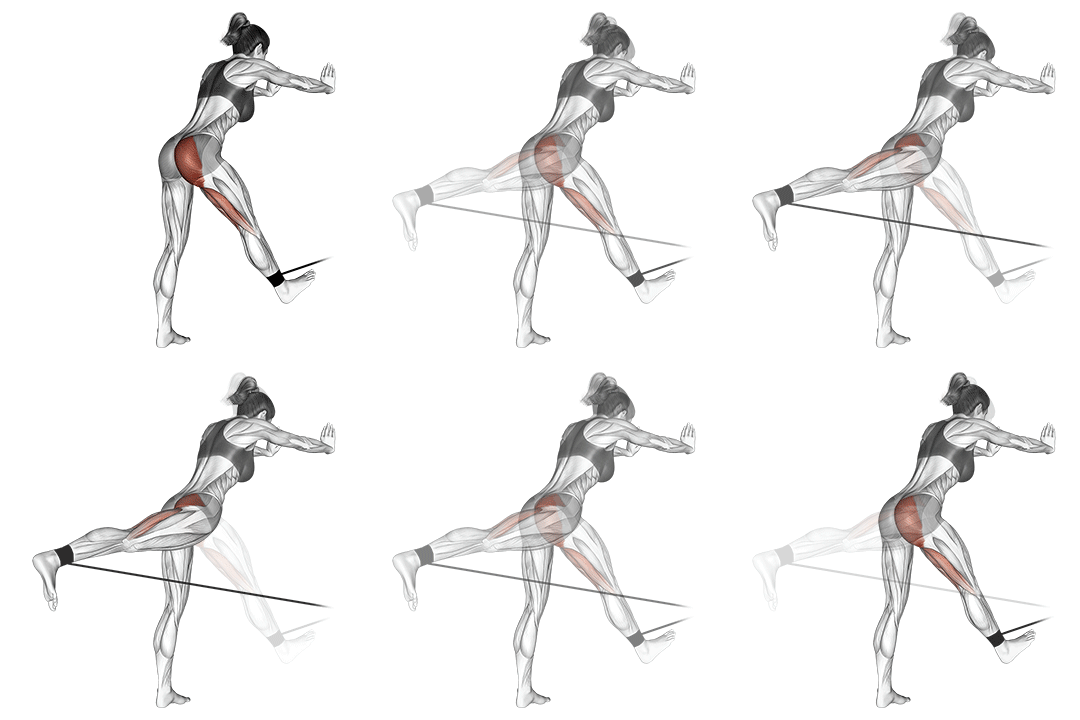
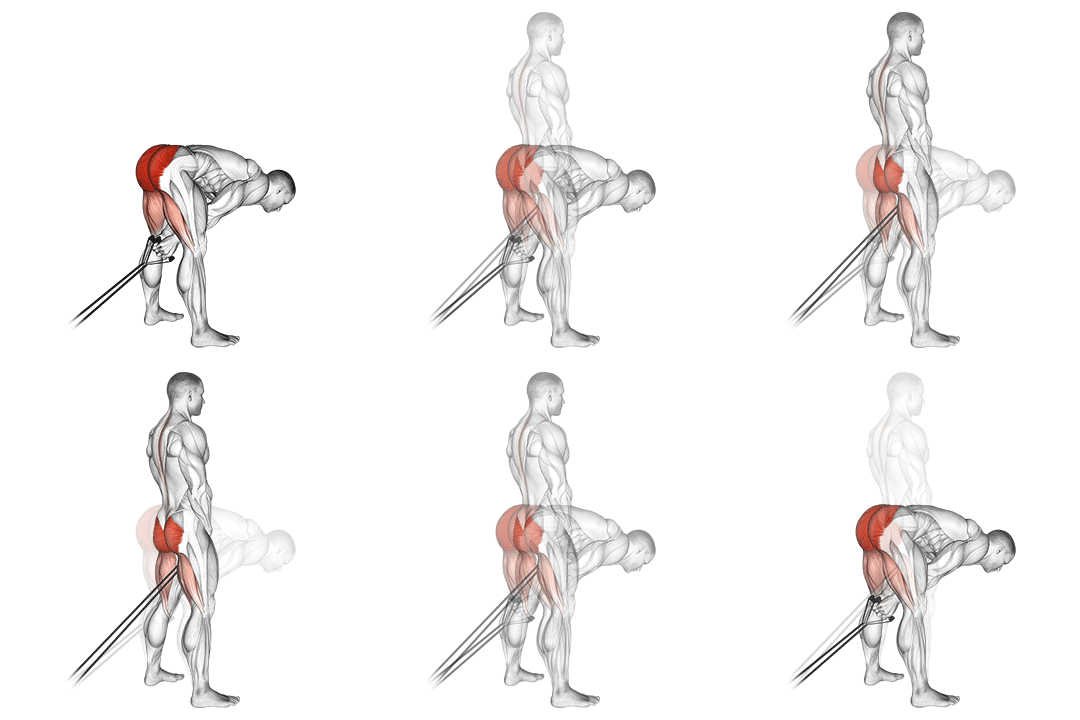
Band Bent-over Hip Extension
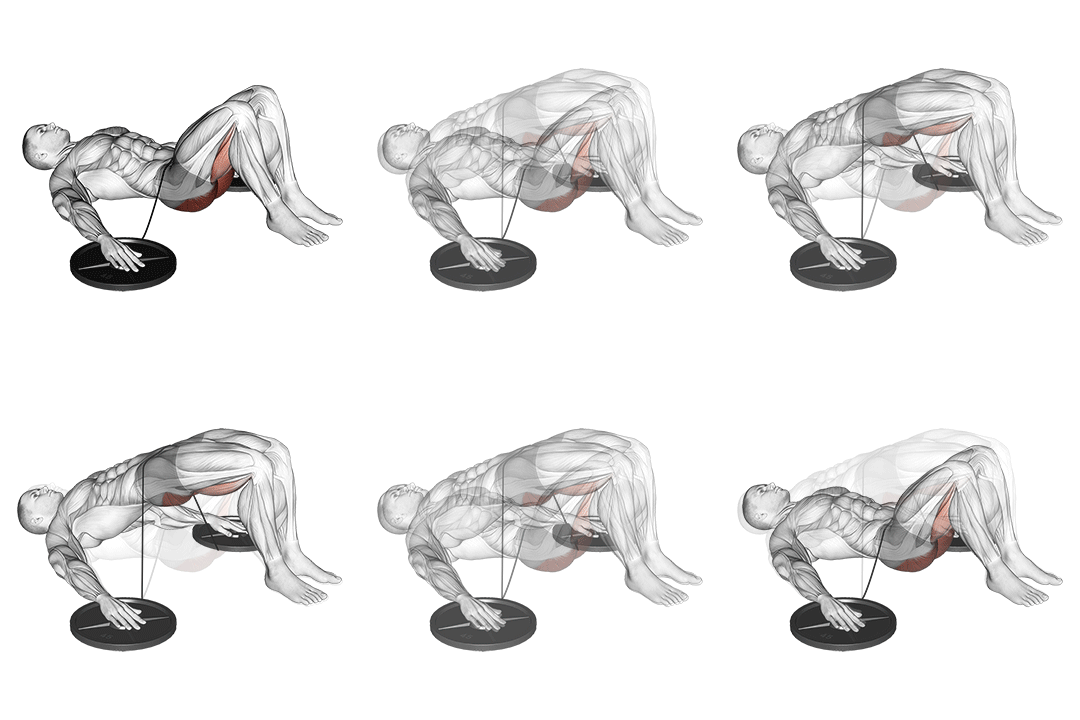
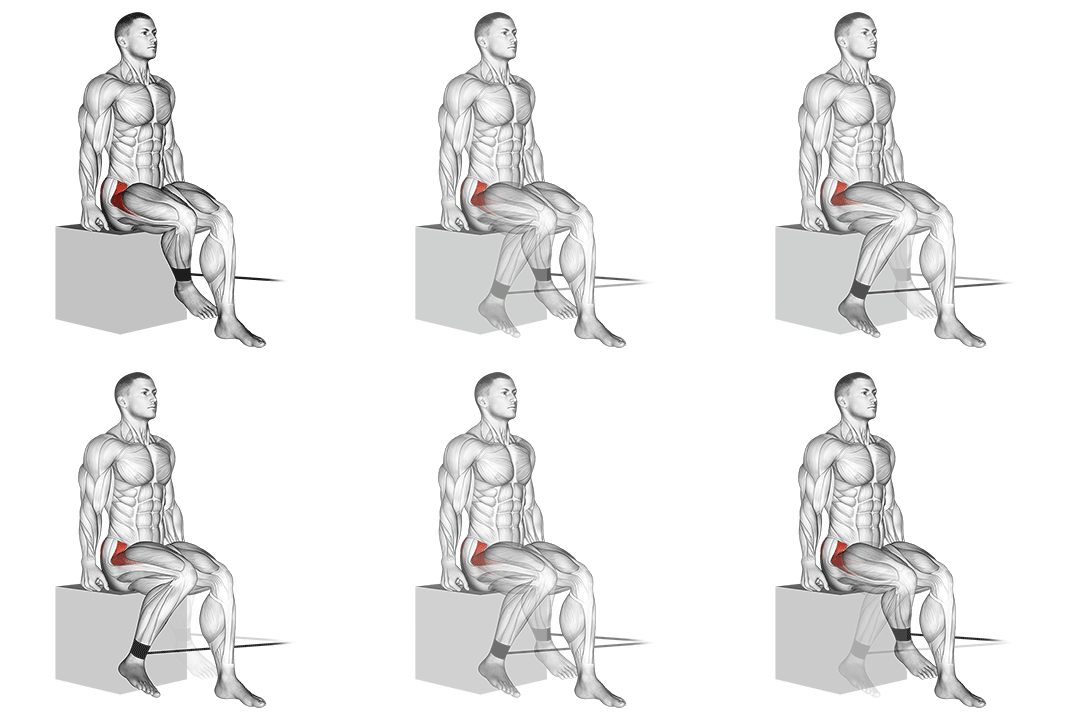
Band Hip Lift
Head-to-Head Comparison
| Attribute | Band Bent-over Hip Extension | Band Hip Lift |
|---|---|---|
| Target Muscle |
Glutes
|
Glutes
|
| Body Part |
Upper-legs
|
Upper-legs
|
| Equipment |
Band
|
Band
|
| Difficulty |
Beginner
|
Beginner
|
| Movement Type |
Isolation
|
Compound
|
| Secondary Muscles |
2
|
2
|
Secondary Muscles Activated
Band Bent-over Hip Extension
Band Hip Lift
Visual Comparison
Overview
Band Bent-over Hip Extension vs Band Hip Lift — two banded glute drills that look similar but load the hips differently. If you want clear guidance on which to use for muscle growth, strength, beginner training, or at-home sessions, you’re in the right place. I’ll compare primary and secondary muscle activation, detail equipment and setup, give specific technique cues (angles, tempo, rep ranges), and recommend which one to choose based on your goals and movement mechanics so you can program them effectively.
Key Differences
- Band Bent-over Hip Extension is an isolation exercise, while Band Hip Lift is a compound movement.
- Both exercises target the Glutes using Band. The main differences are in their movement patterns and muscle activation angles.
Pros & Cons
Band Bent-over Hip Extension
+ Pros
- Direct posterior chain isolation that emphasizes glute–hamstring coordination
- Requires minimal space and no bench or mat
- Good carryover to standing hip-hinge patterns and athletic movements
- Easy to do for short sets and metabolic circuits
− Cons
- Higher lumbar loading if hip hinge and bracing are poor
- Smaller ROM for the glutes compared with supine hip lifts
- Harder to progressively overload safely with heavy resistance
Band Hip Lift
+ Pros
- Stronger glute activation across a larger ROM (start ~90° hip flexion)
- Lower spinal shear and easier to teach to beginners
- Highly scalable with band tension, tempo, and unilateral variations
- Better time-under-tension for hypertrophy programming
− Cons
- Involves quads and can reduce isolation of the glutes when feet placement is incorrect
- Requires a mat or floor space and may need elevation to increase ROM
- If you over-extend the pelvis you can diminish glute tension and stress the lumbar spine
When Each Exercise Wins
Band Hip Lift wins because it produces higher time-under-tension across a larger hip ROM and lets you load the glutes more effectively with stronger bands or unilateral reps. Use 8–15 rep ranges with a 2s concentric and 3s eccentric tempo for hypertrophy.
Band Hip Lift supports higher peak force production because the torso is supported and you can apply heavier band tension safely. Progress with lower reps (4–8) and stronger bands, and emphasize concentric drive to build hip extension force.
The supine position reduces balance and hinge demands, making it easier to learn pelvic drive and maintain neutral spine. Start with light bands and 10–15 reps while mastering hip squeeze at the top.
Band Hip Lift is the most practical: you need only a band and floor space, it scales well, and it minimizes risk of lower-back strain, so you can include it in circuits and progressive programs at home.
Frequently Asked Questions
Can I do both Band Bent-over Hip Extension and Band Hip Lift in the same workout?
Yes. Pairing them back-to-back works well: do Band Hip Lifts as a primary glute builder (3–4 sets of 8–12) and finish with 2–3 sets of Band Bent-over Hip Extensions for posterior chain specificity. Keep total weekly volume in mind to avoid overtraining the glutes.
Which exercise is better for beginners?
Band Hip Lift is better for beginners because the supine position reduces balance and lumbar demand, making it easier to learn a strong hip extension pattern. Start with light bands, focus on pelvic neutral and a deliberate squeeze at the top.
How do the muscle activation patterns differ?
The bent-over version places more demand on hamstrings and lower-back stabilizers due to torso flexion and a more horizontal force vector, concentrating peak tension near full extension. The hip lift emphasizes glute activation across a larger ROM from ~90° hip flexion to neutral, increasing time under tension and peak hip torque.
Can Band Hip Lift replace Band Bent-over Hip Extension?
For most people focused on glute hypertrophy and safe progression, yes—the Band Hip Lift can replace bent-over extensions. Keep the bent-over variation if you need standing hinge specificity or want to emphasize hamstring–lumbar coordination for athletic transfer.
Expert Verdict
Use the Band Hip Lift as your primary banded glute builder: it gives superior glute activation, safer loading, and clearer progression options for hypertrophy and strength. Program it for 8–15 reps with controlled tempo or 4–8 reps with heavier bands for strength, and add unilateral variations to correct imbalances. Keep the Band Bent-over Hip Extension as a supplementary movement when you want to target the posterior chain in a standing pattern or emphasize hamstring–glute coordination. If your goal is transfer to hinge-dominant lifts (deadlifts, kettlebell swings), include bent-over variations for specificity, but prioritize the hip lift for pure glute development and beginner-friendly training.
Also Compare
More comparisons with Band Bent-over Hip Extension
Compare More Exercises
Use our free comparison tool to analyze any two exercises head-to-head.
Compare Exercises