

Band Bent-over Hip Extension vs Band Lying Hip Internal Rotation: Complete Comparison Guide
Band Bent-over Hip Extension vs Band Lying Hip Internal Rotation — if you want stronger, fuller glutes you should understand how each moves the hip and which fibers they tax. In this guide you get clear technique cues, biomechanical reasons one shifts load to glute max while the other biases the glute med/min, recommended rep ranges (8–15 for hypertrophy), and practical programming tips. Read on and you’ll know which to use for muscle growth, movement quality, or simple home sessions and exactly how to perform each with safe form.
Exercise Comparison
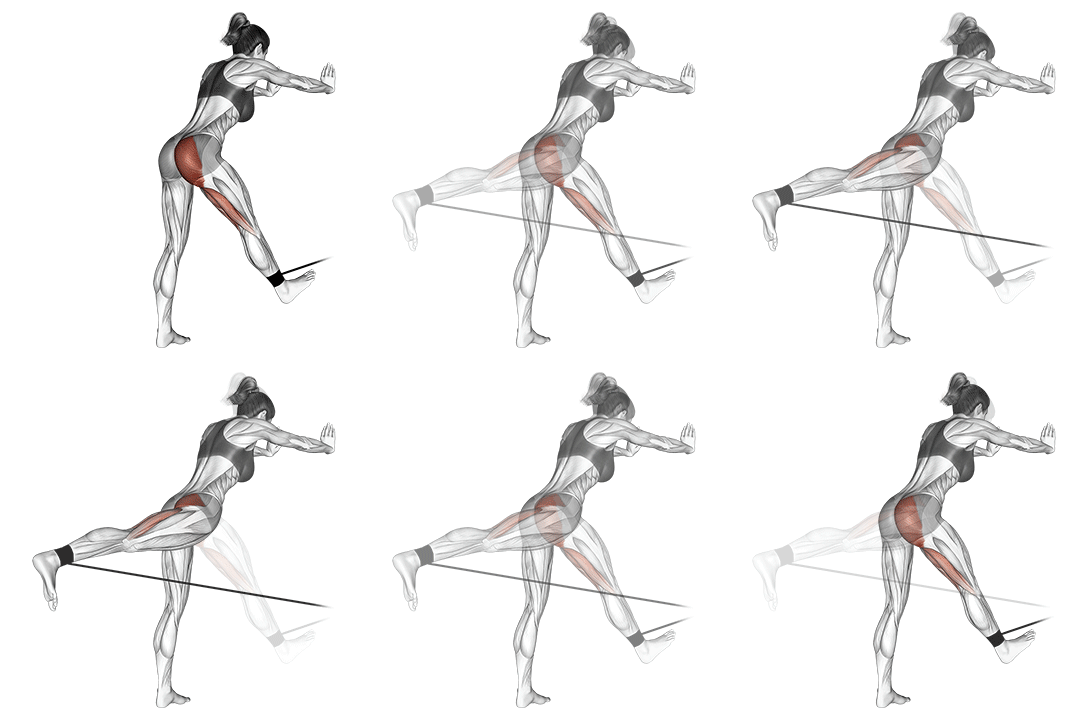
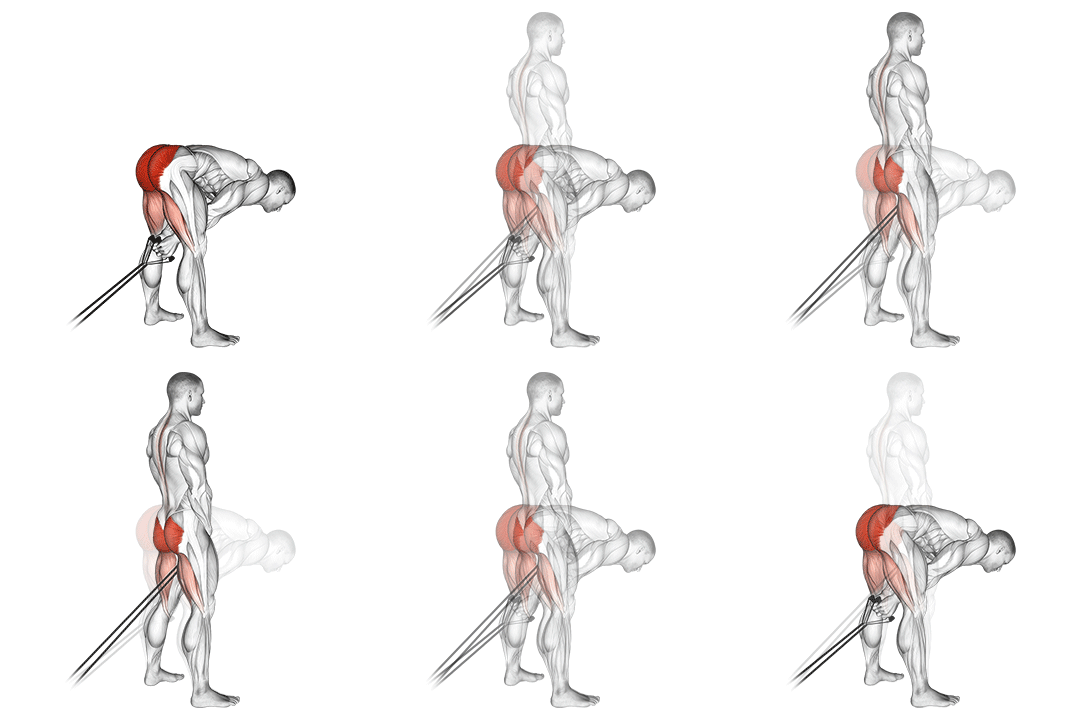
Band Bent-over Hip Extension
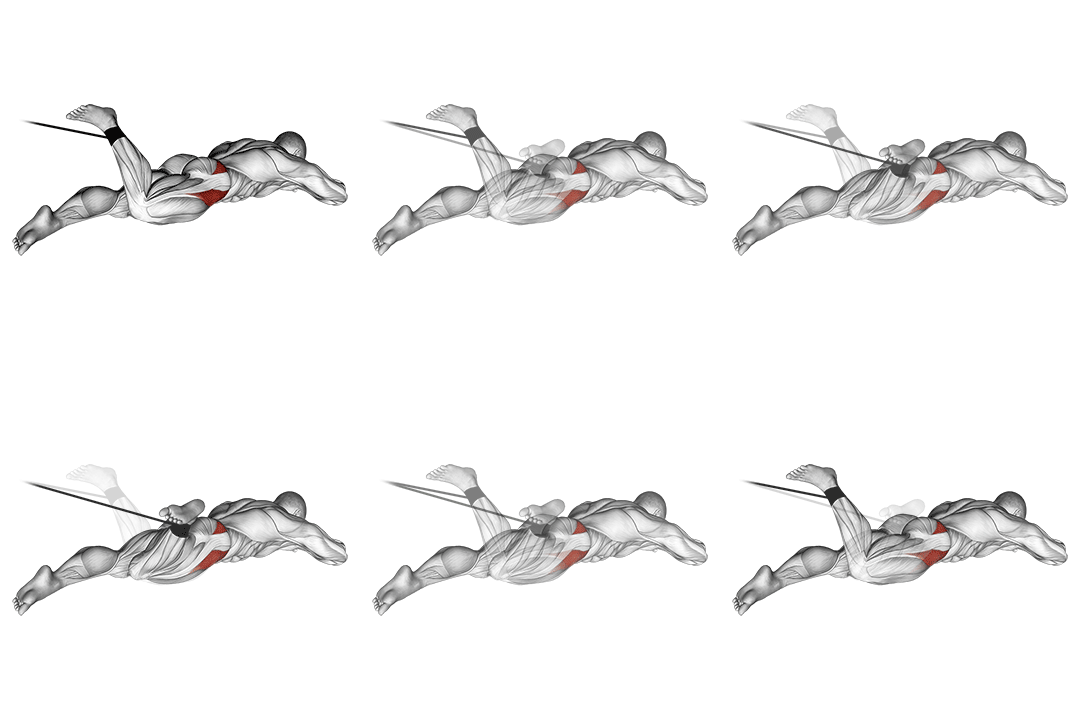
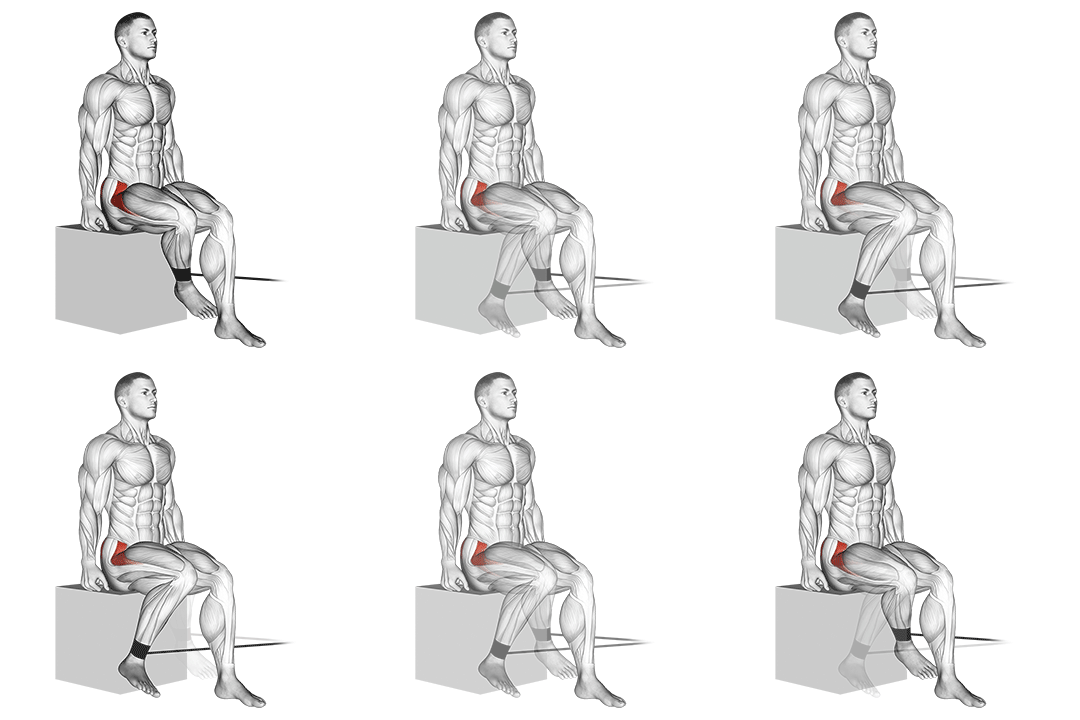
Band Lying Hip Internal Rotation
Head-to-Head Comparison
| Attribute | Band Bent-over Hip Extension | Band Lying Hip Internal Rotation |
|---|---|---|
| Target Muscle |
Glutes
|
Glutes
|
| Body Part |
Upper-legs
|
Upper-legs
|
| Equipment |
Band
|
Band
|
| Difficulty |
Beginner
|
Beginner
|
| Movement Type |
Isolation
|
Isolation
|
| Secondary Muscles |
2
|
2
|
Secondary Muscles Activated
Band Bent-over Hip Extension
Band Lying Hip Internal Rotation
Visual Comparison
Overview
Band Bent-over Hip Extension vs Band Lying Hip Internal Rotation — if you want stronger, fuller glutes you should understand how each moves the hip and which fibers they tax. In this guide you get clear technique cues, biomechanical reasons one shifts load to glute max while the other biases the glute med/min, recommended rep ranges (8–15 for hypertrophy), and practical programming tips. Read on and you’ll know which to use for muscle growth, movement quality, or simple home sessions and exactly how to perform each with safe form.
Key Differences
- Both exercises target the Glutes using Band. The main differences are in their movement patterns and muscle activation angles.
Pros & Cons
Band Bent-over Hip Extension
+ Pros
- Direct gluteus maximus loading with a strong posterior force vector
- Easily progresses to heavier band tensions or weighted hinge variations
- Improves hip extension strength and sprint/power carryover
- Hits hamstrings and lumbar stabilizers for posterior chain integration
− Cons
- Requires good hip hinge mechanics and spinal control
- Higher compression on the lower back if form breaks down
- Less isolation of hip abductors and internal rotators
Band Lying Hip Internal Rotation
+ Pros
- Excellent isolation of glute medius/minimus and internal rotators
- Very low spinal loading and minimal setup
- Great for improving hip motor control and addressing asymmetries
- Beginner-friendly and ideal for rehab-style work
− Cons
- Limited ability to produce high absolute force for glute max hypertrophy
- Smaller range of motion means less metabolic stress per rep
- Progression is mostly via band tension and higher reps, which can plateau
When Each Exercise Wins
The bent-over extension produces a larger hip extension moment and longer muscle lengths for the gluteus maximus, so you can apply higher loads and mechanical tension. Use 3–4 sets of 8–12 reps with a 2-1-2 tempo to maximize muscle growth.
Because it creates a stronger posterior force vector and allows progressive overload, the bent-over variation transfers better to hip extension strength and athletic movements like sprinting and deadlifting.
Lying internal rotation isolates transverse-plane control with low spinal demand and minimal balance needs, so beginners can learn hip motor patterns safely and build stability before loading the hinge.
It requires only a light loop band and a mat, needs no anchor, and is quick to set up. That makes it the simplest option for short, focused home sessions.
Frequently Asked Questions
Can I do both Band Bent-over Hip Extension and Band Lying Hip Internal Rotation in the same workout?
Yes. Use the bent-over extension earlier to load the glute max (3–4 sets of 8–12) then add lying internal rotation as a finisher for 2–3 sets of 12–20 to reinforce hip control and target glute med/min.
Which exercise is better for beginners?
Band Lying Hip Internal Rotation is better for most beginners because it minimizes spinal load and balance demands while teaching transverse-plane control. Progress to the bent-over version once you have a stable hinge and neutral spine.
How do the muscle activation patterns differ?
The bent-over hip extension generates a large sagittal-plane extension moment that preferentially activates gluteus maximus and hamstrings at 15–30° extension. The lying internal rotation produces transverse-plane torque around 10–25°, recruiting anterior gluteus medius/minimus and TFL more than the glute max.
Can Band Lying Hip Internal Rotation replace Band Bent-over Hip Extension?
No, not for all goals. Lying internal rotation can replace the bent-over move for stability work or rehab, but it won't match the glute max loading or strength carryover of the bent-over extension when muscle growth or power is the objective.
Expert Verdict
Use the Band Bent-over Hip Extension when your primary goal is gluteus maximus development and posterior chain strength. Its extension torque and longer length-tension window let you apply higher mechanical tension (aim for 8–12 reps, 3–4 sets). Choose the Band Lying Hip Internal Rotation when you need hip stability, address medial-lateral asymmetry, or want a low-back-safe isolation drill (12–20 reps, 2–4 sets). For structured training, pair them: start with bent-over extensions for load and finish with lying internal rotations for motor control and fatigue-resistant fibers.
Also Compare
More comparisons with Band Bent-over Hip Extension
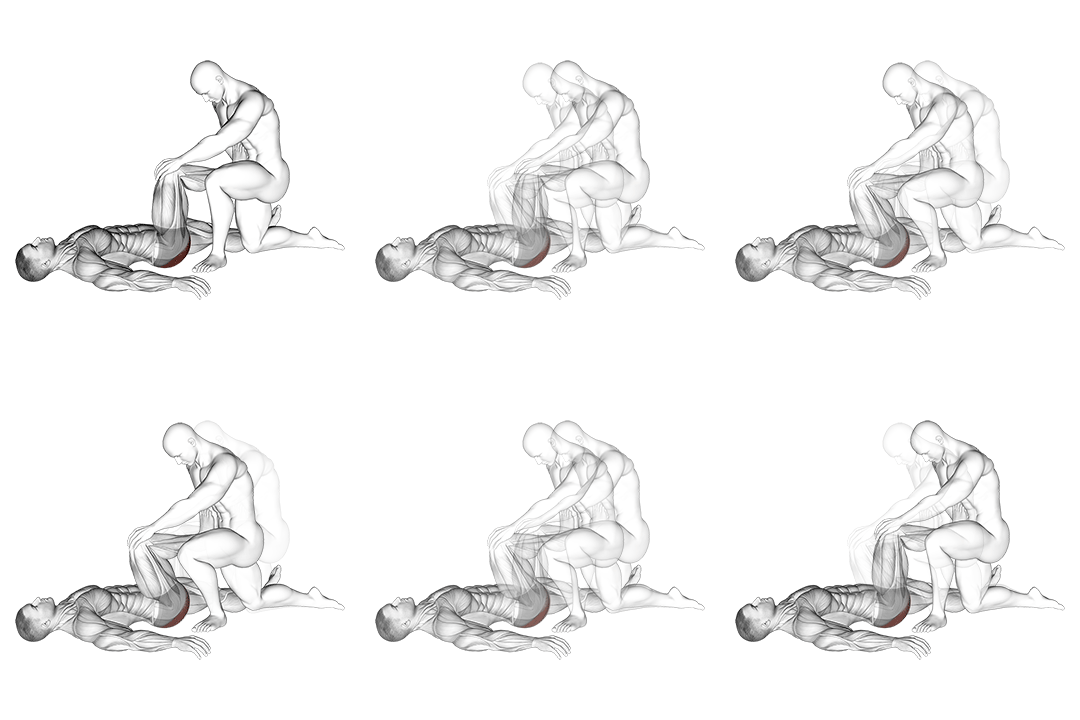
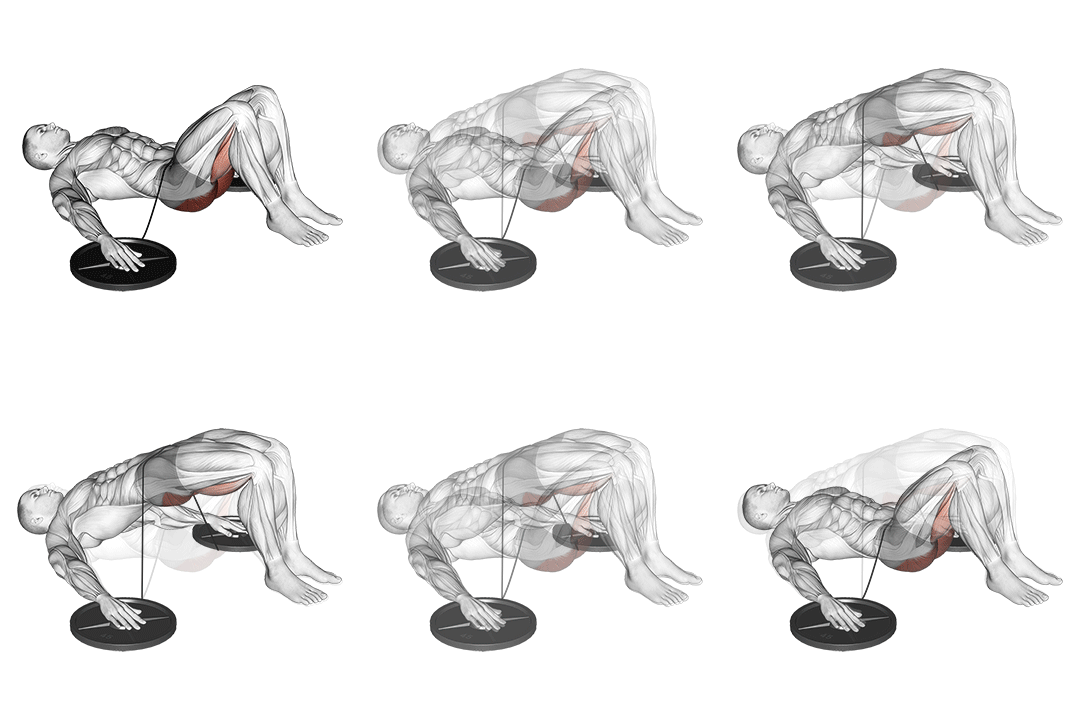
More comparisons with Band Lying Hip Internal Rotation
Compare More Exercises
Use our free comparison tool to analyze any two exercises head-to-head.
Compare Exercises