

Band Bent-over Hip Extension vs Band Squat: Complete Comparison Guide
Band Bent-over Hip Extension vs Band Squat — if you want stronger, fuller glutes you'll want to pick the right tool. In this comparison you'll get clear technique cues, biomechanical differences, and specific rep ranges so you can choose the best move for muscle growth, strength, or home training. I'll cover primary and secondary muscle activation, equipment and setup, progression options, and practical programming recommendations so you know when to use the isolation hip extension and when to prioritize the compound squat.
Exercise Comparison
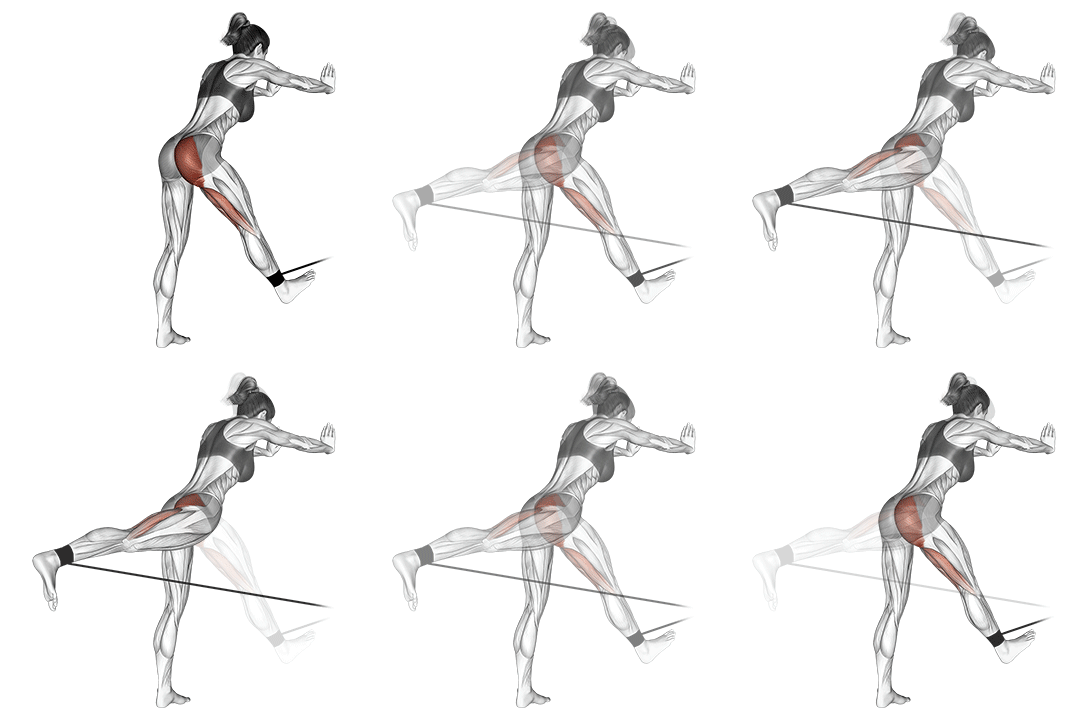
Band Bent-over Hip Extension
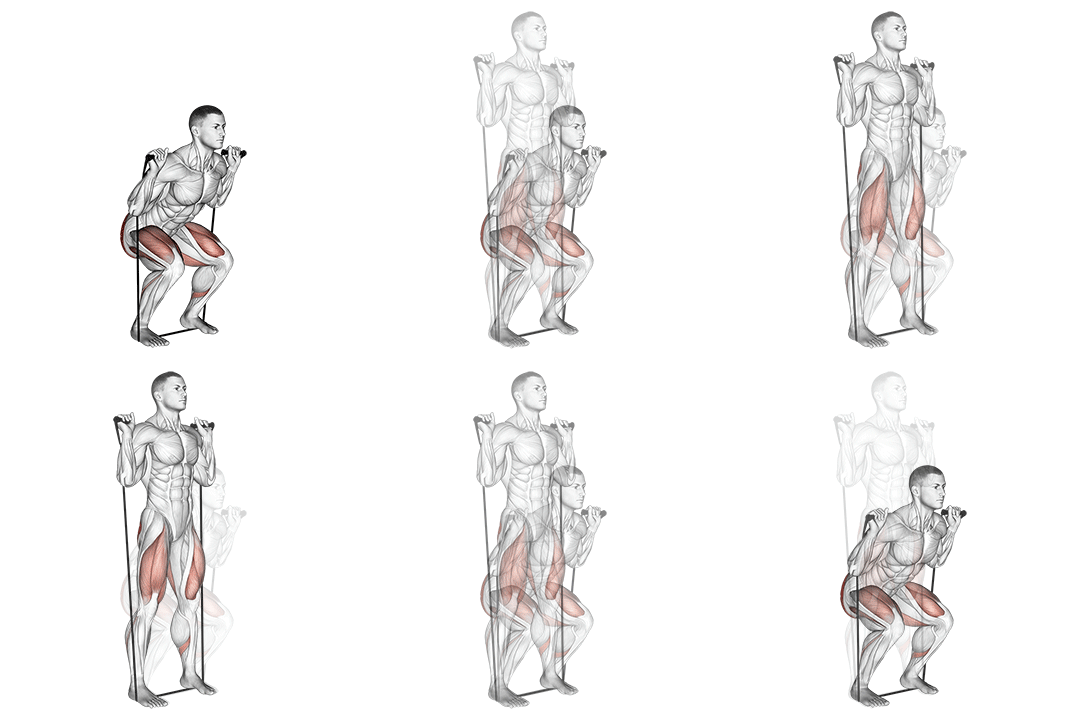
Band Squat
Head-to-Head Comparison
| Attribute | Band Bent-over Hip Extension | Band Squat |
|---|---|---|
| Target Muscle |
Glutes
|
Glutes
|
| Body Part |
Upper-legs
|
Upper-legs
|
| Equipment |
Band
|
Band
|
| Difficulty |
Beginner
|
Intermediate
|
| Movement Type |
Isolation
|
Compound
|
| Secondary Muscles |
2
|
3
|
Secondary Muscles Activated
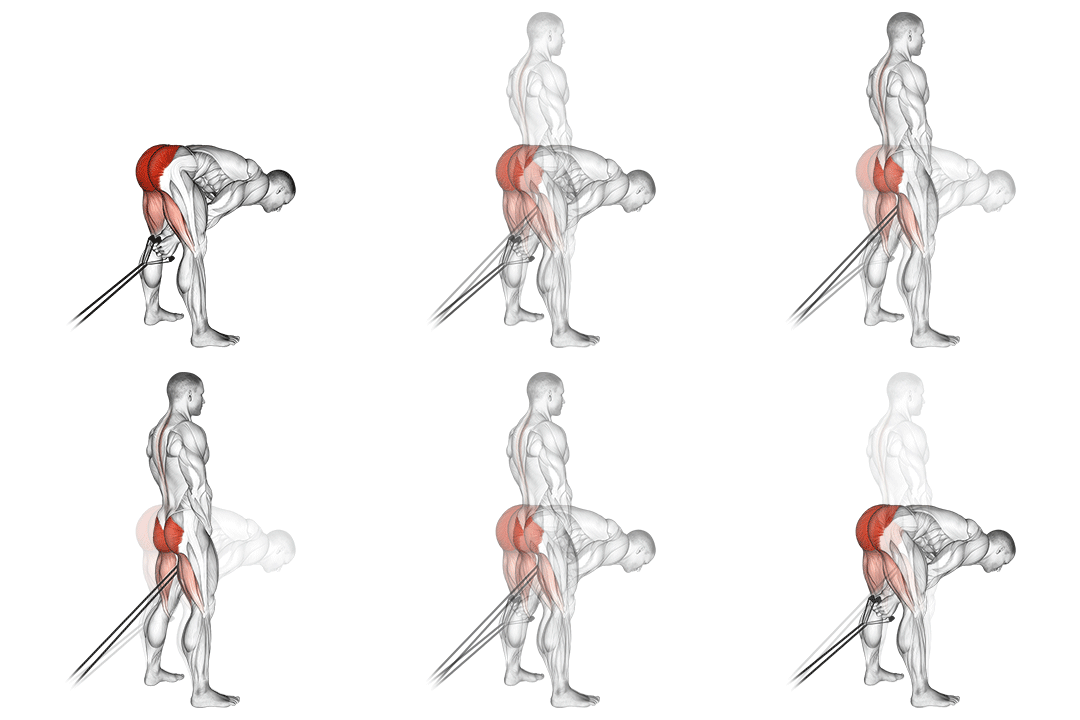
Band Bent-over Hip Extension
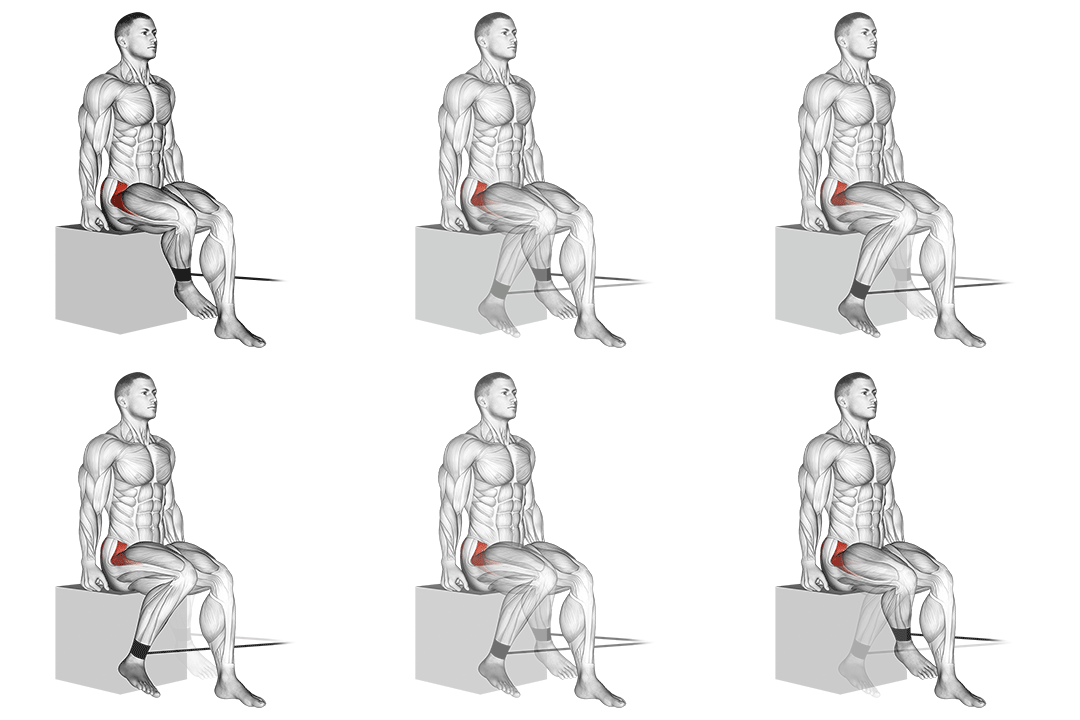
Band Squat
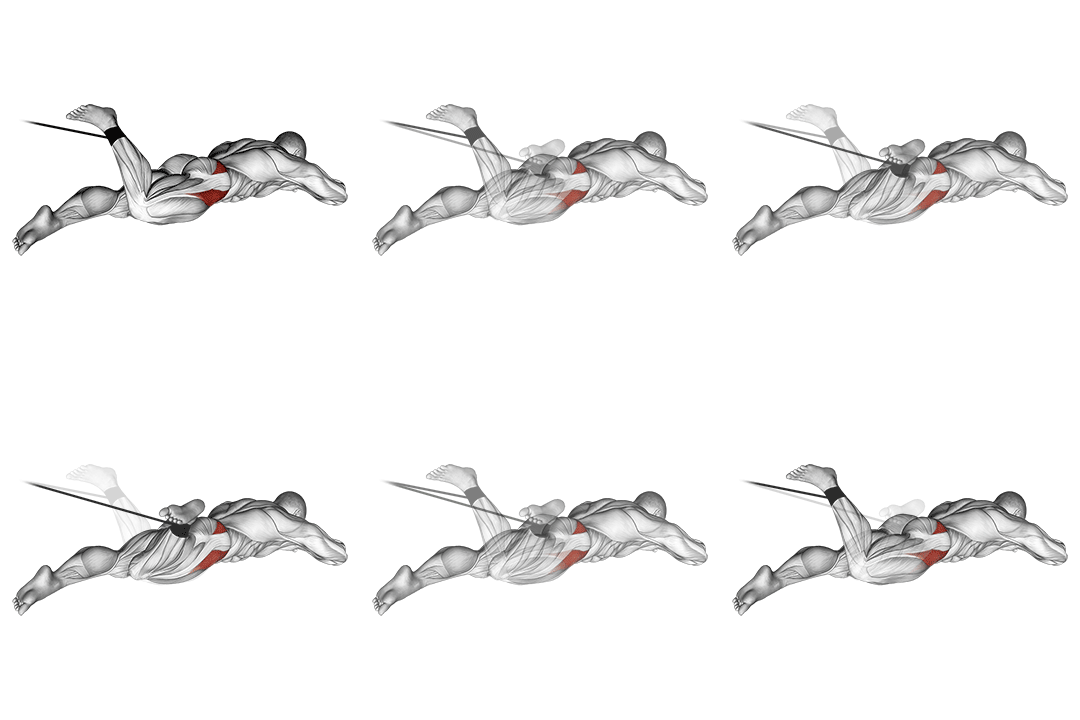
Visual Comparison
Overview
Band Bent-over Hip Extension vs Band Squat — if you want stronger, fuller glutes you'll want to pick the right tool. In this comparison you'll get clear technique cues, biomechanical differences, and specific rep ranges so you can choose the best move for muscle growth, strength, or home training. I'll cover primary and secondary muscle activation, equipment and setup, progression options, and practical programming recommendations so you know when to use the isolation hip extension and when to prioritize the compound squat.
Key Differences
- Band Bent-over Hip Extension is an isolation exercise, while Band Squat is a compound movement.
- Difficulty levels differ: Band Bent-over Hip Extension is beginner, while Band Squat is intermediate.
- Both exercises target the Glutes using Band. The main differences are in their movement patterns and muscle activation angles.
Pros & Cons
Band Bent-over Hip Extension
+ Pros
- Direct glute isolation increases time under tension for the hip extensors
- Simple setup — needs only one band and minimal space
- Lower coordination demand; beginner-friendly movement pattern
- Easy to add volume (sets/reps) for hypertrophy work
− Cons
- Limited absolute overload compared with compound lifts
- Less carryover to whole-body strength and power
- Can place shear load on lower back if bracing is poor
Band Squat
+ Pros
- High overall mechanical tension allows for meaningful progressive overload
- Builds lower-body strength and functional carryover through triple extension
- Engages multiple muscle groups for greater caloric demand
- Versatile: adjust stance, depth, and band tension to target different regions
− Cons
- Higher technical demand and learning curve
- Quads can dominate and limit isolated glute stimulus without cueing
- Requires stronger anchoring/stronger bands to reach heavy tension
When Each Exercise Wins
Band Squat wins because it lets you generate higher total mechanical tension and train with lower-rep strength phases (3–8) and mid-range hypertrophy sets (6–12) that stimulate both quads and glutes. Use squats as the base and add hip extensions as an isolation finisher for targeted glute hypertrophy.
Band Squat trains the triple-extension pattern and tolerates progressive overload better, which develops force production through hip and knee joints. Squats translate to improved standing strength and better transfer to loaded lifts.
Band Bent-over Hip Extension is simpler to learn and isolate — you only need to master a hip hinge and bracing. It builds targeted glute strength safely before adding compound complexity.
The hip extension needs minimal space, lighter bands, and simpler setup, making it ideal for apartment or travel workouts. It also scales easily with time under tension when you lack heavy bands.
Frequently Asked Questions
Can I do both Band Bent-over Hip Extension and Band Squat in the same workout?
Yes — pair band squats as your main lift for 3–5 sets in strength or hypertrophy rep ranges, then follow with 2–4 sets of bent-over hip extensions for focused glute work. That sequencing uses squats to create overall tension and hip extensions to drive additional glute length-tension stimulus.
Which exercise is better for beginners?
For absolute beginners, the band bent-over hip extension is better because it isolates the hip hinge and demands less coordination. Once you master hip and knee control, add band squats to build full lower-body strength.
How do the muscle activation patterns differ?
The bent-over hip extension emphasizes hip extension torque with peak glute loading as the hip moves toward extension, whereas the band squat spreads force between hip and knee extensors with a larger vertical force vector. In short, hip extensions bias posterior chain loading; squats distribute load across quads and glutes.
Can Band Squat replace Band Bent-over Hip Extension?
Not entirely — band squats provide strong overall stimulus but may underload the gluteus maximus at specific joint angles. If your goal is targeted glute hypertrophy or correcting a hip-extension weakness, keep hip extensions in your program as an accessory.
Expert Verdict
Choose Band Squat when you want compound strength and higher mechanical tension for lower-body muscle growth or to build functional power. Squats let you progress load and work in strength-focused rep ranges (3–8) and hypertrophy ranges (6–12). Use Band Bent-over Hip Extension when you need a low-setup isolation exercise to directly overload the glutes, add volume, or rehab/teach hip extension. For best results, program squats as your primary movement 1–3 times weekly and add 2–4 sets of banded hip extensions (8–15 reps) as an accessory to maximize glute development and address movement-specific weakness.
Also Compare
More comparisons with Band Bent-over Hip Extension
Compare More Exercises
Use our free comparison tool to analyze any two exercises head-to-head.
Compare Exercises