

Band Hip Lift vs Band Lying Hip Internal Rotation: Complete Comparison Guide
Band Hip Lift vs Band Lying Hip Internal Rotation — if you want stronger, more resilient glutes you need to pick the right tool. I’ll walk you through how each move loads the glute complex, how they differ in movement pattern and muscle activation, specific technique cues, and which one to choose for hypertrophy, strength, or rehab. Read on and you’ll know when to use the compound, hip-extension dominant Band Hip Lift and when to prioritize the isolation-focused Band Lying Hip Internal Rotation to target medial-lateral control.
Exercise Comparison
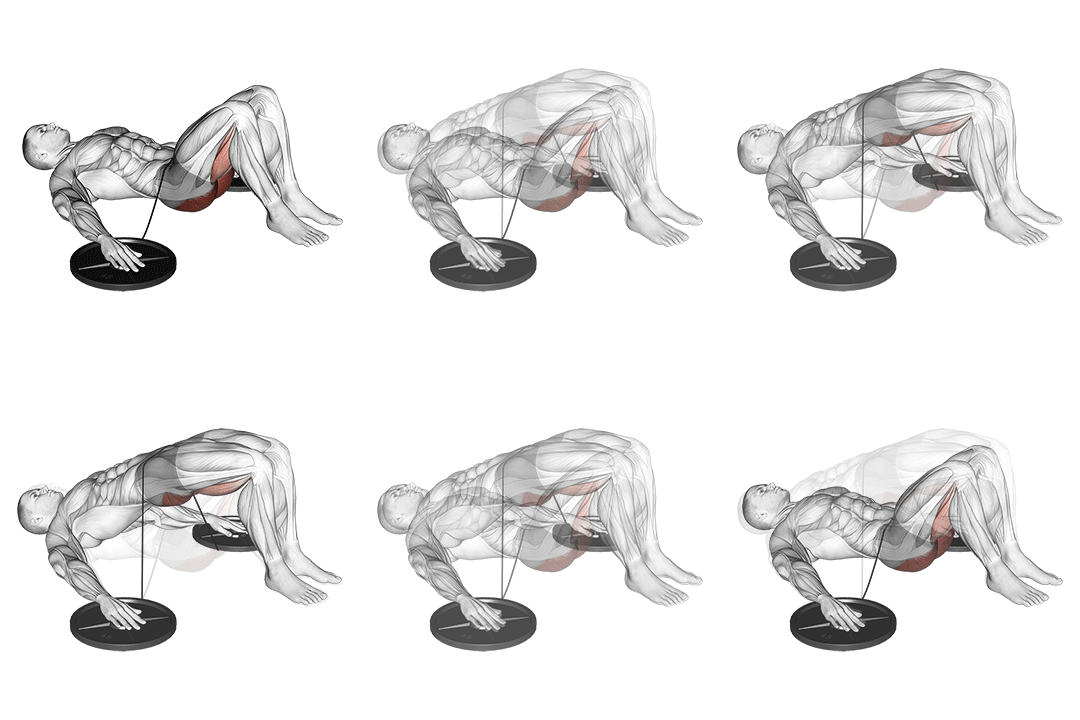
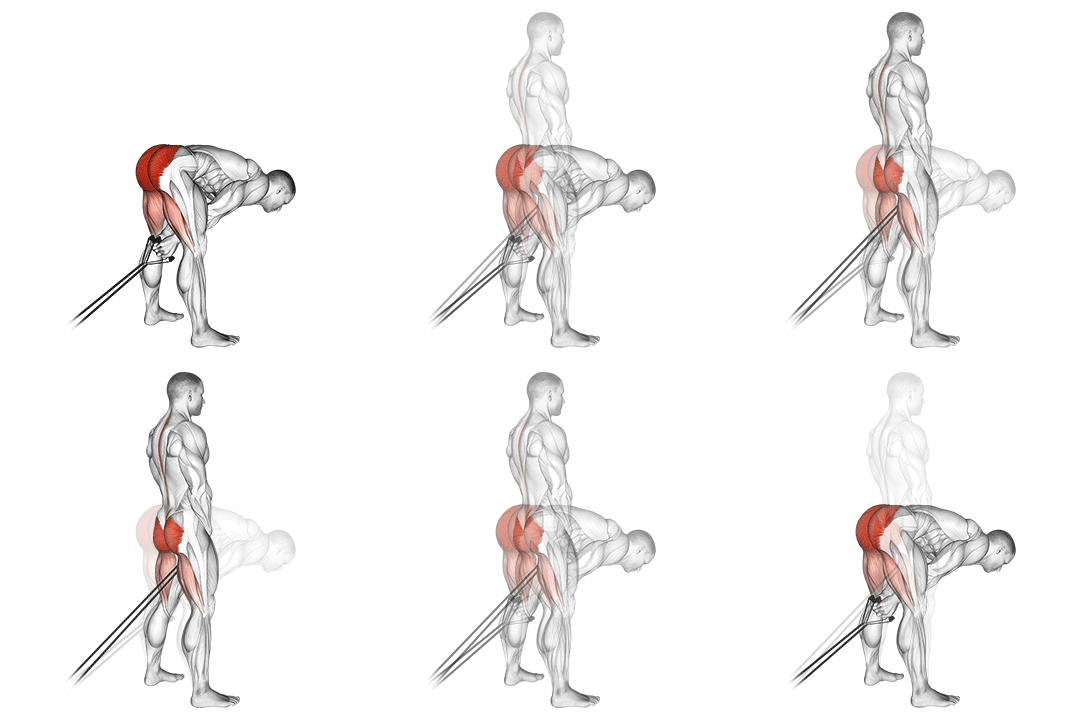
Band Hip Lift
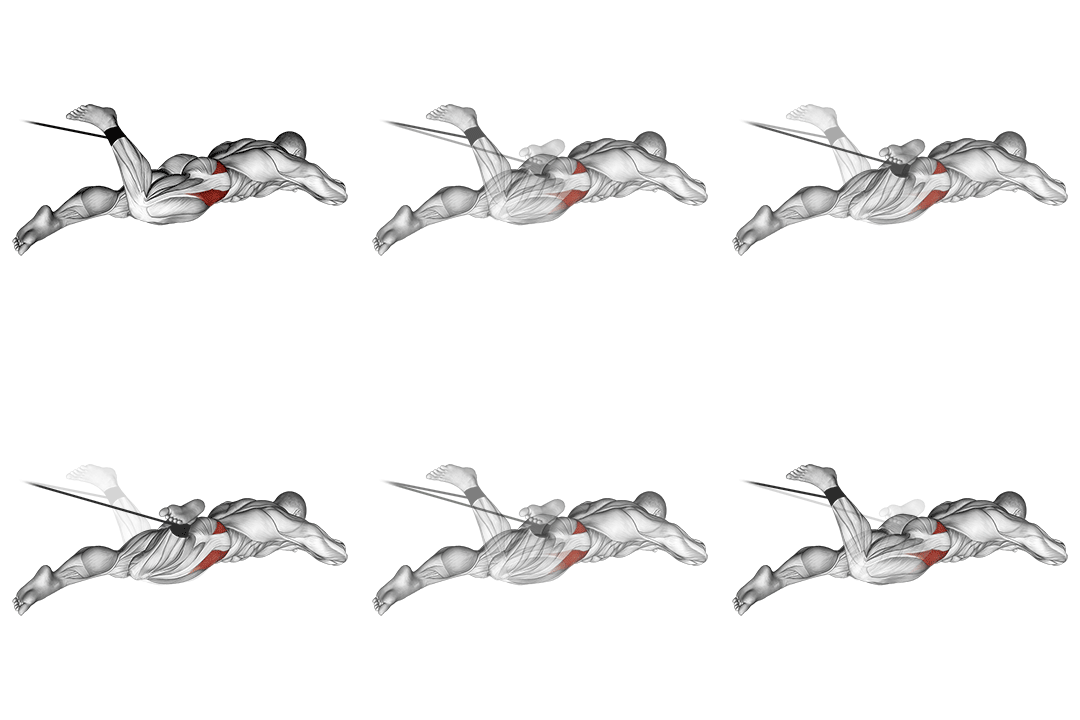
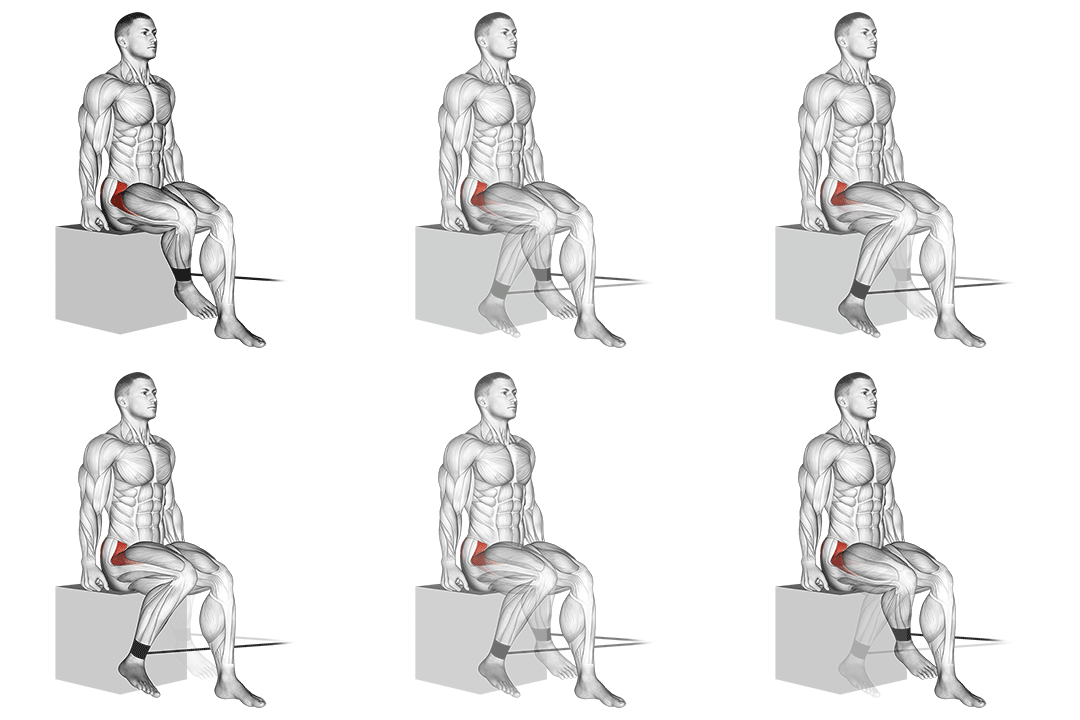
Band Lying Hip Internal Rotation
Head-to-Head Comparison
| Attribute | Band Hip Lift | Band Lying Hip Internal Rotation |
|---|---|---|
| Target Muscle |
Glutes
|
Glutes
|
| Body Part |
Upper-legs
|
Upper-legs
|
| Equipment |
Band
|
Band
|
| Difficulty |
Beginner
|
Beginner
|
| Movement Type |
Compound
|
Isolation
|
| Secondary Muscles |
2
|
2
|
Secondary Muscles Activated
Band Hip Lift
Band Lying Hip Internal Rotation
Visual Comparison
Overview
Band Hip Lift vs Band Lying Hip Internal Rotation — if you want stronger, more resilient glutes you need to pick the right tool. I’ll walk you through how each move loads the glute complex, how they differ in movement pattern and muscle activation, specific technique cues, and which one to choose for hypertrophy, strength, or rehab. Read on and you’ll know when to use the compound, hip-extension dominant Band Hip Lift and when to prioritize the isolation-focused Band Lying Hip Internal Rotation to target medial-lateral control.
Key Differences
- Band Hip Lift is a compound movement, while Band Lying Hip Internal Rotation is an isolation exercise.
- Both exercises target the Glutes using Band. The main differences are in their movement patterns and muscle activation angles.
Pros & Cons
Band Hip Lift
+ Pros
- Effective compound hip-extension exercise that loads gluteus maximus for muscle growth and strength
- Easy to progress with heavier bands, single-leg variation, or tempo work
- Engages hamstrings and posterior chain for carryover to squat and deadlift patterns
- Simple teaching cues (drive through heels, squeeze glutes, neutral pelvis) speed skill acquisition
− Cons
- Less targeted for gluteus medius/minimus transverse-plane control
- Risk of lumbar extension if performed with poor pelvic control
- Band tension may plateau for users who need heavy absolute loads
Band Lying Hip Internal Rotation
+ Pros
- Targets transverse-plane control and gluteus medius/minimus activation for hip stability
- Low mechanical load makes it suitable for rehab and corrective work
- Easy to perform in supine with minimal equipment
- Improves femoral internal rotation control, which helps knee tracking and gait mechanics
− Cons
- Limited overall load — less effective as a primary hypertrophy exercise for gluteus maximus
- Requires precise positioning and motor control, which can be awkward for beginners
- Progressions are smaller and may not translate directly to sagittal-plane strength
When Each Exercise Wins
Band Hip Lift produces higher hip-extension torque and larger gluteus maximus loading, making it better for hypertrophy when programmed for 8–15 reps and 3–5 sets with progressive band tension. The compound, phasic contractions create more overall mechanical tension across the posterior chain.
Because it allows heavier band resistances and single-leg variations, the hip lift builds practical hip extension strength that transfers to squats and deadlifts. Focus on lower-rep ranges (6–12) with increased band tension and controlled eccentrics for improved force production.
Beginners learn sagittal-plane hip extension patterns faster with clear, repeatable cues and immediate load progression. The movement requires less fine motor control than isolated transverse-plane rotations and yields measurable progress in strength and muscle growth.
The hip lift needs only one loop band and minimal space and scales well with band tension, making it the most practical home option. While lying rotations are portable, the hip lift delivers broader conditioning and strengthens multiple movers with the same equipment.
Frequently Asked Questions
Can I do both Band Hip Lift and Band Lying Hip Internal Rotation in the same workout?
Yes. Pair the Band Hip Lift as your primary compound movement and follow with Band Lying Hip Internal Rotation as an accessory to address transverse-plane control. For example, do 3–4 sets of hip lifts (8–12 reps) then 2–3 sets of 12–20 rotations focusing on slow, controlled range-of-motion.
Which exercise is better for beginners?
Band Hip Lift is better for most beginners because the sagittal-plane pattern is intuitive and easier to teach with cues like neutral pelvis and maximal glute squeeze. Use light band tension and progress to single-leg bridges as technique improves.
How do the muscle activation patterns differ?
The hip lift creates phasic, high-amplitude gluteus maximus activation at end-range hip extension due to favorable length-tension and high extension moment. The lying internal rotation produces lower-amplitude, continuous activation of gluteus medius/minimus and deep rotators to control femoral internal rotation in the transverse plane.
Can Band Lying Hip Internal Rotation replace Band Hip Lift?
No — not if your primary goal is hip-extension strength or glute hypertrophy. The lying rotation is a useful complement for stability and motor control, but it lacks the sagittal-plane loading and mechanical tension the hip lift provides for larger-scale muscle growth.
Expert Verdict
Use the Band Hip Lift as your primary glute-building and strength exercise: it delivers higher hip-extension torque, easier progression, and greater carryover to functional lifts. Program it for 3–5 sets of 6–15 reps, adjusting band tension or single-leg variations to increase load. Reserve Band Lying Hip Internal Rotation as a targeted accessory for transverse-plane control, gluteus medius/minimus activation, and rehab work — perform 2–4 sets of 10–20 controlled reps or 10–30 second isometric holds. Combine both when you need volume plus motor control: hip lifts first, rotations as corrective finishers.
Also Compare
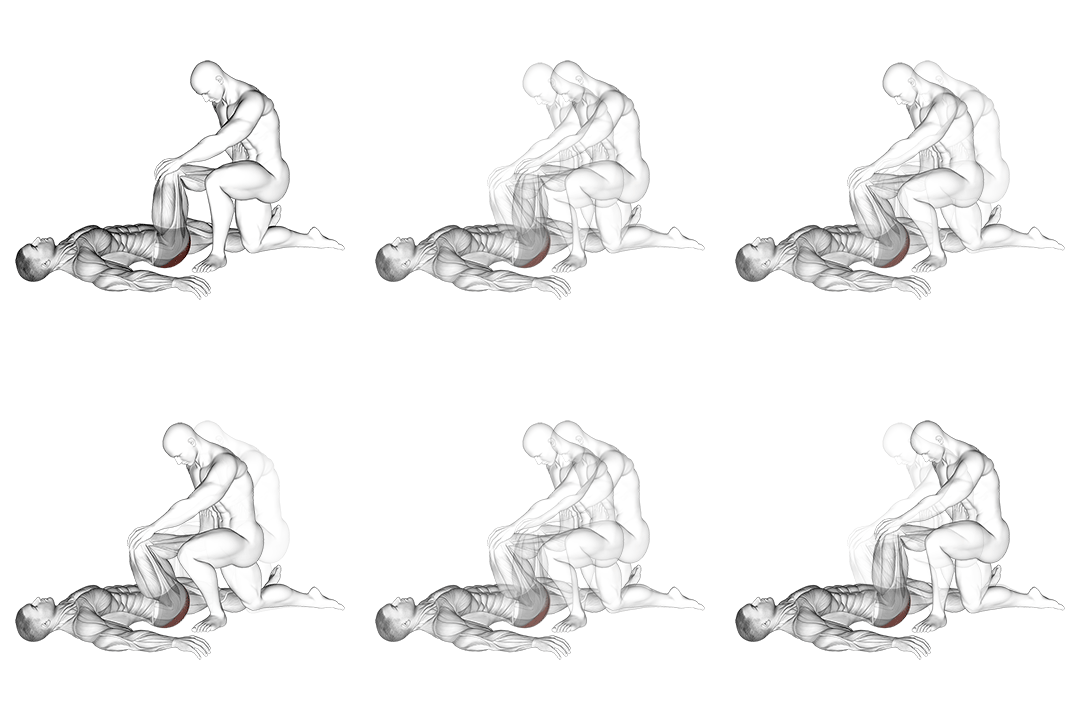
More comparisons with Band Hip Lift
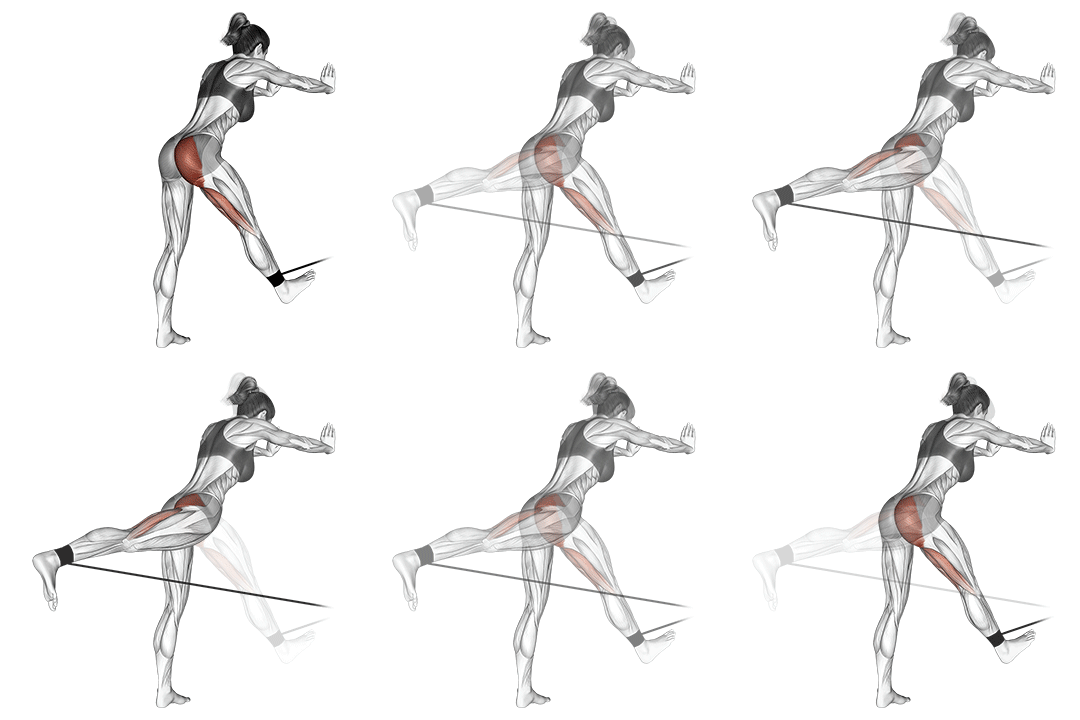
More comparisons with Band Lying Hip Internal Rotation
Compare More Exercises
Use our free comparison tool to analyze any two exercises head-to-head.
Compare Exercises