

Band Hip Lift vs Band Seated Hip Internal Rotation: Complete Comparison Guide
Band Hip Lift vs Band Seated Hip Internal Rotation — this head-to-head will help you decide which banded exercise suits your goals. You’ll get clear comparisons of muscle activation, biomechanics, equipment needs, and progression options. I’ll show technique cues, typical rep ranges (8–15 for strength/hypertrophy, 12–25 for endurance), and when to choose the compound hip lift versus the isolation internal rotation for rehab, motor control, or targeted glute work.
Exercise Comparison
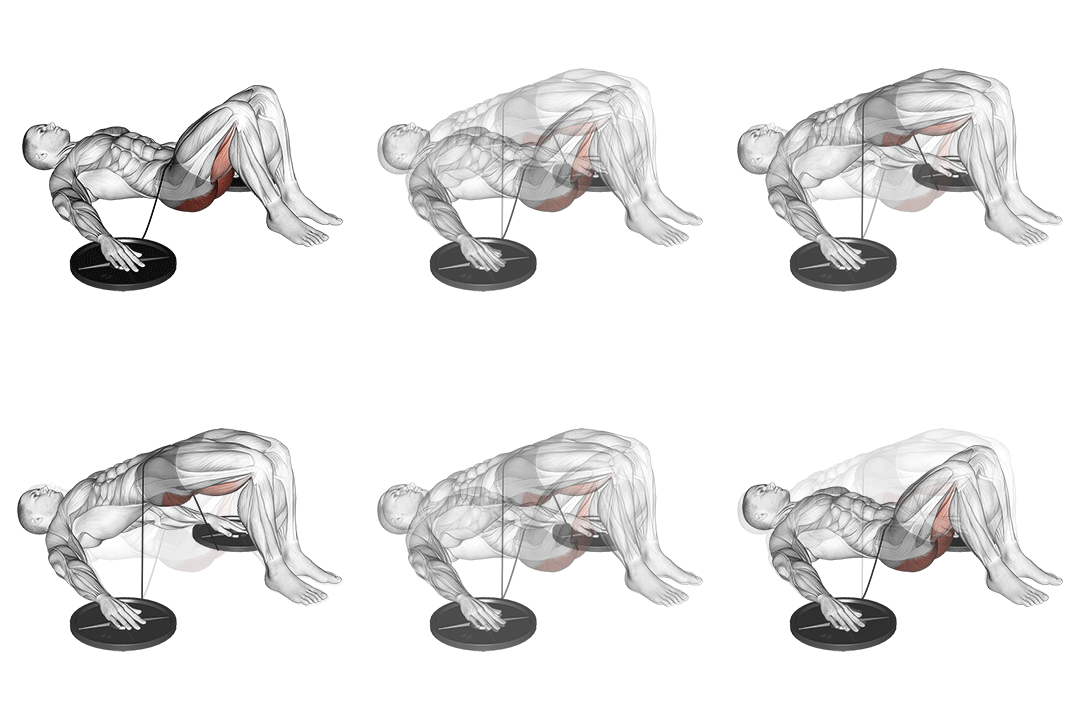
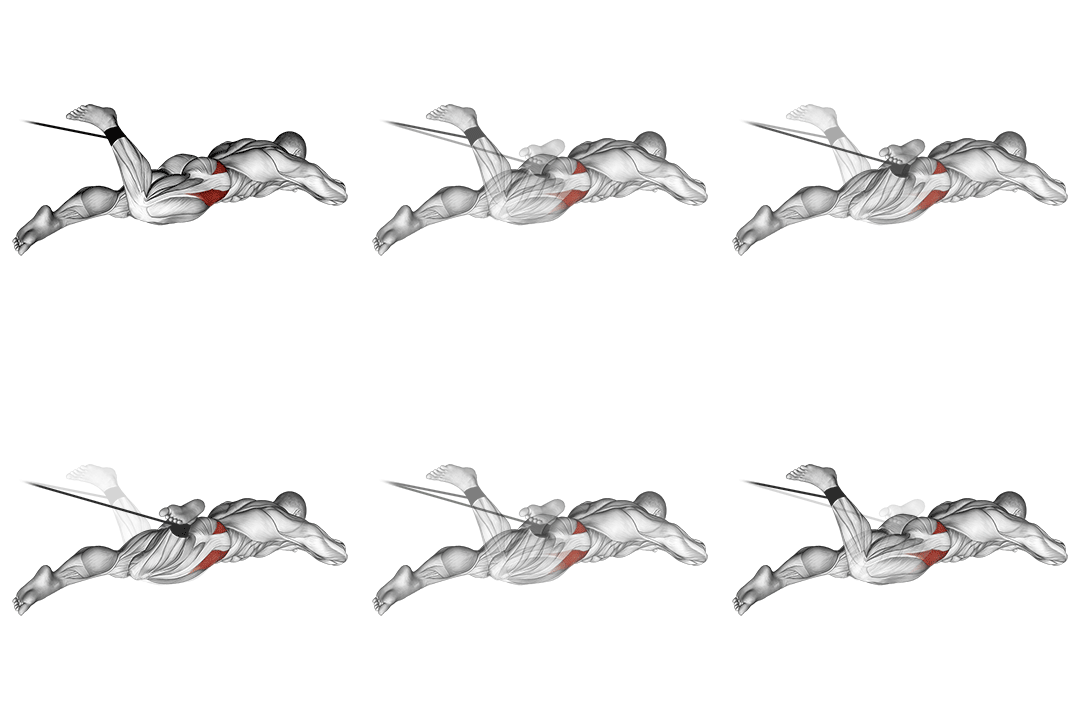
Band Hip Lift
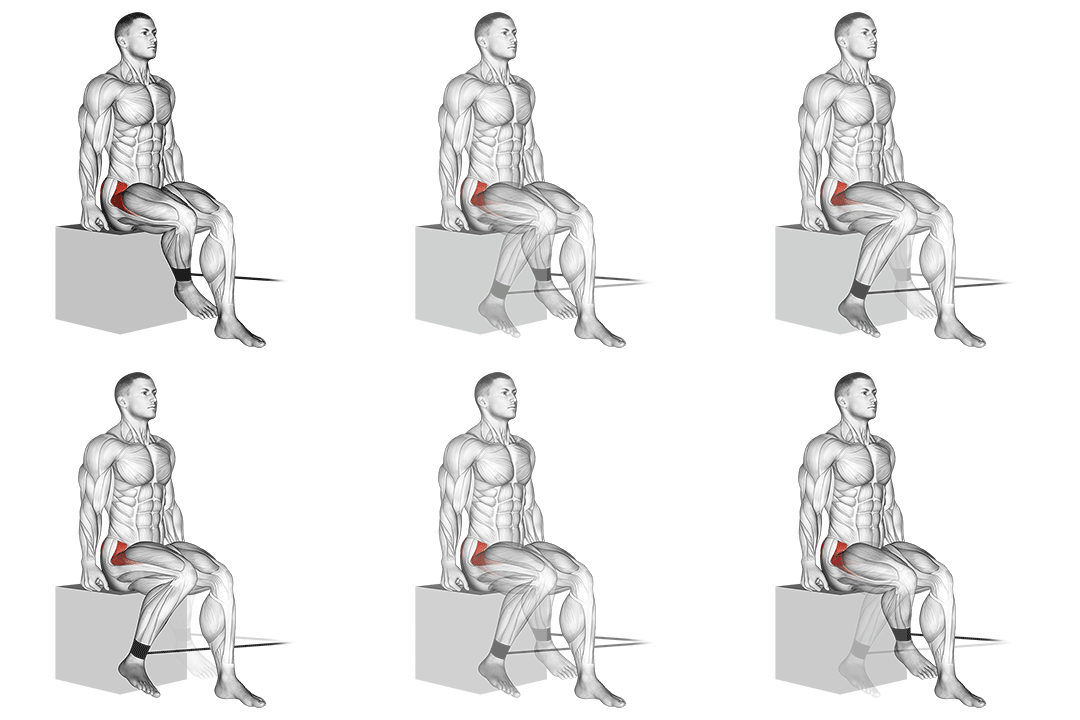
Band Seated Hip Internal Rotation
Head-to-Head Comparison
| Attribute | Band Hip Lift | Band Seated Hip Internal Rotation |
|---|---|---|
| Target Muscle |
Glutes
|
Glutes
|
| Body Part |
Upper-legs
|
Upper-legs
|
| Equipment |
Band
|
Band
|
| Difficulty |
Beginner
|
Beginner
|
| Movement Type |
Compound
|
Isolation
|
| Secondary Muscles |
2
|
2
|
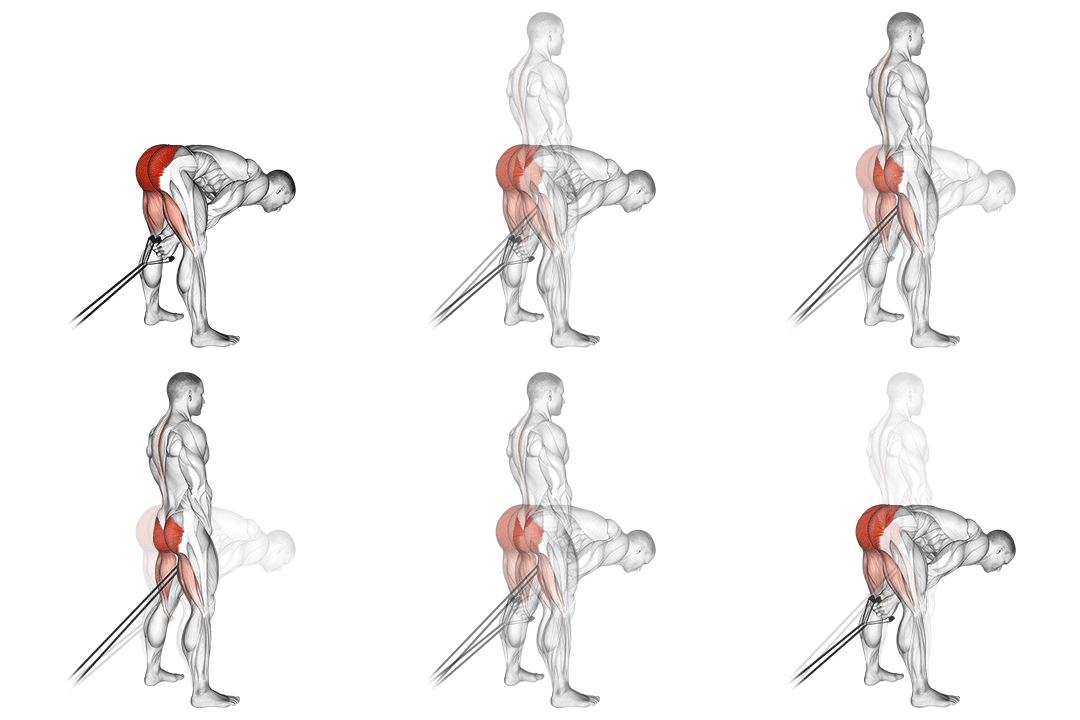
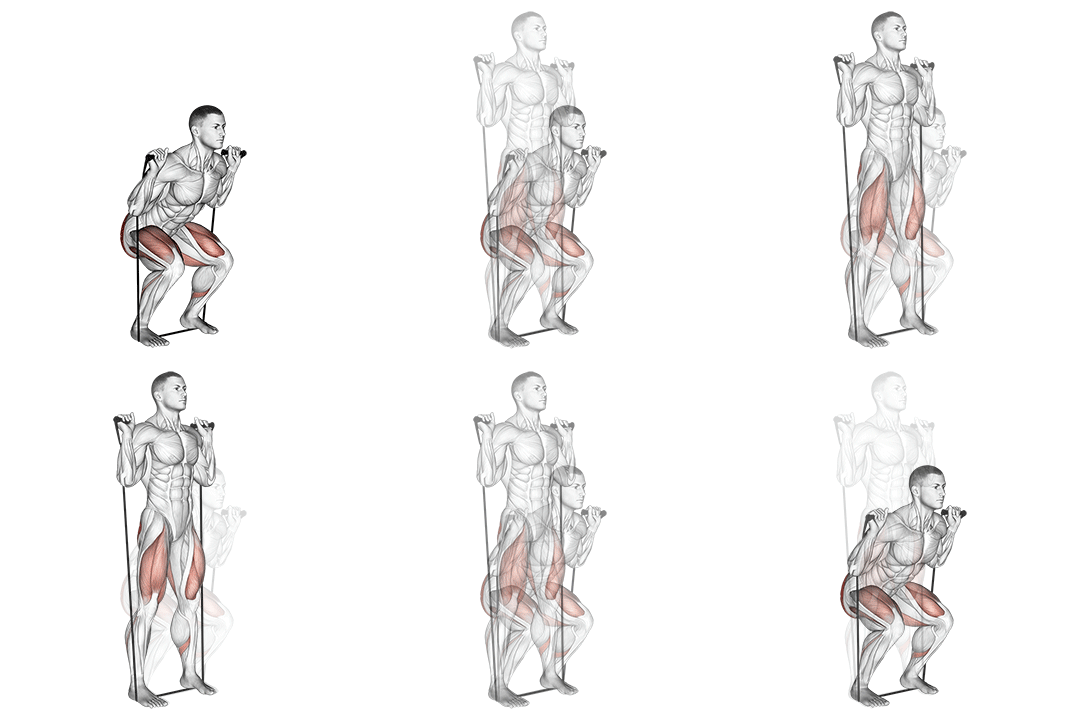
Secondary Muscles Activated
Band Hip Lift
Band Seated Hip Internal Rotation
Visual Comparison
Overview
Band Hip Lift vs Band Seated Hip Internal Rotation — this head-to-head will help you decide which banded exercise suits your goals. You’ll get clear comparisons of muscle activation, biomechanics, equipment needs, and progression options. I’ll show technique cues, typical rep ranges (8–15 for strength/hypertrophy, 12–25 for endurance), and when to choose the compound hip lift versus the isolation internal rotation for rehab, motor control, or targeted glute work.
Key Differences
- Band Hip Lift is a compound movement, while Band Seated Hip Internal Rotation is an isolation exercise.
- Both exercises target the Glutes using Band. The main differences are in their movement patterns and muscle activation angles.
Pros & Cons
Band Hip Lift
+ Pros
- Loads glute max effectively for hip extension and muscle growth
- Easy to scale with band tension or single-leg variation
- Engages hamstrings and posterior chain for functional strength
- Can be done anywhere with minimal space
− Cons
- Can provoke low-back compression if form breaks down
- Less emphasis on transverse-plane control and glute medius isolation
- Requires attention to knee tracking to avoid valgus
Band Seated Hip Internal Rotation
+ Pros
- Isolates transverse-plane glute control (glute med/min and TFL)
- Excellent for rehab and correcting hip internal rotation weakness
- Very low spinal load—safe for those with back issues
- Improves motor control and foot/knee alignment in gait
− Cons
- Limited overload potential for maximal strength or hypertrophy
- Harder to perform cleanly; compensatory hip or knee motion is common
- Small range of motion means slower visible muscle size changes
When Each Exercise Wins
Band Hip Lift produces greater overall load across the glute max and posterior chain, allowing progressive overload (8–15 reps) and time under tension for muscle growth. Its larger sagittal ROM and ability to add band resistance make it superior for building size.
The hip lift creates higher hip-extension torque and carries over to functional lifts due to stronger posterior chain recruitment. Single-leg or heavier band progressions provide a clearer path to increased force production.
Beginners learn a simple, powerful hip extension pattern that recruits big muscles and teaches pelvic stability. It’s easier to coach and produces noticeable strength and endurance improvements quickly.
Requires minimal setup, no anchor point, and works well with a single loop band on the floor. It scales across fitness levels and fits short home sessions without extra equipment.
Frequently Asked Questions
Can I do both Band Hip Lift and Band Seated Hip Internal Rotation in the same workout?
Yes. Pair them by doing hip lifts first for heavy, global hip extension (3–4 sets of 8–15), then use seated internal rotations as a finisher or corrective exercise (2–3 sets of 12–20) to reinforce transverse-plane control.
Which exercise is better for beginners?
Band Hip Lift is better for most beginners because it trains large muscle groups with a simple sagittal-plane movement and easier progression. Use seated internal rotation once basic hip control is established.
How do the muscle activation patterns differ?
Hip lifts emphasize concentric glute max shortening under load with substantial hamstring synergy during terminal extension. Seated internal rotation targets glute medius/minimus in the transverse plane with primarily isometric and small concentric contractions over a 10°–30° ROM for stabilization.
Can Band Seated Hip Internal Rotation replace Band Hip Lift?
No — it can complement but not replace the hip lift. Seated internal rotation improves rotational control and medial glute activation, but it lacks the sagittal-plane load and progressive overload needed for significant glute max strength and size.
Expert Verdict
Use the Band Hip Lift as your primary glute-building and posterior-chain strength tool: it loads hip extension, scales well, and transfers to squats and deadlifts. Reserve Band Seated Hip Internal Rotation for targeted work—rehab, improving femoral internal rotation control, and strengthening the glute medius/minimus in the transverse plane. If your goal is hypertrophy or strength, prioritize the hip lift with 8–15 reps and progressive band tension. If you need motor control, pelvic stability, or injury-specific rehab, add 2–4 sets of 12–25 controlled seated internal rotations focused on smooth 10°–30° ROM.
Also Compare
More comparisons with Band Hip Lift
More comparisons with Band Seated Hip Internal Rotation
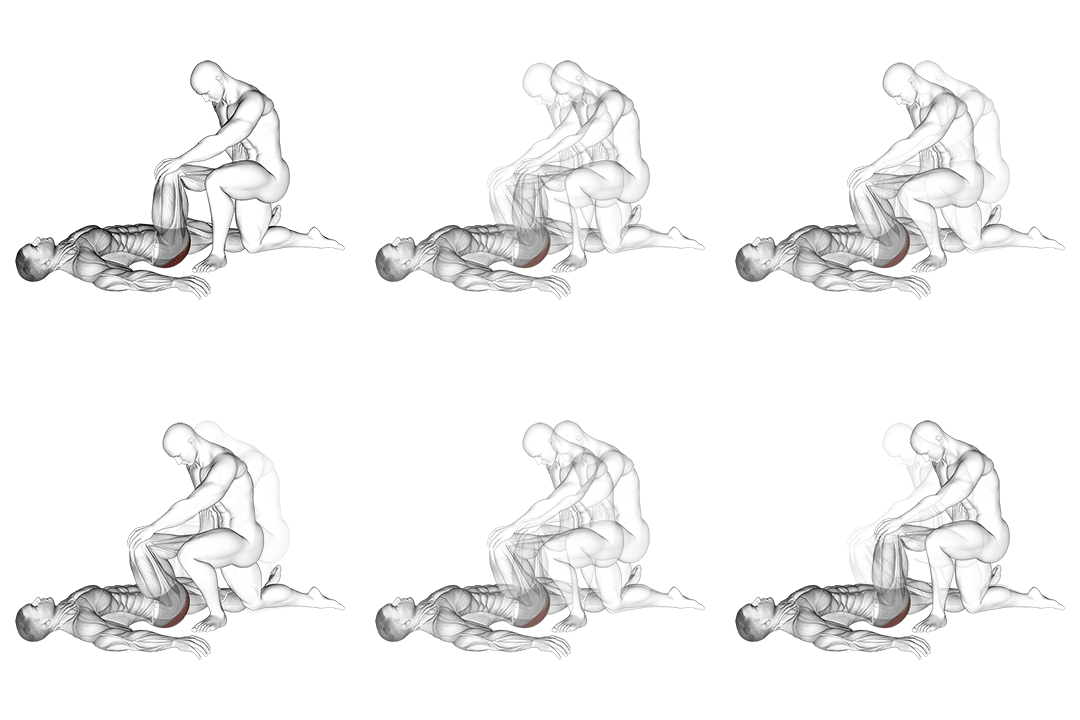
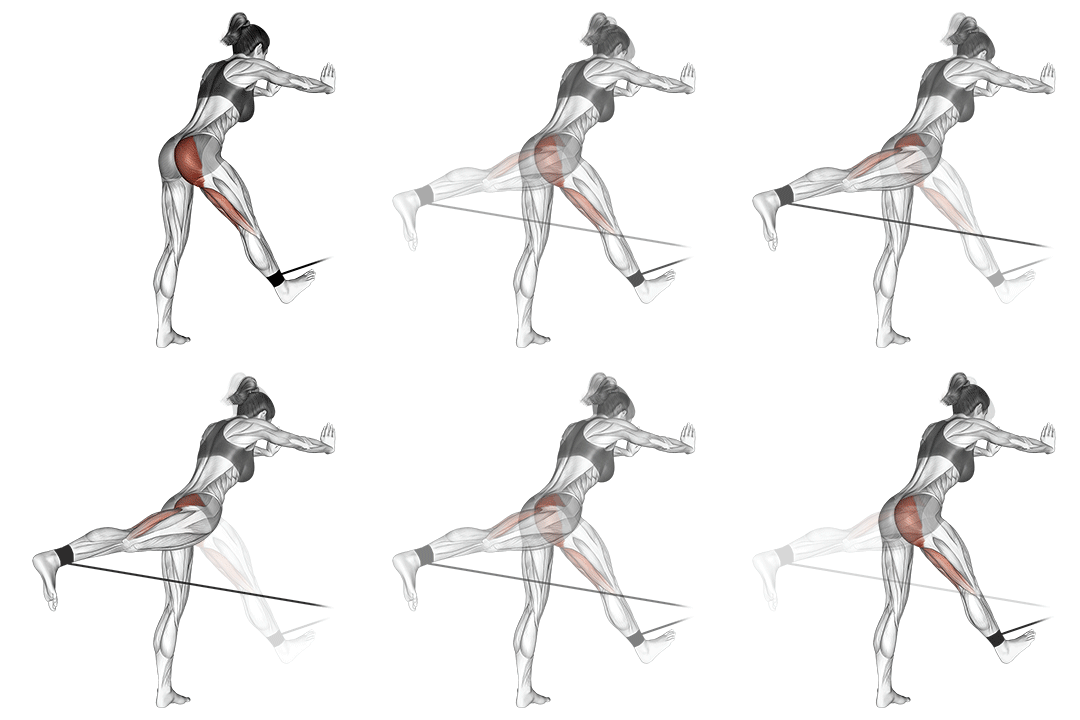
Compare More Exercises
Use our free comparison tool to analyze any two exercises head-to-head.
Compare Exercises