

Band Lying Hip Internal Rotation vs Band Pull Through: Complete Comparison Guide
Band Lying Hip Internal Rotation vs Band Pull Through. You’re choosing between a focused glute isolation and a hip-hinge compound movement, so this guide compares mechanics, muscle activation, equipment, difficulty, and programming. You’ll get clear technique cues (joint angles, foot and pelvis position), rep ranges for activation (12–25+) and strength/hypertrophy (6–15), and specific reasons to pick one exercise over the other. I’ll explain force vectors, moment arms, and length–tension effects on the glutes, plus quick progressions and injury-prevention tips so you can use each move effectively in your training.
Exercise Comparison
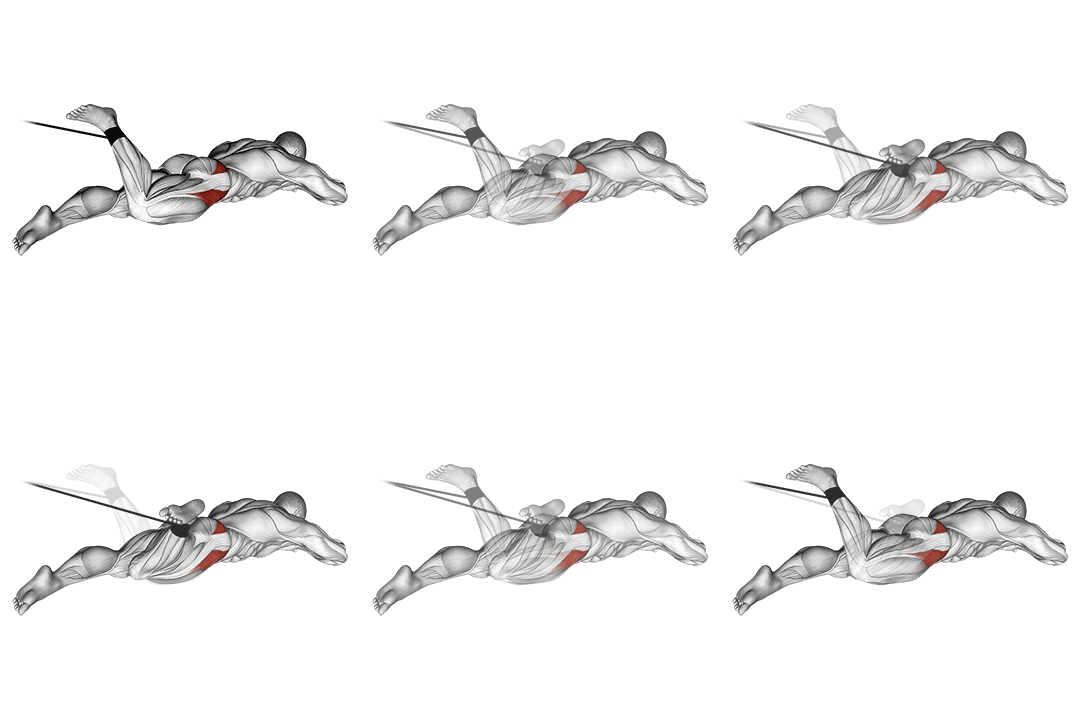
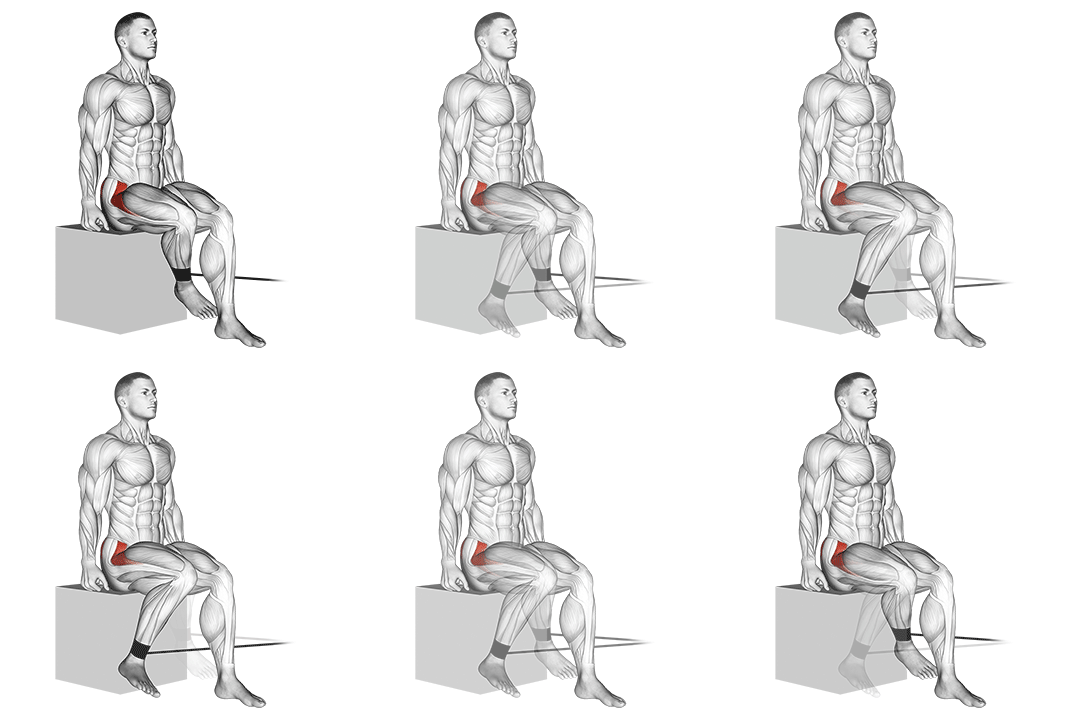
Band Lying Hip Internal Rotation
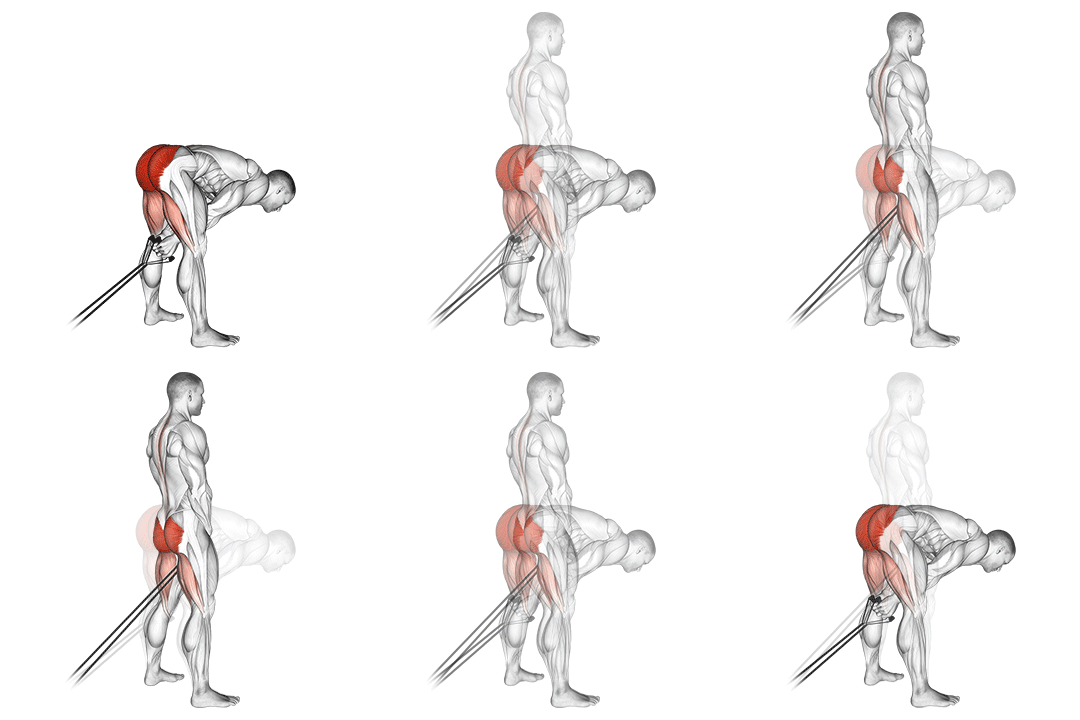
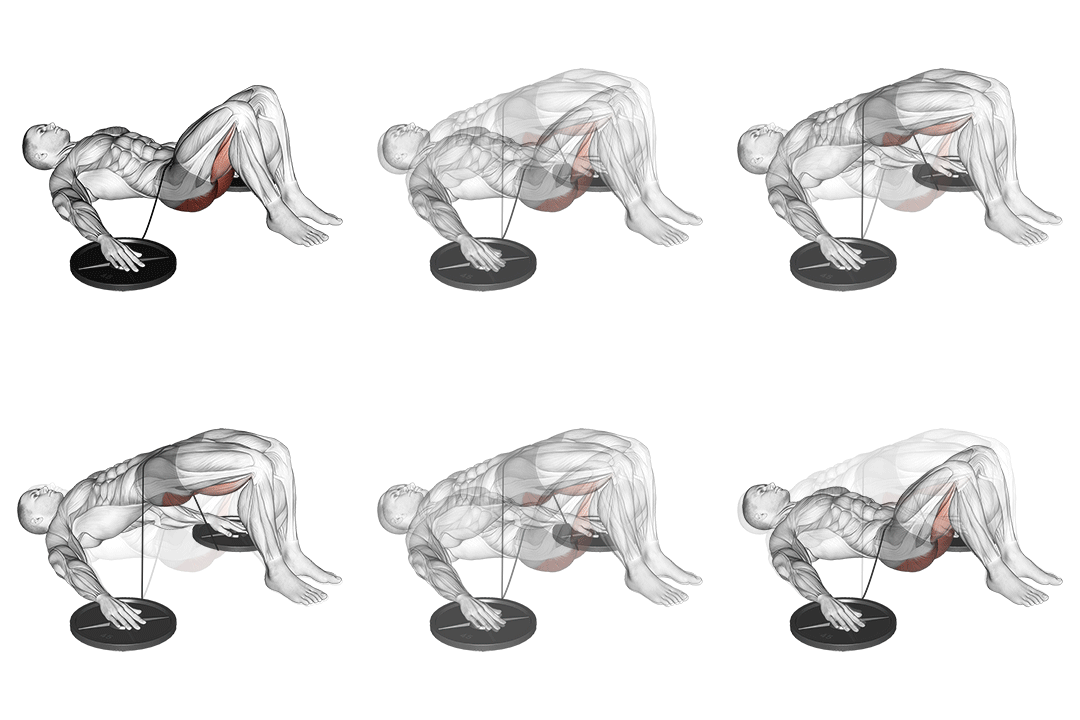
Band Pull Through
Head-to-Head Comparison
| Attribute | Band Lying Hip Internal Rotation | Band Pull Through |
|---|---|---|
| Target Muscle |
Glutes
|
Glutes
|
| Body Part |
Upper-legs
|
Upper-legs
|
| Equipment |
Band
|
Band
|
| Difficulty |
Beginner
|
Intermediate
|
| Movement Type |
Isolation
|
Compound
|
| Secondary Muscles |
2
|
2
|
Secondary Muscles Activated
Band Lying Hip Internal Rotation
Band Pull Through
Visual Comparison
Overview
Band Lying Hip Internal Rotation vs Band Pull Through. You’re choosing between a focused glute isolation and a hip-hinge compound movement, so this guide compares mechanics, muscle activation, equipment, difficulty, and programming. You’ll get clear technique cues (joint angles, foot and pelvis position), rep ranges for activation (12–25+) and strength/hypertrophy (6–15), and specific reasons to pick one exercise over the other. I’ll explain force vectors, moment arms, and length–tension effects on the glutes, plus quick progressions and injury-prevention tips so you can use each move effectively in your training.
Key Differences
- Band Lying Hip Internal Rotation is an isolation exercise, while Band Pull Through is a compound movement.
- Difficulty levels differ: Band Lying Hip Internal Rotation is beginner, while Band Pull Through is intermediate.
- Both exercises target the Glutes using Band. The main differences are in their movement patterns and muscle activation angles.
Pros & Cons
Band Lying Hip Internal Rotation
+ Pros
- Directly isolates glute medius/minimus and anterior glute fibers for targeted activation
- Requires minimal equipment and space — no anchor point needed
- Low spinal loading, making it suitable for rehab and warm-ups
- Ideal for pre-activation before compound posterior-chain exercises
− Cons
- Limited absolute loading potential for hypertrophy of the gluteus maximus
- Primarily single-plane — less carryover to hip extension power
- Can aggravate hip joint symptoms if you push excessive internal rotation angles
Band Pull Through
+ Pros
- Produces strong gluteus maximus activation via hip-extension torque
- High progression ceiling using band tension and variations
- Carries over to athletic movements that require horizontal force production
- Also recruits hamstrings and trains posterior chain coordination
− Cons
- Requires a longer band or anchor and more setup
- Higher technical demand — hip hinge and trunk control required
- Greater potential for lumbar stress with poor technique
When Each Exercise Wins
Pull-through produces greater hip-extension torque and larger moment arms on the gluteus maximus, allowing heavier progressive loading (6–12 reps) and longer time under tension for hypertrophy.
The compound hinge pattern recruits more motor units and lets you incrementally increase band resistance, making it better for building hip extension strength and posterior-chain power.
Its single-plane motion and low spinal demand make it easier to learn and safe for teaching glute activation, especially when you need 12–25+ reps to build neuromuscular control.
It needs only a loop band and floor space with no anchor, so you can perform it anywhere and still get effective glute-specific work.
Frequently Asked Questions
Can I do both Band Lying Hip Internal Rotation and Band Pull Through in the same workout?
Yes. Use Band Lying Hip Internal Rotation early as an activation drill (2–3 sets of 12–20) to prime the glute medius, then perform Band Pull Throughs as the primary loading exercise (3–5 sets of 6–15). This sequence improves recruitment and reduces compensatory lumbar movement.
Which exercise is better for beginners?
Band Lying Hip Internal Rotation is better for beginners due to its low coordination and minimal spinal load. It teaches targeted glute activation before introducing multi-joint hip-hinge patterns like the pull-through.
How do the muscle activation patterns differ?
Internal rotation isolates lateral glute fibers with steady, low-torque contraction over ~30–45° of medial rotation. Pull-through creates high hip-extension torque across a longer ROM, recruiting gluteus maximus and hamstrings more intensely and producing higher peak activation during concentric hip extension.
Can Band Pull Through replace Band Lying Hip Internal Rotation?
Not fully. If your goal is glute medius/internal-rotation strength or rehab, pull-through won’t isolate those fibers sufficiently. For hypertrophy and strength of the gluteus maximus, pull-through can replace internal rotation, but keep internal-rotation work if you need stability or targeted activation.
Expert Verdict
Use Band Lying Hip Internal Rotation when you need targeted glute medius/internal-rotation work, pre-activation before compound lifts, or a low-back-friendly option. Perform 2–4 sets of 12–25+ reps, working through 30–45° of internal rotation with controlled tempo. Choose Band Pull Through when your goal is gluteus maximus hypertrophy and hip-extension strength: hinge aggressively, keep a neutral spine, and use heavier band tension for 3–5 sets of 6–15 reps. Biomechanically, internal rotation optimizes stabilization and short-range tension, while pull-through maximizes torque via a larger moment arm and length–tension across the posterior chain. Combine both across a program: use internal rotation for activation and pull-through for overload and strength.
Also Compare
More comparisons with Band Lying Hip Internal Rotation
More comparisons with Band Pull Through
Compare More Exercises
Use our free comparison tool to analyze any two exercises head-to-head.
Compare Exercises