

Band Lying Hip Internal Rotation vs Band Seated Hip Internal Rotation: Complete Comparison Guide
Band Lying Hip Internal Rotation vs Band Seated Hip Internal Rotation — both use a band to load internal rotation at the hip, but they feel different and serve different purposes. If you want a clear recommendation, I’ll compare muscle activation, setup, difficulty, progression options, and injury risk. You’ll get direct technique cues (hip angles, band placement, tempo), biomechanical reasoning (moment arms, length-tension), and specific rep ranges so you can pick the one that fits your training goals and equipment at home or in the gym.
Exercise Comparison
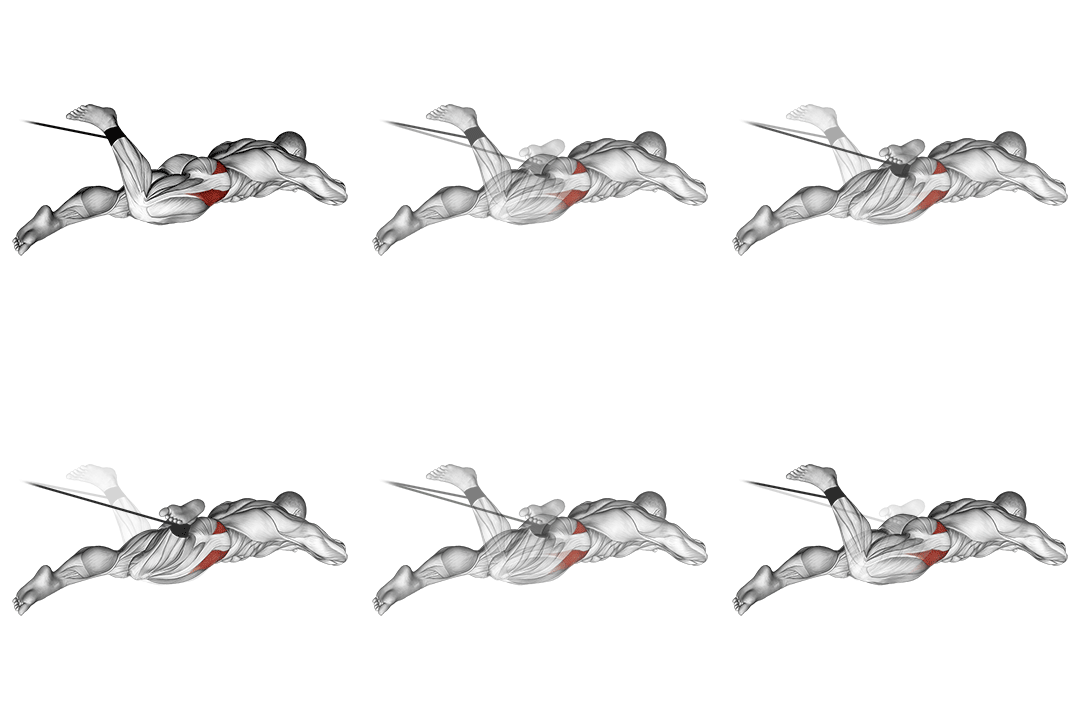
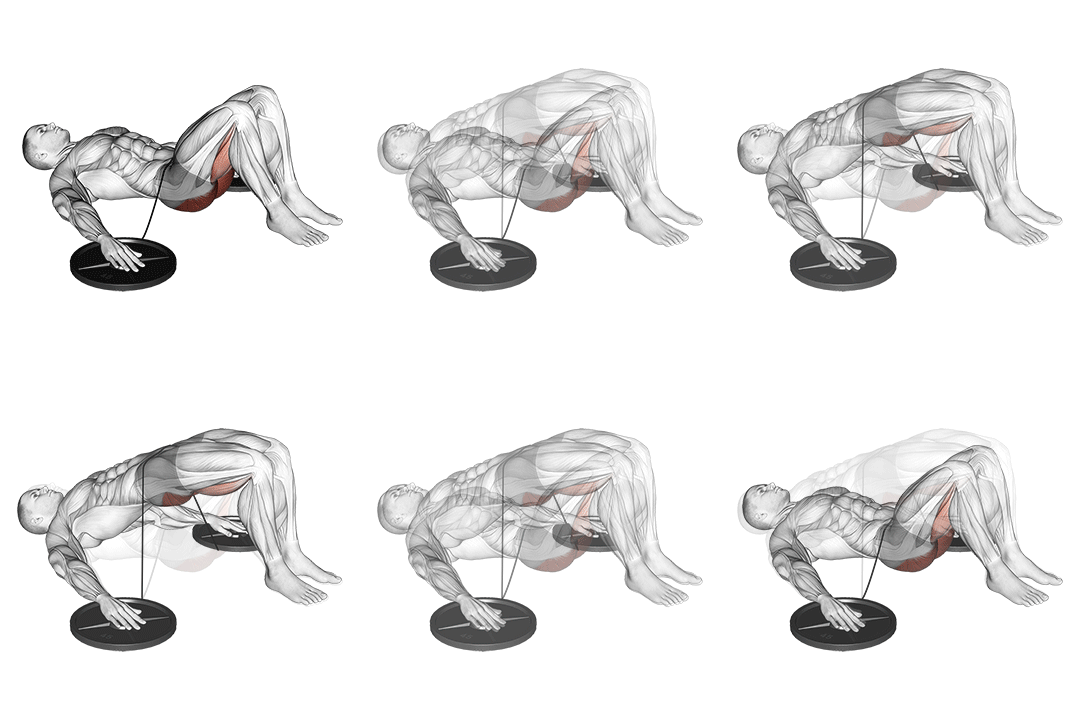
Band Lying Hip Internal Rotation
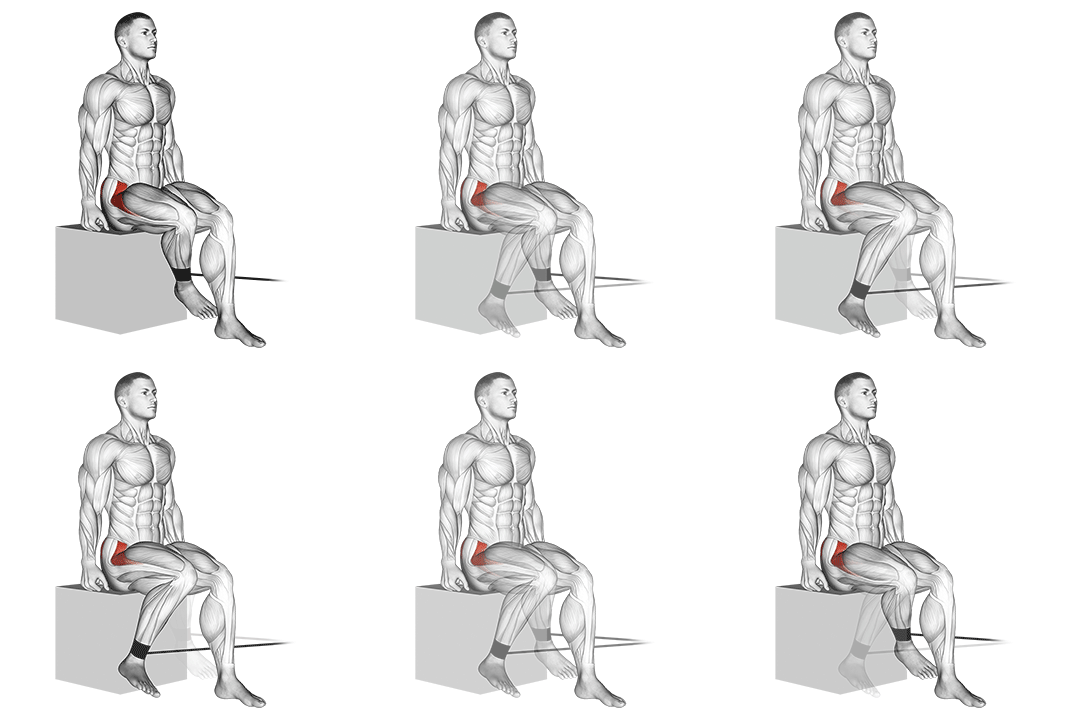
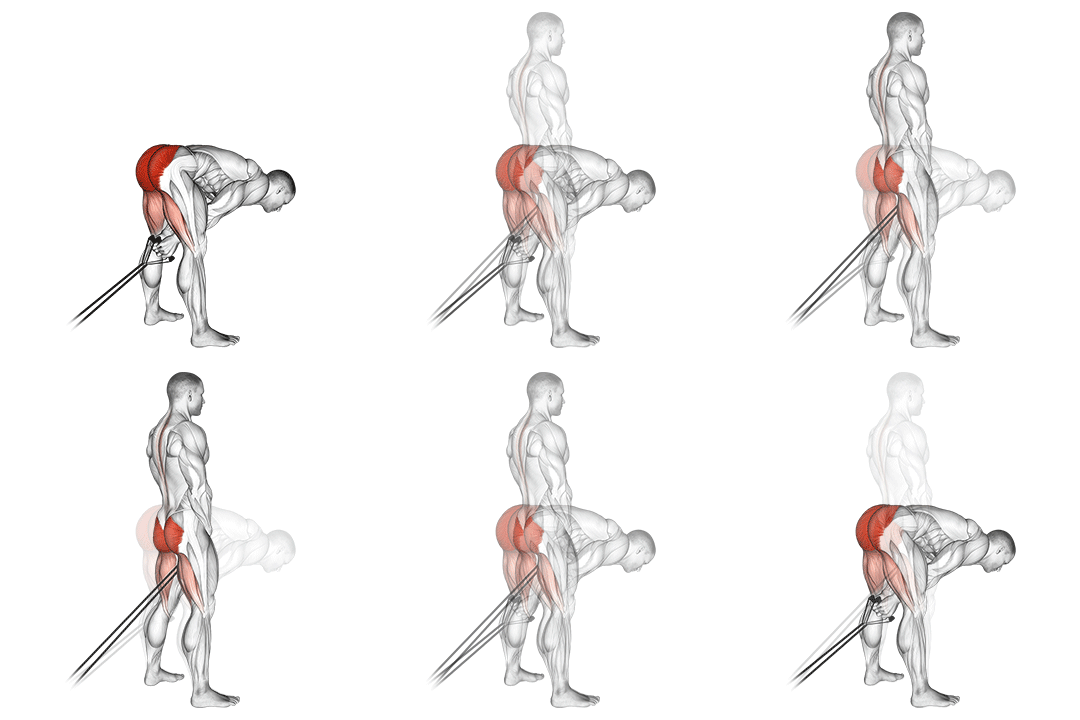
Band Seated Hip Internal Rotation
Head-to-Head Comparison
| Attribute | Band Lying Hip Internal Rotation | Band Seated Hip Internal Rotation |
|---|---|---|
| Target Muscle |
Glutes
|
Glutes
|
| Body Part |
Upper-legs
|
Upper-legs
|
| Equipment |
Band
|
Band
|
| Difficulty |
Beginner
|
Beginner
|
| Movement Type |
Isolation
|
Isolation
|
| Secondary Muscles |
2
|
2
|
Secondary Muscles Activated
Band Lying Hip Internal Rotation
Band Seated Hip Internal Rotation
Visual Comparison
Overview
Band Lying Hip Internal Rotation vs Band Seated Hip Internal Rotation — both use a band to load internal rotation at the hip, but they feel different and serve different purposes. If you want a clear recommendation, I’ll compare muscle activation, setup, difficulty, progression options, and injury risk. You’ll get direct technique cues (hip angles, band placement, tempo), biomechanical reasoning (moment arms, length-tension), and specific rep ranges so you can pick the one that fits your training goals and equipment at home or in the gym.
Key Differences
- Both exercises target the Glutes using Band. The main differences are in their movement patterns and muscle activation angles.
Pros & Cons
Band Lying Hip Internal Rotation
+ Pros
- Strong pelvic stabilization for cleaner glute med/min isolation
- Simpler setup—only a band and floor needed
- Lower risk of lumbar compensation
- Easier to feel the target muscles as a beginner
− Cons
- Less core and postural challenge
- Slightly smaller functional transfer to upright activities
- Limited progression styles compared with seated variations
Band Seated Hip Internal Rotation
+ Pros
- Greater functional carryover to standing movements due to upright posture
- More progression options (tension, lever arm, holds)
- Increased TFL and adductor involvement can help balance muscle patterns
- Easy to adjust band anchor height for different force vectors
− Cons
- Requires a stable seat and more setup
- Higher chance of trunk compensation if core is weak
- Can over-recruit TFL, reducing isolated glute activation
When Each Exercise Wins
For isolated hypertrophy of the anterior glute medius and minimus, lying provides cleaner tension and less TFL takeover, letting you target the muscle at higher-rep ranges (12–20) with better time under tension.
Seated offers more progression paths and forces the internal rotators to work in a functional, loaded position with greater demand on postural control, which supports strength and transfer to standing tasks.
Lying reduces compensations and gives immediate pelvic support, so you can learn the internal rotation pattern and feel the glute med/min without complex setup or trunk demands.
You only need a band and a small floor area—no chair or bench—so the lying version is quicker to set up and safer when you train alone at home.
Frequently Asked Questions
Can I do both Band Lying Hip Internal Rotation and Band Seated Hip Internal Rotation in the same workout?
Yes. Start with 2–3 sets of the lying variation to groove the movement and then perform 2–3 sets of the seated version for load and functional carryover. Keep total volume moderate (6–12 sets per side) and use controlled tempo to avoid fatigue-driven compensation.
Which exercise is better for beginners?
Band Lying Hip Internal Rotation is better for beginners because the floor stabilizes the pelvis and makes it easier to feel anterior glute medius and minimus activation. Begin with 2–4 sets of 12–20 reps and progress when you can maintain clean form.
How do the muscle activation patterns differ?
Seated internal rotation increases TFL and anterior adductor contribution because hip flexion shifts the muscles’ moment arms and length-tension relationships. Lying stabilizes the pelvis and reduces TFL recruitment, producing more isolated glute med/min activation across the transverse plane.
Can Band Seated Hip Internal Rotation replace Band Lying Hip Internal Rotation?
Seated can replace lying for functional strength work, but not for initial isolation or rehab where you need minimal compensation. If your goal is specific hypertrophy or motor control of the glute med/min, keep the lying version in your program at least periodically.
Expert Verdict
Use Band Lying Hip Internal Rotation when you want clean isolation, low injury risk, and an easy setup—ideal for early-stage rehab, motor-pattern training, or high-rep hypertrophy work (12–20 reps, 2–4 sets). Choose Band Seated Hip Internal Rotation when you want more progression options and functional carryover to upright movements; it’s better for building strength and coordination under load (8–15 reps, 3–5 sets) and for manipulating force vectors by changing band anchor point. Be decisive: if you struggle with core stability or feel TFL dominance in seated work, spend 4–6 weeks on the lying variation to build neuromuscular control, then progress to seated.
Also Compare
More comparisons with Band Lying Hip Internal Rotation
More comparisons with Band Seated Hip Internal Rotation
Compare More Exercises
Use our free comparison tool to analyze any two exercises head-to-head.
Compare Exercises