

Band Pull Through vs Band Seated Hip Internal Rotation: Complete Comparison Guide
Band Pull Through vs Band Seated Hip Internal Rotation — two banded glute exercises that look similar on paper but deliver different mechanical demands. You’ll learn how each moves the hip, which glute heads they target, the equipment and space required, and concrete rep ranges for strength, hypertrophy, and rehab. I’ll give technique cues, explain the biomechanics (force vectors, length-tension relationships), and tell you exactly when to program each exercise into your sessions so you get the most muscle growth and movement quality from your bands.
Exercise Comparison
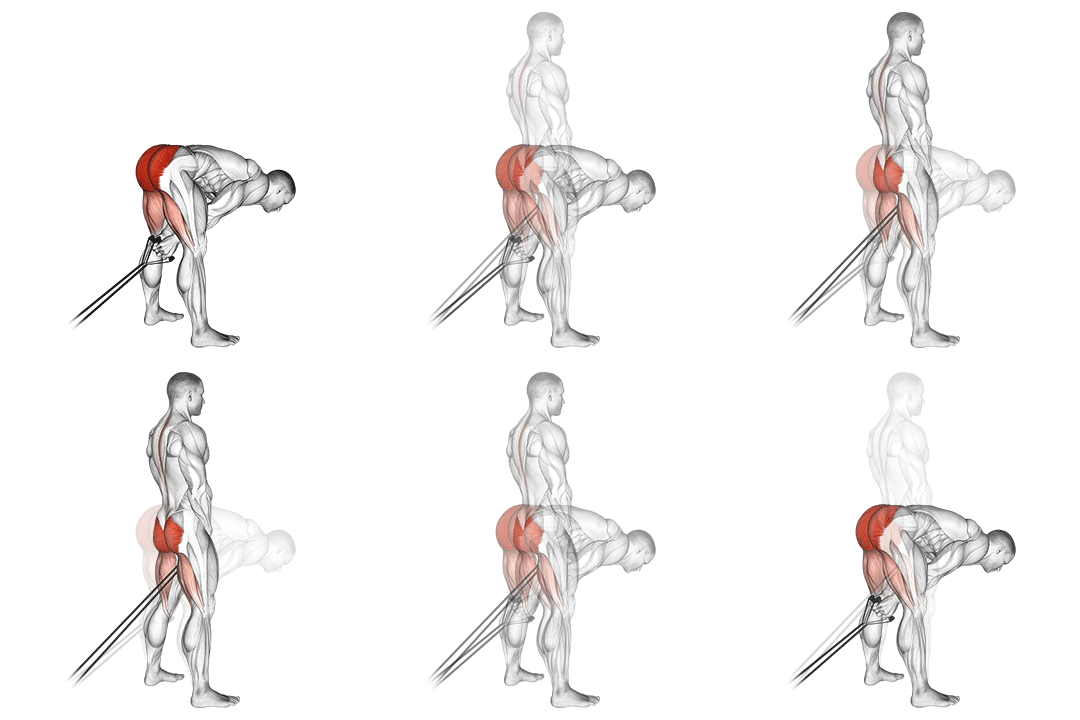
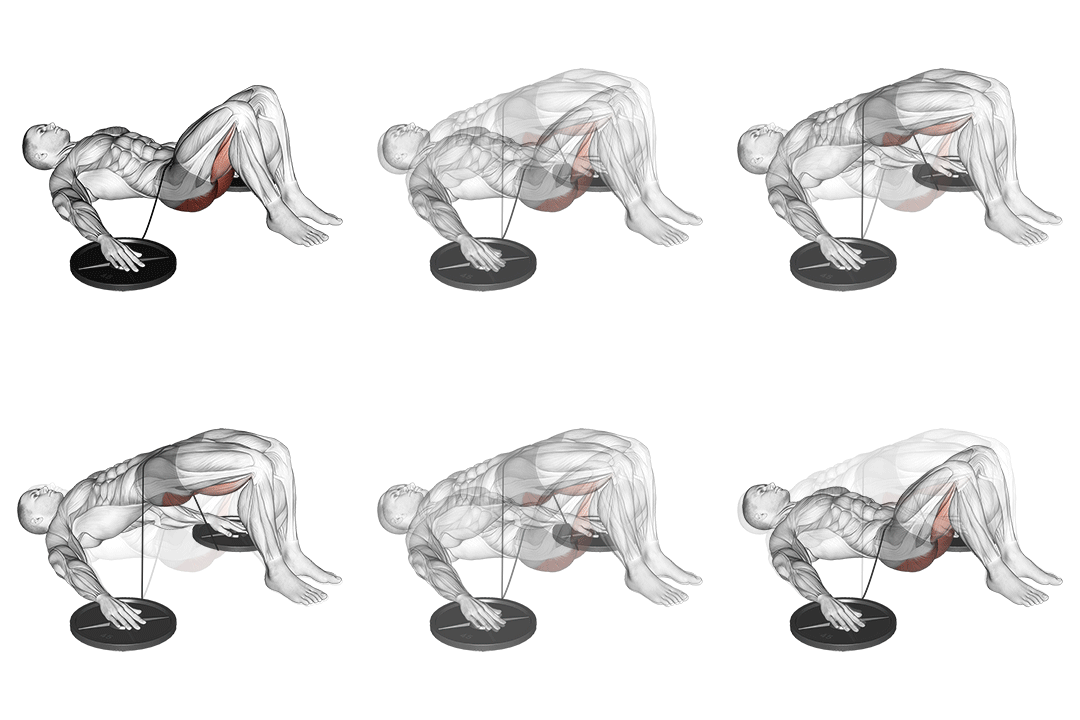
Band Pull Through
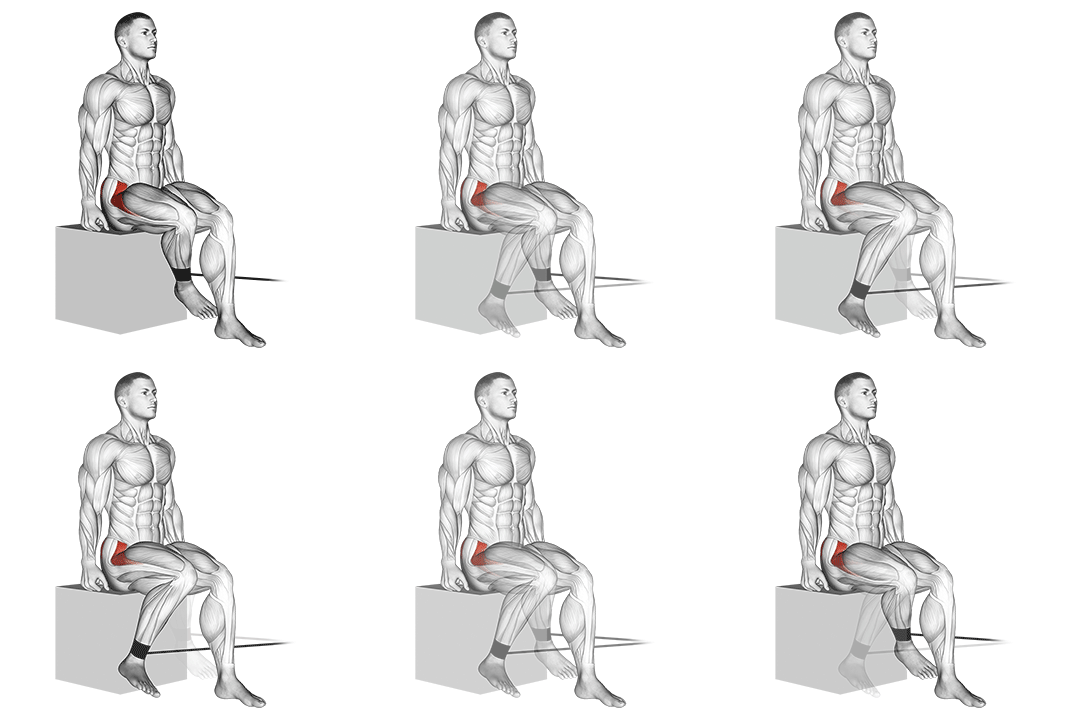
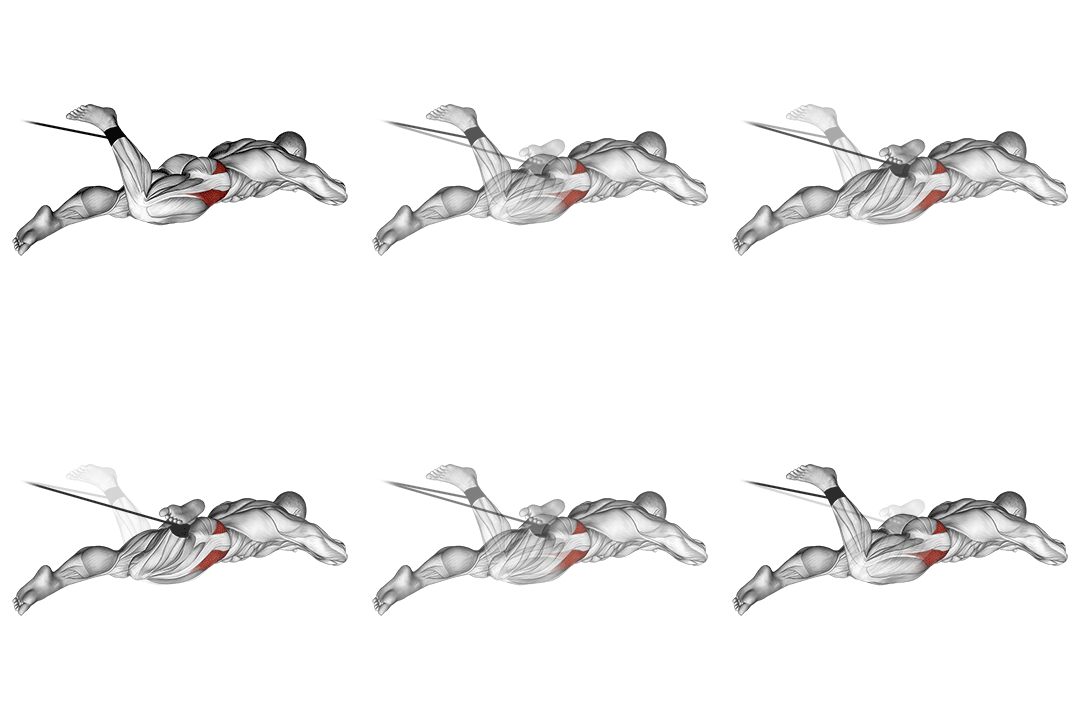
Band Seated Hip Internal Rotation
Head-to-Head Comparison
| Attribute | Band Pull Through | Band Seated Hip Internal Rotation |
|---|---|---|
| Target Muscle |
Glutes
|
Glutes
|
| Body Part |
Upper-legs
|
Upper-legs
|
| Equipment |
Band
|
Band
|
| Difficulty |
Intermediate
|
Beginner
|
| Movement Type |
Compound
|
Isolation
|
| Secondary Muscles |
2
|
2
|
Secondary Muscles Activated
Band Pull Through
Band Seated Hip Internal Rotation
Visual Comparison
Overview
Band Pull Through vs Band Seated Hip Internal Rotation — two banded glute exercises that look similar on paper but deliver different mechanical demands. You’ll learn how each moves the hip, which glute heads they target, the equipment and space required, and concrete rep ranges for strength, hypertrophy, and rehab. I’ll give technique cues, explain the biomechanics (force vectors, length-tension relationships), and tell you exactly when to program each exercise into your sessions so you get the most muscle growth and movement quality from your bands.
Key Differences
- Band Pull Through is a compound movement, while Band Seated Hip Internal Rotation is an isolation exercise.
- Difficulty levels differ: Band Pull Through is intermediate, while Band Seated Hip Internal Rotation is beginner.
- Both exercises target the Glutes using Band. The main differences are in their movement patterns and muscle activation angles.
Pros & Cons
Band Pull Through
+ Pros
- Strong posterior-chain stimulus that loads gluteus maximus and hamstrings
- Easy to progressively overload by using thicker bands or multiple anchors
- Trains the hip hinge pattern, carrying over to deadlifts and squats
- Works through a large sagittal-plane ROM, improving power at terminal hip extension
− Cons
- Requires solid hip-hinge technique to avoid lumbar strain
- Needs anchor point and space behind you
- Less isolated control of glute medius and transverse-plane stability
Band Seated Hip Internal Rotation
+ Pros
- Simple setup and minimal space required
- Excellent for teaching glute medius internal rotation and isolating transverse-plane control
- Low spinal load, safe for post-injury or rehab scenarios
- Beginner-friendly motor pattern with immediate muscle activation feedback
− Cons
- Limited ability to progressively overload for muscle hypertrophy
- Small ROM offers less total mechanical work compared with compound moves
- Less carryover to heavy posterior-chain strength
When Each Exercise Wins
Band Pull Through produces greater mechanical tension across the gluteus maximus and hamstrings and can be loaded with heavier band tension for 6–12 reps. The longer sagittal-plane ROM and capacity for progressive overload produce more muscle growth in the posterior chain.
Pull Through trains hip-extension torque and the hip-hinge pattern, directly improving posterior-chain strength. You can target lower rep ranges (3–6) with heavier bands or by increasing resistance to challenge force production.
Seated internal rotation isolates transverse-plane control and requires minimal skill, making it easier for beginners to activate the glute medius. It’s safer, has lower spinal load, and allows high-rep motor learning (12–30 reps).
Seated internal rotation needs only a loop band and a chair, so setup and space are minimal. If you lack an anchor point or room for a hinge, this gives consistent glute activation at home.
Frequently Asked Questions
Can I do both Band Pull Through and Band Seated Hip Internal Rotation in the same workout?
Yes. Pair them in the same session by using the Band Pull Through as your compound heavy set (6–12 reps) then follow with Band Seated Hip Internal Rotation for 12–20 reps per side to target glute medius control and correct imbalances.
Which exercise is better for beginners?
Band Seated Hip Internal Rotation is better for absolute beginners because it isolates the movement, reduces spinal load, and teaches transverse-plane control. Once you’ve built basic activation, add Band Pull Throughs to train the hinge and increase overall strength.
How do the muscle activation patterns differ?
Band Pull Through loads the gluteus maximus through sagittal-plane hip extension with peak activation near terminal extension, recruiting hamstrings and erectors. Seated internal rotation preferentially activates the glute medius/minimus in the transverse plane during 10–30° of internal rotation, emphasizing stabilizers over prime movers.
Can Band Seated Hip Internal Rotation replace Band Pull Through?
No, not if your goal is posterior-chain hypertrophy or hinge strength. Seated internal rotation can complement or precede pull-throughs for activation and stability work, but it lacks the mechanical overload and ROM required to replace a compound hip-extension exercise.
Expert Verdict
Use Band Pull Through when your goal is posterior-chain muscle growth, hip-extension strength, or carryover to lifts like deadlifts and hip thrusts. Program it for 6–12 reps for hypertrophy or 3–6 reps for strength, focus on a solid hip hinge, neutral spine, and controlled eccentric. Use Band Seated Hip Internal Rotation when you want to train glute medius internal rotation, improve hip joint control, or when space and load options are limited. It’s ideal for beginners and rehab, performed for 12–30 reps to build motor control and endurance. Combine both: start sessions with the compound pull-through and finish with seated internal rotations for targeted midline stability and balance.
Also Compare
More comparisons with Band Pull Through
More comparisons with Band Seated Hip Internal Rotation
Compare More Exercises
Use our free comparison tool to analyze any two exercises head-to-head.
Compare Exercises