

Band Pull Through vs Band Squat: Complete Comparison Guide
Band Pull Through vs Band Squat — two banded compounds that both target your glutes but use different movement patterns. If you want clear choices for hypertrophy, strength, or home training, this guide has your back. You'll get side-by-side muscle comparisons, specific technique cues, equipment notes, progression options, and program recommendations with rep ranges. Read on and decide which exercise belongs in your sessions based on the biomechanics of hip extension, knee drive, and force vector differences.
Exercise Comparison
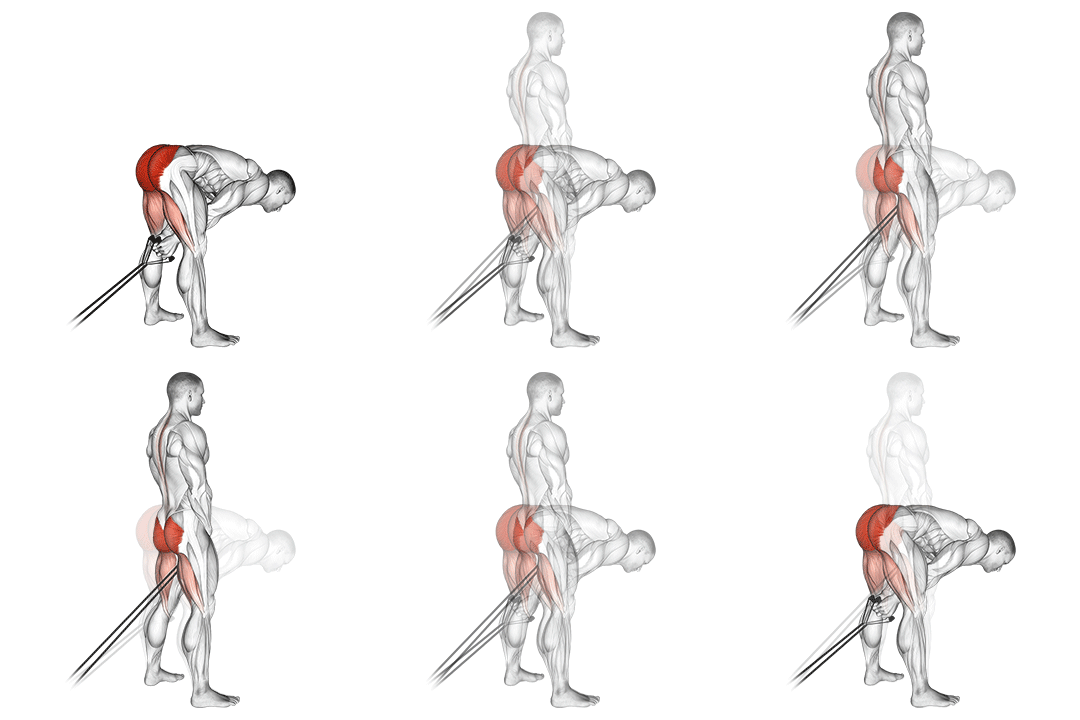
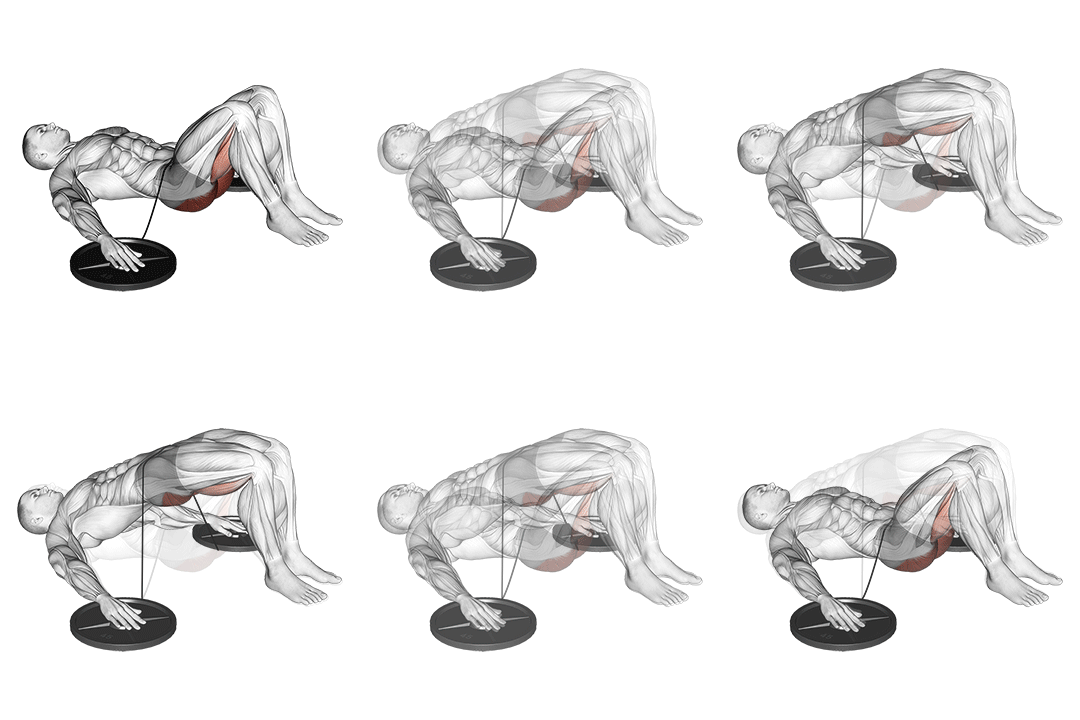
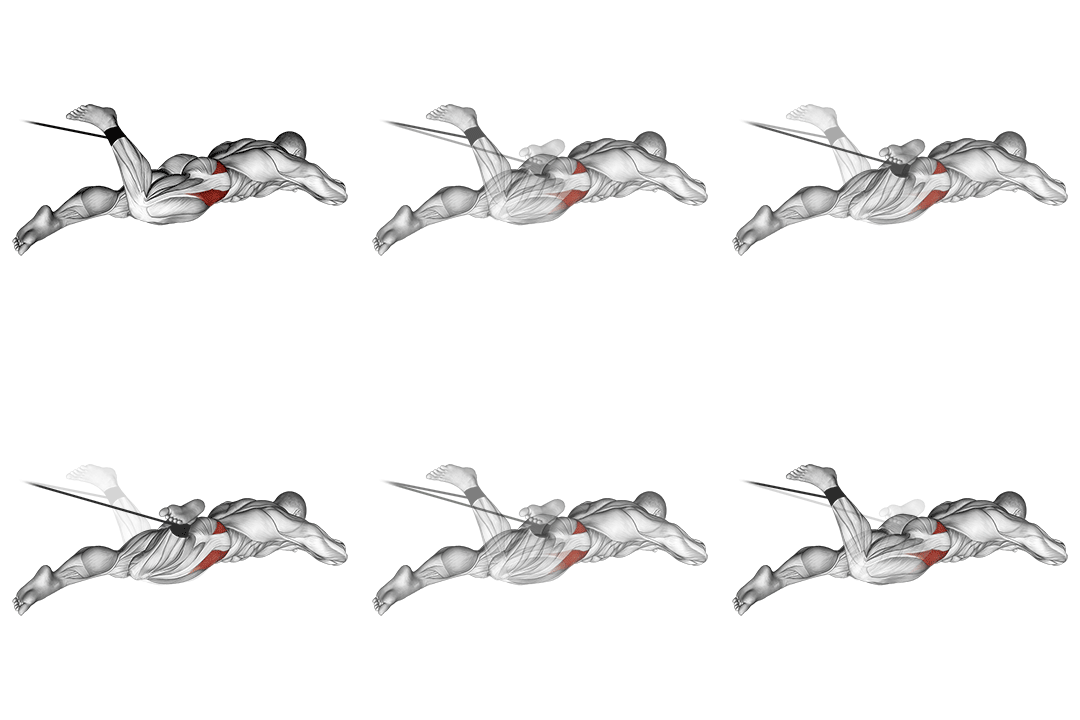
Band Pull Through
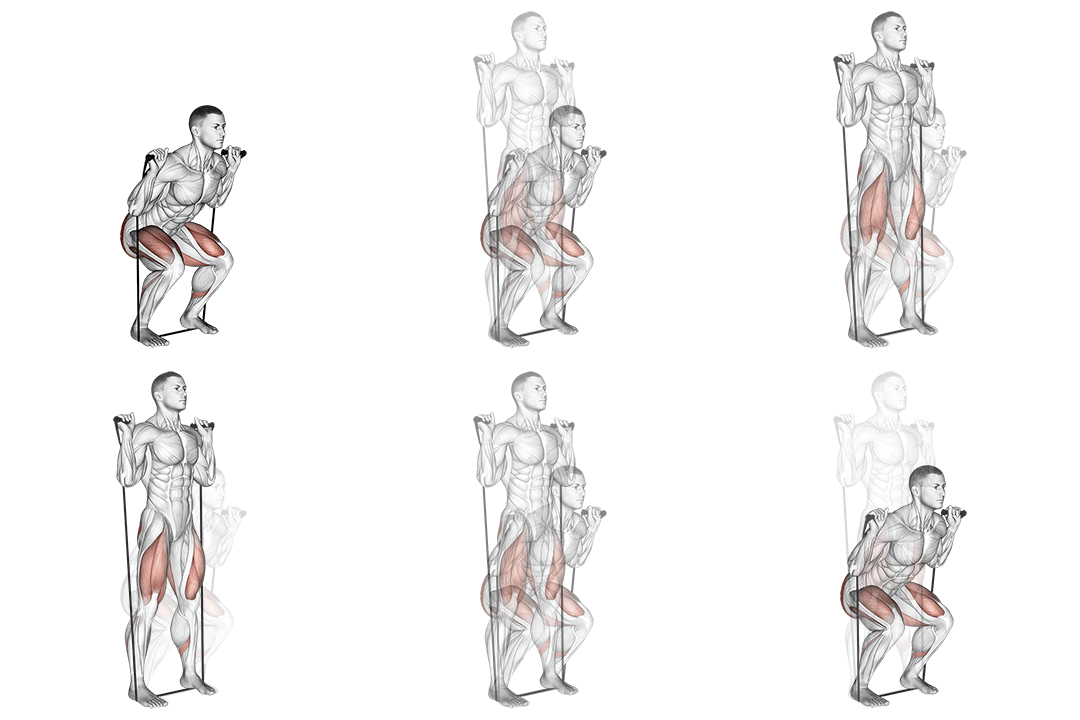
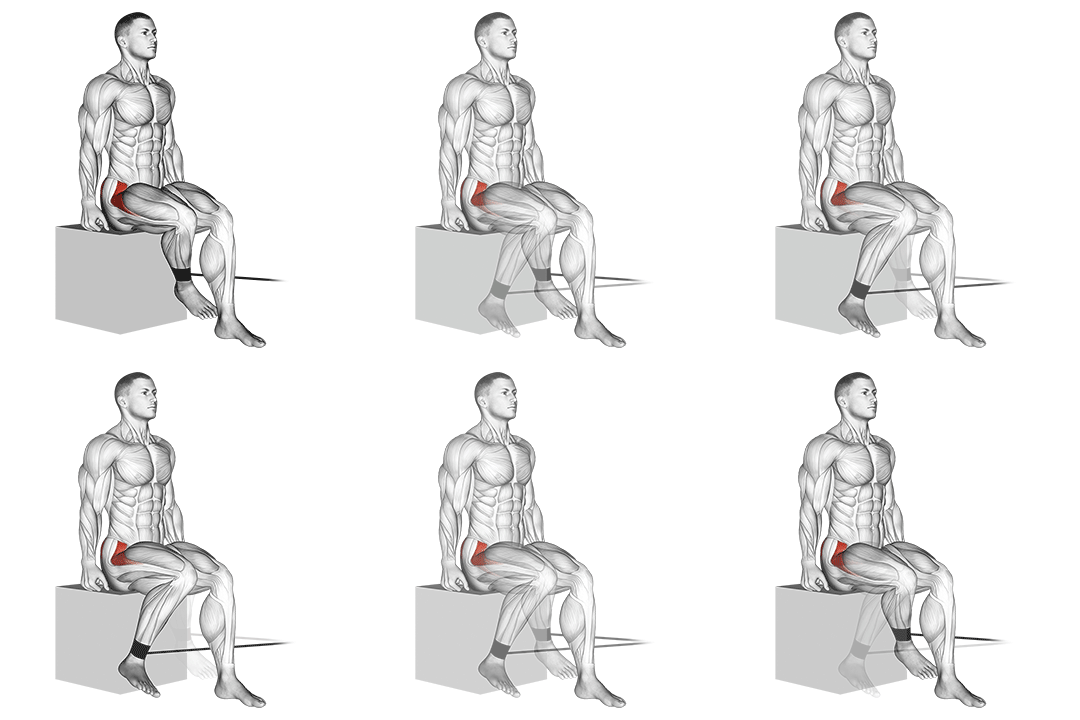
Band Squat
Head-to-Head Comparison
| Attribute | Band Pull Through | Band Squat |
|---|---|---|
| Target Muscle |
Glutes
|
Glutes
|
| Body Part |
Upper-legs
|
Upper-legs
|
| Equipment |
Band
|
Band
|
| Difficulty |
Intermediate
|
Intermediate
|
| Movement Type |
Compound
|
Compound
|
| Secondary Muscles |
2
|
3
|
Secondary Muscles Activated
Band Pull Through
Band Squat
Visual Comparison
Overview
Band Pull Through vs Band Squat — two banded compounds that both target your glutes but use different movement patterns. If you want clear choices for hypertrophy, strength, or home training, this guide has your back. You'll get side-by-side muscle comparisons, specific technique cues, equipment notes, progression options, and program recommendations with rep ranges. Read on and decide which exercise belongs in your sessions based on the biomechanics of hip extension, knee drive, and force vector differences.
Key Differences
- Both exercises target the Glutes using Band. The main differences are in their movement patterns and muscle activation angles.
Pros & Cons
Band Pull Through
+ Pros
- Direct posterior-chain emphasis and strong glute peak contraction
- Minimal load on the knees—good for those with knee sensitivity
- Easy to pair with deadlift-style progressions
- Compact setup with one band and small footprint
− Cons
- Requires solid hip-hinge mechanics to protect the lower back
- Harder to progressively overload compared with weighted squats
- Needs an anchor or space behind you for optimal band path
Band Squat
+ Pros
- Simple setup and highly accessible for home use
- Loads quads and glutes simultaneously for compound development
- Wide progression options (tempo, band tension, unilateral)
- Mimics functional movement patterns like sit-to-stand
− Cons
- Less isolated glute peak contraction than pull-throughs
- Can increase anterior knee stress if performed with poor form
- Band tension may change radically through the range, altering load distribution
When Each Exercise Wins
If your priority is targeted glute hypertrophy, the pull through generates stronger end-range glute tension and peak contraction. Use 8–15 reps with 3–5 sets, slow eccentrics (2–3 seconds) and a 1–2 second pause at lockout to maximize time under tension.
Band Squats allow greater total-system load and transfer to upright strength because they combine hip and knee extension under a vertical force vector. Train with lower-rep ranges (4–8) and heavier bands or added external weight for best strength progress.
Squats match everyday movement patterns and are easier to coach for depth, foot placement, and breathing. Start with bodyweight or light band, 2–3 sets of 10–15 reps while focusing on knees tracking over toes and neutral spine.
Band Squats require minimal setup and no anchor, so you can do them anywhere with a single loop band. They also scale more easily across rep ranges for conditioning or strength.
Frequently Asked Questions
Can I do both Band Pull Through and Band Squat in the same workout?
Yes. Pairing them is effective: use Band Squats as your primary compound sets (3–5 sets of 4–8 or 8–12 reps) and follow with Band Pull Throughs as an accessory (3 sets of 8–15) to emphasize glute end-range contraction without excess knee loading.
Which exercise is better for beginners?
Band Squat is better for most beginners because it uses a familiar movement pattern and is easier to cue (sit back, chest up, knees track). Start with lighter bands and focus on depth, ankle mobility, and spine neutrality before adding tension.
How do the muscle activation patterns differ?
Pull-throughs concentrate activation on hip extensors at end-range, stressing glute peak contraction and recruiting hamstrings and lower back as synergists. Band squats split load between knee and hip extensors, producing more quad involvement and a longer-range glute recruitment pattern.
Can Band Squat replace Band Pull Through?
Not completely. Band Squats can substitute when you lack anchors, but they won’t match the pull-through’s isolated end-range glute tension. If your goal is targeted glute hypertrophy, keep pull-throughs in the program; for general strength or limited equipment, squats suffice.
Expert Verdict
Choose Band Pull Through when your main goal is posterior-chain and glute isolation—use it to overload end-range hip extension and finish training sessions for targeted hypertrophy. Pick Band Squat when you want compound lower-body strength, functional transfer, or a setup that’s easier at home. For balanced programming, alternate them: use squats as a primary compound movement (4–8 or 8–12 reps) and pull-throughs as secondary or accessory work (8–15 reps, paused lockouts). Prioritize hinge mechanics for pull-throughs and knee tracking for squats to limit injury risk and maximize muscle-specific progress.
Also Compare
More comparisons with Band Pull Through
Compare More Exercises
Use our free comparison tool to analyze any two exercises head-to-head.
Compare Exercises